dangerous places (get lost, hornets, dogs, snakes)
This article—perhaps best described as semi-scholarly due to its lack of excessive footnotes and artificial language—deals with research on indigenous peoples. It is based on years of reading, several of my academic papers, and above all, practical experience. I will continue to update it regularly. The fundamental problem is summed up in the following statement:
If you want to understand us, don’t ask questions—come with us to the mountains, to our old villages.
—Atayal woman, manager of Aynomi
This sentence will take on greater meaning throughout.
I. Research Distance or Research Ignorance
This sentence carries far more weight than it might initially seem. It highlights a fundamental dilemma in research: the researcher is expected to remain neutral, a detached observer who doesn’t personally identify with their subject. But this simply doesn’t work when conducting research with indigenous people.
For one, they are not “objects” to be studied. The colonial-era concept of the white scholar, superior in knowledge and authority, researching indigenous groups is outdated. Moreover, indigenous people often have little interest in answering academic questions or filling out surveys. They may offer quick responses just to be left alone—or say what they think the researcher wants to hear. Abstract academic articles in journals don’t concern them.
There is a growing number of researchers with indigenous backgrounds, but only rarely are they people who grew up in the mountains themselves. To get honest answers and true understanding, you have to get to know them. That only happens through personal relationships—and those relationships dissolve the (already questionable) concept of scholarly “distance.”
Even clothing shows the divide when researchers join expeditions. Typical mountain gear for indigenous people and many seasoned Taiwanese hikers below 2,000 meters includes rubber boots, a farmer’s knife, a cheap stick, and simple long sports pants. In contrast, the researcher in 5,000 NTD hiking boots not only shows the income gap, but also becomes a burden when crossing creeks—worried about getting their expensive shoes wet. Very few, trained only with pencils, can endure prolonged physical exertion.
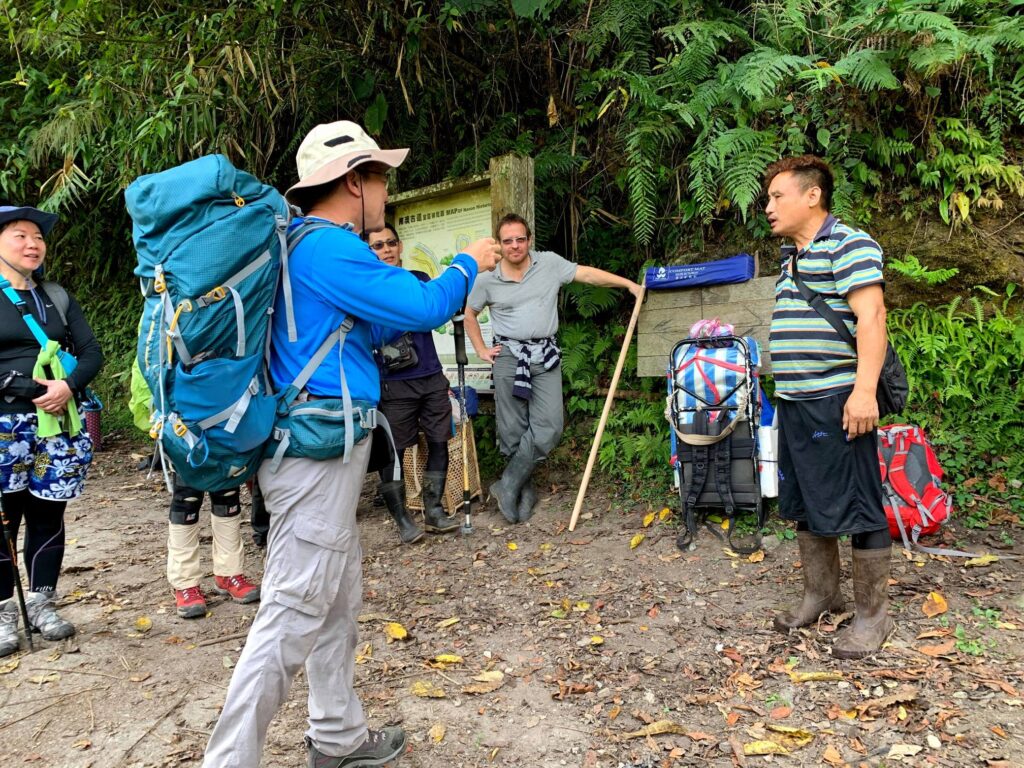
To this day, many indigenous people work in physically demanding jobs. Older generations still go hunting.
It shouldn’t be exhausting. The camp should already be set up, and the places should be close—no need to search.
—Mountain guide for Aynomi about researchers’ demands
After a four-day trek through the mountains, all participants had developed painful chafing—especially in the most sensitive areas. Some had the calluses peeled off their feet, others were stung by Asian hornets, and a few ended up with deep scratches and scrapes.
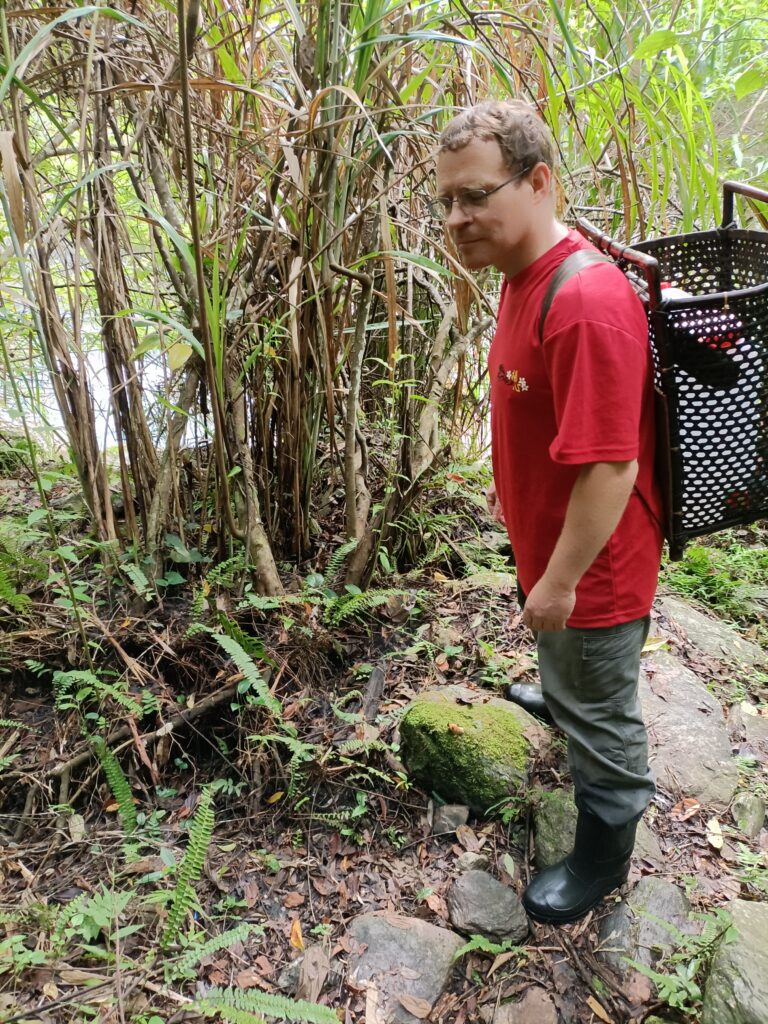
(The boss at work: If you want to be part of it, you have to pitch in with the work.)
II. The Myth of Scientific Objectivity
The self-image of science is sometimes oddly elevated. Scholars often like to ascribe to themselves a special degree of objectivity and rationality—qualities that are, in reality, not quite as solid as claimed. A good example of this is a debate on the Verfassungsblog: Sacksofsky argued that an “objective” assessment of an infringement on fundamental rights is, in truth, always aligned with the mainstream view. Other authors understand scientific judgments or paradigms as the result of socio-political negotiation processes, where a majority opinion may indeed emerge—for a time. Gärditz, on the other hand, emphasized that scientific arguments should follow discipline-specific but nonetheless valid and tested criteria of rationality. Such criteria, he argued, must clearly distinguish scholarly reasoning from mere political opinion or debate.(Sacksofsky, VerfBlog 2022/1/21, https://verfassungsblog.de/allgemeine-impfpflicht-ein-kleiner-piks-ein-grosesverfassungsrechtliches-problem/, 3,; Gärditz, https://verfassungsblog.de/grundrechtsdogmatik-auf-dem-jahrmarktder-wahrheiten/, 2)
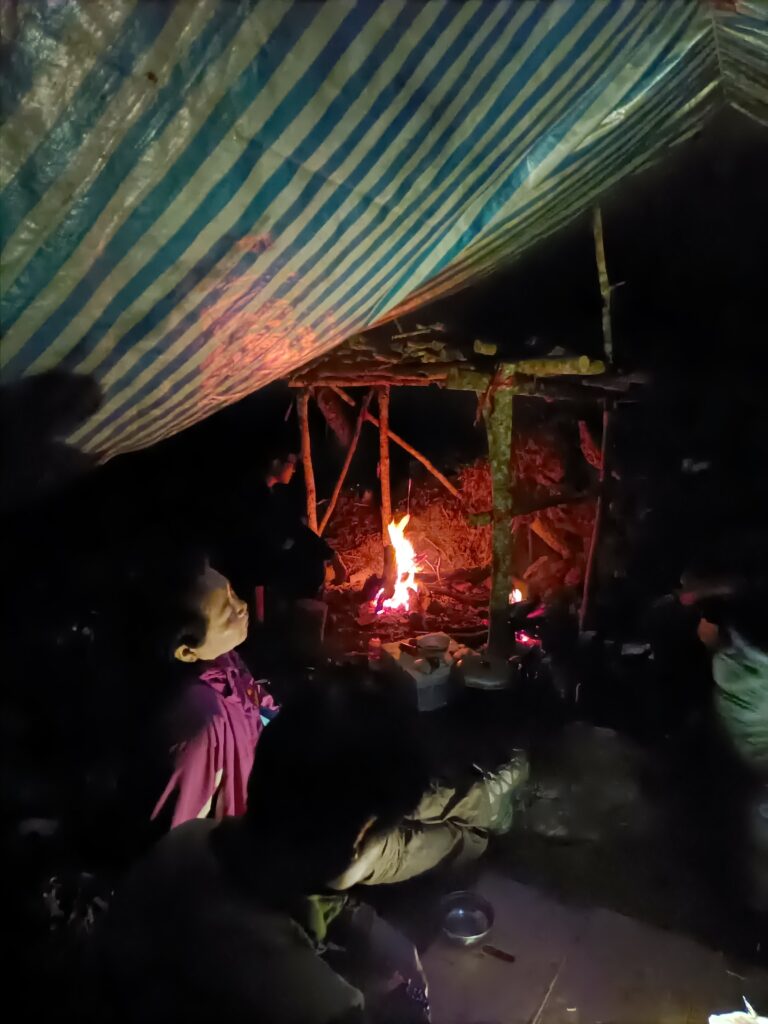
(These fires burn in the eyes and have a biting smell.)
1) Inherent Limitations of Perceptive Ability
To put it in perhaps an overly simplified way: Academic researcher rarely come from a farming background and is more likely to come from an urban environment. They have spent years at a university, which has shaped their thinking and worldview. Academic circles often form subcultures that have relatively little contact with other ways of life. The researcher might enjoy a glass of wine in the evening. Indigenous people who have preserved their traditional culture live in the mountains. They tend to speak more directly, engage in physical labor, and in Taiwan often work in road construction, the military, or as truck drivers. In the evening, they’re more likely to be found drinking beer in a small local restaurant. So how is the researcher supposed to gain real access and understanding?
To particularly associate rationality and objectivity with scientific work raises the question of what organizational and group-specific characteristics enable scientists to detach themselves from their fundamentally human — and therefore subjective — nature.
This is a highly romantic notion still awaiting substantiation. Anyone who self-romantically attributes such qualities to themselves is simply unaware of their own intrinsic and extrinsic limitations. Like other subgroups, scientific fields are subject to the boundaries and internal closures of their academic subcultures, with their own forms of communication and cultural mechanisms — especially when they have never left their academic echo chambers unscathed by everyday difficulties. Indeed, I go so far as to argue that the perception of scientists is shaped by a particularly strong degree of subjectivity. This irrationally heightened self-conception became evident in the case of Dieter Nuhr, when the German Research Foundation (DFG) removed his contribution from its website after he pointed out that science does not deal in absolute truths. To scientists, this statement appeared almost blasphemous.
Sources:
- Groh, Research Methods in Indigenous Context, Cham 2018, p. 28.
- VG Münster, 24.08.2022, 5 L 414/22, BeckRS 2022, 29293, pp. 14 ff.
- Herrig, FAZ, Aug 6, 2020
The margin of error is doubled when moving from the level of perception to that of judgment — which, in any case, is only theoretically separable.
2) Methodical Selection of Rationality
Science, which supposedly operates within the boundaries of rational constraints, offers researchers a wide range of methodological approaches. These allow an investigation to be carried out in a methodologically “objective” manner, in line with its underlying assumptions—but unconscious emotional decisions are often retrofitted with rational explanations. Perhaps the most far-reaching influence is that of academic schools of thought, which “can cloud an objective perspective.” (BVerwG, 20 F 3/16, BeckRS 2017, 101089, para. 15) Ultimately, academic schools merely signify a submission to the foundational beliefs of a particular academic authority. This subjective selection process fundamentally affects the core of legal methodology—namely, interpretation. Often, the choice of interpretive method determines the outcome. Hassemer (p. 216) openly stated this, and the same insight can be transferred to the methodology of other disciplines. Only a few scholars will candidly admit that their focus areas inevitably involve subjectivity (Greiser, SRZ 2022, p. 81).
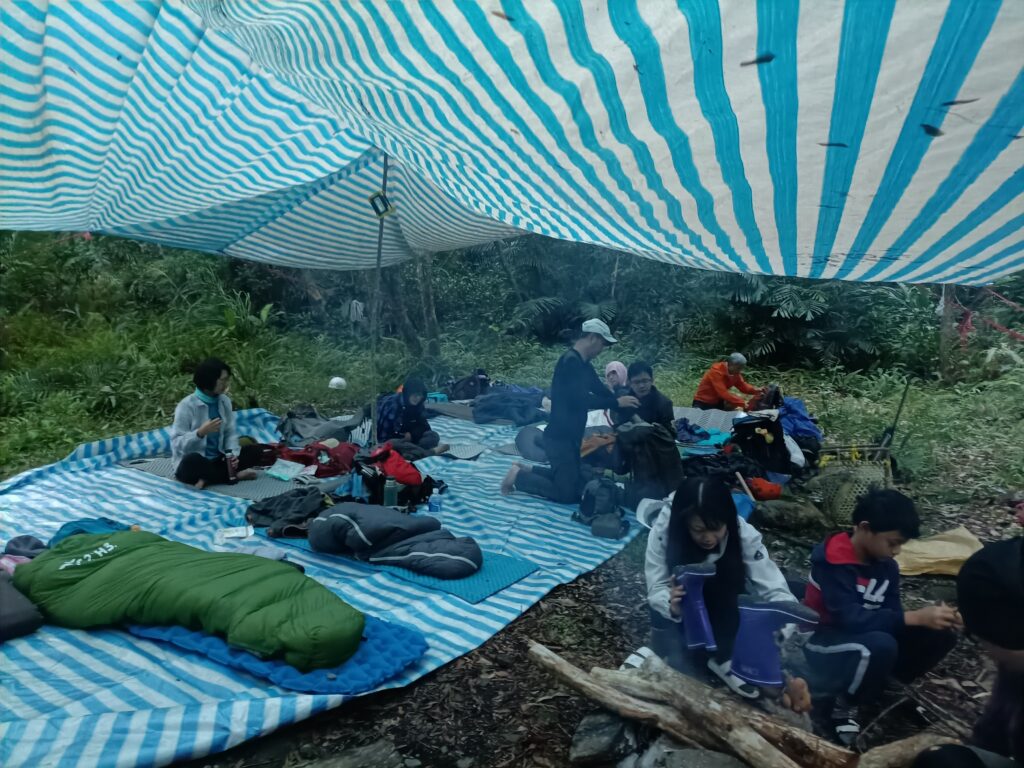
(A camp in 2022, Atayal and Taiwanese maintained a trail together)
Another example of methodologically grounded subjectivity is the wide array of approaches in qualitative research—such as feminist or narrative perspectives (cf. Rapley, “Interviews” in: Seale/Gobo/Gubrium/Silverman, Qualitative Research Practice, Sage, 2001, p. 15). By choosing a specific approach, the researcher adopts a mental filter through which everything is perceived and evaluated. In methodological terms, they do disclose their approach in accordance with academic norms—but at the same time, they are admitting to a partial abandonment of objectivity.
III. Knowledge and Understanding
It is a deep misunderstanding to believe that we truly understand something simply by acquiring knowledge. At first, we hear facts and sort them—this becomes knowledge. The second factor is whether we internalize it, whether we grasp it on the same level as those directly affected. I’d like to begin with a personal example to illustrate the difference between knowing and understanding. For a long time, I knew that hunting holds great importance for Atayal men—on a more or less rational level. But to be honest, I never emotionally understood what could be so great about killing. At least, not until I got to know it more closely. Perhaps a few examples will help:
- Out of what you could call pathological curiosity, I let myself be persuaded to join a hunting trip. It started with a two-hour uphill march after dinner (and that was after a full day already). It was dark and hot, and the climb was sweaty. One of the hunters allowed me to join the actual hunt. We left the trail and moved through the underbrush—me with a loaded rifle, no safety mechanism, in the pitch-black forest lit only by our headlamps. I saw a pair of eyes and tried to aim—only to realize the rifle didn’t even have front or rear sights. The small deer was gone before I could target it. The hunter laughed and said, “It’s not going to wait around to be shot. Stay here—and don’t go wandering off.” Then he took off running, and I was alone. After five minutes, I realized: if he doesn’t come back, I’m really in trouble—I had lost all sense of direction in just a few minutes.
- A few months later, on another hunt, a deer was shot and wounded, but it ran off. The hunter said we had to go after it right away. “If I only wounded it, it’ll die a cruel death.” So we had to follow it—sliding and stumbling down a nearly vertical slope in the dark. We had to stop constantly to look for signs. That night, I finally understood why I kept hearing stories of fathers dying on the hunt. Hunting is risky—not just for the animal, but for the hunter too.
- Another time, I went with my indigenous son and the hunters to build a trail. A 70-year-old hunter asked my son if he wanted to hunt one day, as a man. Some other Taiwanese joined us, but the old hunter firmly turned them away—only my son and I were allowed to go along. My son, ten years old at the time, held his first rifle that day.
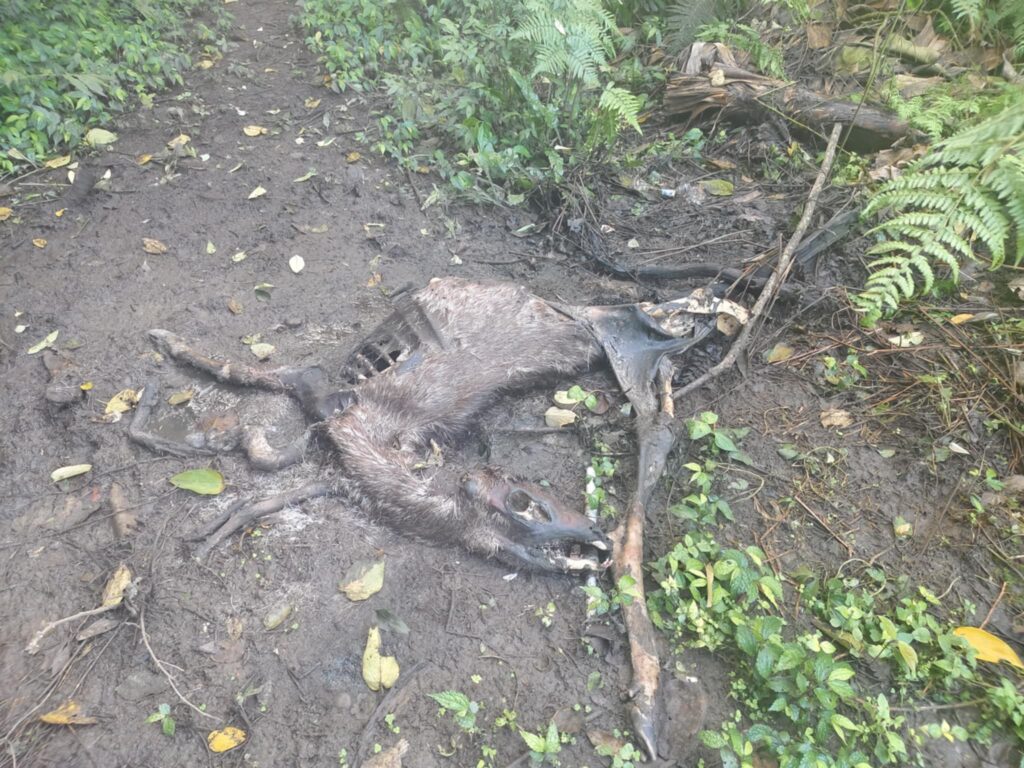
- When I meet indigenous people, they often tell me with pride about the first time they killed an animal—often a wild boar.
- When my dog was badly poisoned and had no chance of survival, no vet would euthanize him—and they wouldn’t give me the syringes either. So I called one of the indigenous hunters and asked to borrow his rifle. He replied simply: “Yes, but you’ll have to do the killing yourself.”
Hunting is more than a practice—it’s a rite of passage, a sign of adulthood and masculinity in the sense of self-reliance. Since indigenous people are only allowed to use very weak rifles without any aiming aids, it takes years of training. In the end, you have to be able to see an animal and instantly lift the rifle and shoot. They only kill to eat. The animals they hunt are prepared the very same evening. They also take care to ensure the animal doesn’t suffer; if it’s only wounded, they pursue it until it’s over.
(Copyright Claudius Petzold)