edit: 2026/9/21
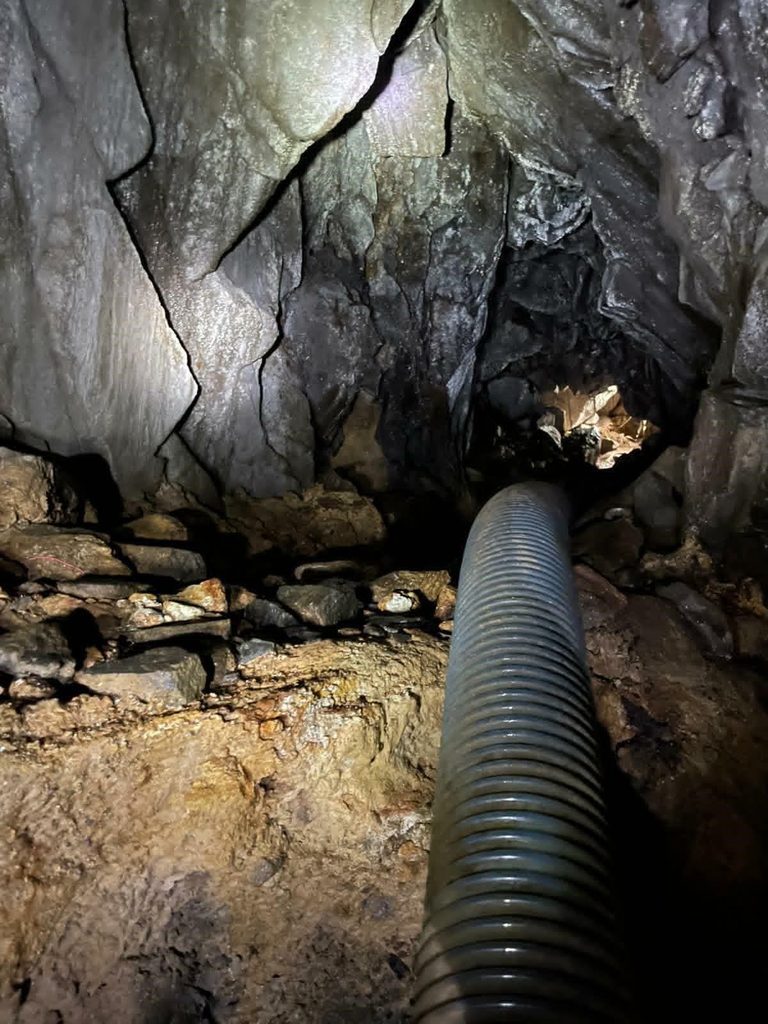
toxic (arsenic), snakes in the higher levels, unstable ground, green frogs with very low tolerance
Warning: For some time, there seemed to be a certain lack of interest on the part of both the authorities and the owner. However, after an influencer entered the site without having the slightest idea of how dangerous and toxic it was, the authorities tightened the security measures. There are now strict controls and a zero-tolerance policy. He simply went in with a selfie stick, wearing shorts and a tank top, without gloves or a mask. At one point, he even licked a wall whose coloured deposits alone were already a clear indication of potentially high toxicity. Do NOT enter. The site is clearly visible and monitored by cameras and PIR motion sensors, and apparently also, at least at times, by drones and security patrols.
One of Taiwan’s most well-known landmarks is the Thirteen Levels, a large site on the northern coast. It is already noticeable from the road, but can actually be seen from many different viewpoints. The area consists of two parts. In the evening, they are illuminated with floodlights.
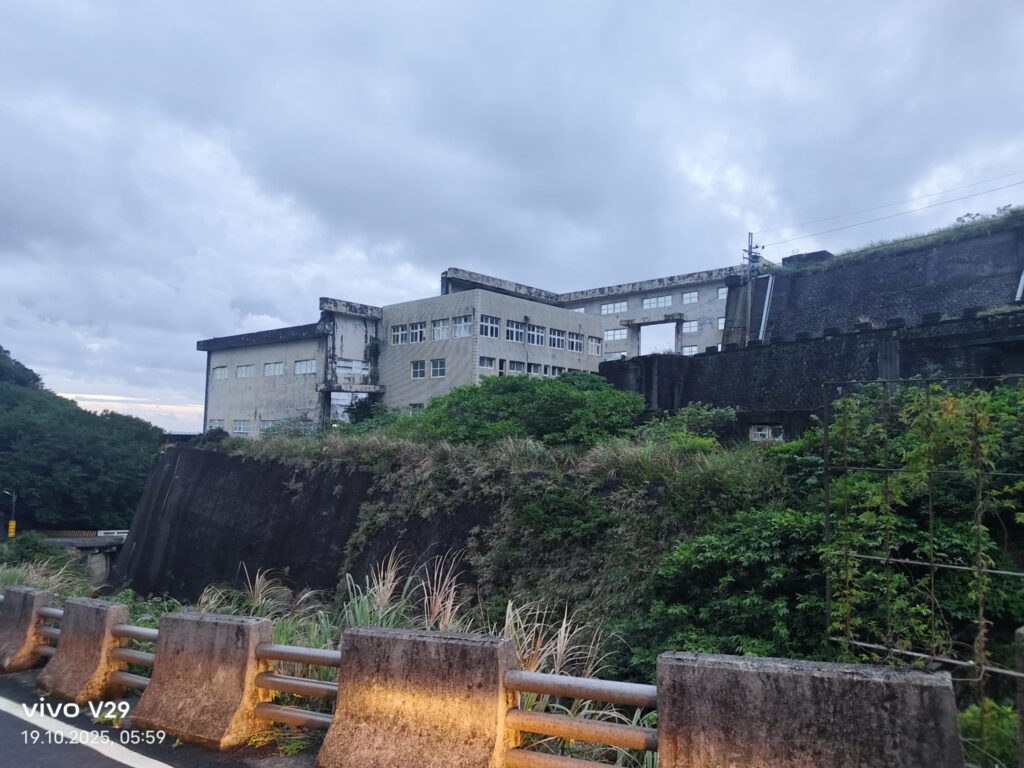
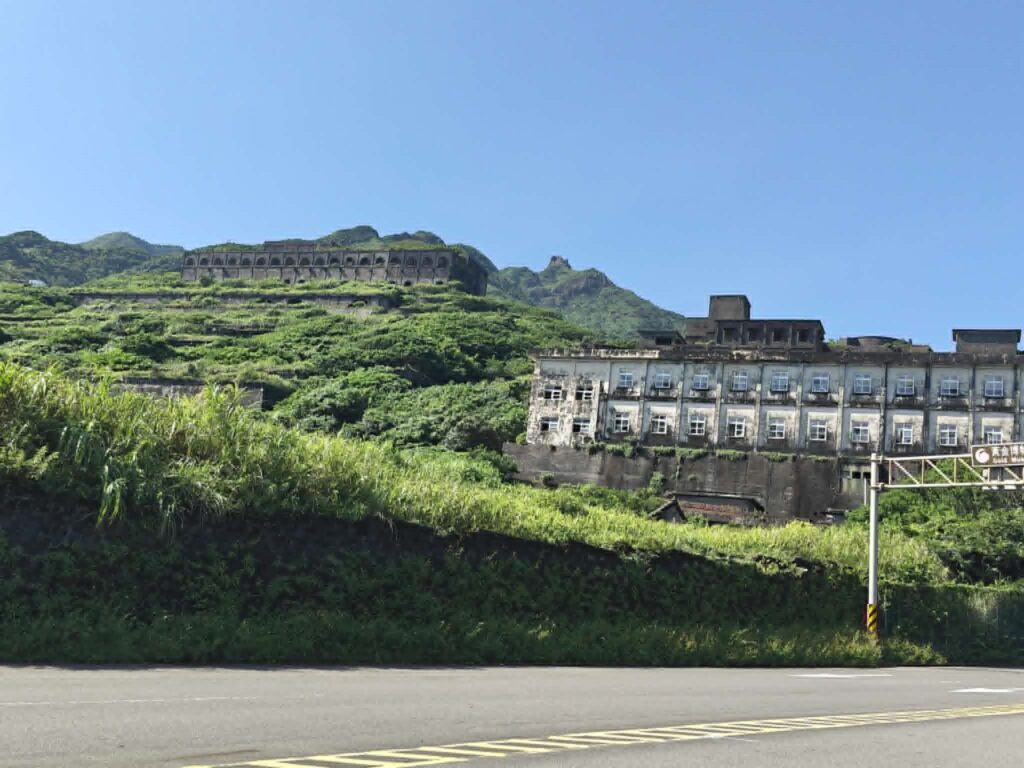
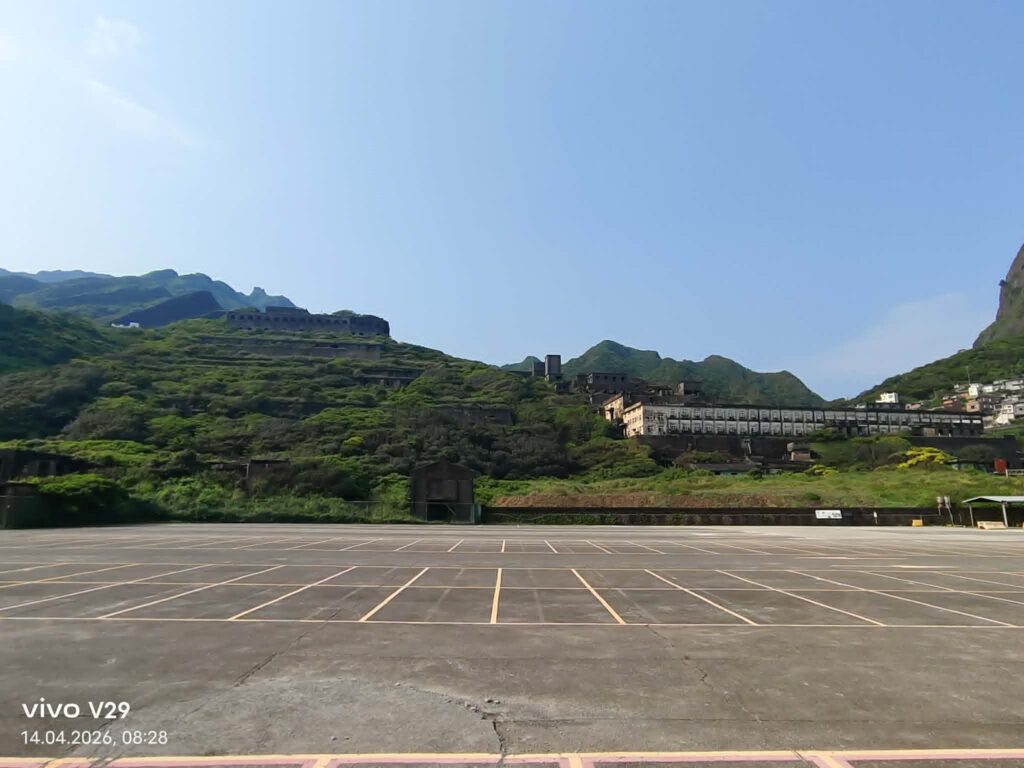
From the road, on the right, there are several workshops and processing facilities—you can still smell strong chemicals there. On the left are the Thirteen Levels, named after the fact that the facilities were once arranged across 13 levels, 18 levels in earlier times. Today, it is hard to imagine that a complete structure once stood here.
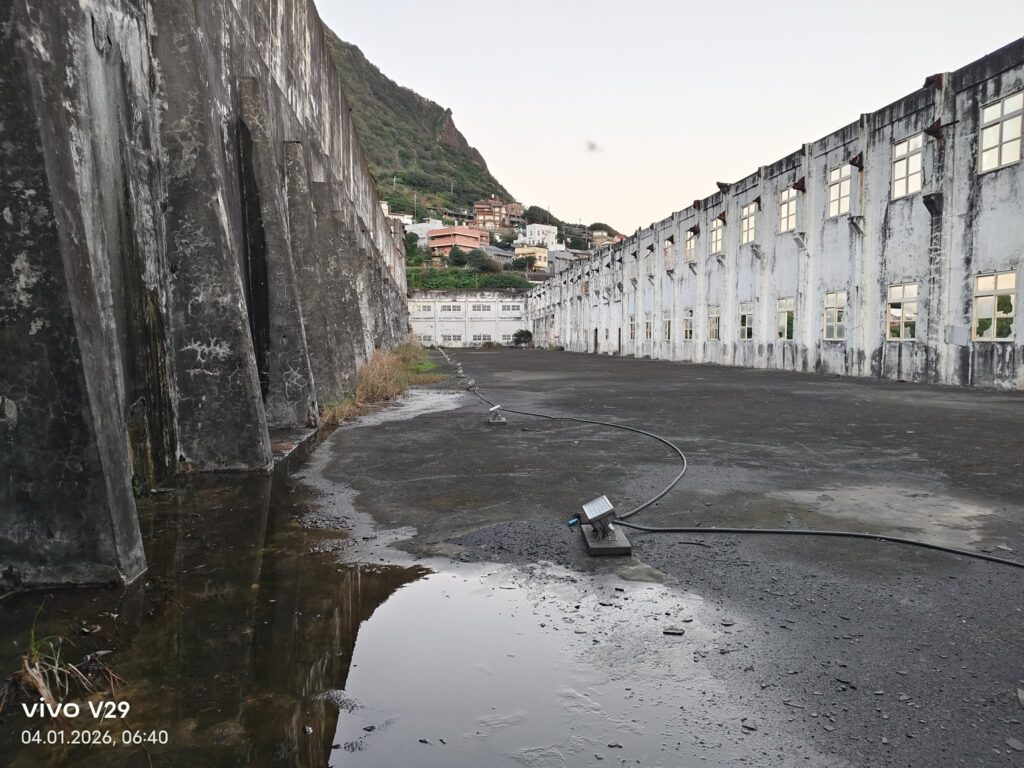
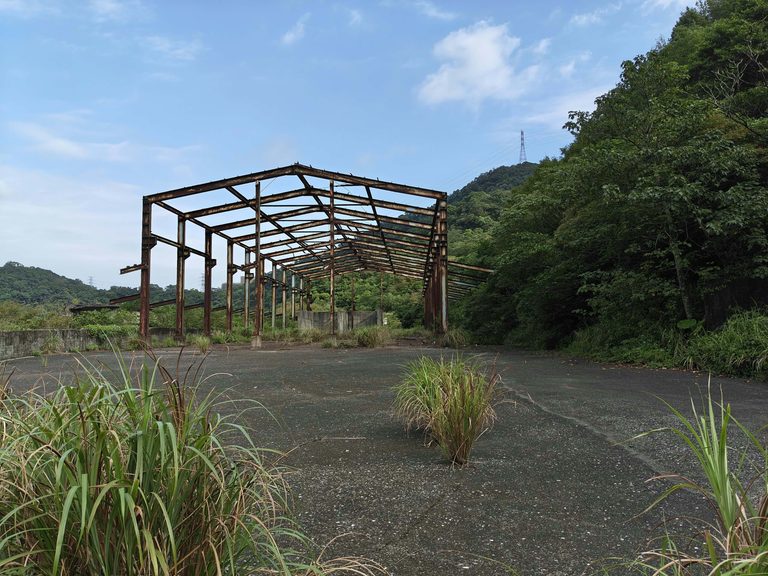
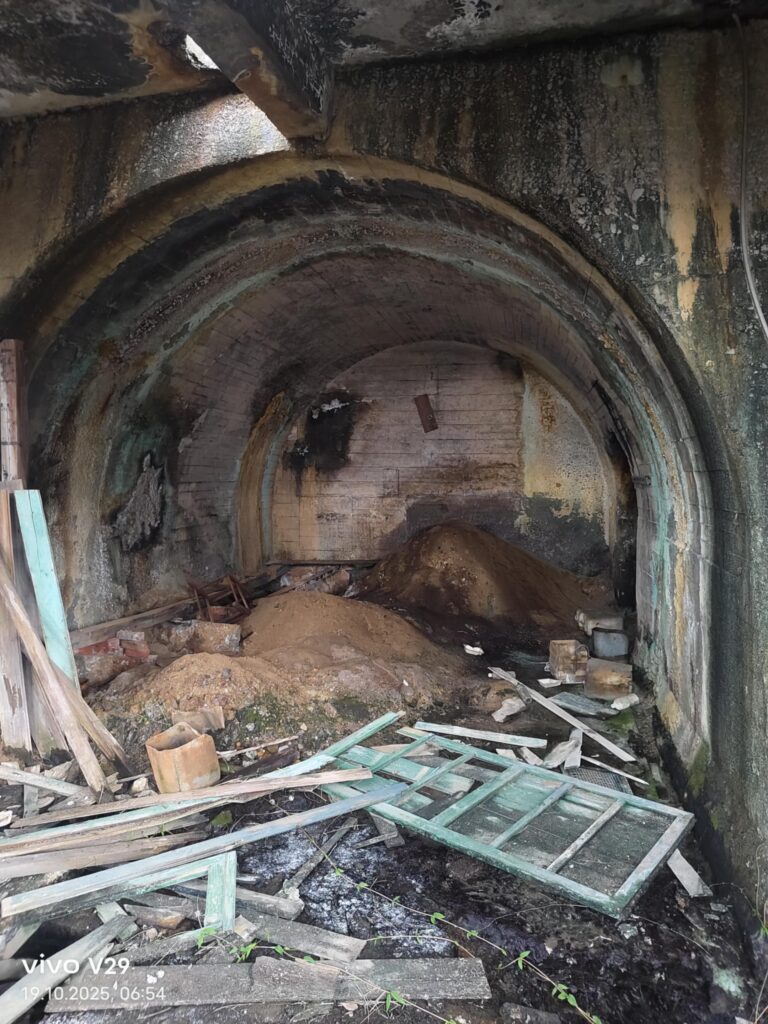
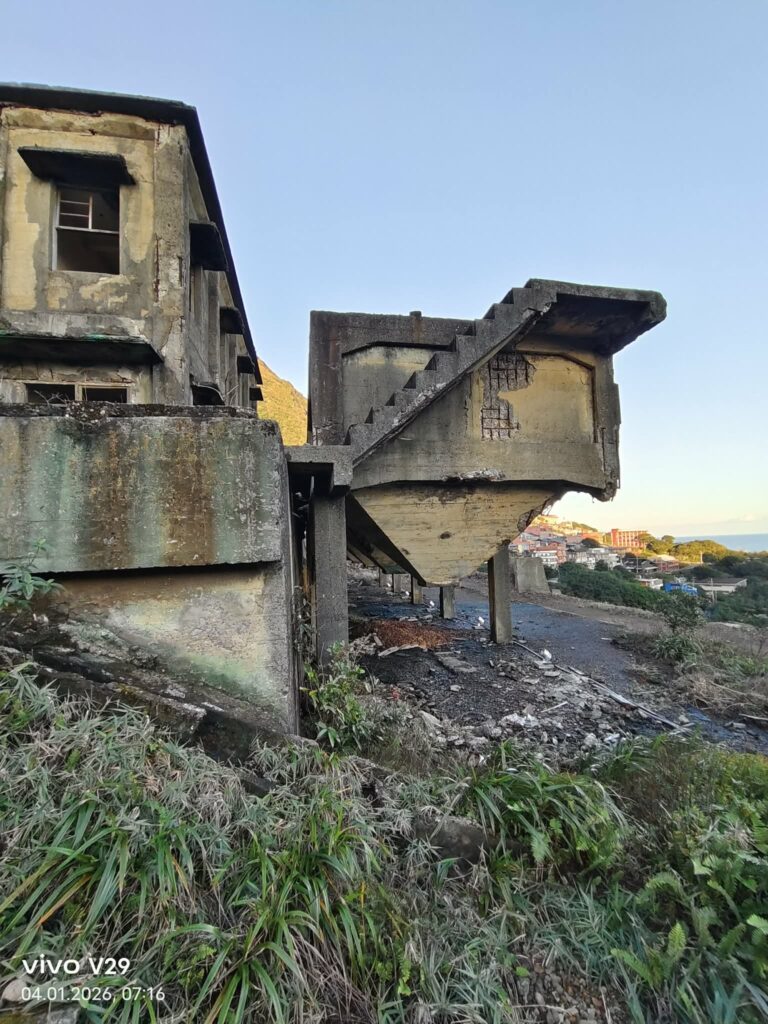
The main hall, which can be seen from many angles, has already been partially demolished; only the side walls remain. Around the main hall, there are some buildings and installations that can no longer be clearly identified. Even today, there is a repulsive chemical smell, and the entrances into the buildings are stained by chemicals.
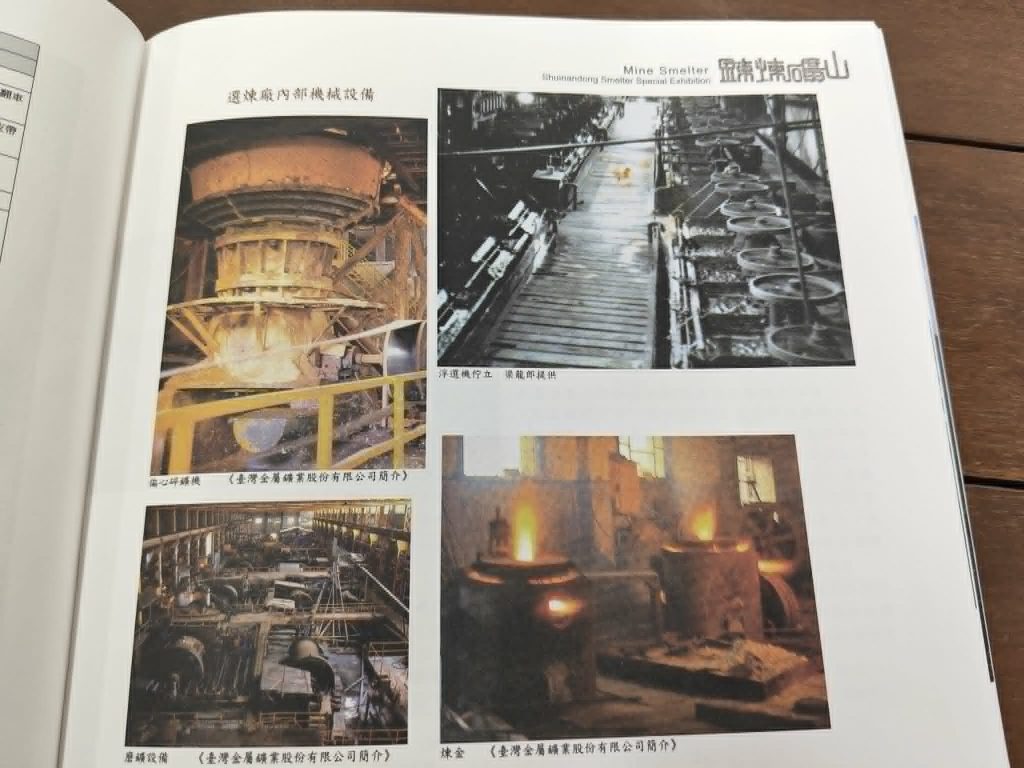
(Machinery in the ore processing plant.-Shuinandong Smelter Special edition)
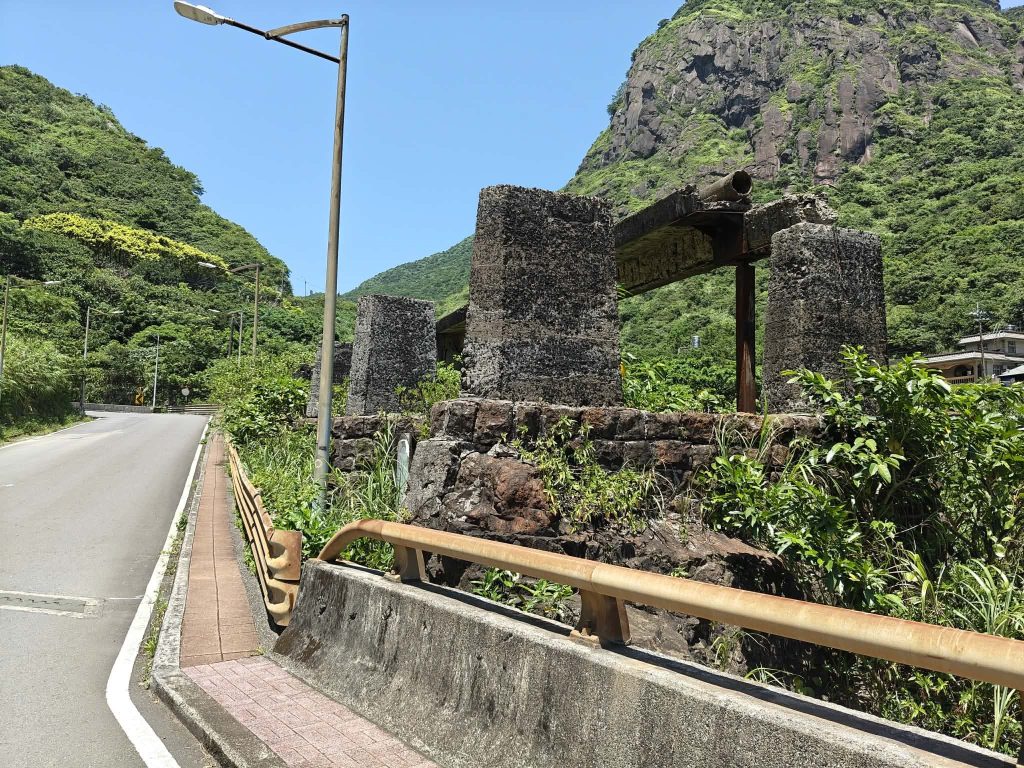
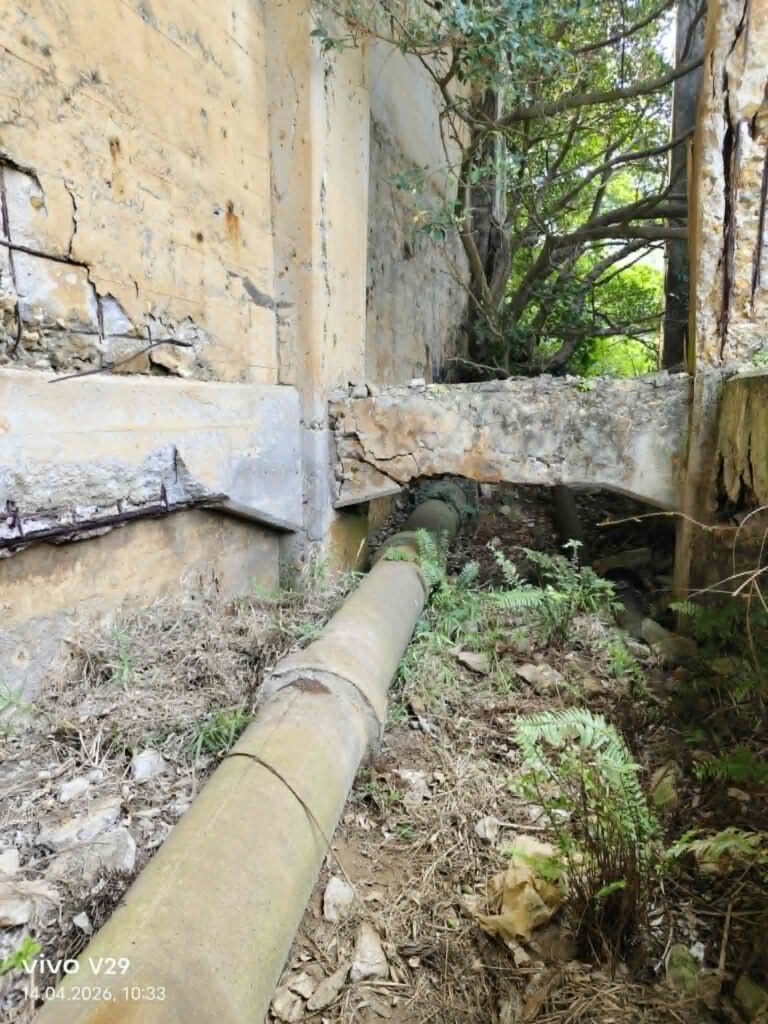
These are mining water channels and channel bridges. These bridges were not built for pedestrian or vehicle traffic, but for water. Specifically, they functioned as aqueducts within the historical mining and irrigation system of Jinguashi / Jiufen. The bridges allowed water channels to cross cuts, ravines, and streams without interrupting the flow. The water was needed for ore processing (washing and separation), to power machinery, as well as for cooling and cleaning. In Jinguashi, water was a key production factor in gold mining. The bridges were not standalone structures, but nodes within an extensive network that is no longer visible today.
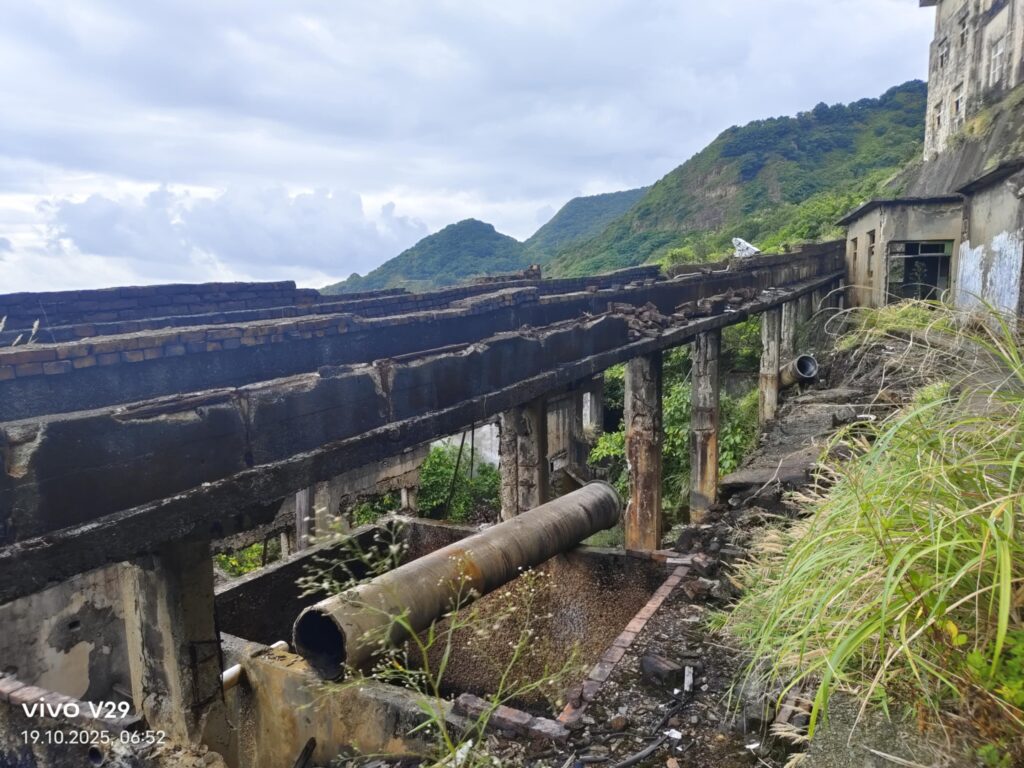
(inside)
(outside)
It is definitely better to use the external stairs.
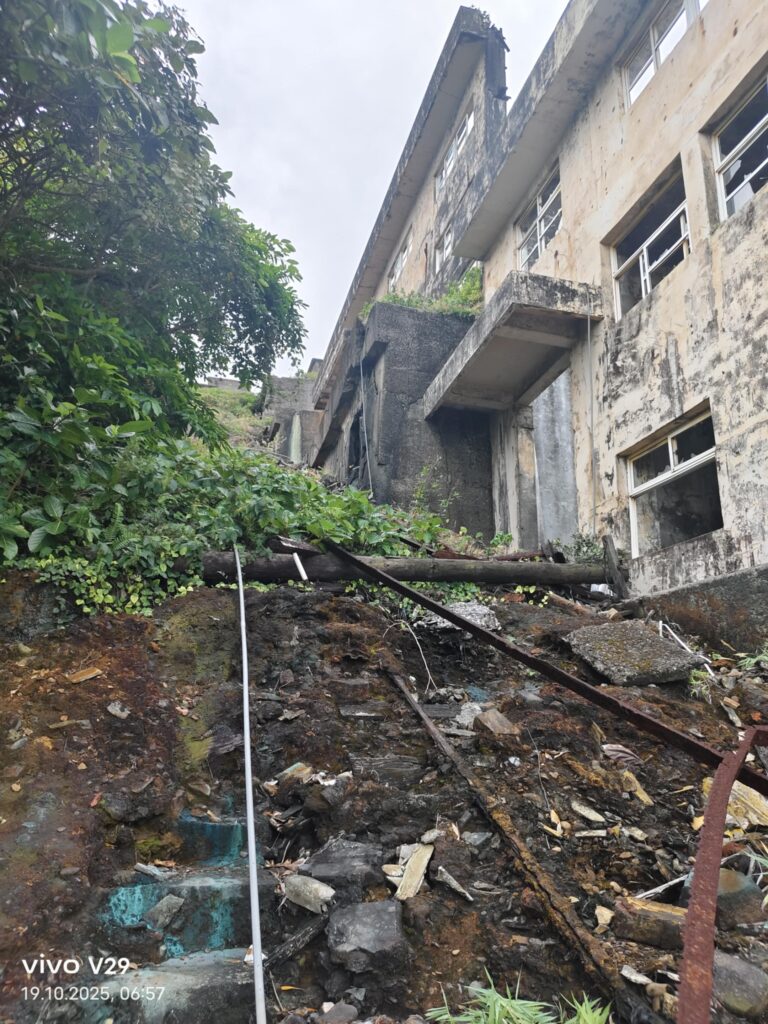
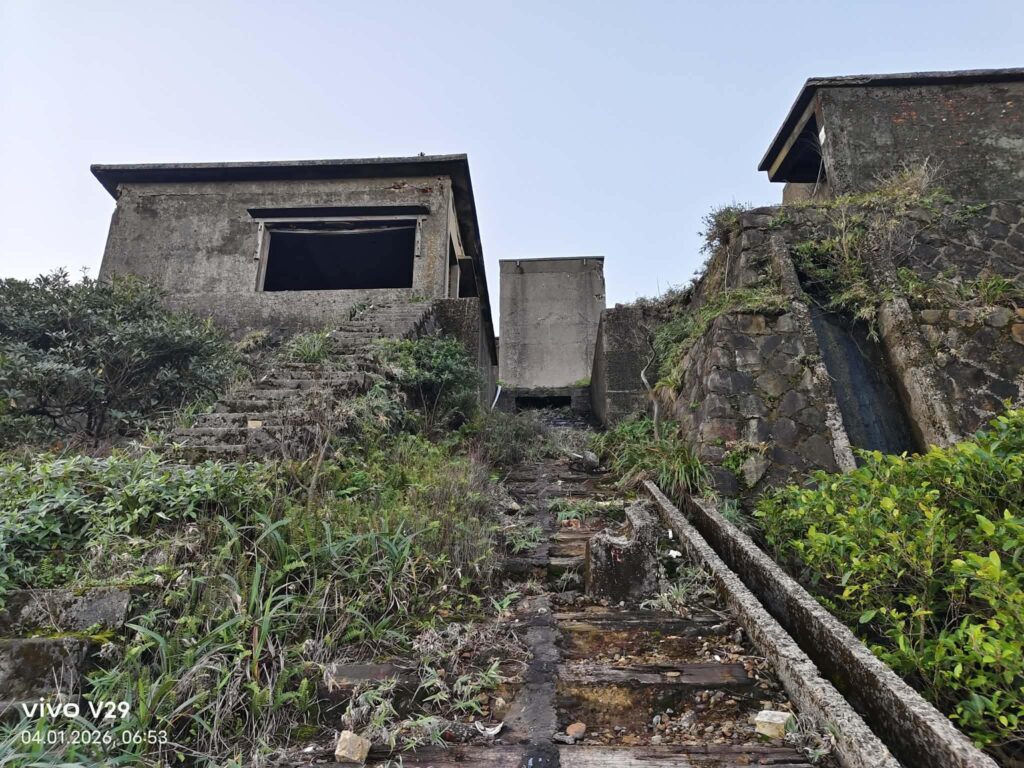
Many parts of the site were connected by cableways. An old picture:
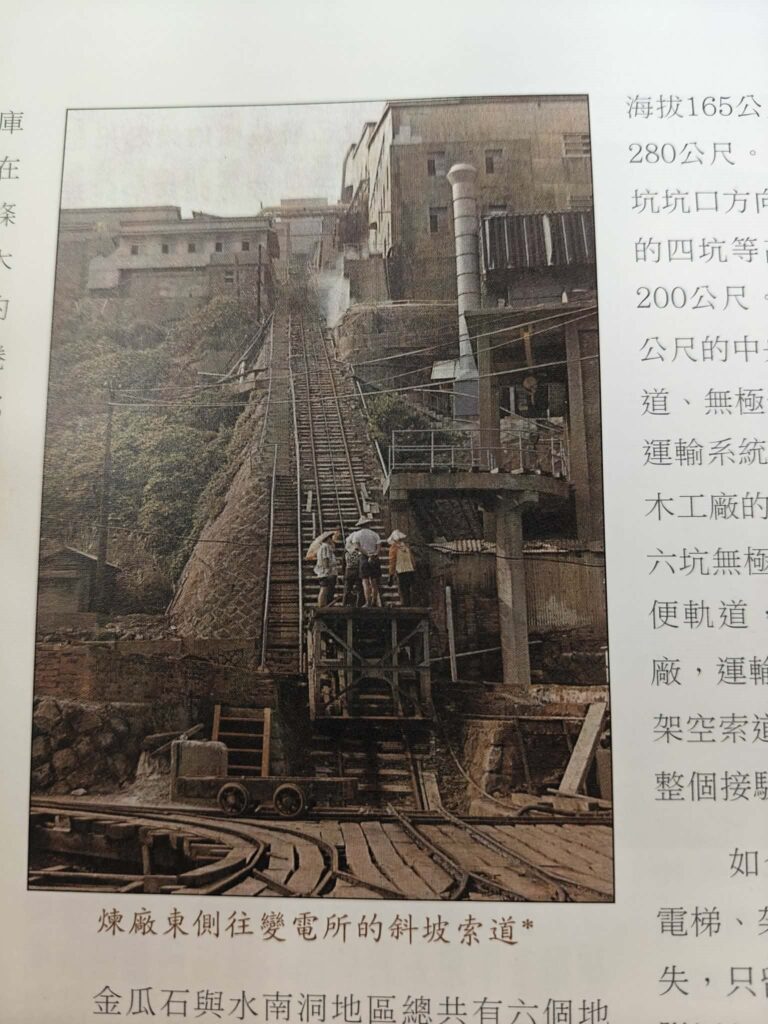
(懷念的故鄉金瓜石,courtesy to the museum)
I can’t identify the purpose of some of the buildings above.
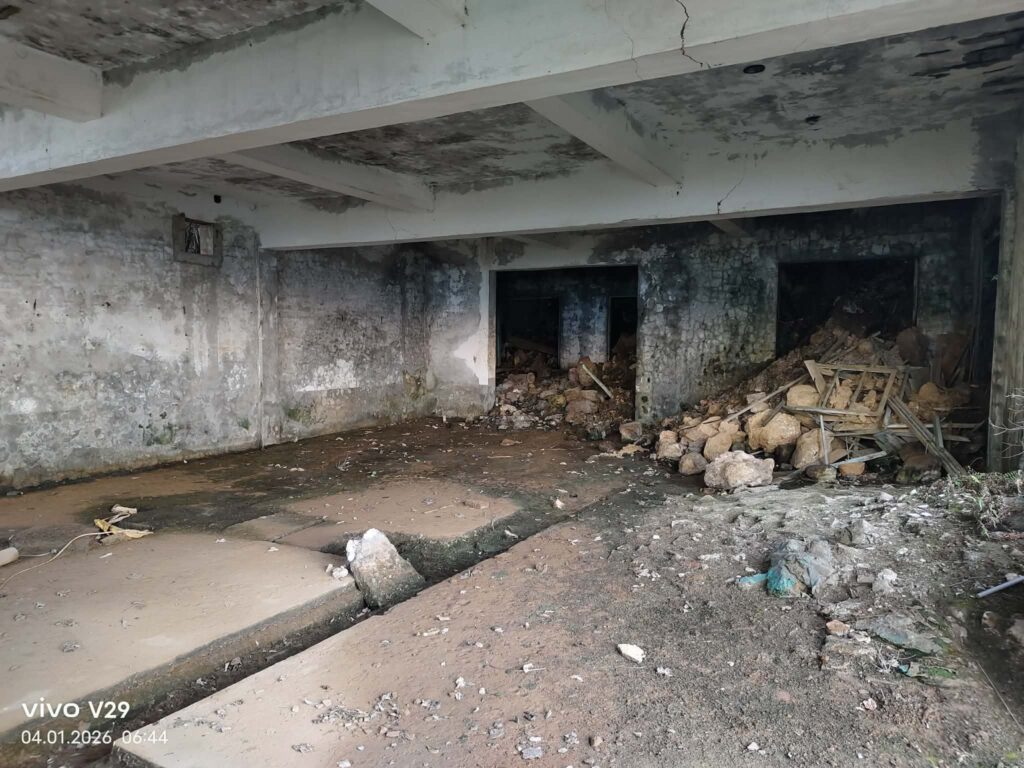
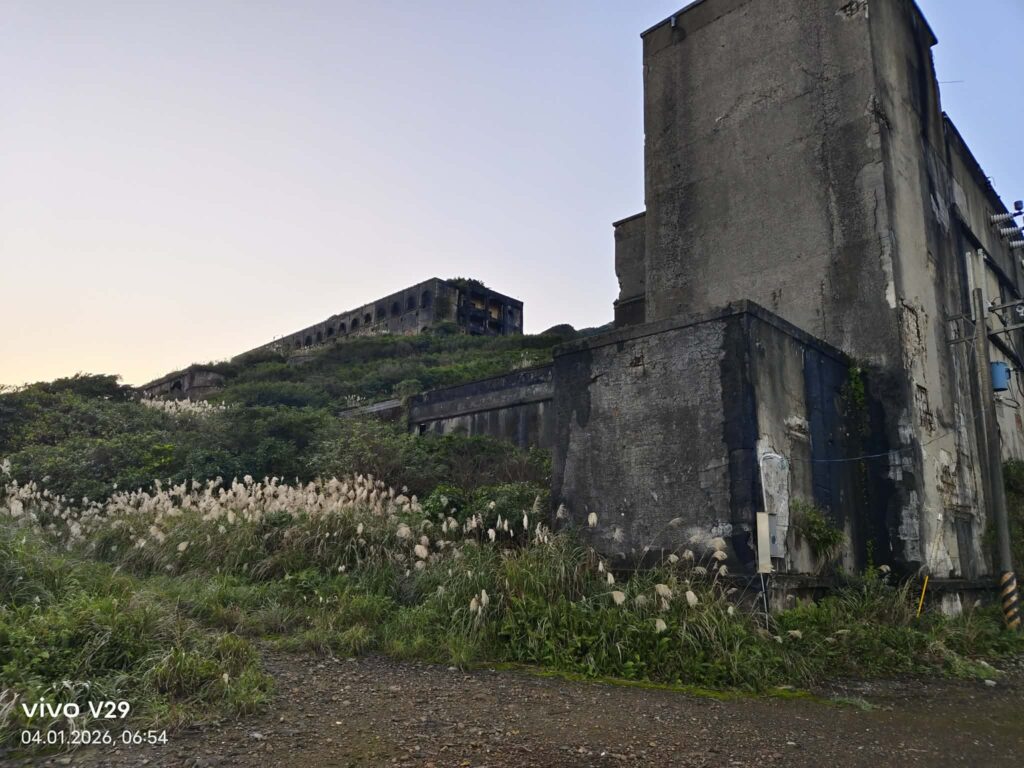
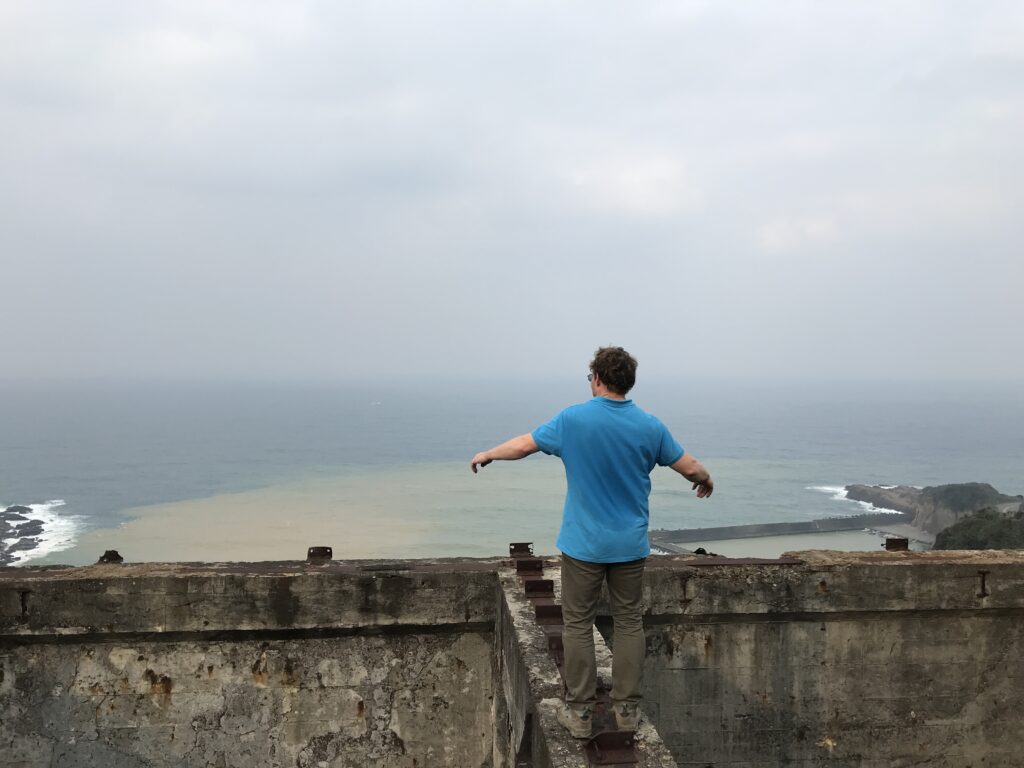
And now we reach the area of the actual Thirteen Levels. Those who dare can climb along the narrow partition walls on the uppermost level. Below, in the sea, are the famous deposits.
In the library of the Gold Museum, you can find numerous books, some of them also in English. Here are some:
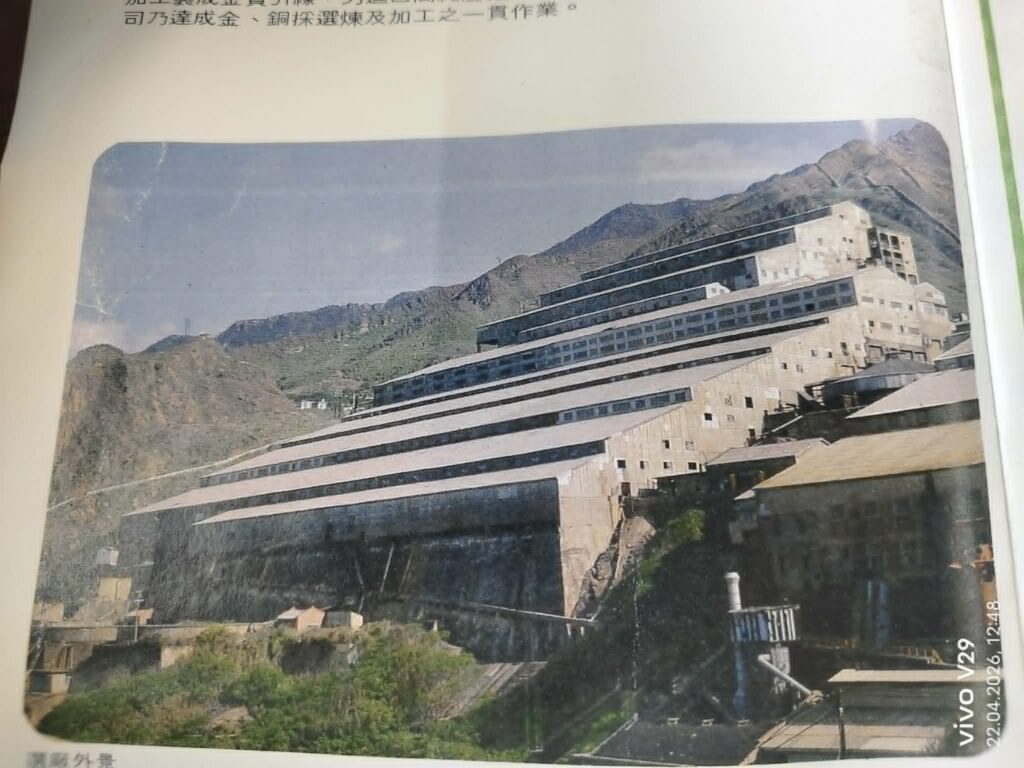
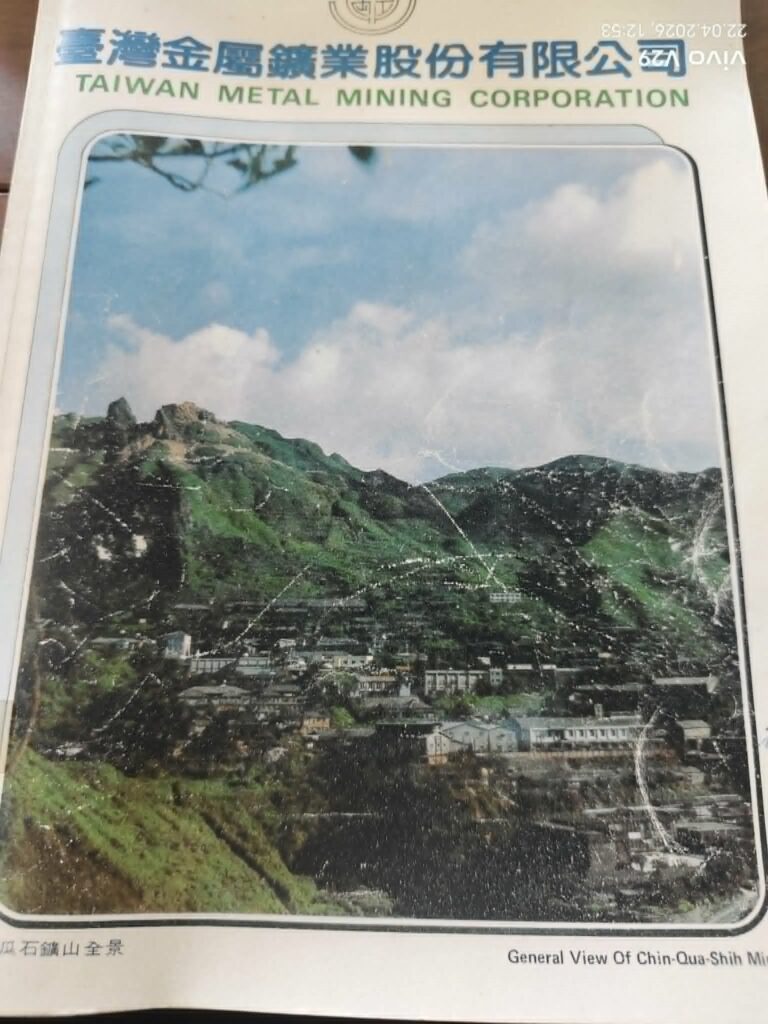
(Jingua Museum)
Both sides were once well connected. Today, everything on the left side is heavily overgrown. Within the site, it is no longer possible to tell which level you are on.
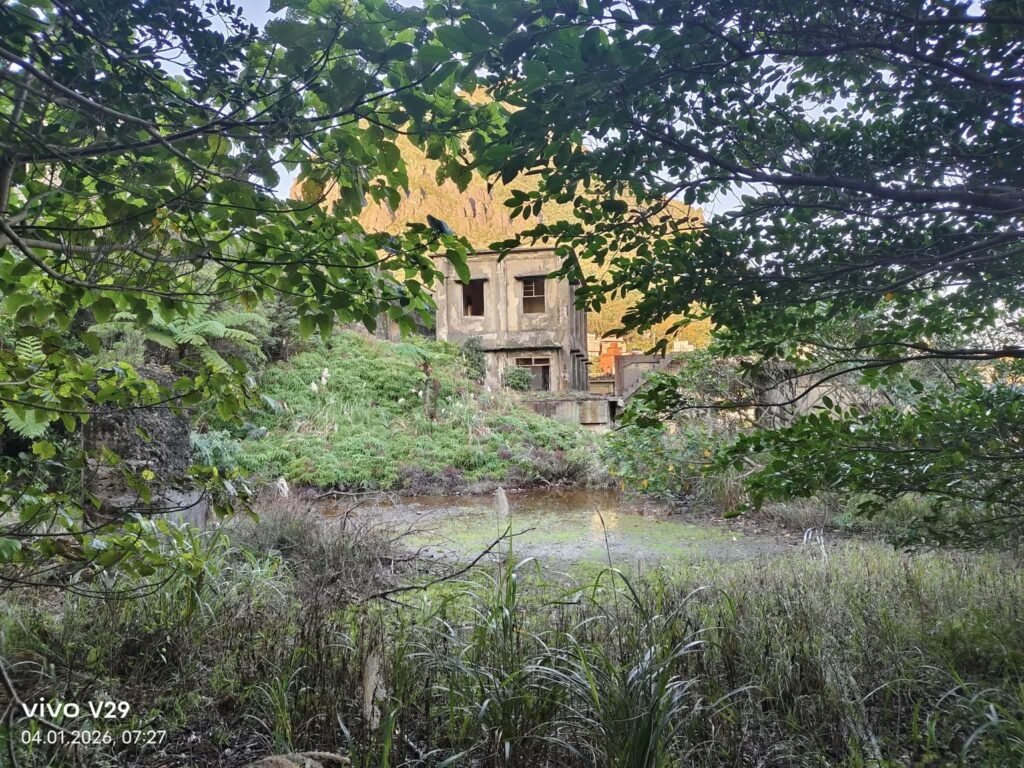
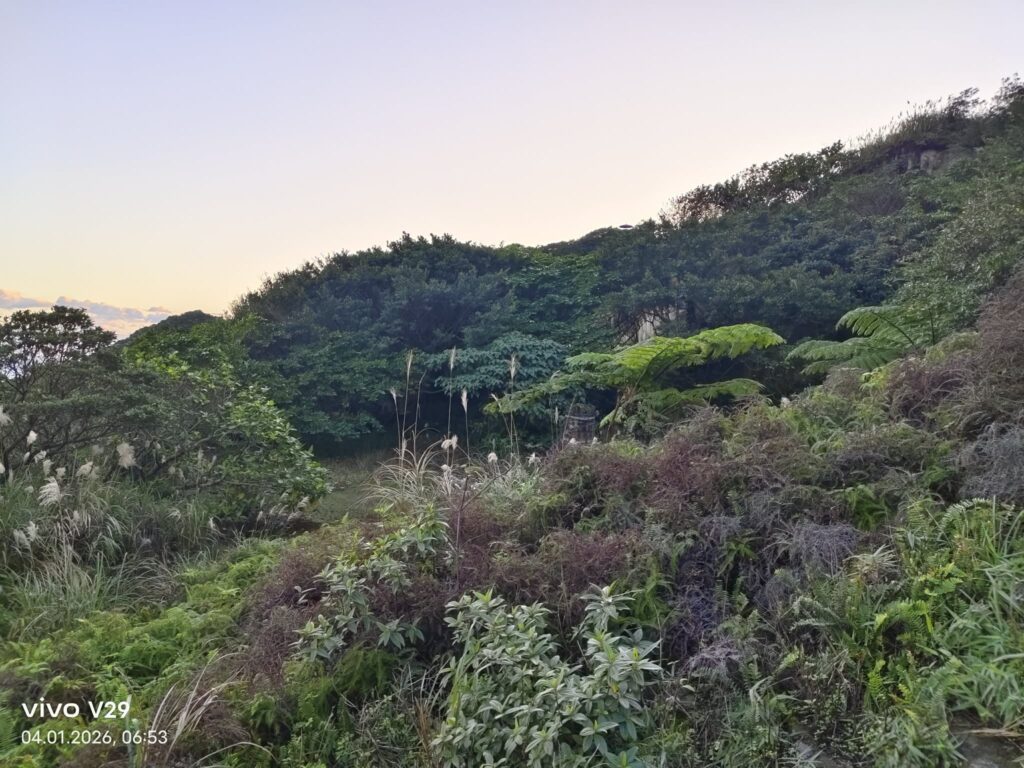
I did not find any entrances to the buildings on the individual levels — were they sealed off?
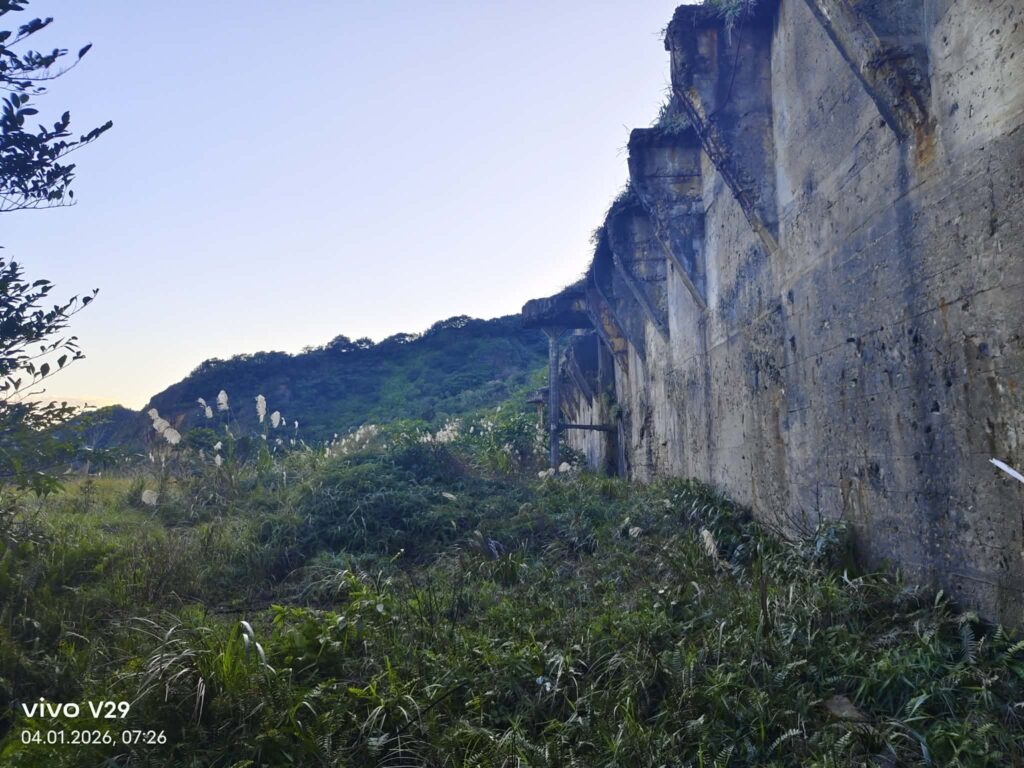
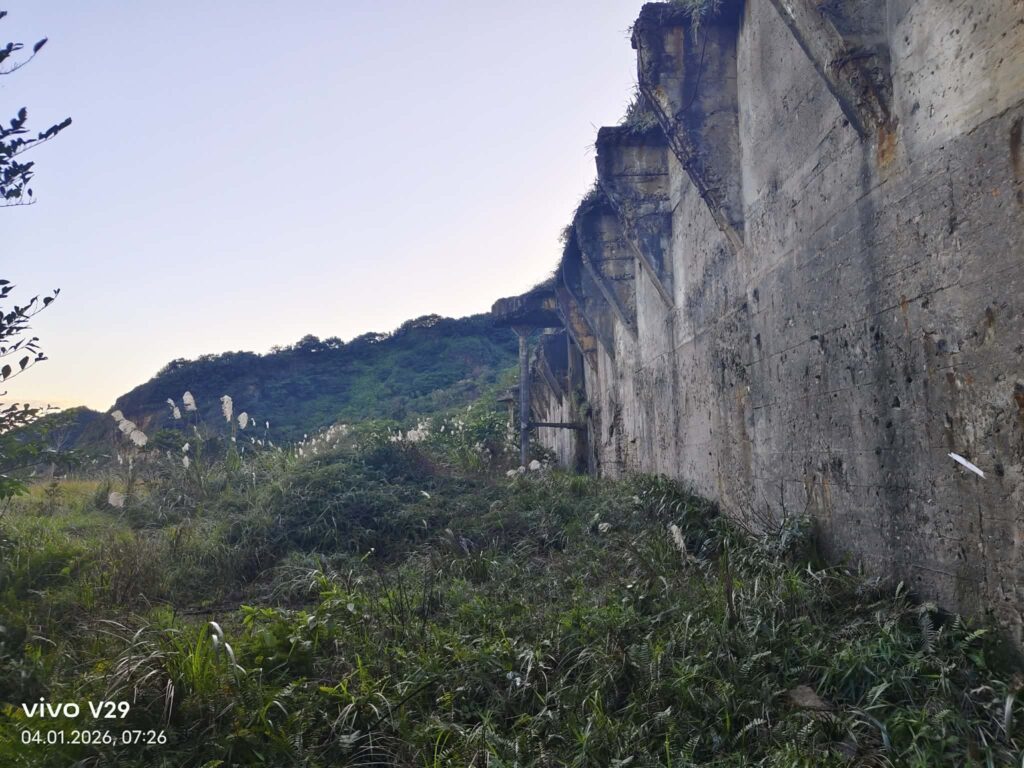
The levels also look different from one another.
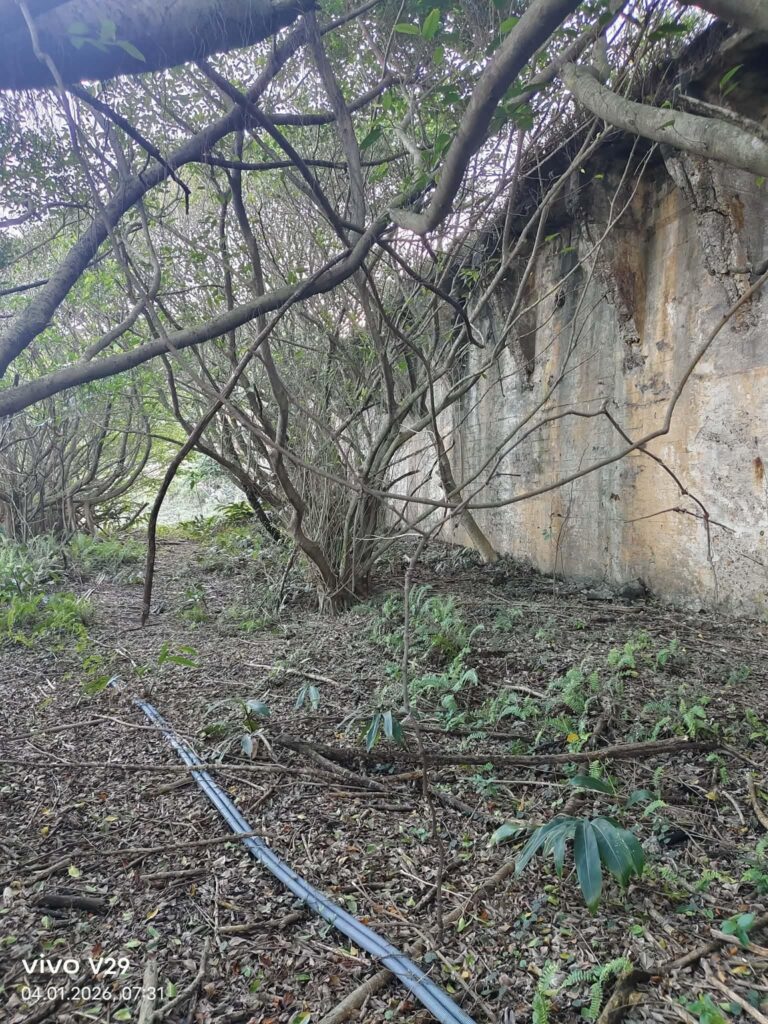
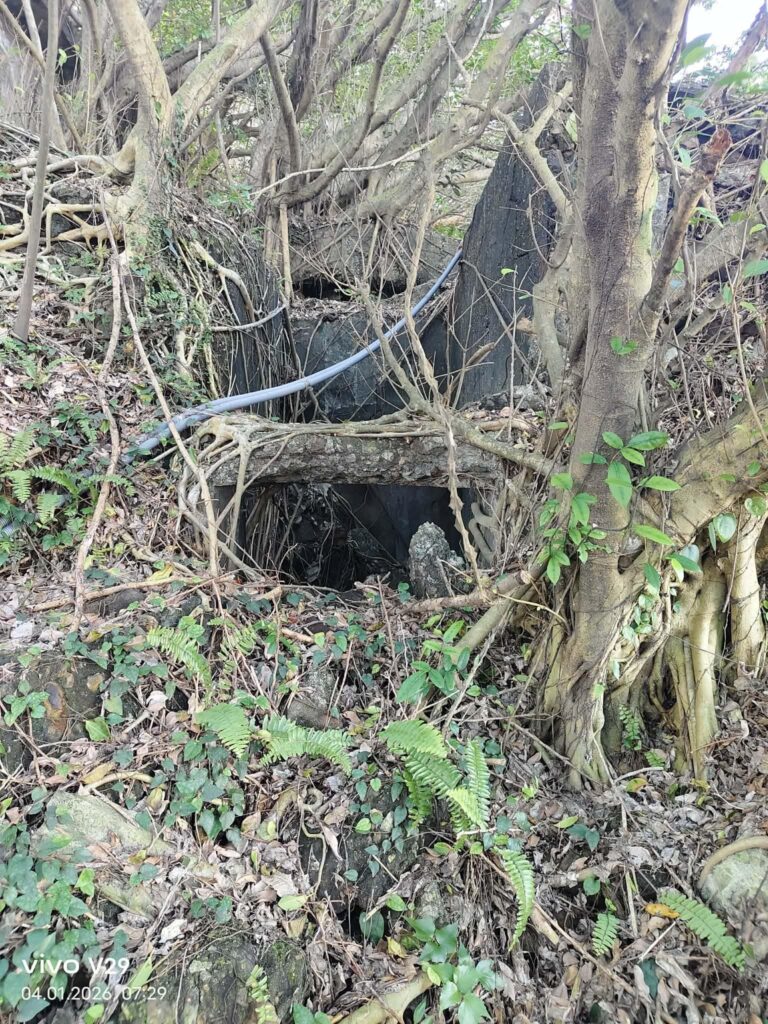
I only found a single entrance into a tunnel.
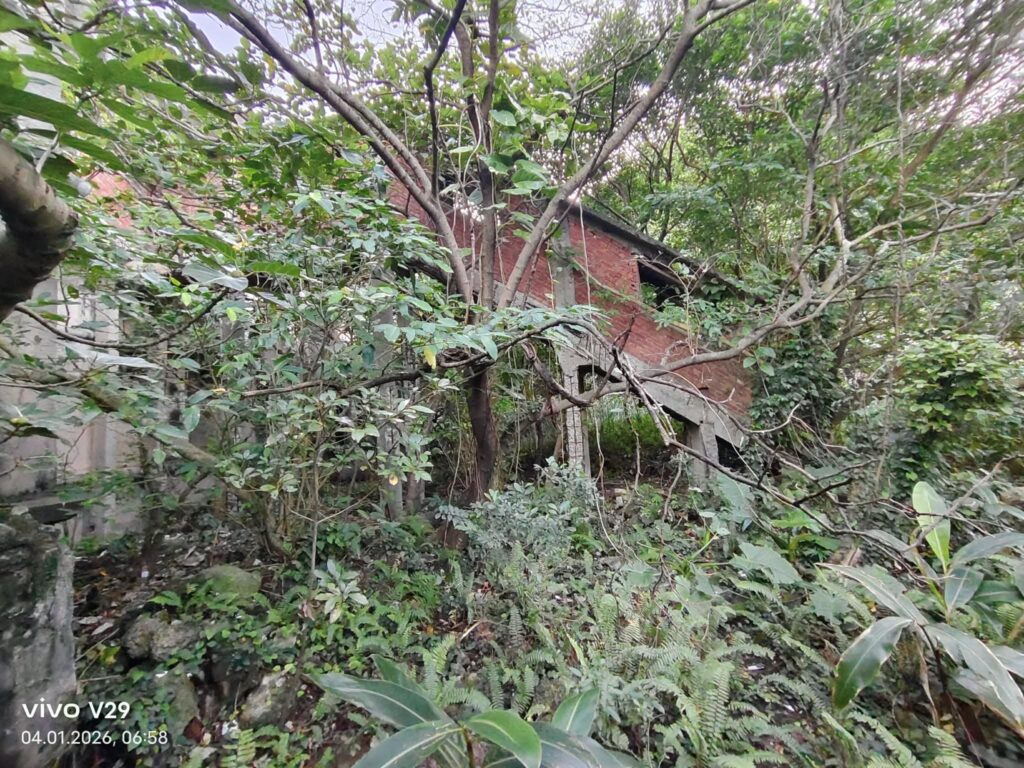
There is a large main building that can be entered.
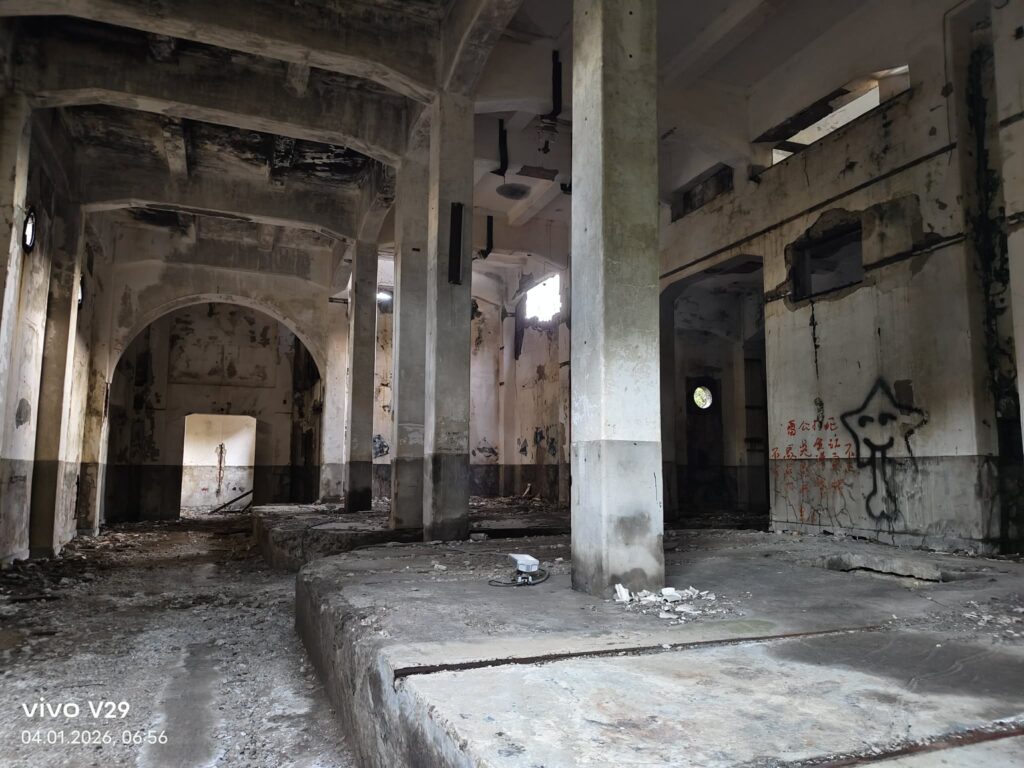
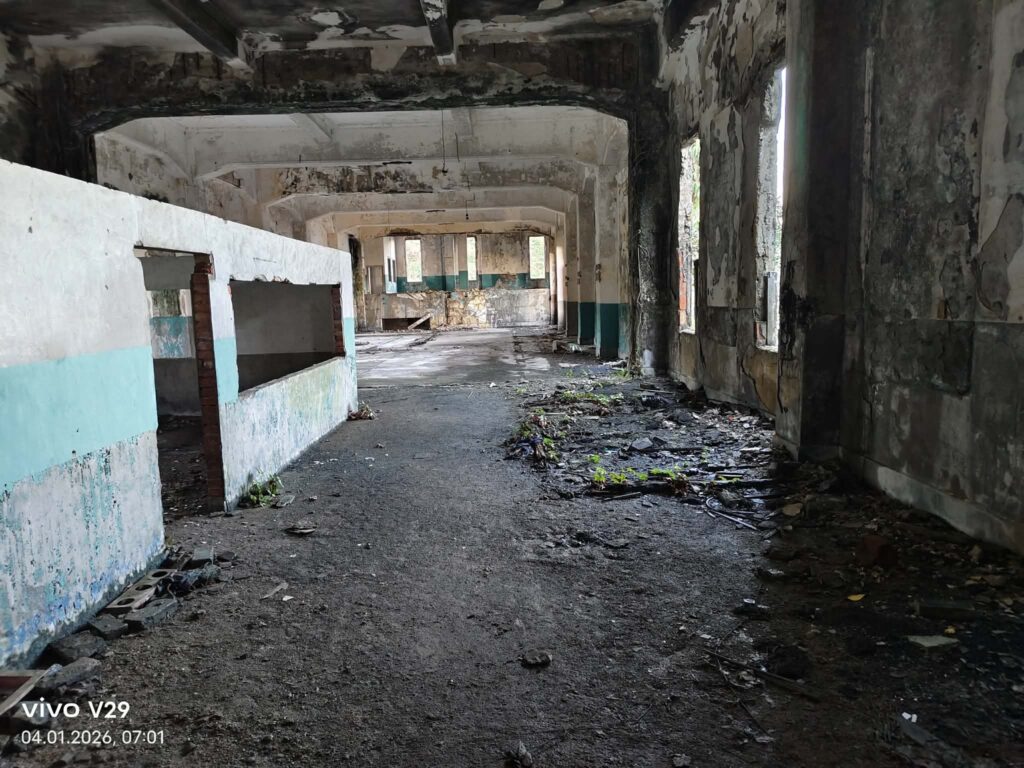
(the power plant for the factory and the settlement around)
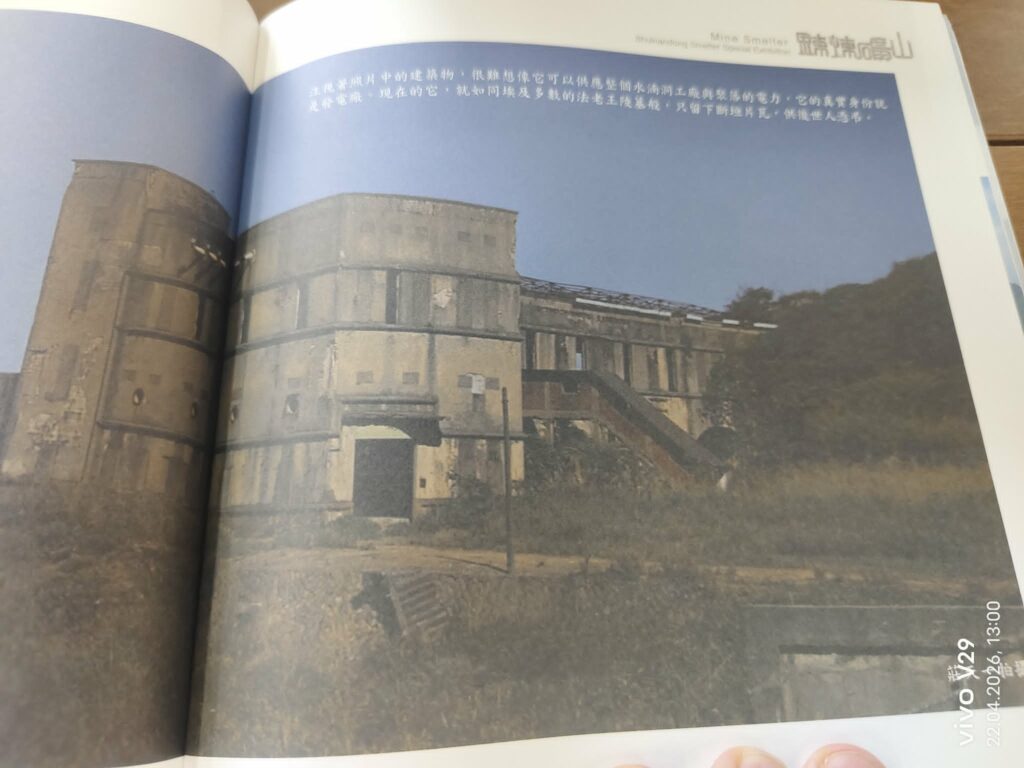
(an older picture/Jinguashi Museum)
Built by a Japanese mining company in the 1930s, the complex originally sprawled over a total of eighteen levels, with raw materials entering the top floor via a cableway and gradually moving downhill as they were tested, crushed, and mixed into a slurry from which the precious metals (mostly gold and copper) could be extracted.
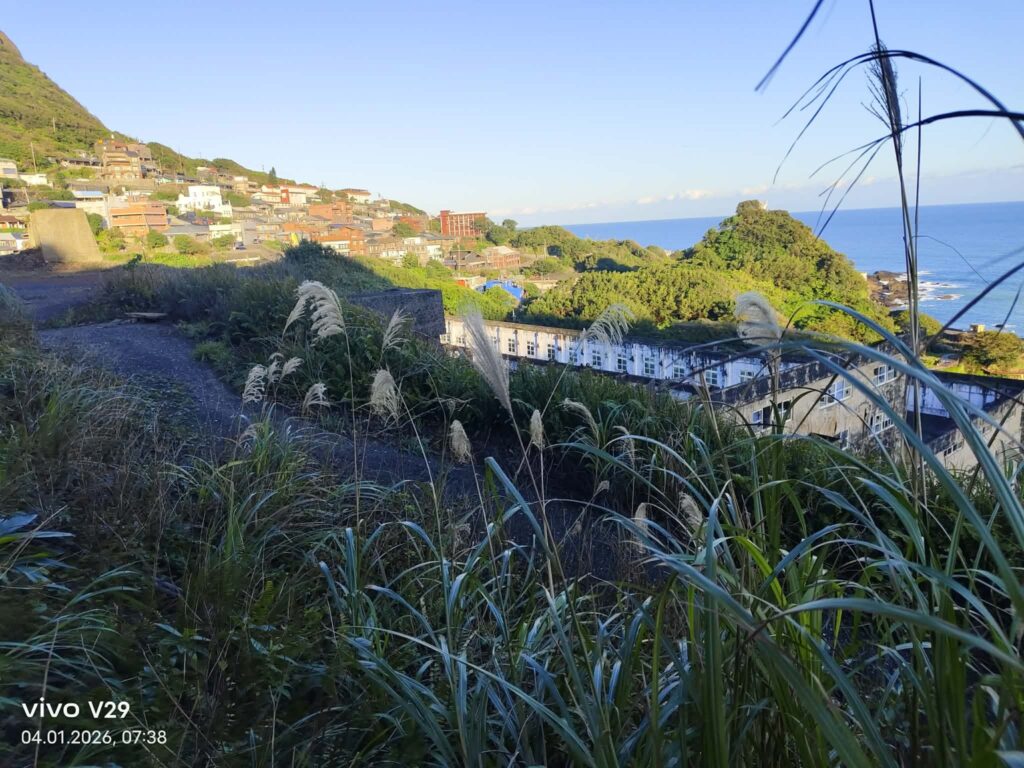
Much of the site was damaged by World War Two bombing, leading to an extensive round of repairs and upgrades, including the installation of the three gargantuan fume-extracting flues still visible on the hillsides above the plant. After its eventual closure in 1987, the facility became a favorite haunt of urban explorers and bands looking for a dramatic spot to record a music video, but these days it’s best viewed from the observation platform in the highway-side car park (formerly the location of the facility’s copper precipitation pools).
Different Visits
One of the most haunting visits was the first one at night. Darkness swallowed everything; the buildings rose like black silhouettes, looming ominously in the background. The path was unknown and treacherous, every step carrying a sense of danger. A heavy, acrid smell of toxins hung in the air—it was unmistakable that copper had once been produced here using poisonous substances. The place felt abandoned, yet disturbingly alive, as if it still held the echoes of its past. Just a few impressions. (Hey, good text as changed by ChatGPT)
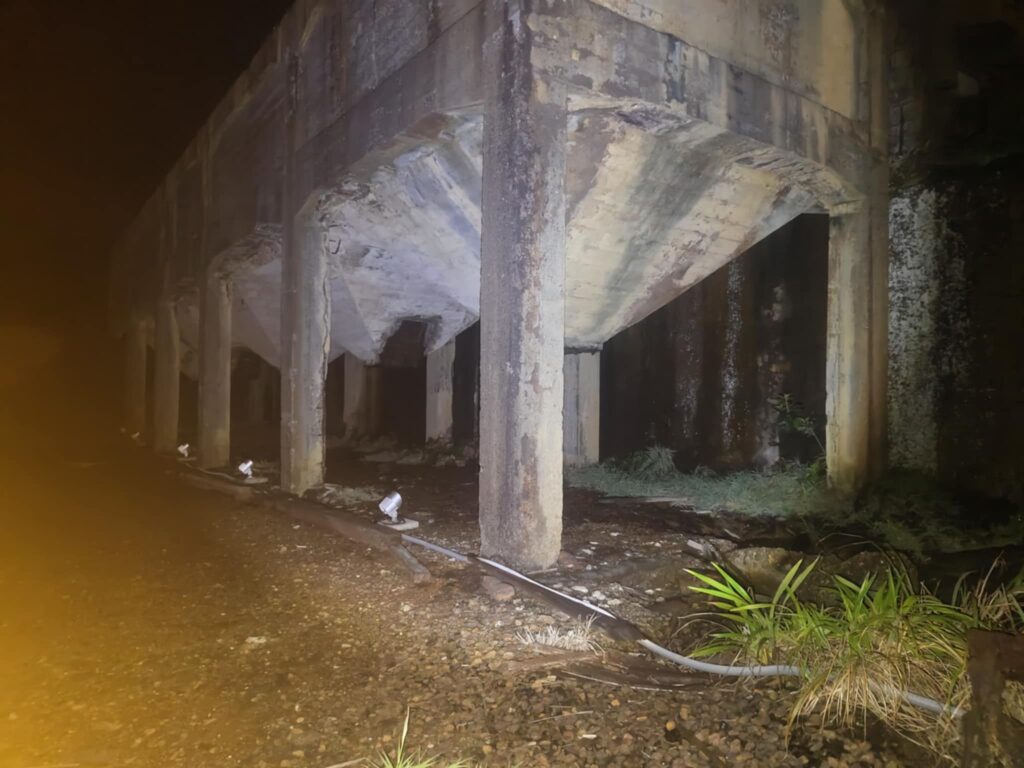
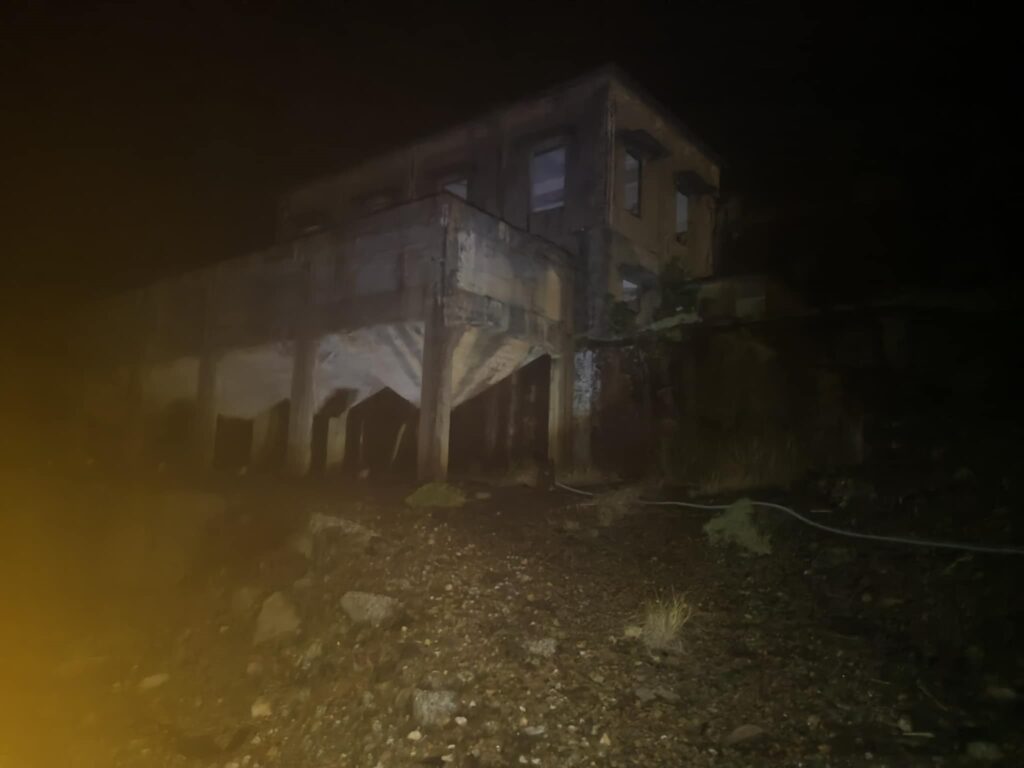
Much later, a second route opened up through the jungle. For a long time, it was unclear whether the path—and the hour of work with the machete—had been in vain.
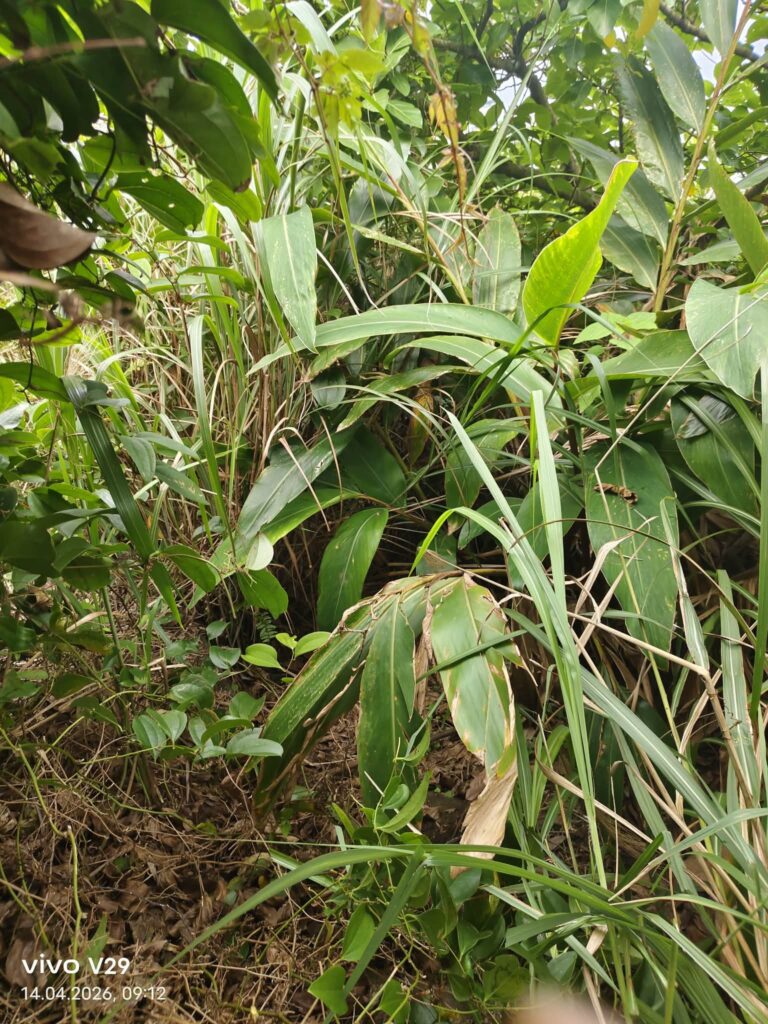
(remains of a paths)
Then this watchtower appeared.
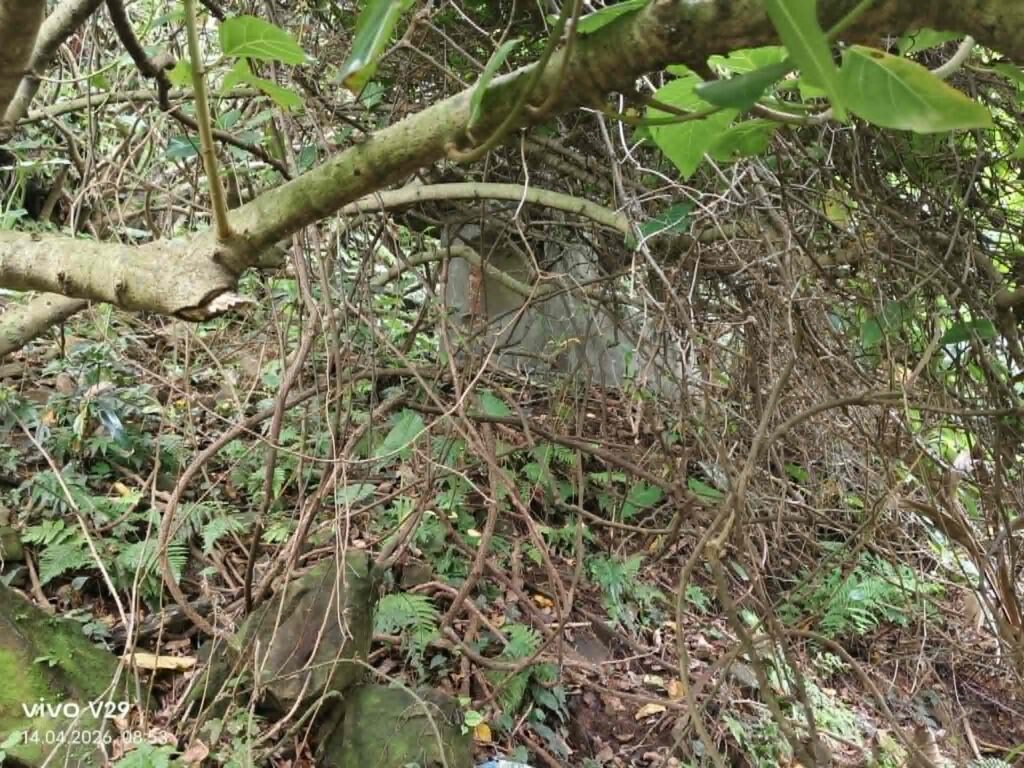
This part is truly overgrown; hardly anything of the different levels can still be seen.
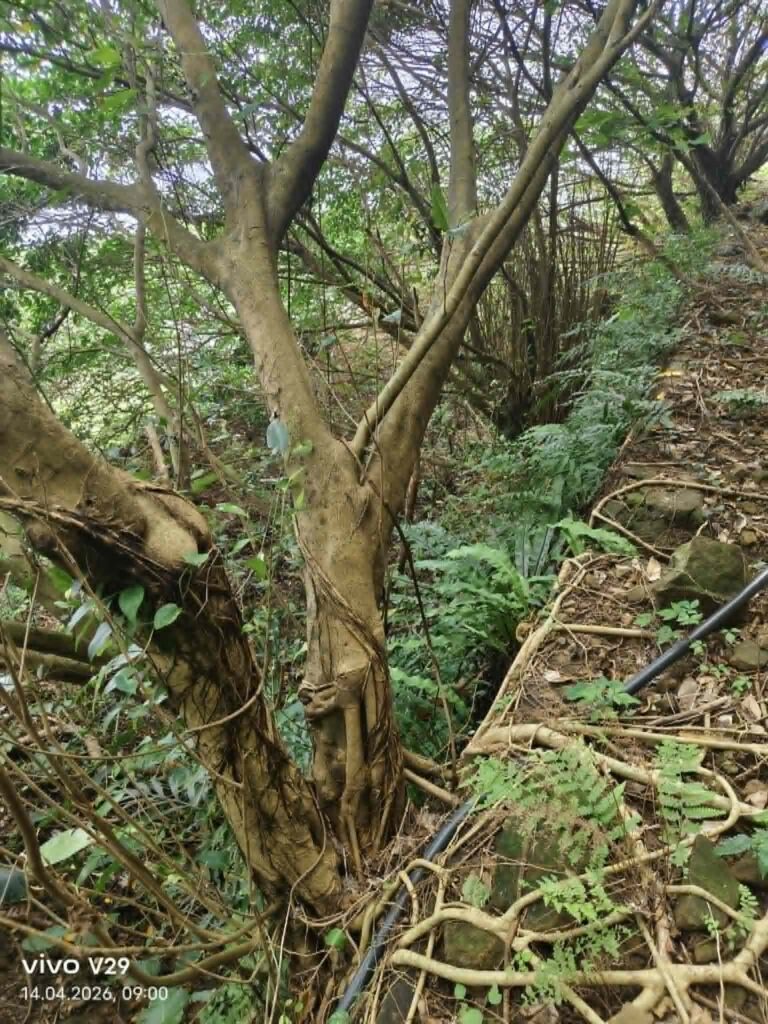
(one of the deeper levels)
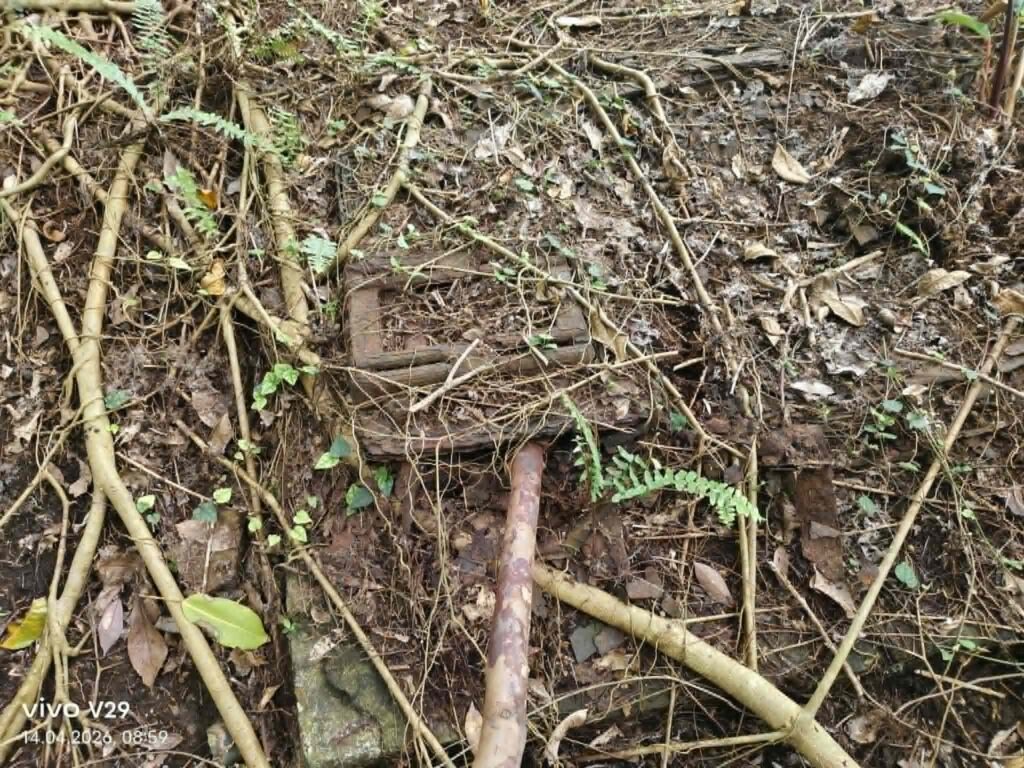
(An entrance?)
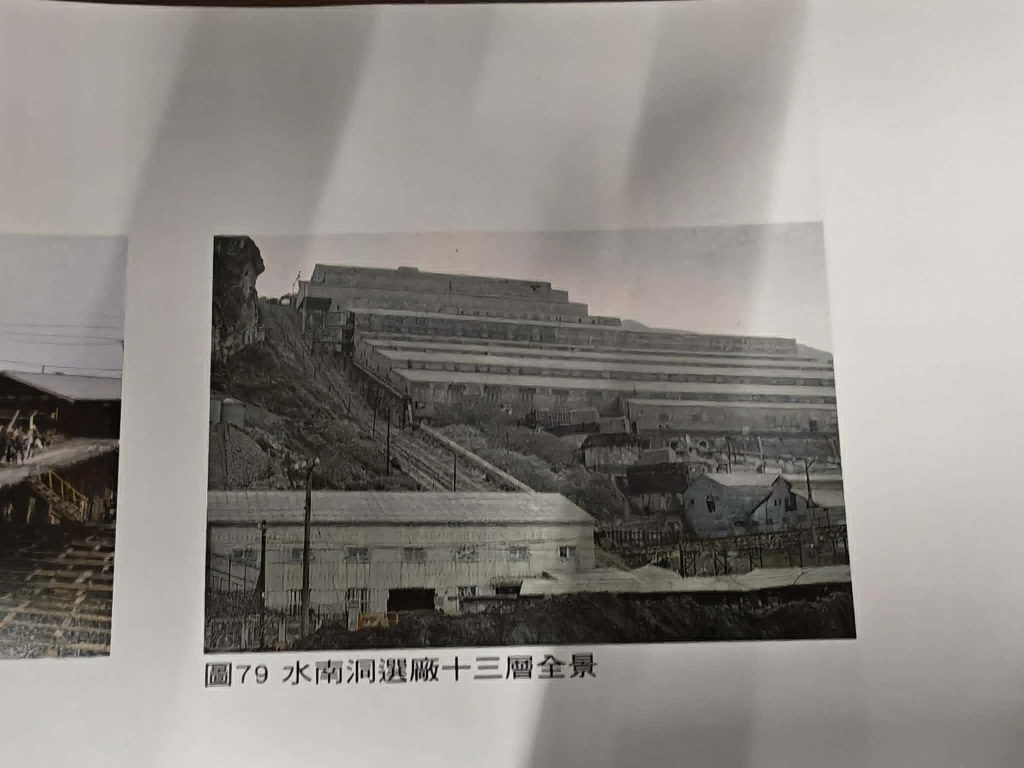
(華風展金瓜, The area shown above several decades ago.)
And now, ladies and girls,
I present the upper levels in their raw, untouched beauty. Another journey.
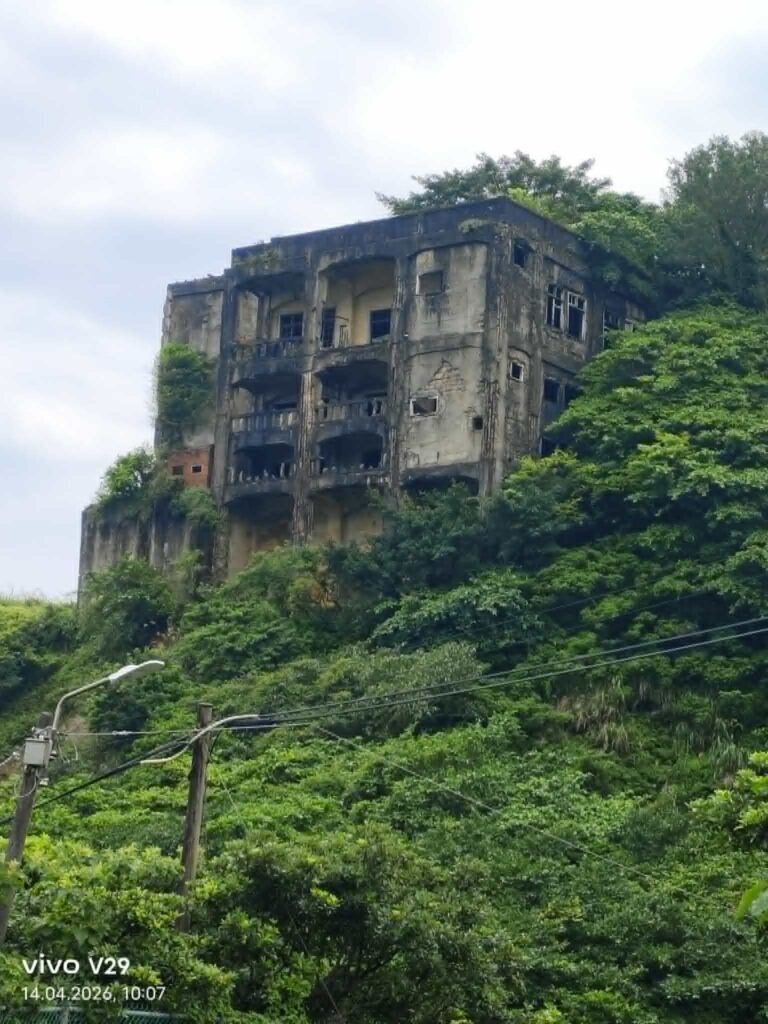
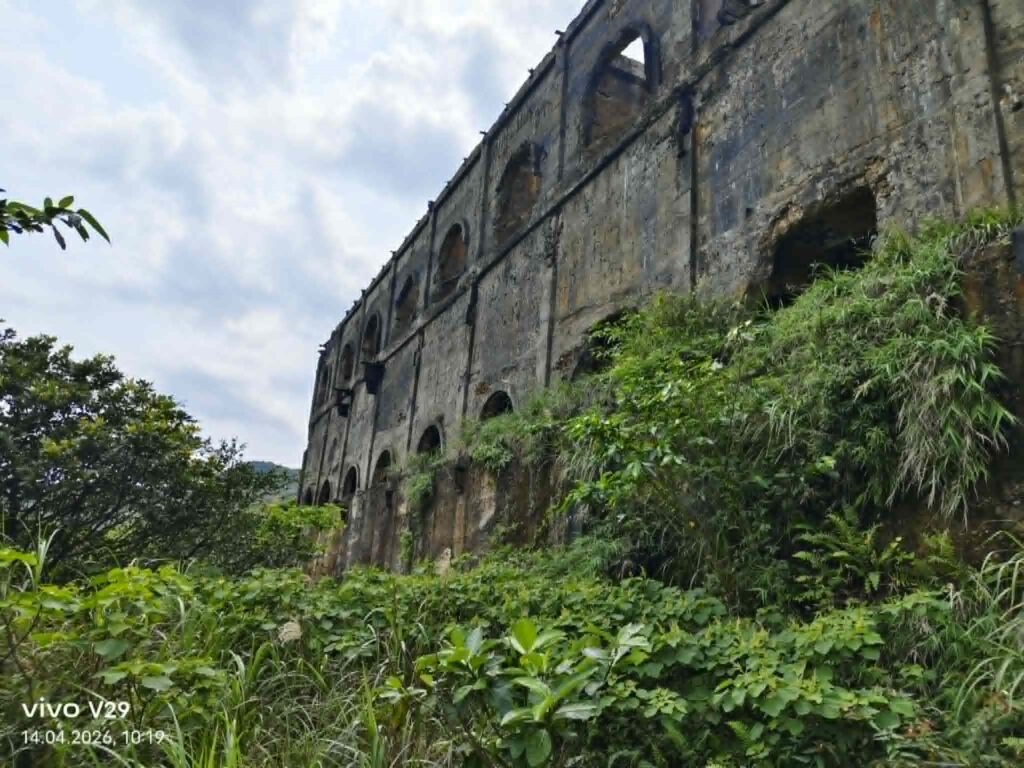
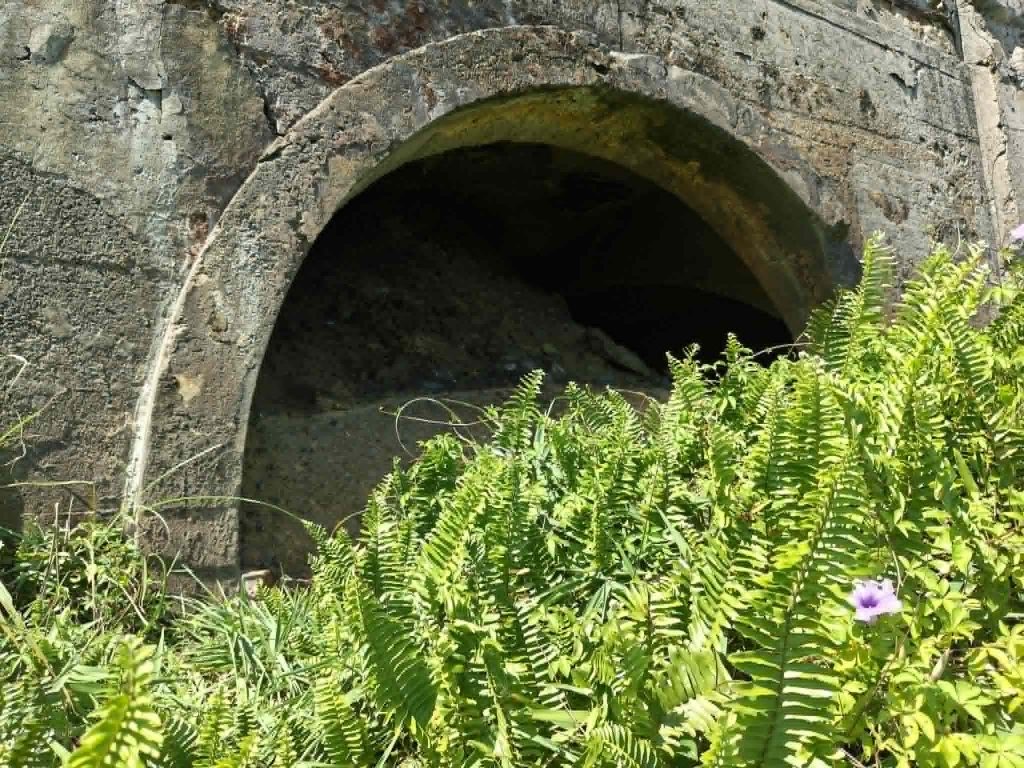
From here, the ore was transported downhill. Today, however, there no longer seems to be any way to enter.
HISTORY
In 1893, a large and rich outcrop of a gold ore deposit was first discovered in the area. The mine began formal mining operations in 1896. In 1931, large-scale mining and milling operations for gold and copper ores were started by the Nippon Mining Company. However, the copper concentrate, cement copper, and gold and silver precipitates were shipped to Japan for smelting. In 1944, mining and milling activities were closed due to ocean transportation difficulties at that time.
In 1945, the Chinese government established the “Taiwan Copper Mine Reconstruction Office” to take over the property. The office reopened the gold mining and cement copper recovery sections and constructed a smelter for the treatment of gold and silver precipitates to produce fine gold, as well as for the treatment of cement copper to produce electrolytic copper. In 1948, the office was reorganized as the “Taiwan Gold and Copper Mining Administration,” in 1955, into the “Taiwan Metal Mining Corporation.”
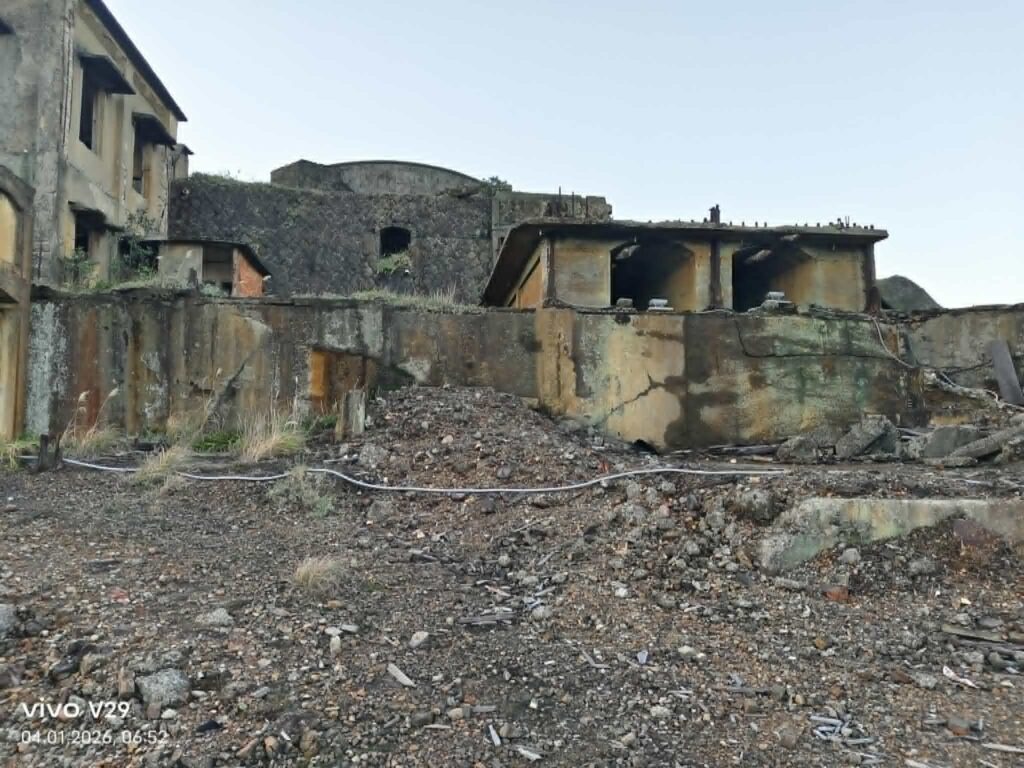
The main activities of the corporation at that time were still the mining and milling of gold and copper ores, with mineral semi-products sent to Japan for smelting and the final products shipped back to Taiwan for marketing. Later, it was considered that shipping raw copper materials to Japan for smelting was uneconomical. The corporation therefore completed the construction of a copper matte reverberatory furnace for processing raw copper materials into copper matte, as well as copper converters and copper refining furnaces for processing copper matte into copper anodes in 1972 and 1973 respectively.
Since 1975, the corporation began expanding its copper tankhouse equipment. At present, its copper smelter has a capacity of 15,000 mtpy of cathode copper. Moreover, between July 1977 and December 1980, the corporation completed the construction and trial operation of a new copper smelter complex at Li-Lao, which has a capacity of 50,000 mtpy of cathode copper and 175,000 mtpy of sulfuric acid.
In addition, 1974/1975, it completed the construction of a fabricating plant for copper and brass strips, as well as a gold and aluminum bonding wire plant for producing gold and aluminum bonding wires respectively. Since then, the corporation has achieved the goal of an integrated operation for gold and copper, from mining and milling to smelting and fabrication.
https://taiwaneverything.cc/2023/06/02/ruifang-district/?utm_source=chatgpt.com
https://newtaipei.travel/en/attractions/detail/111576
https://travelintaiwan.net/2023/06/ruifang-district/?utm_source=chatgpt.com
pictures by Mr. X
copyright Claudius Petzold