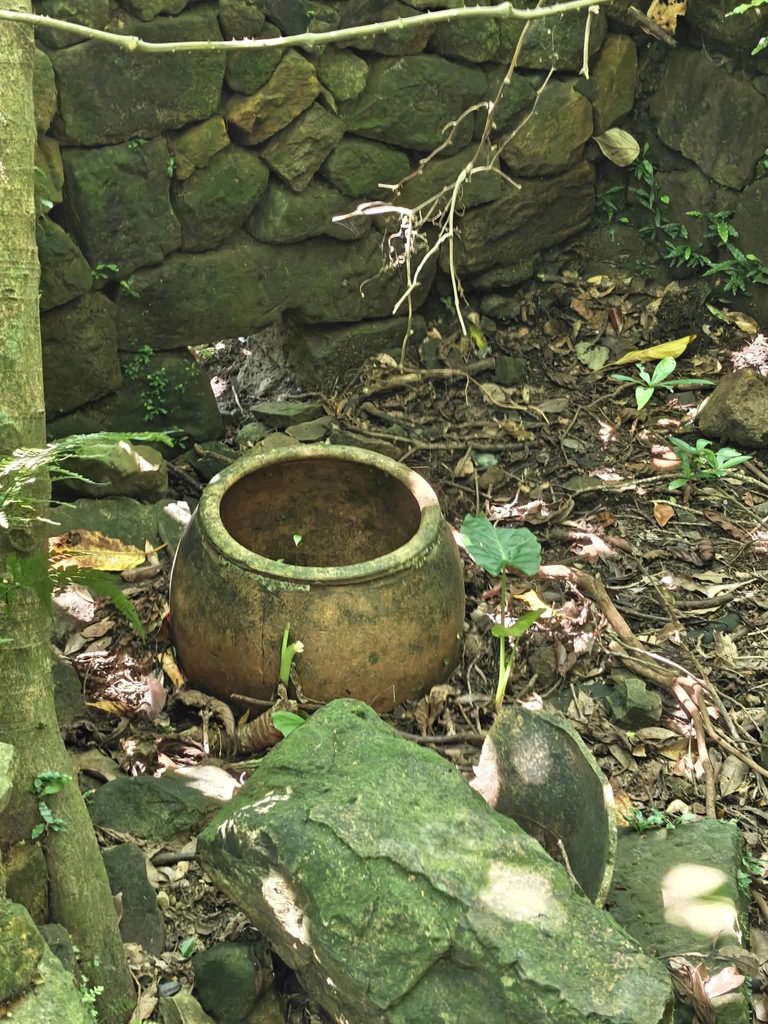
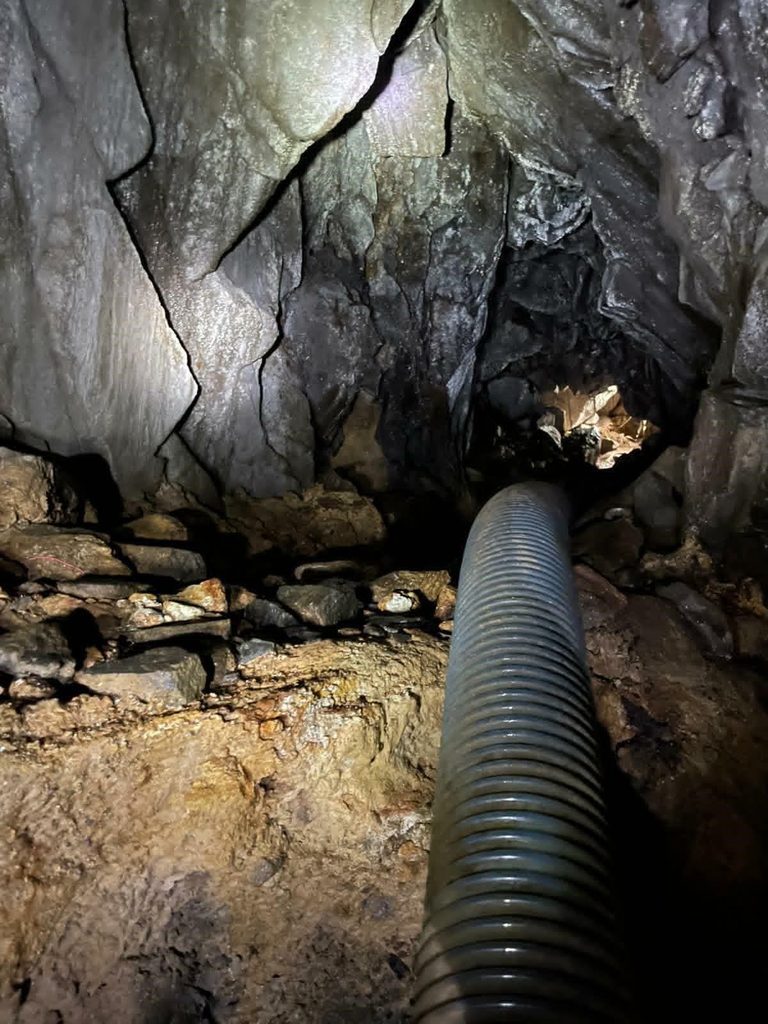
Oil was first discovered in Taiwan at the Chuhuangkeng Oilfield in Gongguan Township, Miaoli County. Oil extraction has been carried out there since 1877. During the Japanese colonial period, development became much more advanced, and approximately 98 oil wells were drilled. The site of Taiwan’s first oil well has since been transformed into the Taiwan Oil Field Exhibition Hall.
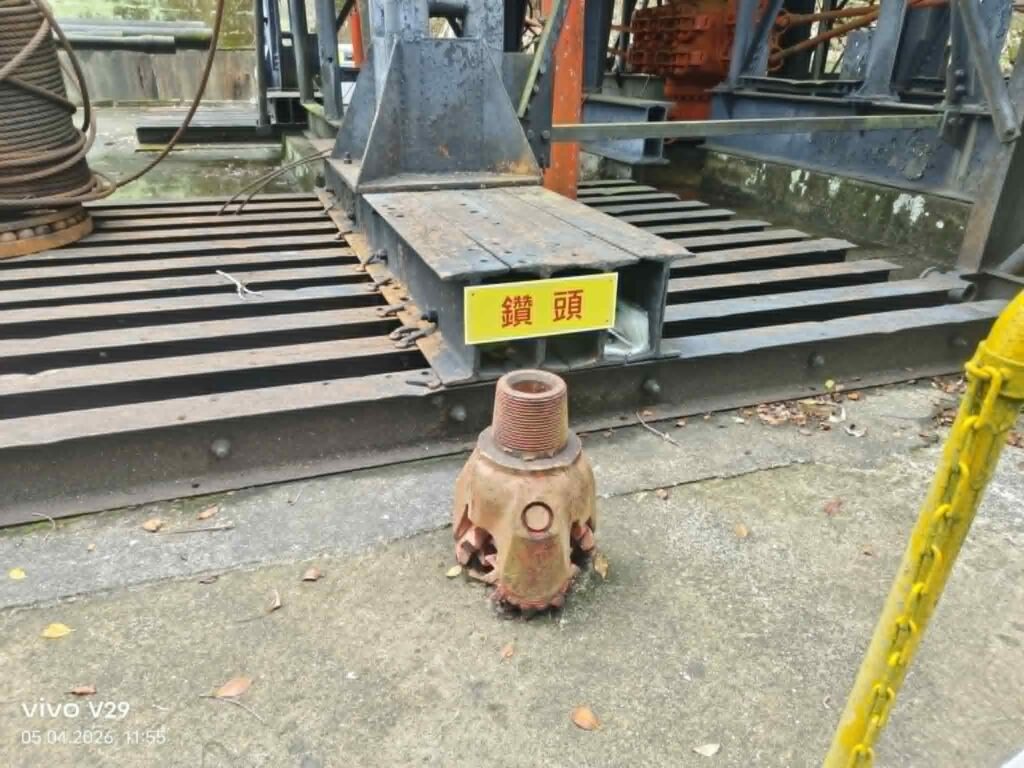
(drill head)
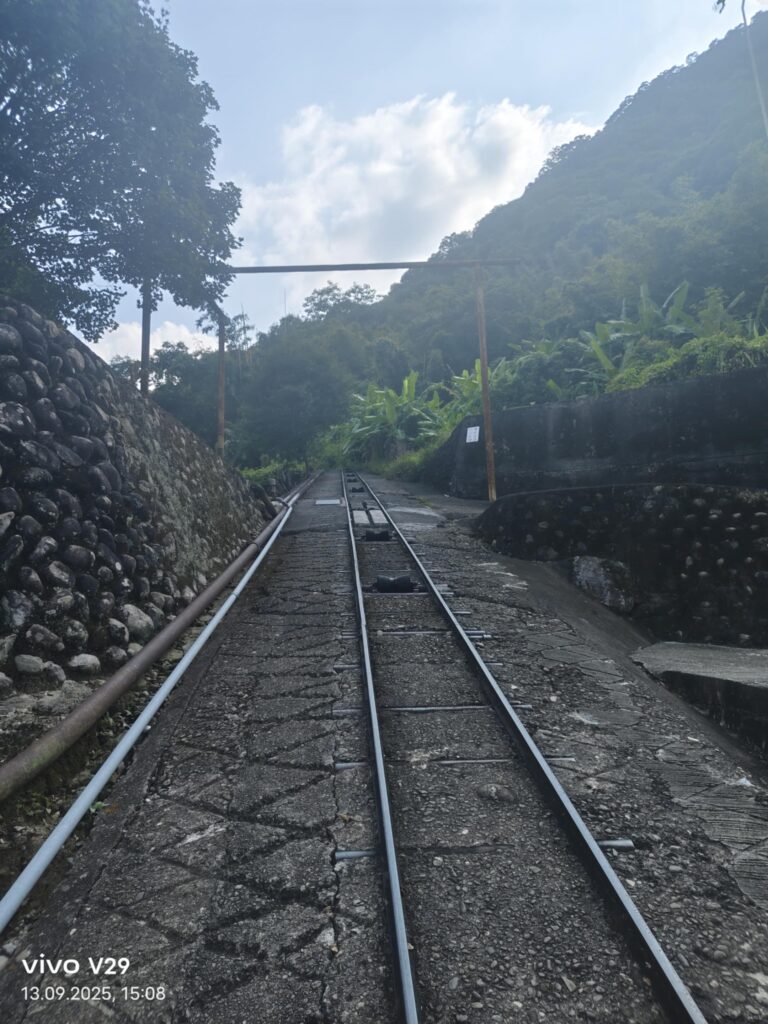
At the lower end of the site, directly beside the road, you will find the museum, which provides an excellent introduction to the history of Taiwan’s oil industry and drilling technology. Further uphill, several former residential and office buildings have been well preserved. Most visitors are familiar with the remains of the old cable car rails, but the line appears to end abruptly here.
Shortly before reaching the end of the developed area, a large pumpjack is described on information panels (unfortunately only in Chinese). It is exceptionally well preserved and well documented. A pumpjack is the above-ground drive mechanism for a reciprocating piston pump used in oil wells.
What many visitors do not realize is that additional pumpjacks can still be found above the museum area. Although the trail was once frequently visited and remains signposted today, it has largely been abandoned. Along the approximately 20-minute Ancient Oil Well Trail (古油井步道), you can still appreciate the former scale of the oil field. Remains of machinery, pipes, and other industrial equipment appear repeatedly along the route.
Be aware that the trail is in poor condition. In some places, vegetation has completely overgrown the path, and sections have collapsed. A machete or sturdy knife may be useful for clearing your way, although the route itself remains relatively easy to follow.
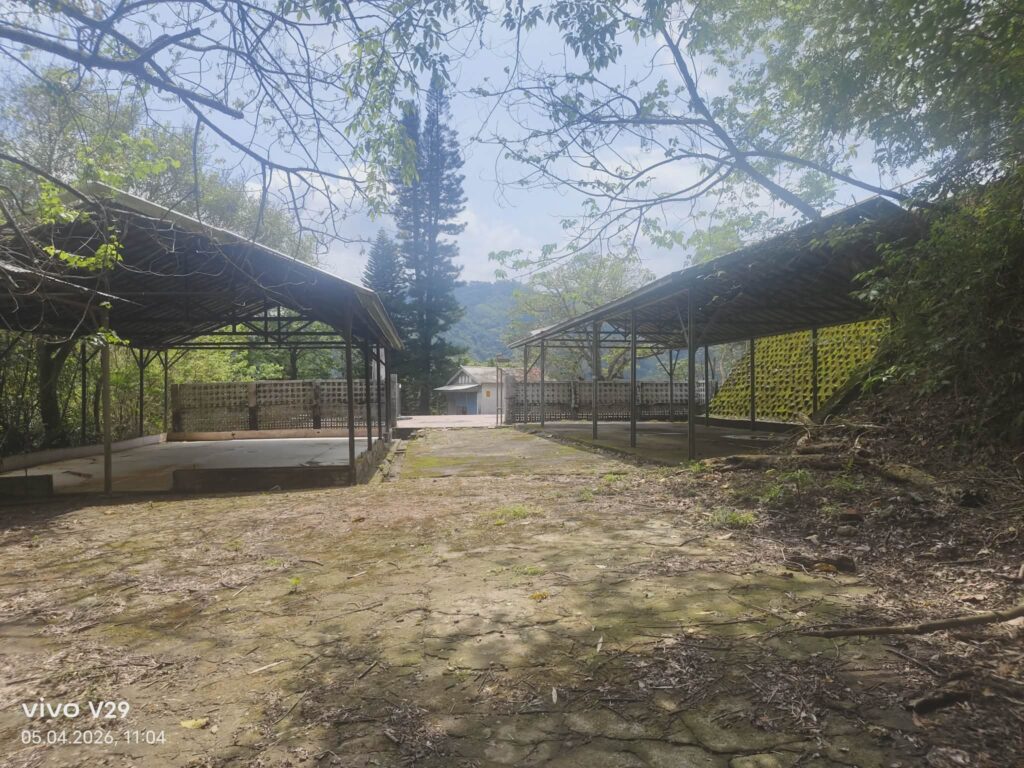
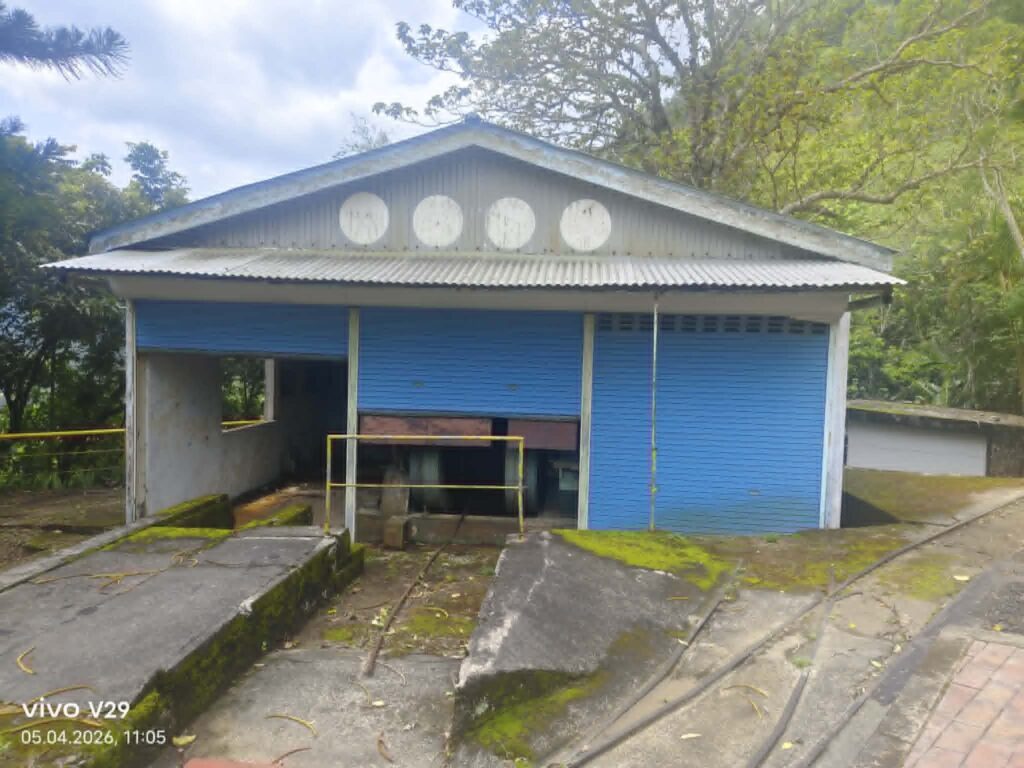
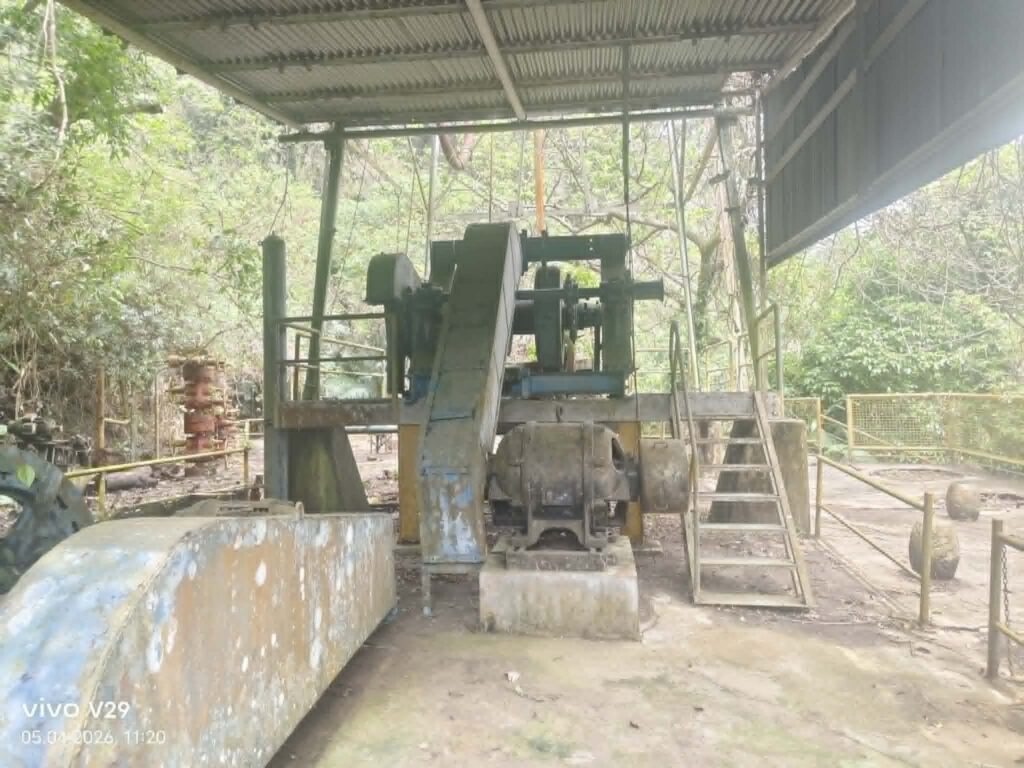
Eventually, you reach a plateau where the cable car line once terminated. The machinery house still stands, offering a glimpse into the site’s industrial past.
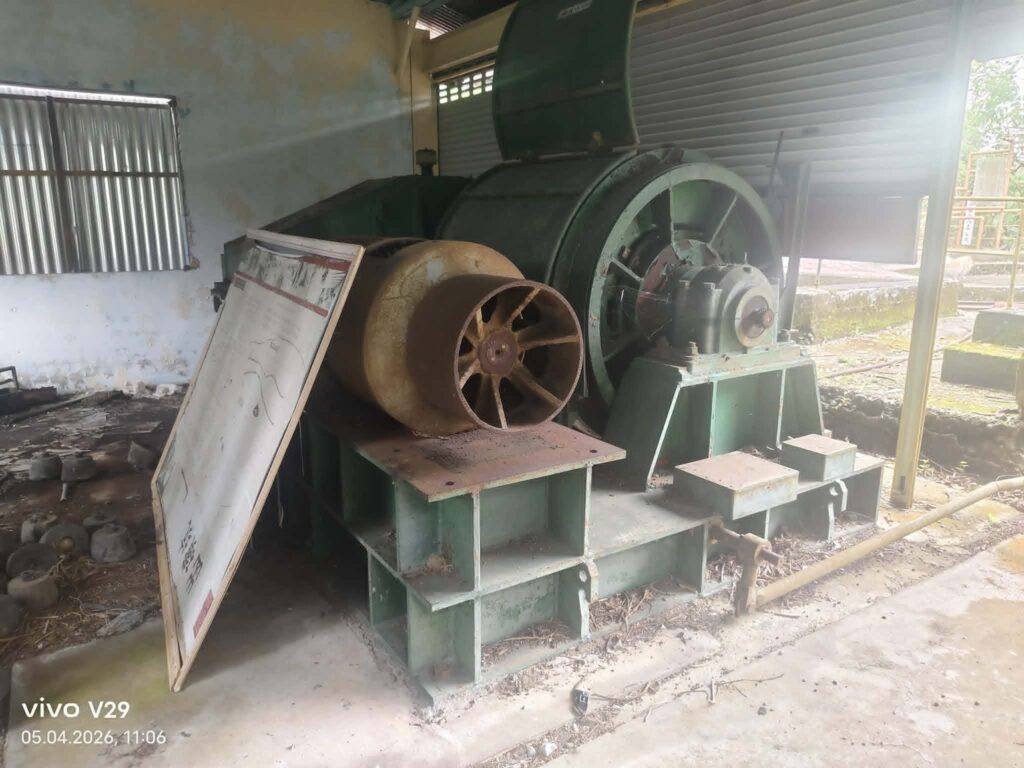
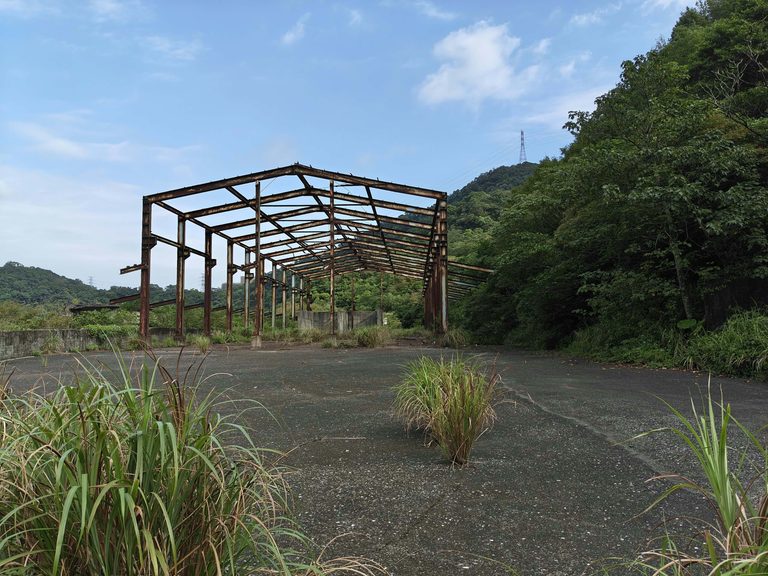
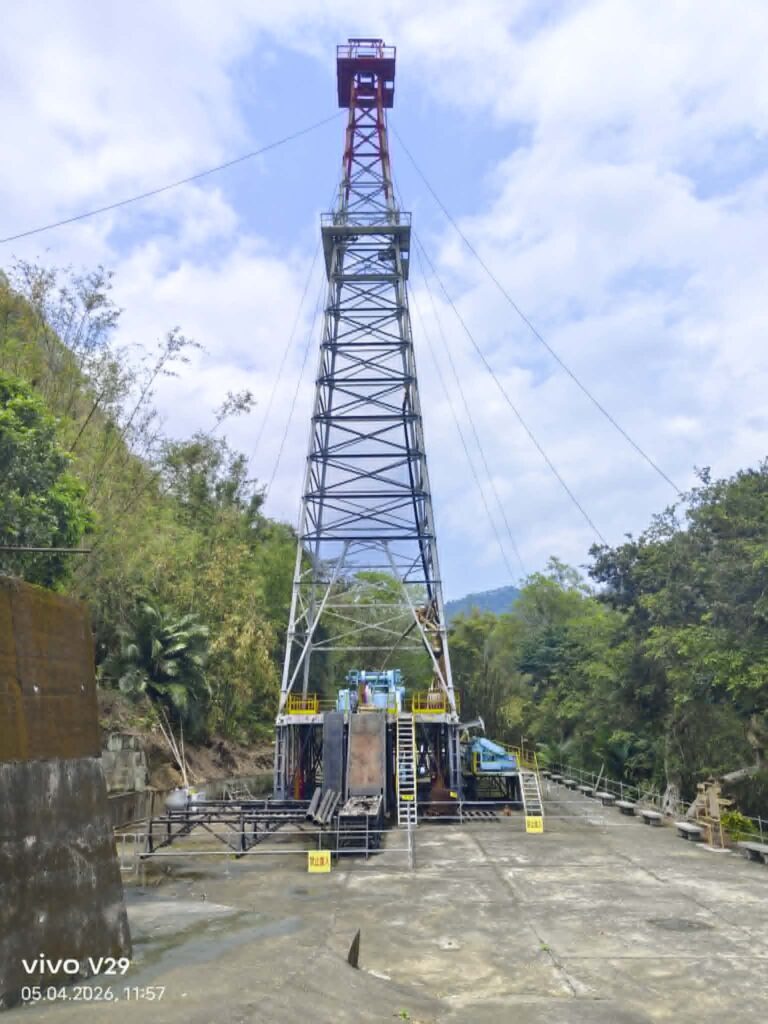
A little further uphill, you will encounter the characteristic oil-field structure: the pumpjack, recognizable by its distinctive “horse head.” There are several possible explanations for the large steel framework that still surrounds it. Most likely, the structure was used during installation or maintenance, as the pumpjack itself is mounted securely on a concrete foundation.
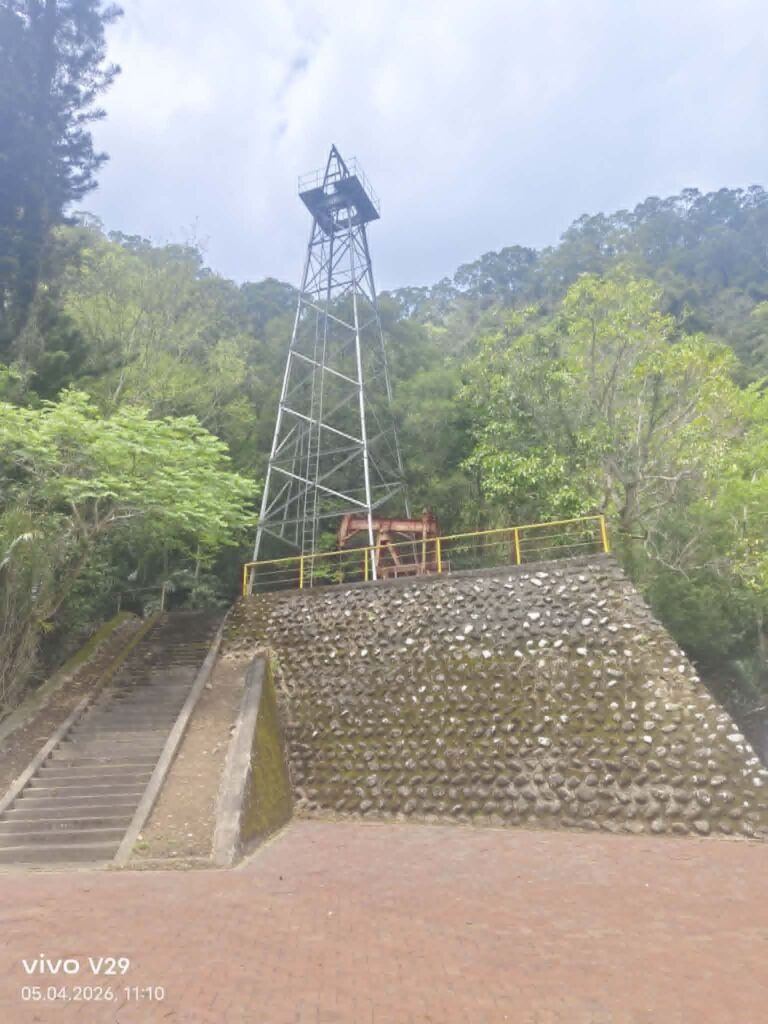
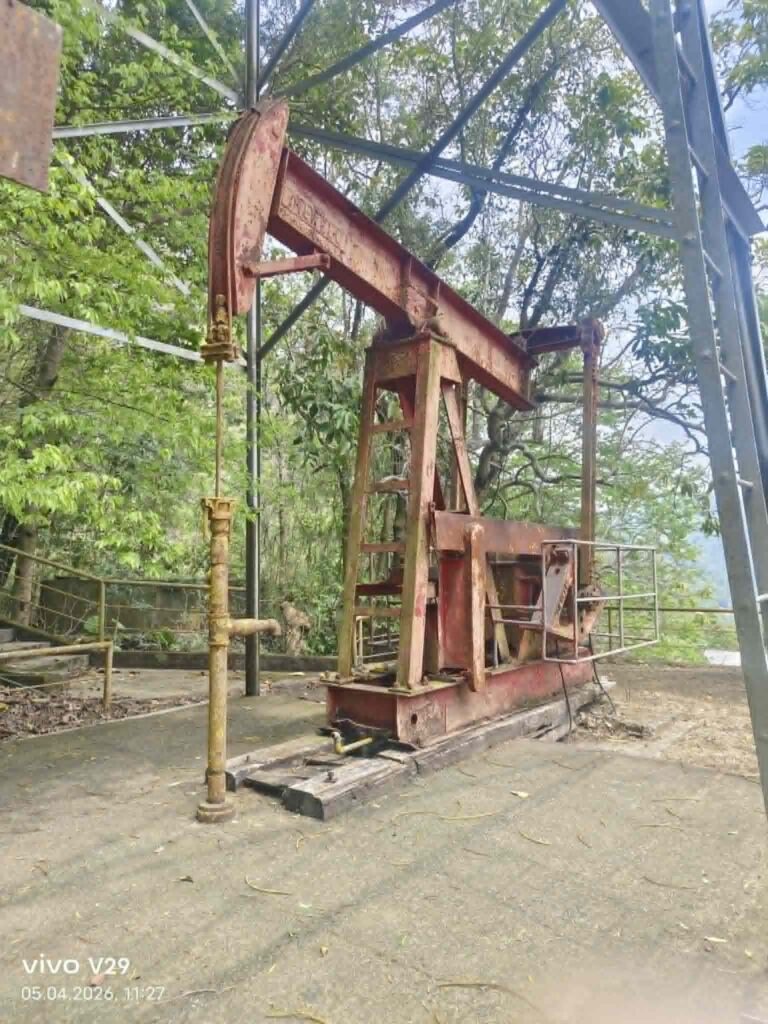
If you continue up the stairs, another well-preserved pumpjack comes into view after only a couple of minutes. I climbed approximately halfway up the steel framework for a closer look. (Sorry for being so weak)
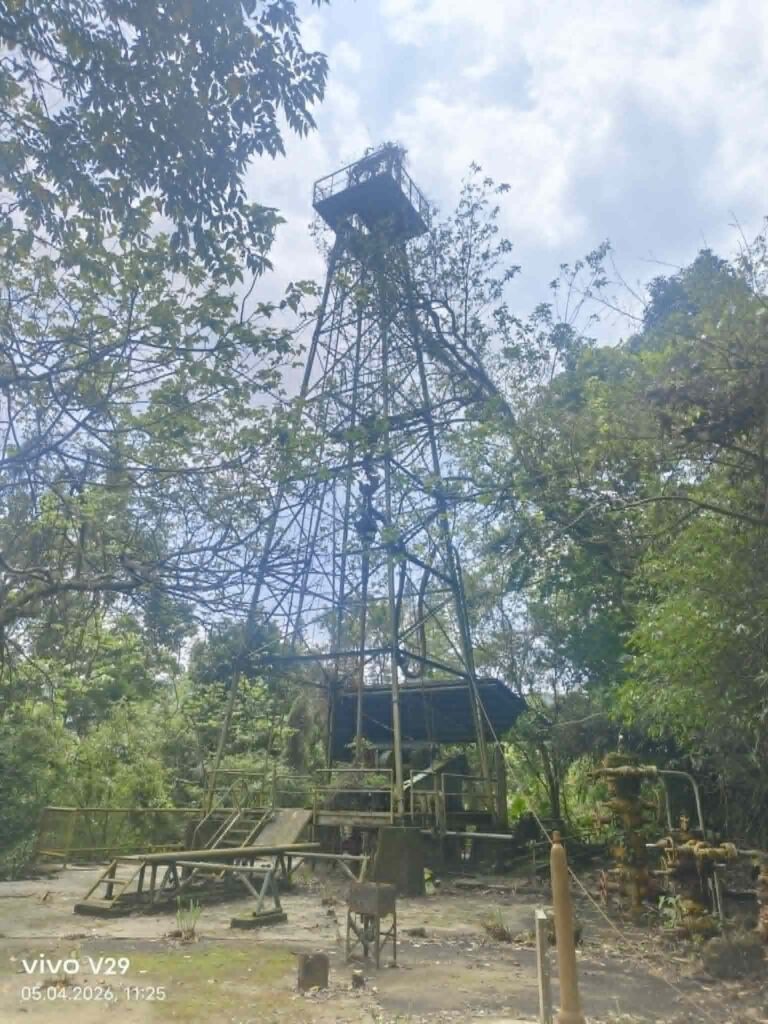
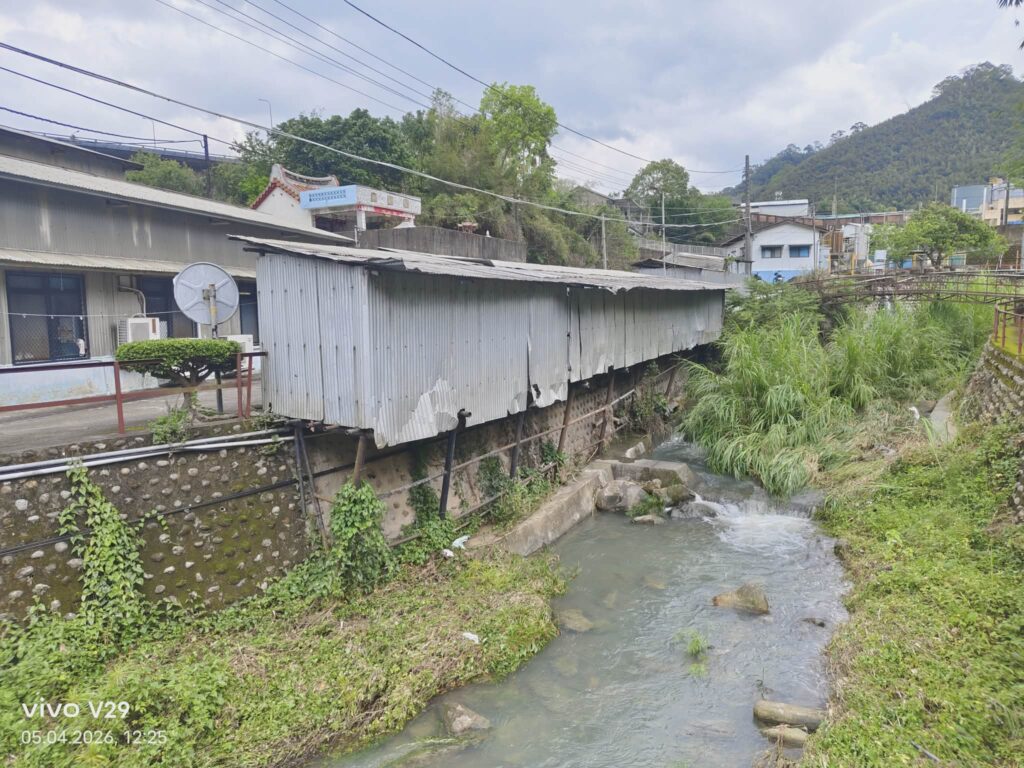
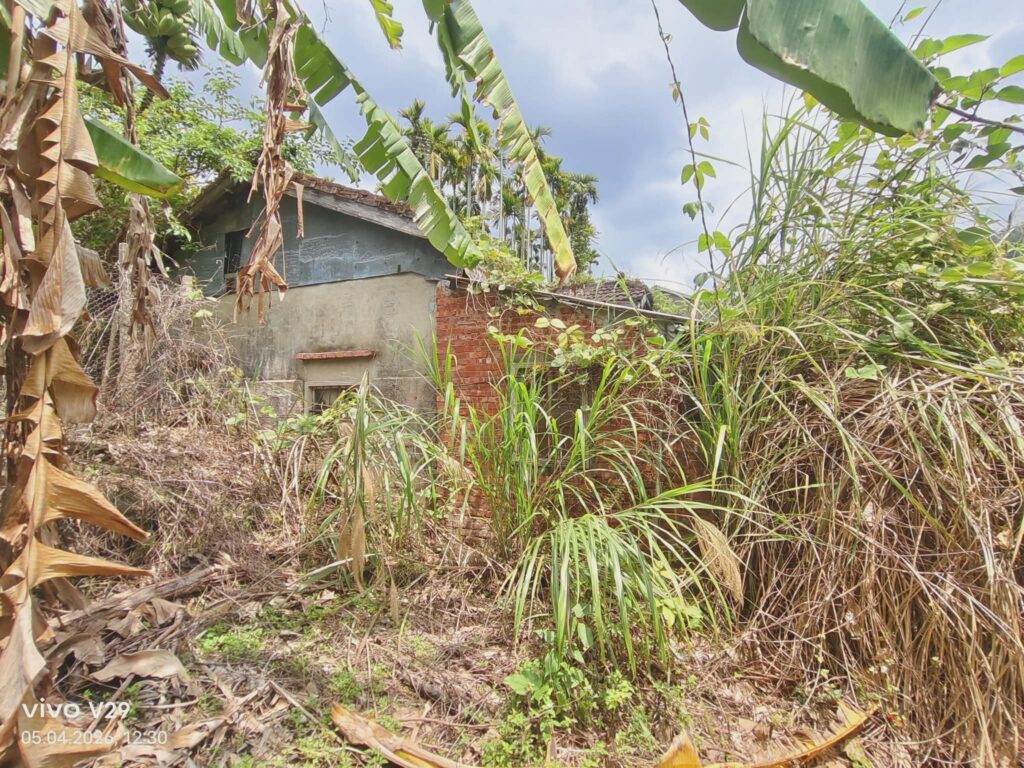
Visitors with additional time can explore more of the former oil-field settlement around the museum. Several historic buildings and workers’ houses remain standing—some remarkably well preserved, while others are in an advanced state of decay.