ed. 12/2025
Very dangerous (risk of collapse, snakes), visitors not welcome
This is an abandoned lumber and plywood factory in Nantou that reflects a chapter of Taiwan’s industrial history. Today, it serves as a parking lot and is partially accessible.
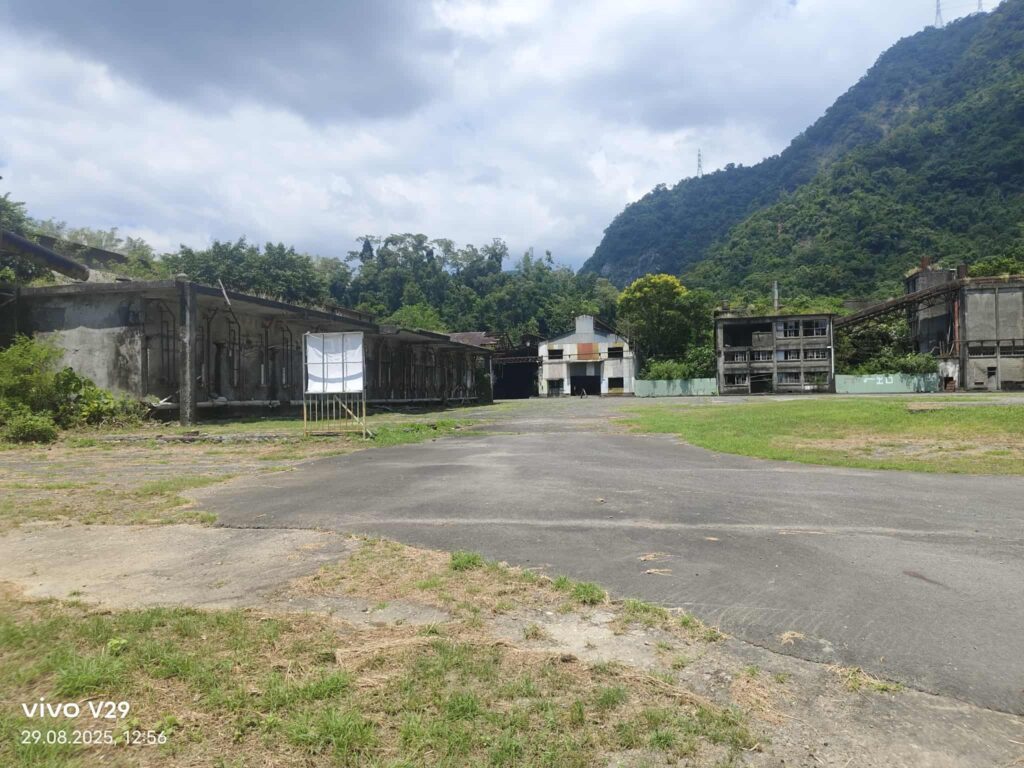
Parking lot
When walking through the vast, abandoned factory halls, it evokes the atmosphere of a post-apocalyptic saga—reminiscent of Cyborg with Jean-Claude Van Damme.
The parking area is open on weekends, and some of the factory halls can be freely entered. However, visitors should be cautious—the monkeys in the area are known to be quite aggressive. They followed us, baring their teeth. Good guards indeed!
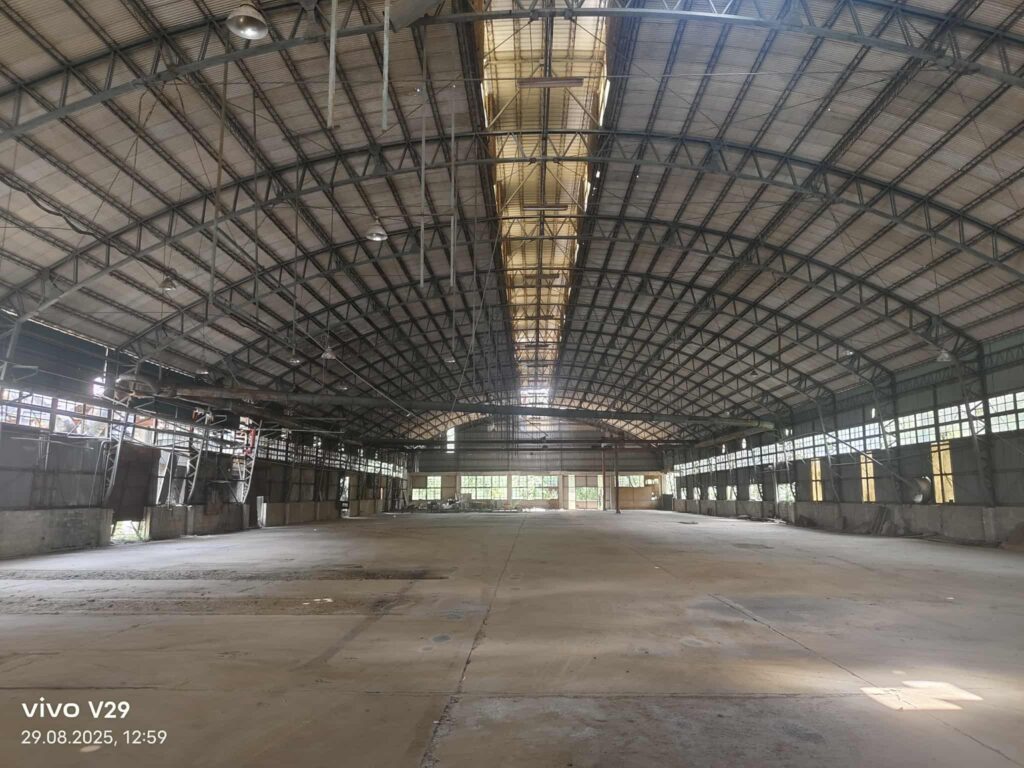
Hall 1
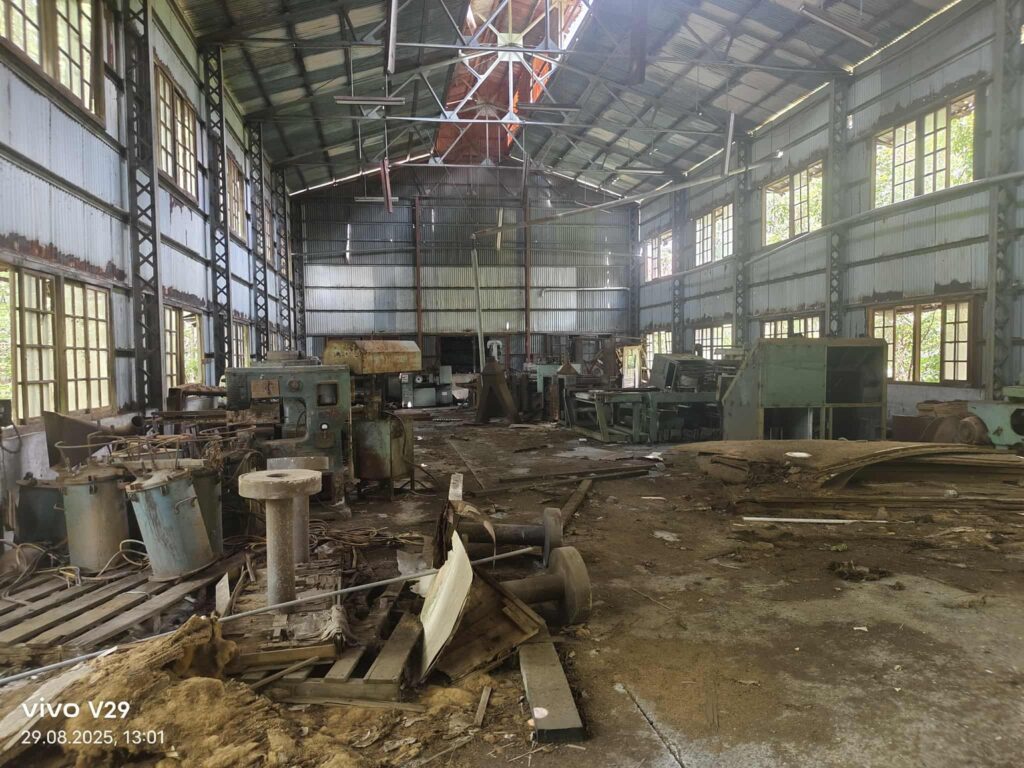
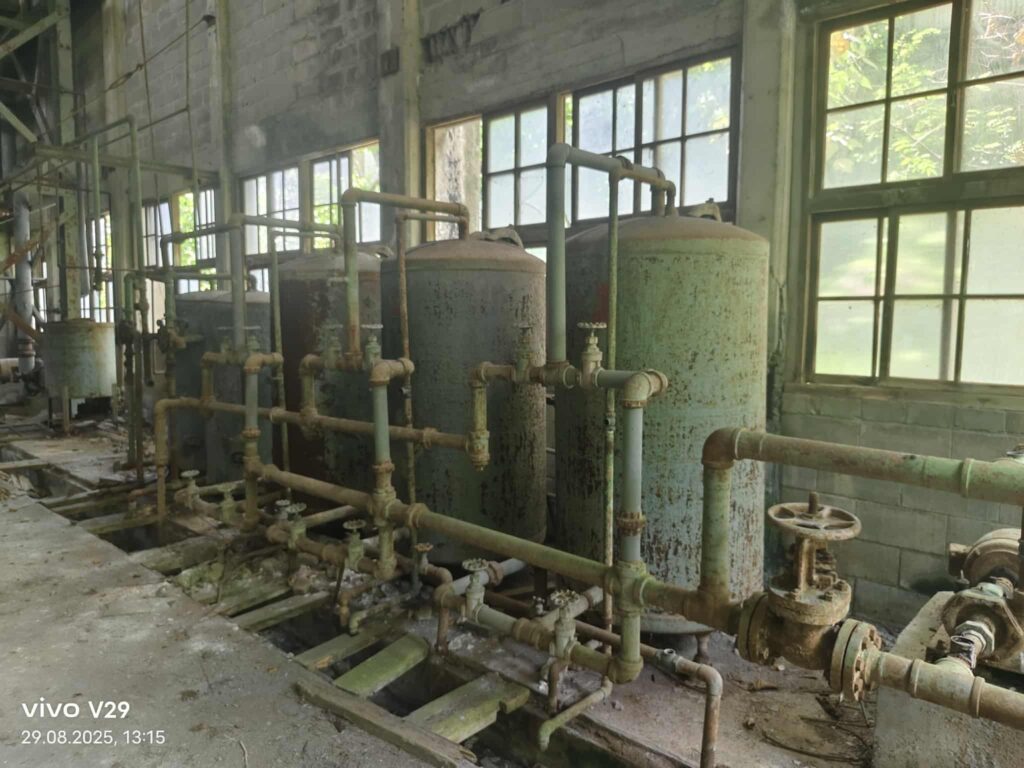
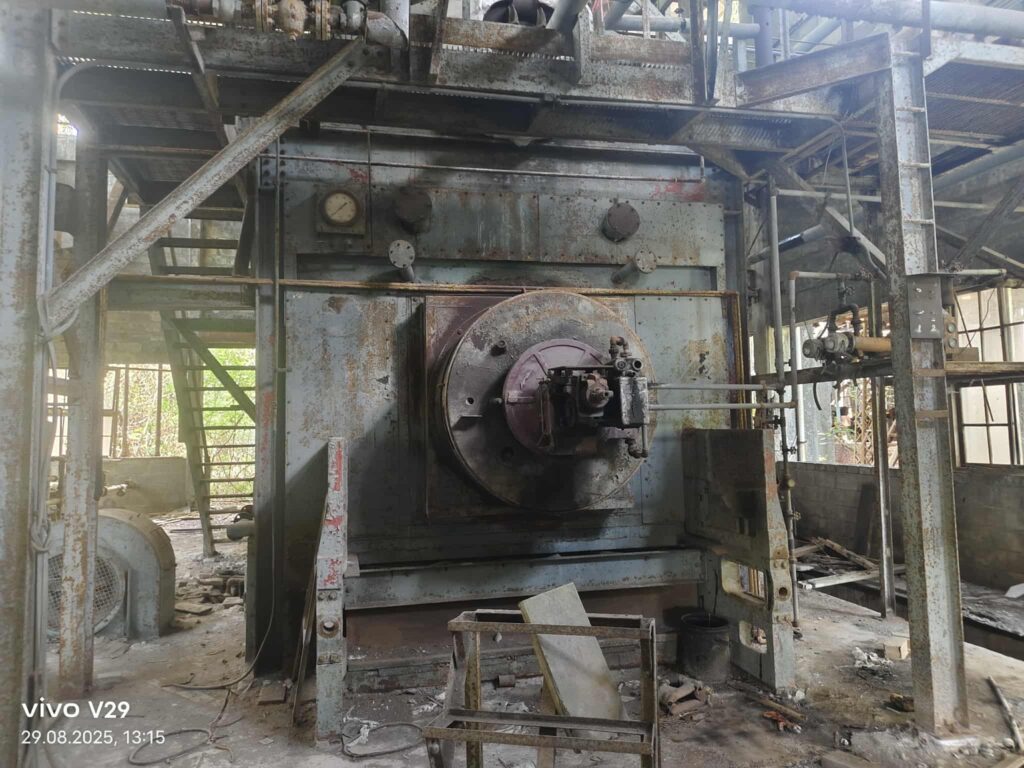
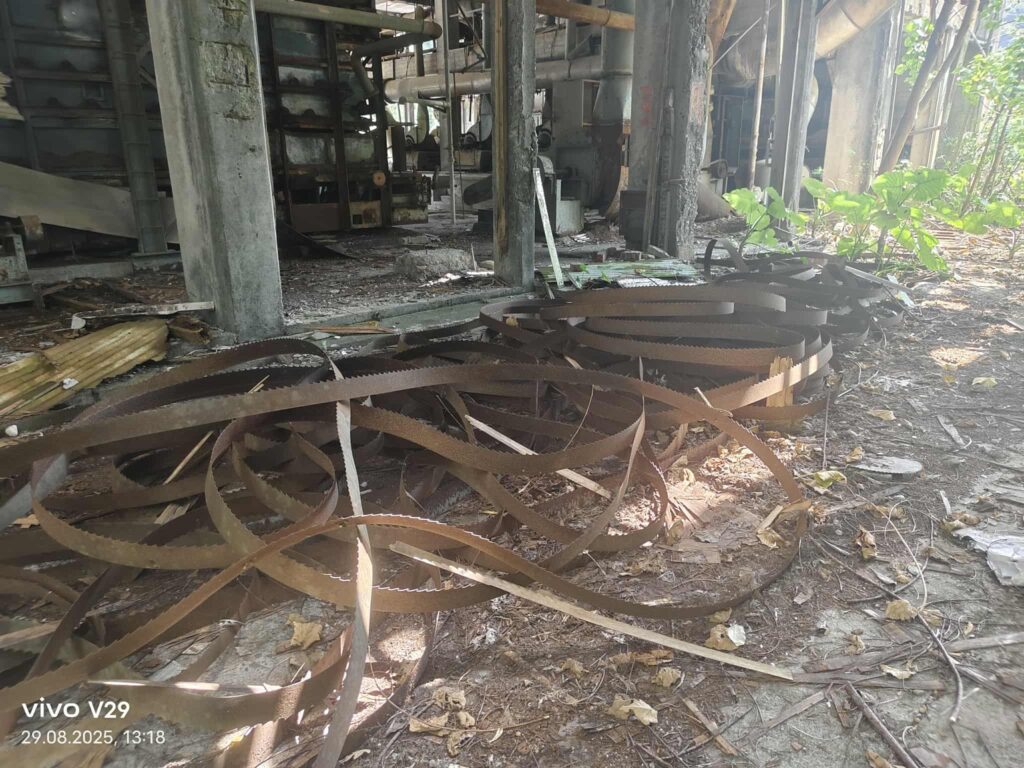
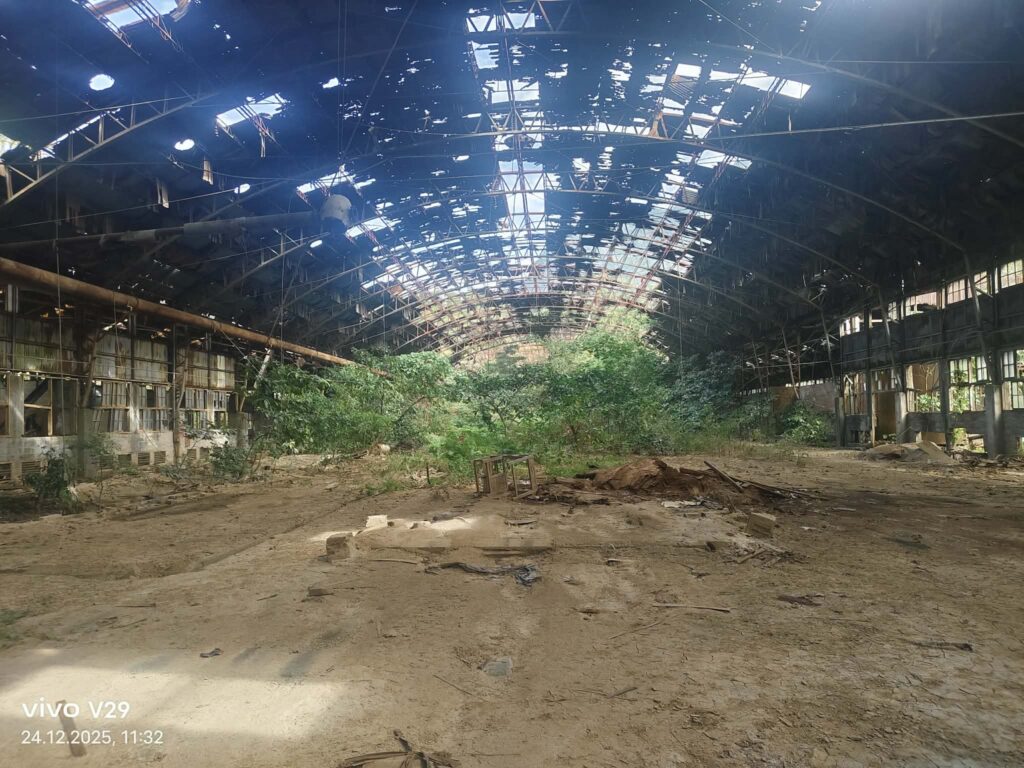
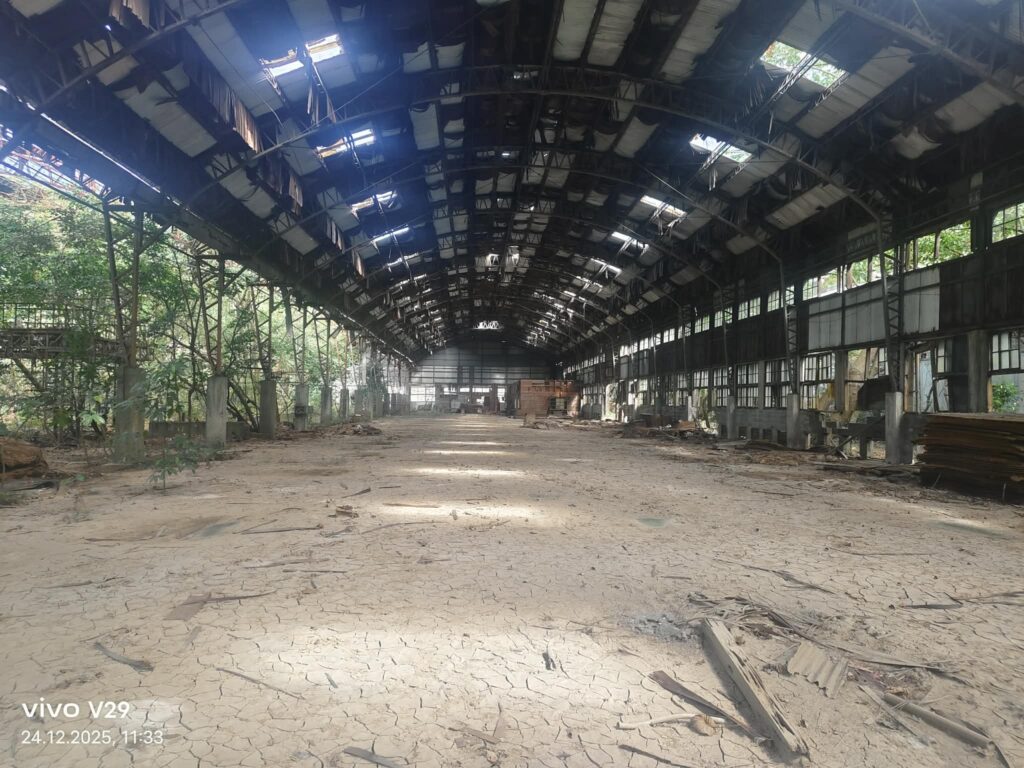
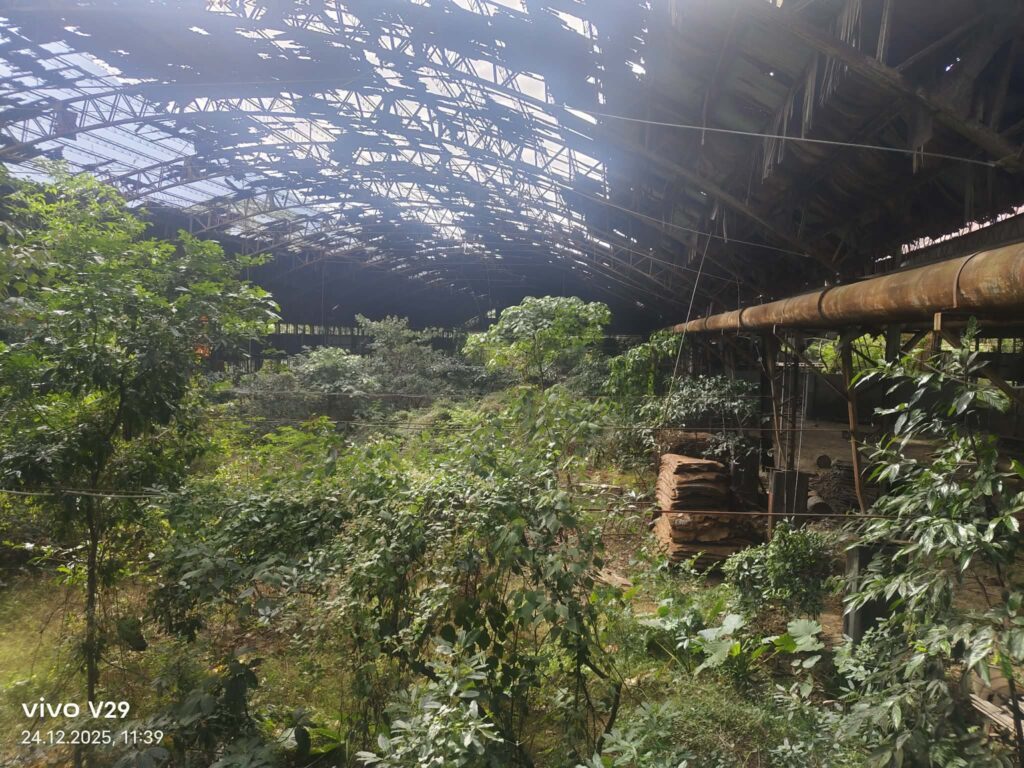
It is a vast site with several halls, some separated by open spaces, others standing close together. The roofs are severely damaged, so a visit during a typhoon would not be advisable. Old machinery can still be found scattered throughout the grounds.
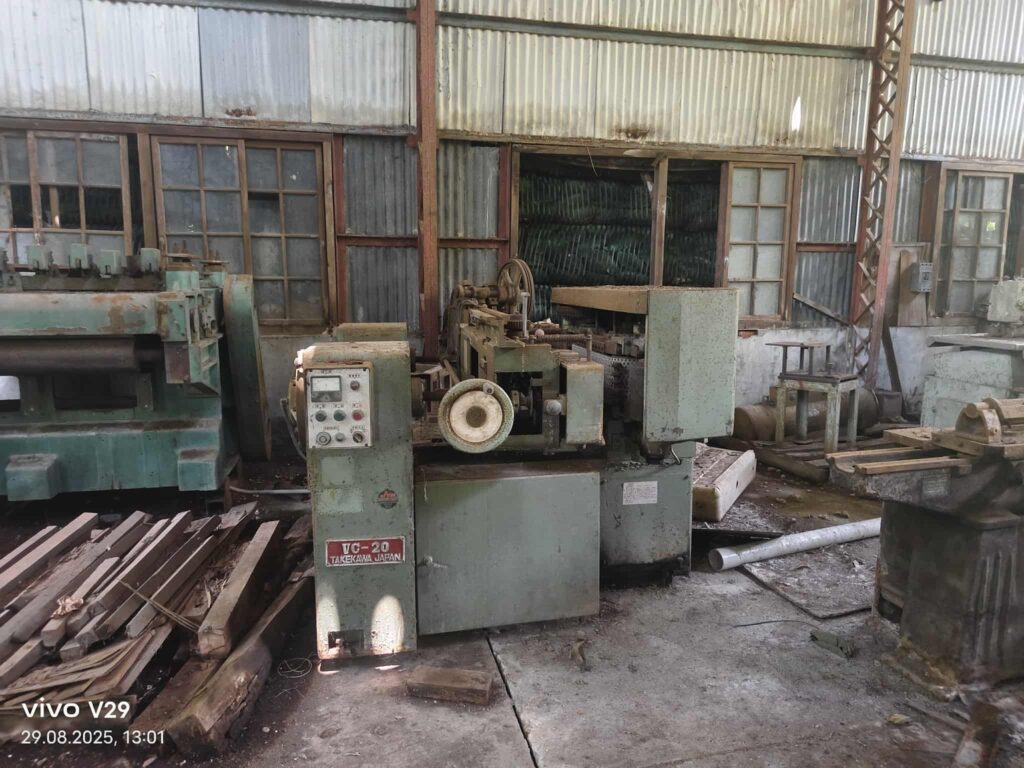
The factory was founded by a local notable, Sun Hai (1917–1979). In 1958, he secured logging rights for 5,000 hectares in the Danda Forest Area under the Londa Forest District Office of the Forestry Bureau. He also oversaw the construction of the Danda Forest Road and the Sun Hai Bridge.At Checheng, his operations included sawmills, plywood plants, and charcoal factories, employing more than 600 workers on site. Counting forest loggers, transporters, and road crews, the workforce exceeded 3,000 people.
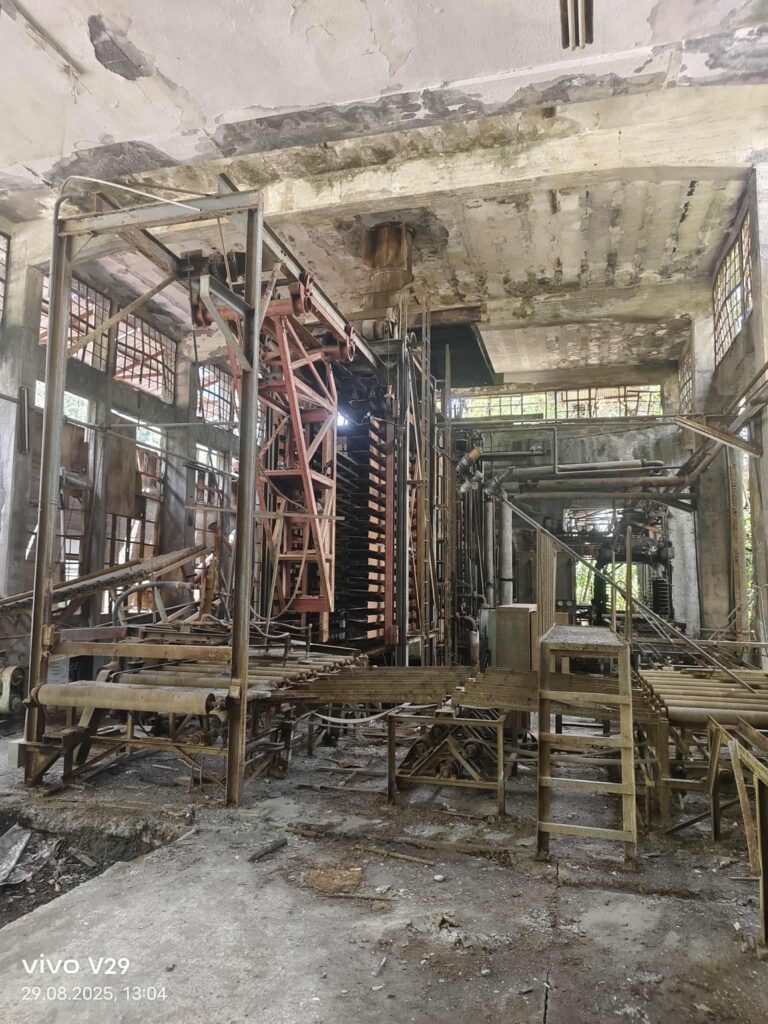
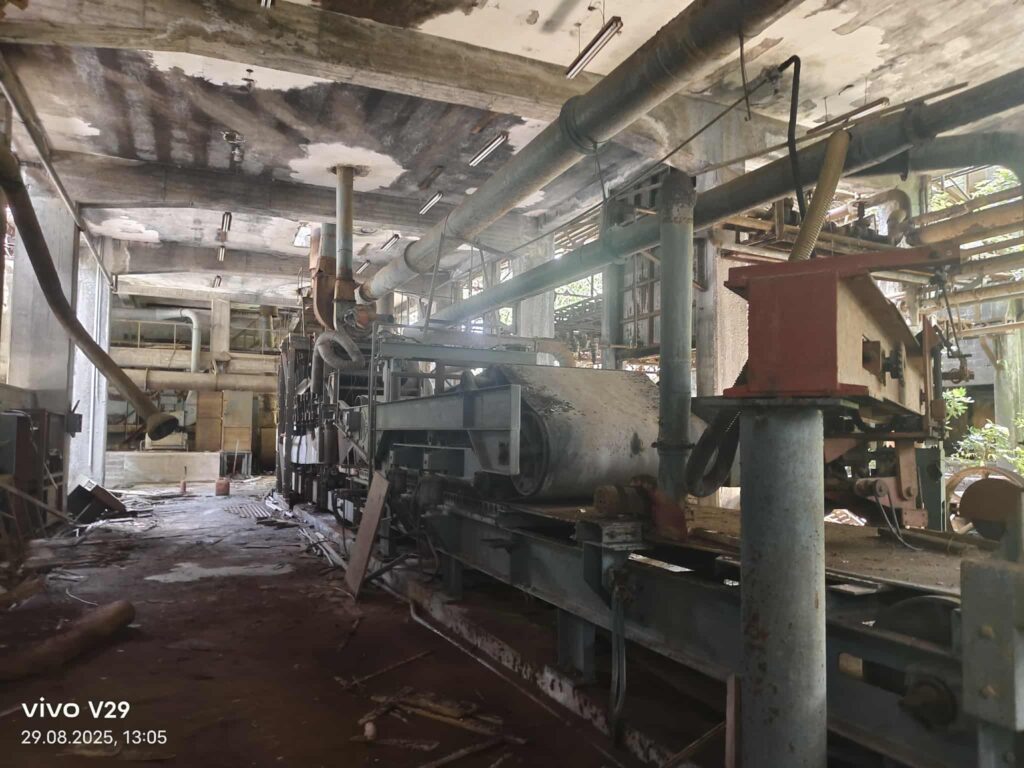
In 1960, making use of railway access and the water of the Shuili River, he purchased 26,000 ping of land in Checheng and established Zhenchang Lumber Company. By 1972, he had invested NT$100 million to build the Zhenchang Plywood Plant in Shuili, with a monthly production capacity of 100,000 sheets. It was among the first to pioneer the use of domestic hardwoods and secondary forests instead of imported tropical timber.
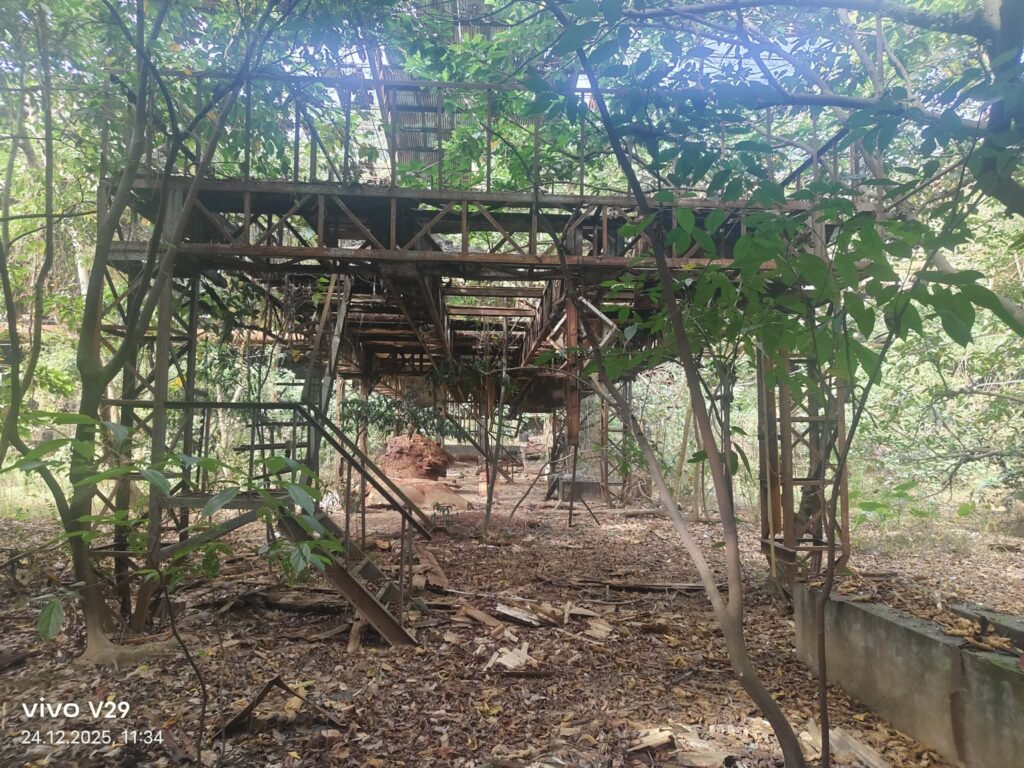
(Some of the machines can be climbed on, and it is even possible to go up to the second and third floors. However, everything is badly rusted. Not all of the beams are unstable—but you never know which ones.)
Well connected politically, Sun Hai was able to offset miscalculations with political backing. Nevertheless, he played a crucial role both economically and politically, as his enterprises enabled the growth of the local industry. At the same time, he served as a community benefactor, making generous donations to schools, temples, and even police stations.
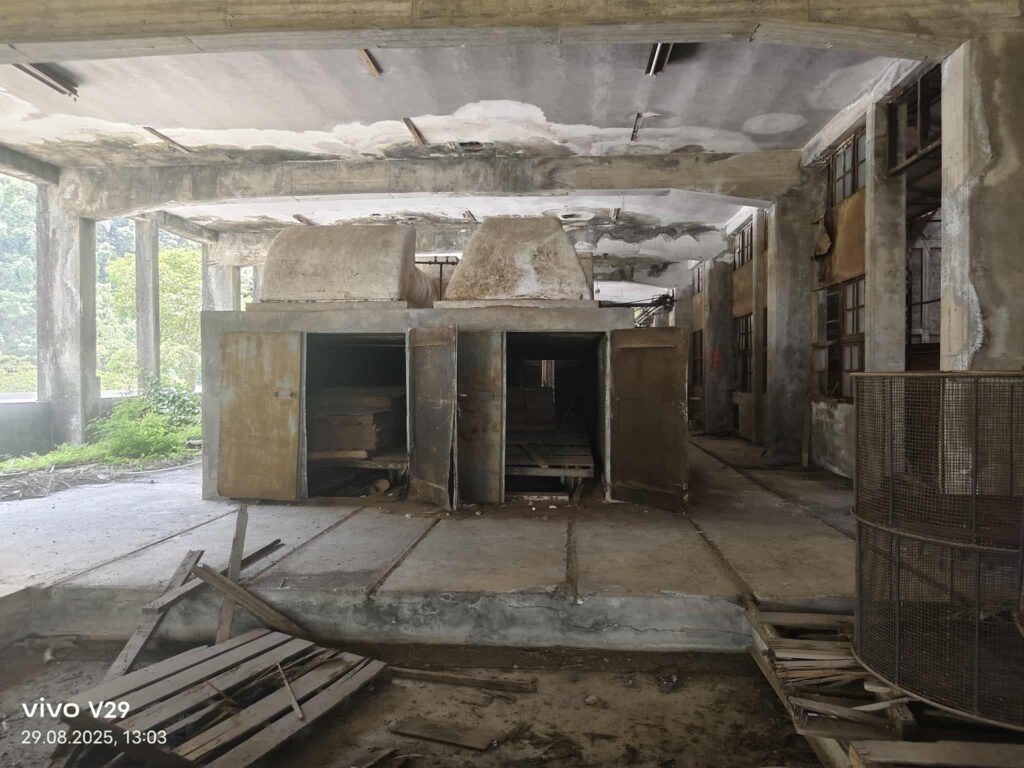
Although detailed historical records about the exact machinery used at the facilities are scarce, it is possible to infer the equipment based on standard plywood production technology of that era—many of which are still in use today:
- Veneer Peeling / Rotary Cutting Machines – to slice logs into thin veneer sheets, the basis of plywood.
- Glue Spreaders – to evenly apply adhesive between veneer layers.
- Cold Press & Hot Press Machines – the cold press aligns and consolidates the veneer stack, while the hot press cures the glue under heat and pressure, bonding the layers.
- Saws and Trimmers – precision tools for cutting and sizing plywood sheets after lamination.
- Sanders / Calibrating Equipment – to smooth and standardize the surface of the panels.
- Conveyor and Handling Systems – to efficiently transport materials between workstations.
2. Visit
During the second visit, Mr. X ventured further into the rear halls near the railway tracks. This area is in a more advanced state of decay.
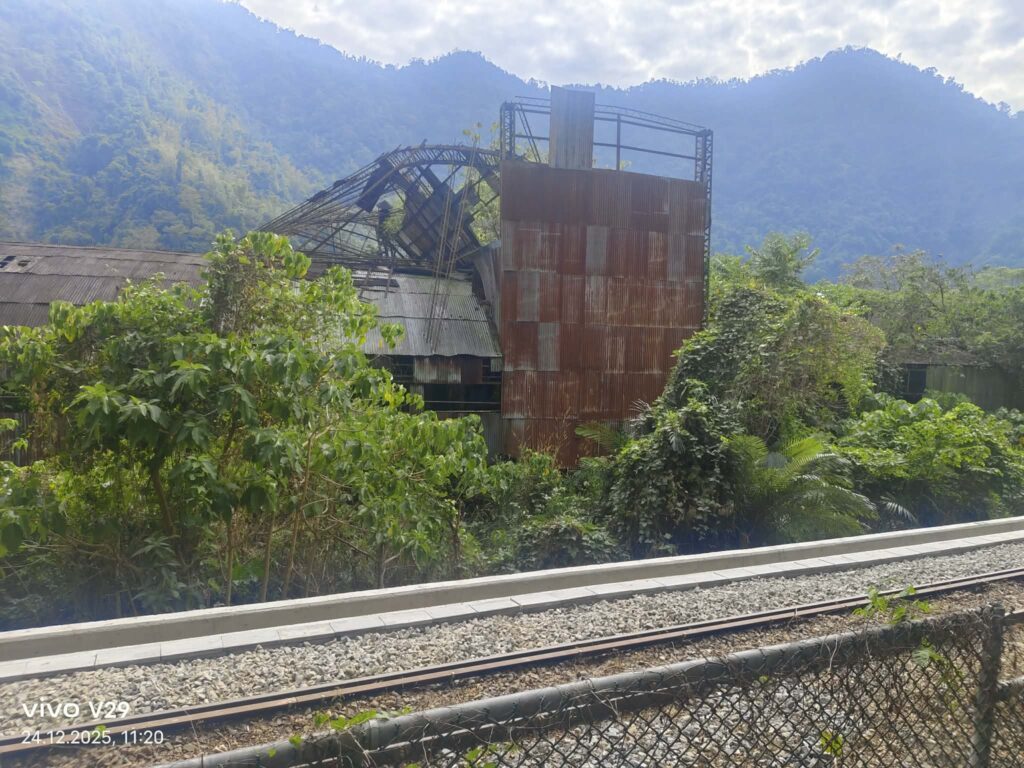
The ground is heavily covered with sand. The halls were mainly used as storage spaces, but they are quite large in scale.
There is an intermediate level with remnants of machinery, but the steel structure is severely corroded.
(copyright Claudius Petzold)