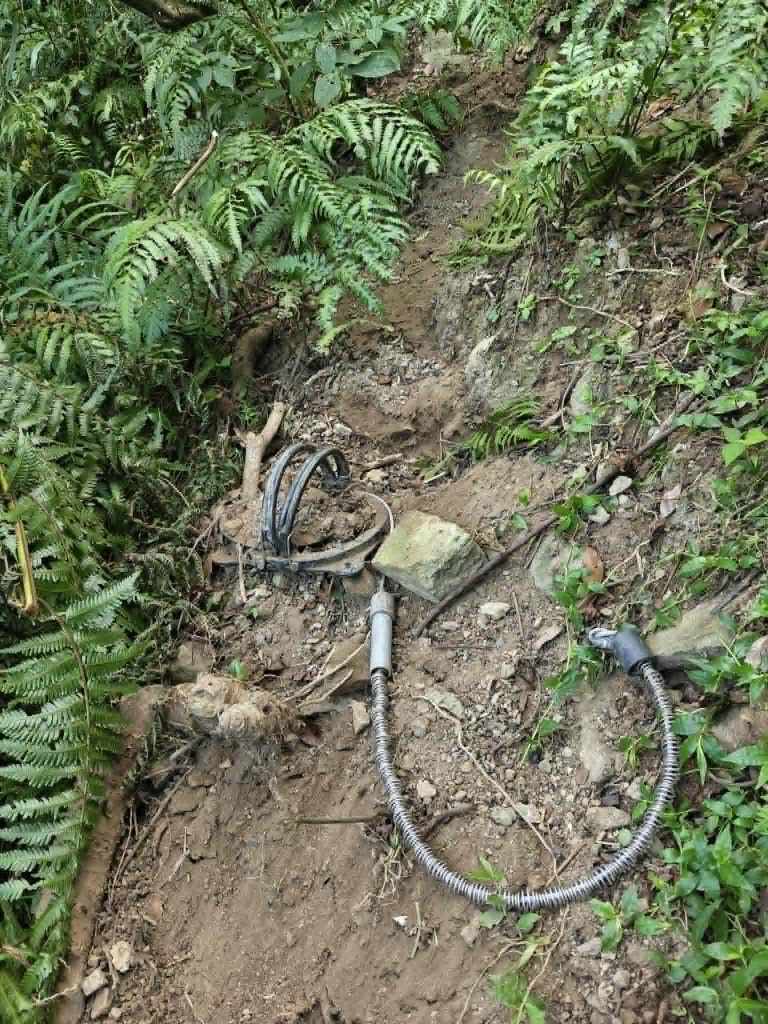
Unfortunately, not much remains of the old mining area. At the entrance of the Sakura Trail, you can still see two large buildings where the rock was once loaded onto trucks. These solid structures are still in good condition, though heavily overgrown.
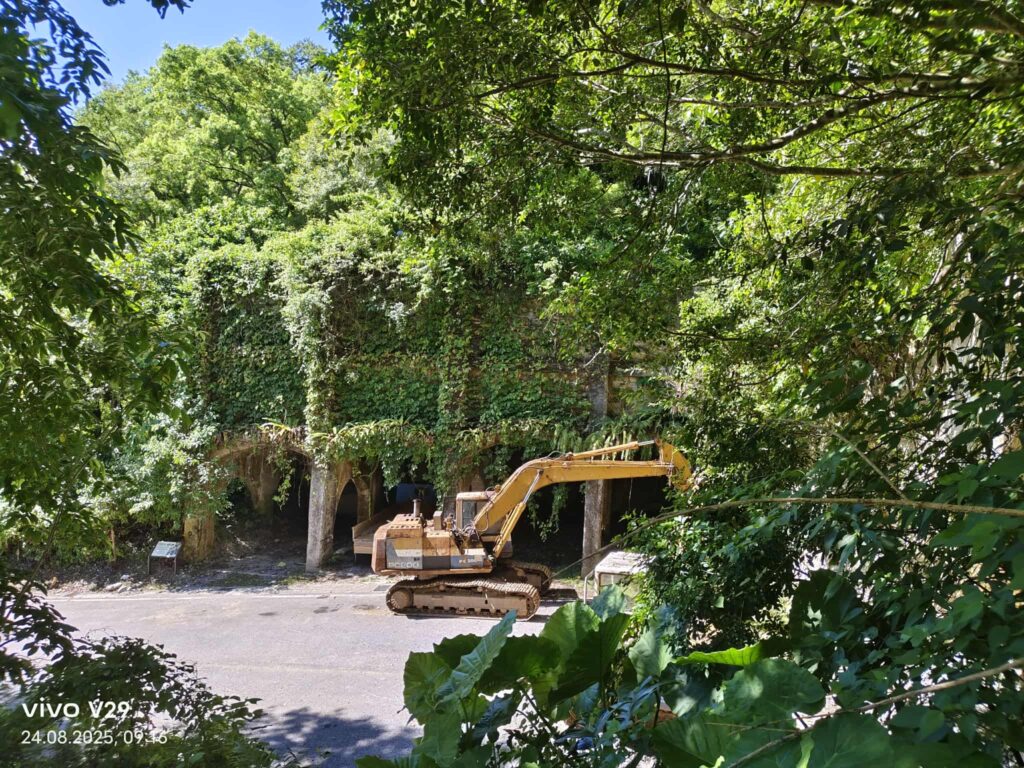
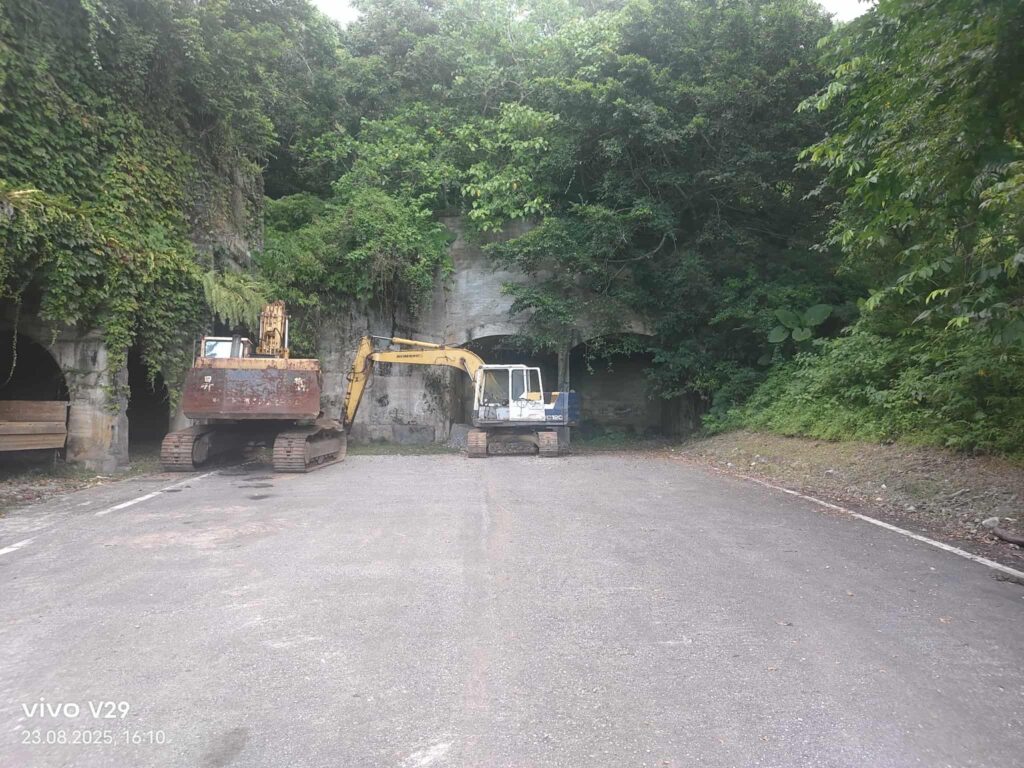
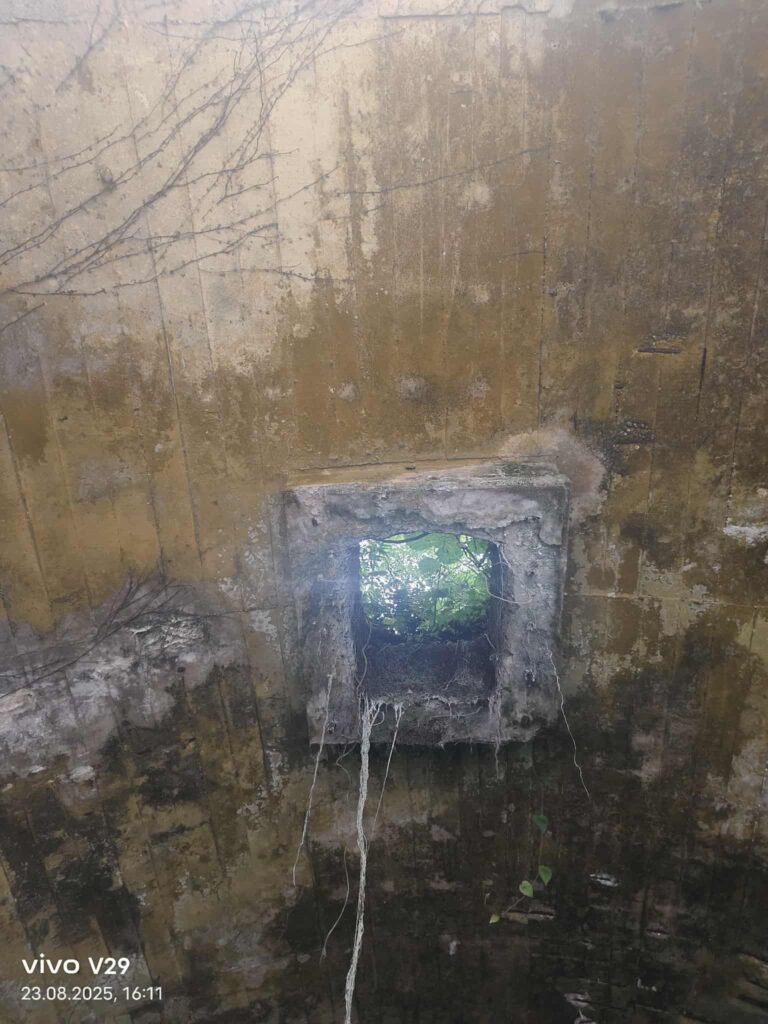
From inside, you can look up and still see the holes in the ceiling, through which the rock was dumped down from the upper transport route for loading.
If you walk around the building, you will find the remains of the old transport path at the back. The modern trail doesn’t exactly follow the original route. You can also climb up onto the roof.
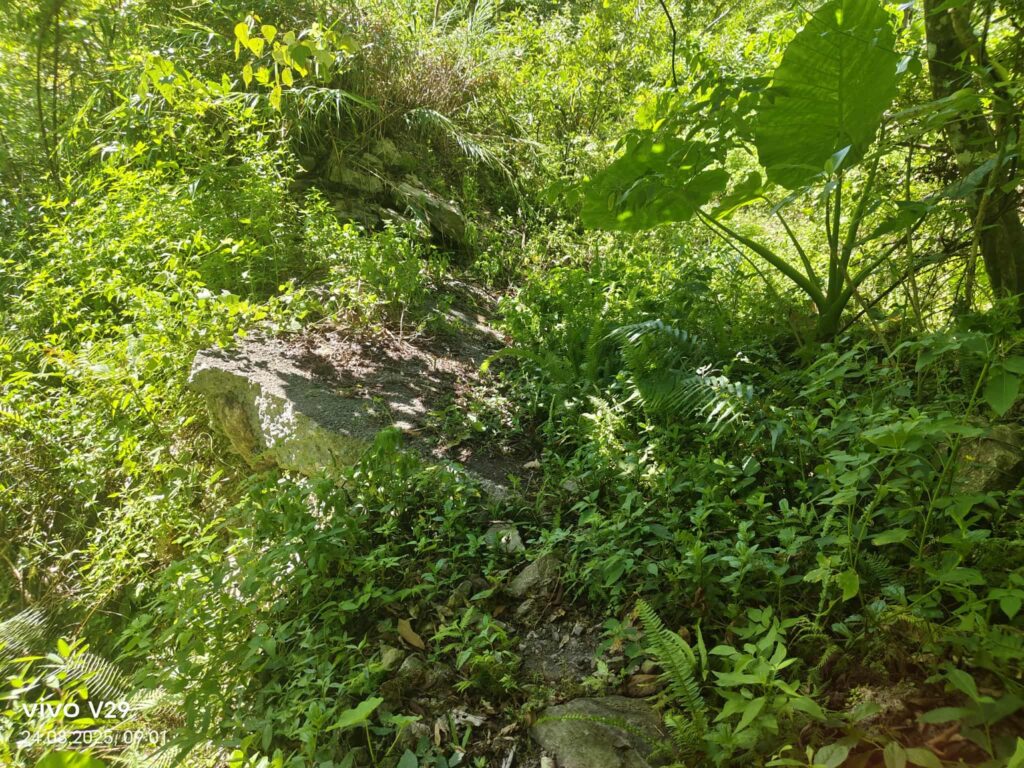
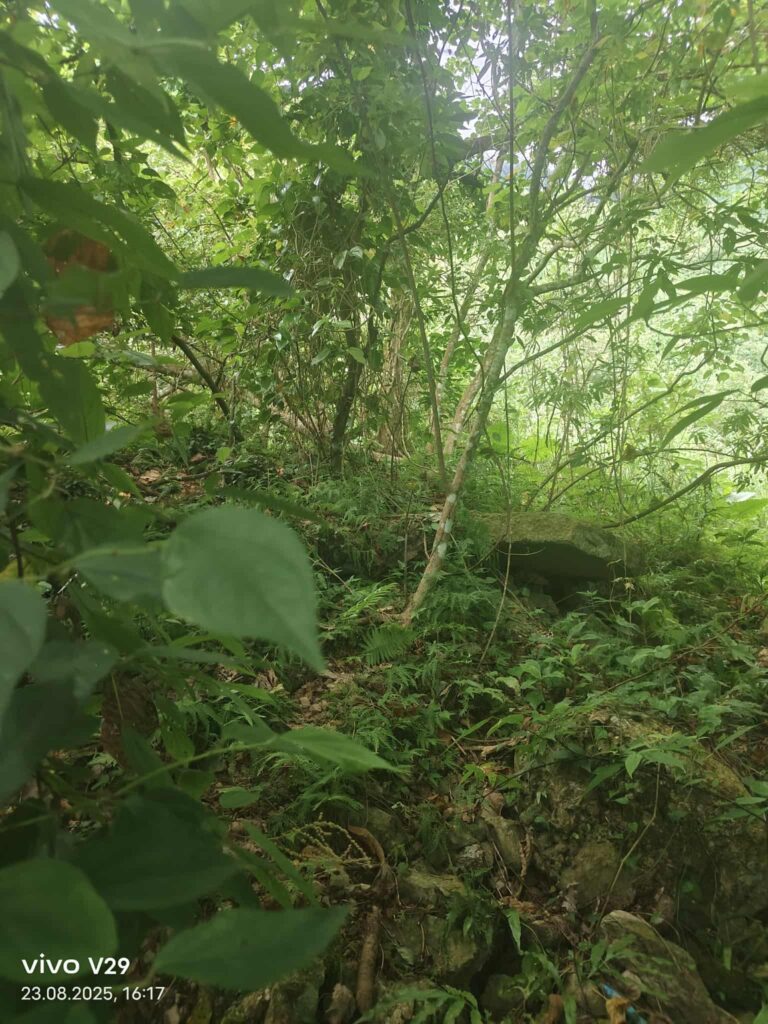
The Sakura Trail was originally constructed as an industrial mining road for the Taiwan Cement Company (台泥), also referred to as the Sakula, Jingshan, or Guofu mining site. It served to transport marble and cement raw materials down the mountainside.
Historical Background
Mining operations ceased in 1996. Due to the lack of ores in the Tso-ts’ang Mine Area, the Taiwan Cement Corporation abandoned further exploitation and returned the land to the Forestry Bureau. After mining activities ended, Shapodang Mountain was restored—though not completely, as remnants of the quarry still remain. The Forestry Bureau began planning the current trail in 2003, aiming to reduce environmental damage and allow visitors to still experience the natural surroundings. However, instability caused by earlier blasting work became evident again in 2024, when parts of the trail were damaged during an earthquake.
You can follow the trail for about 750 meters before turning onto a side path that gradually becomes narrower and narrower, until it eventually disappears altogether.
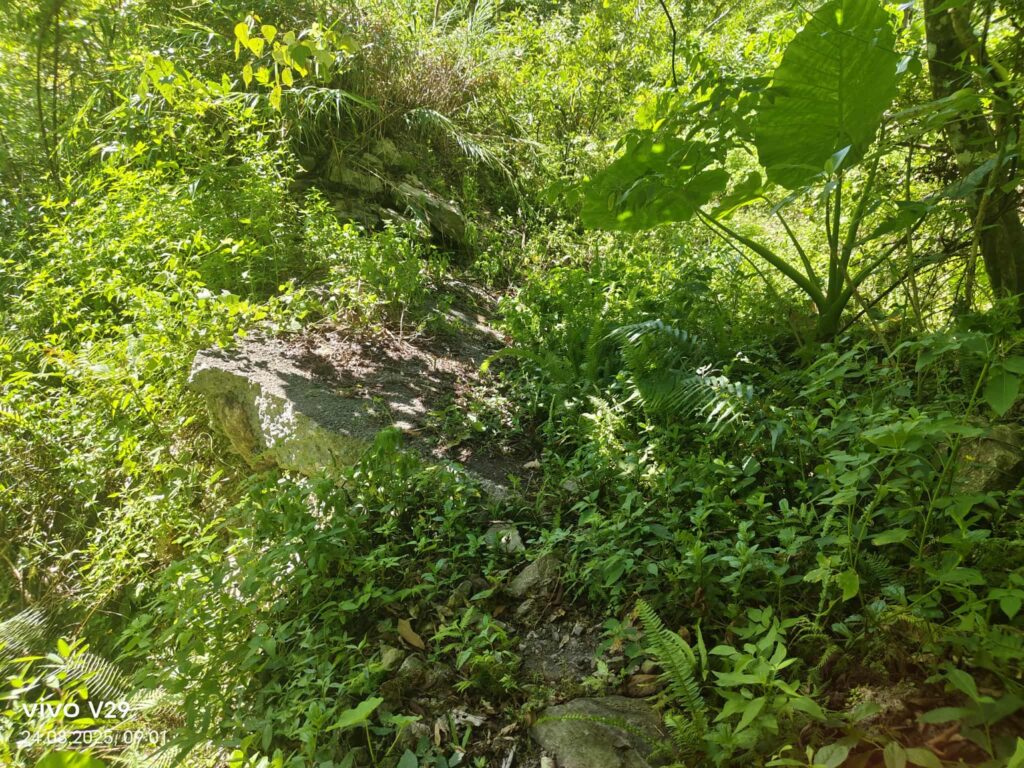
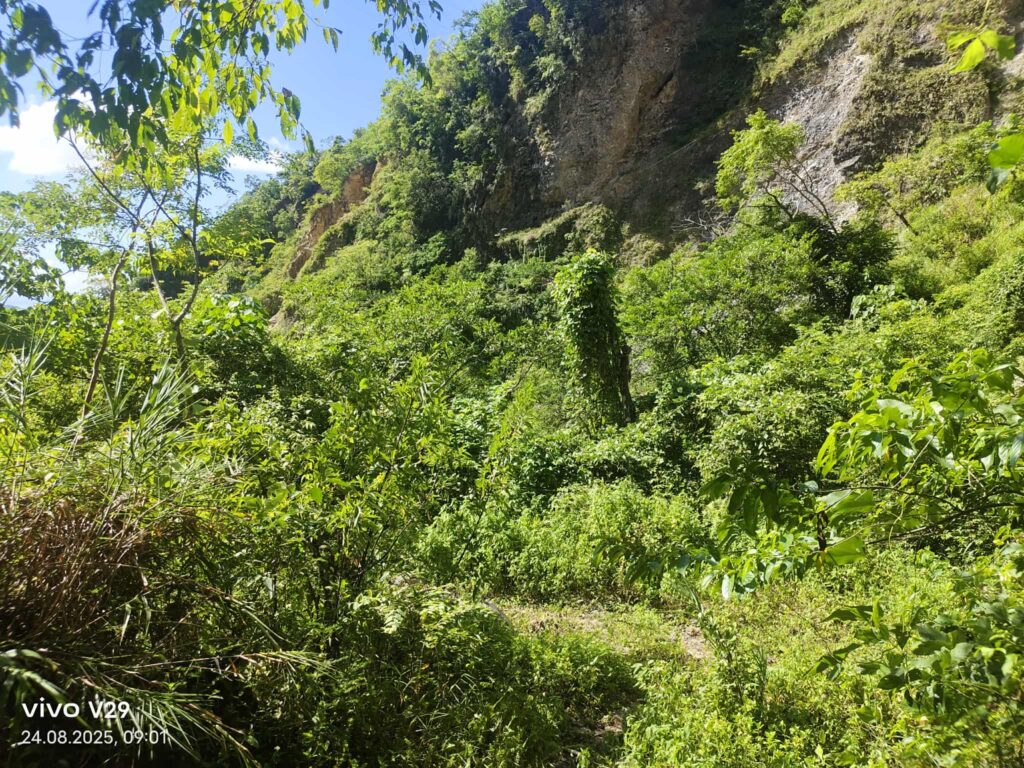
(overgrown quarry)
At the very end of this hidden path lies a small shelter, almost concealed in the vegetation. This was where the miners once sought refuge during blasting operations.
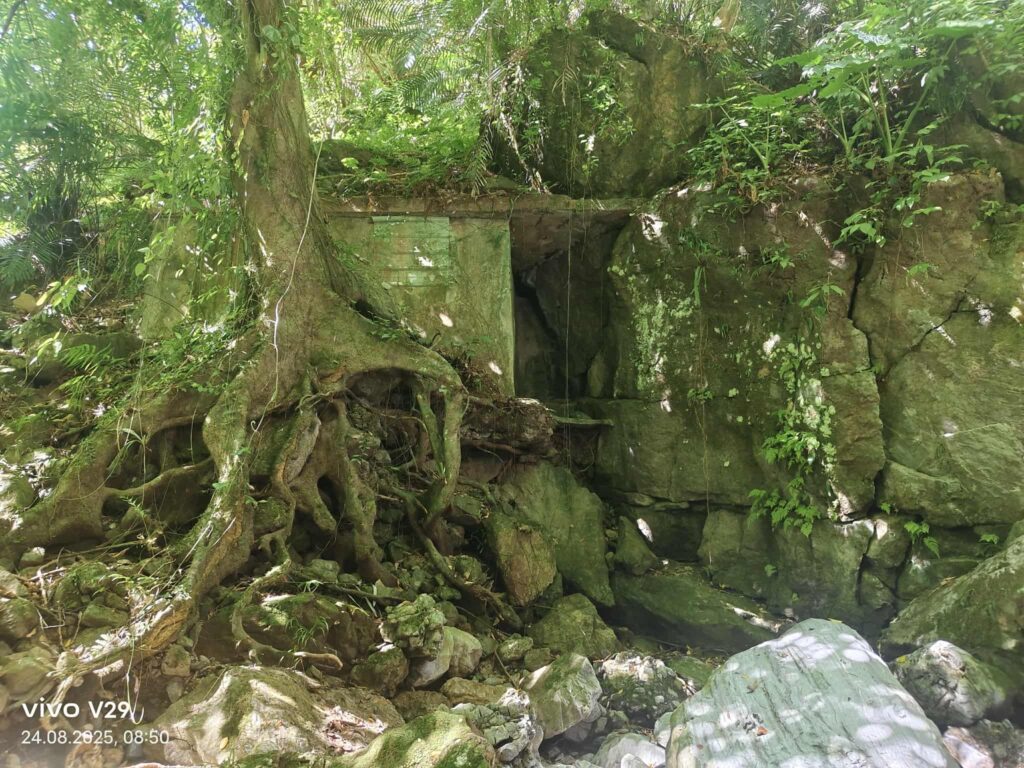
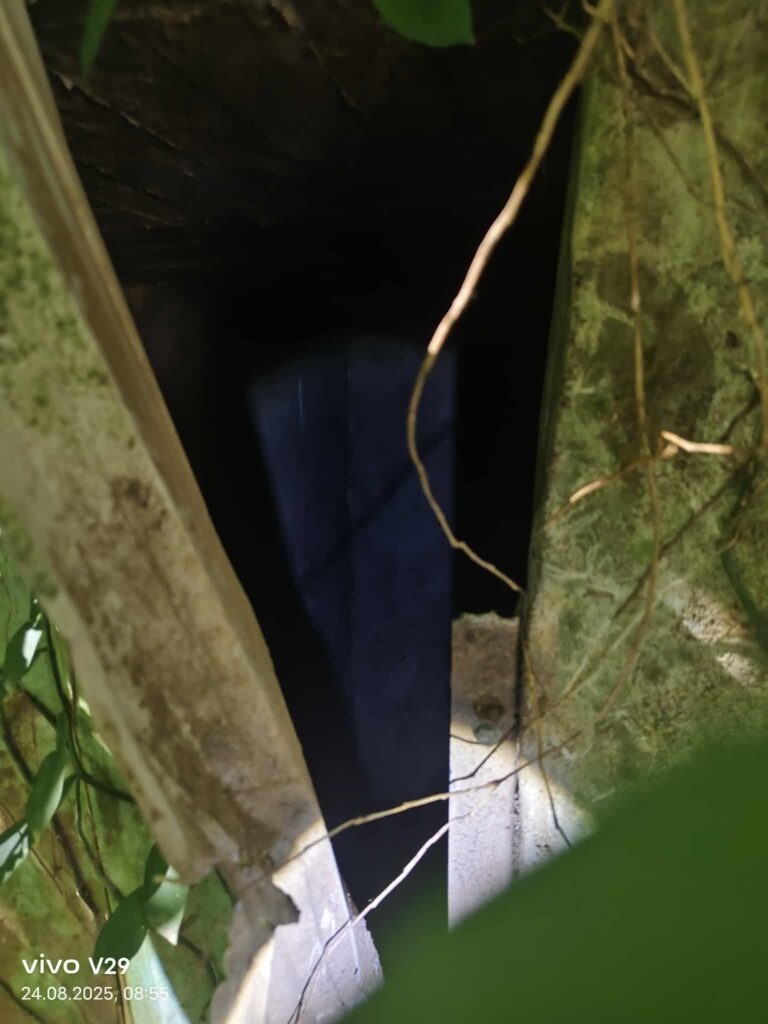
From the vegetation and a few broken sections, you can still trace the course of the old road. I’ll go back in again another time—it was simply too hot in the summer.
(copyright Claudius Petzold)