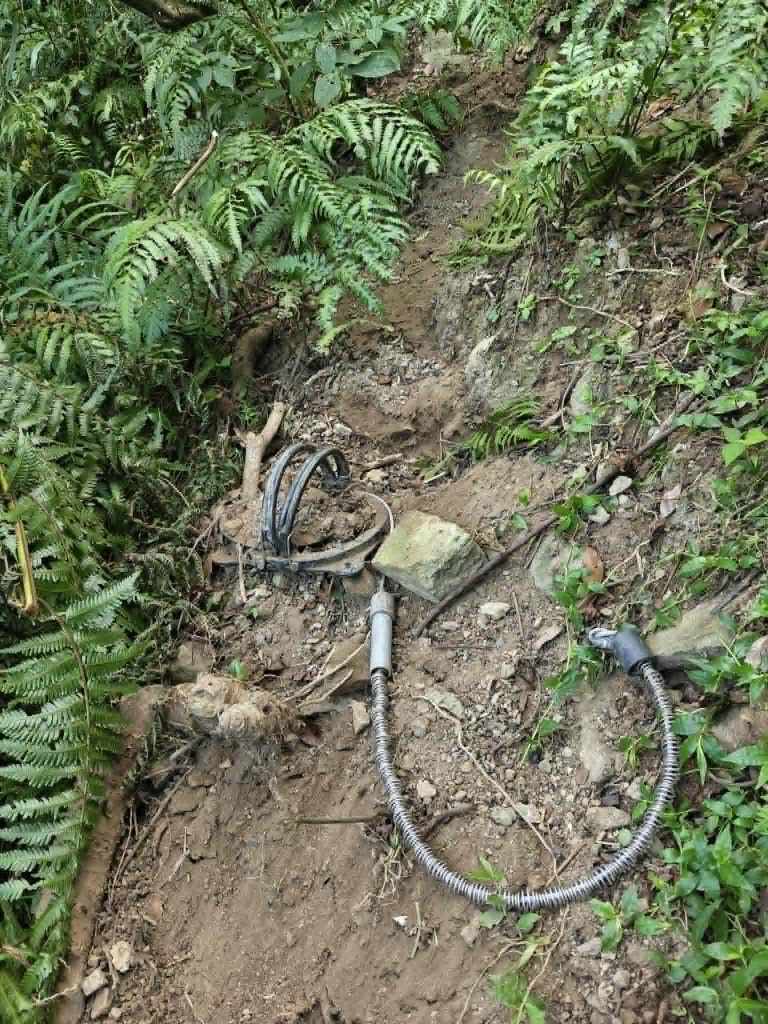
dangerous (hornets, dogs, sakes)
The lodges were heavily concealed and located about 200 meters from the main entrance—once again, a knife was necessary.
The entrance road is overgrown and significantly narrowed. There are numerous individual buildings. The entrance and the administration building:
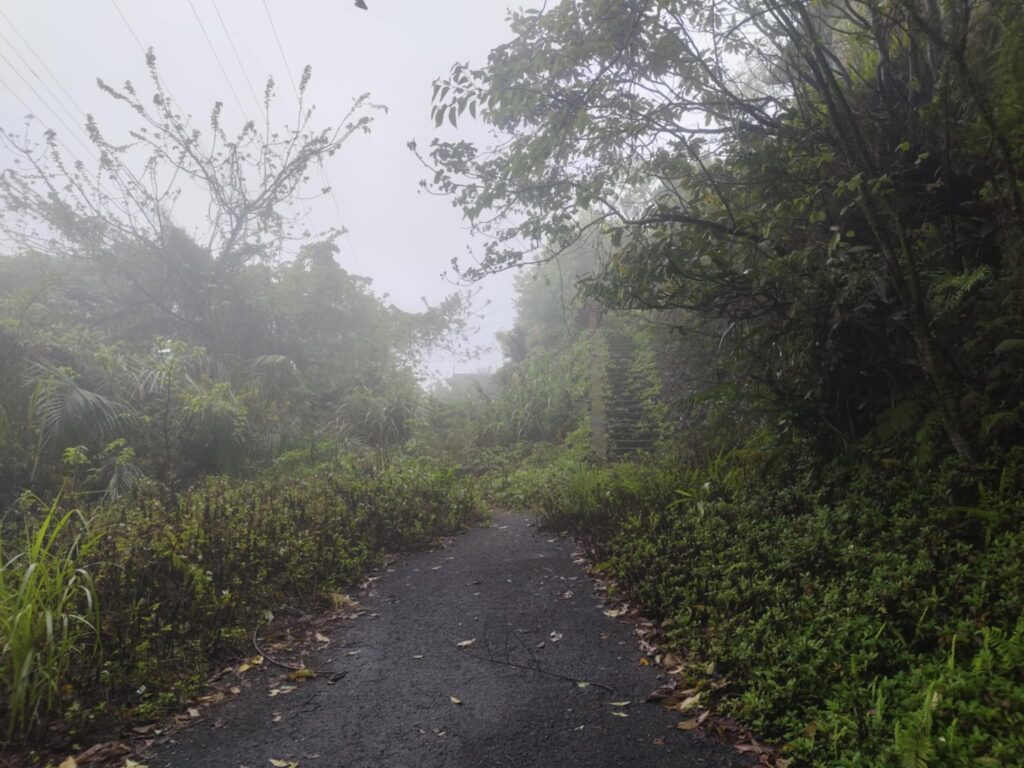
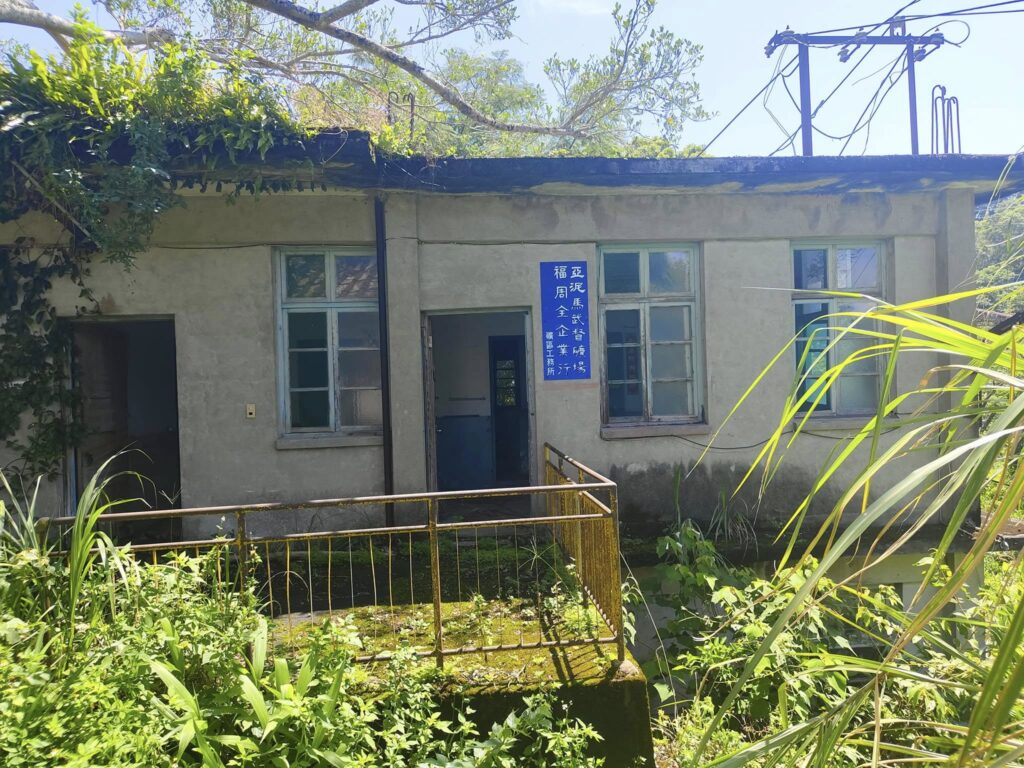
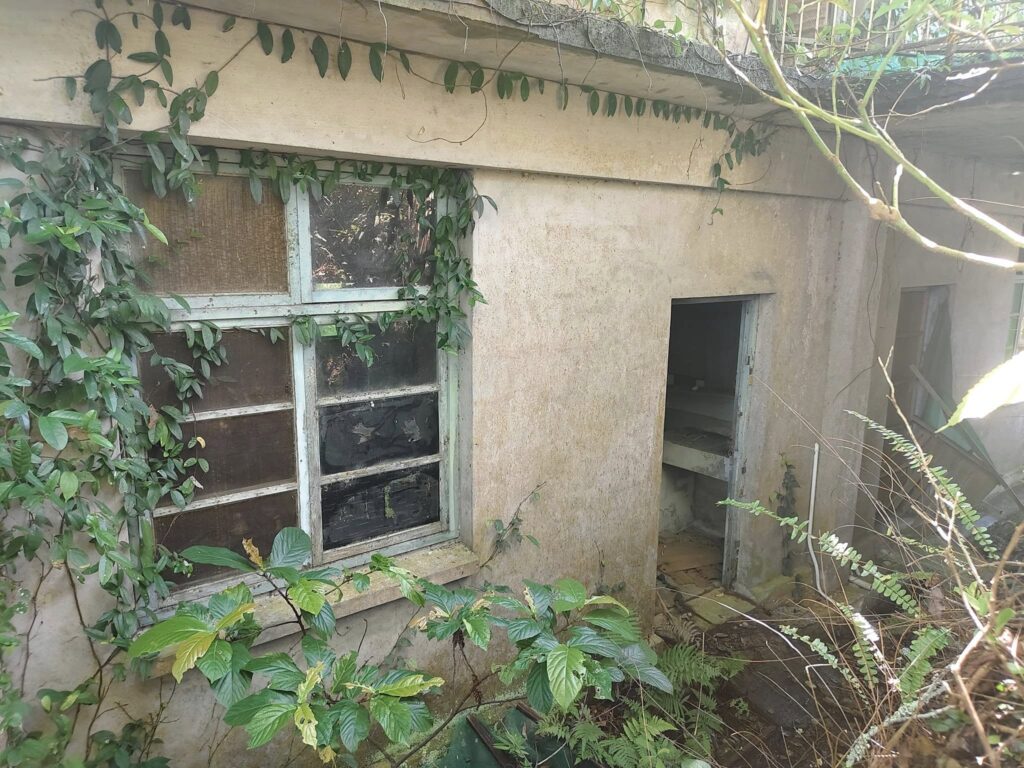
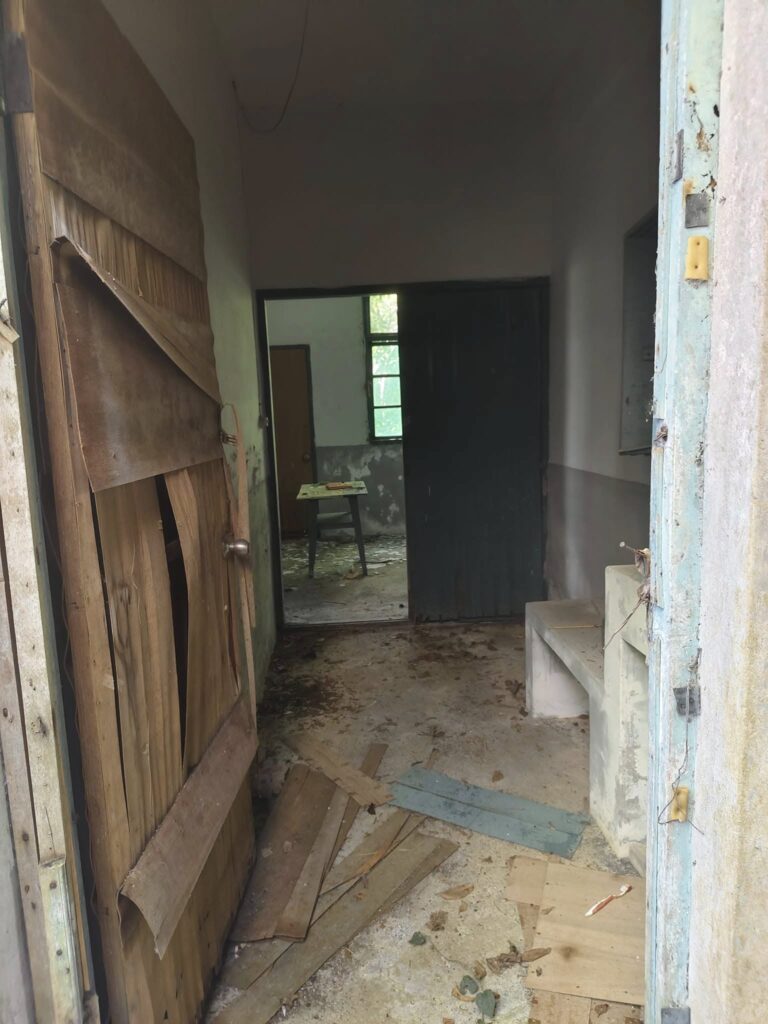
After about 60 meters, additional accommodations followed—but a knife was necessary. While they do not feature any special characteristics, they offer a glimpse into the former lives of their inhabitants. Furniture and calendars are still intact.
The view is impressive.
The guard at the entrance forbade me from taking direct photos inside the site because they don’t want to attract any interest. Normally, you can talk your way around things with locals in Taiwan, but this time, it didn’t work.
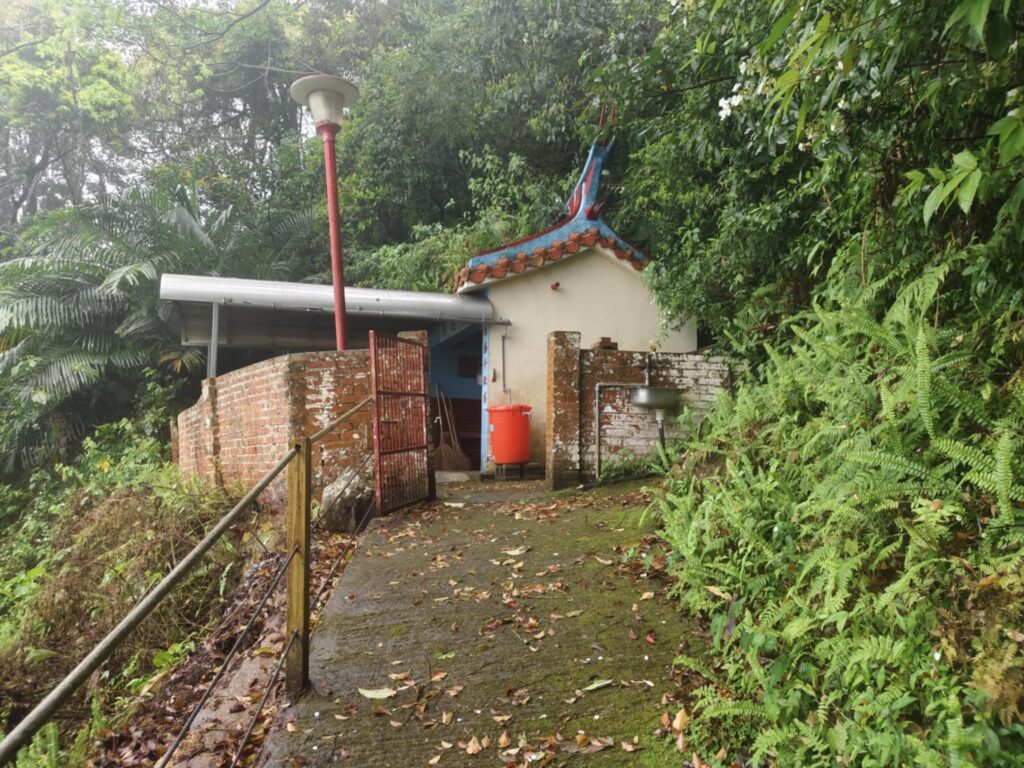
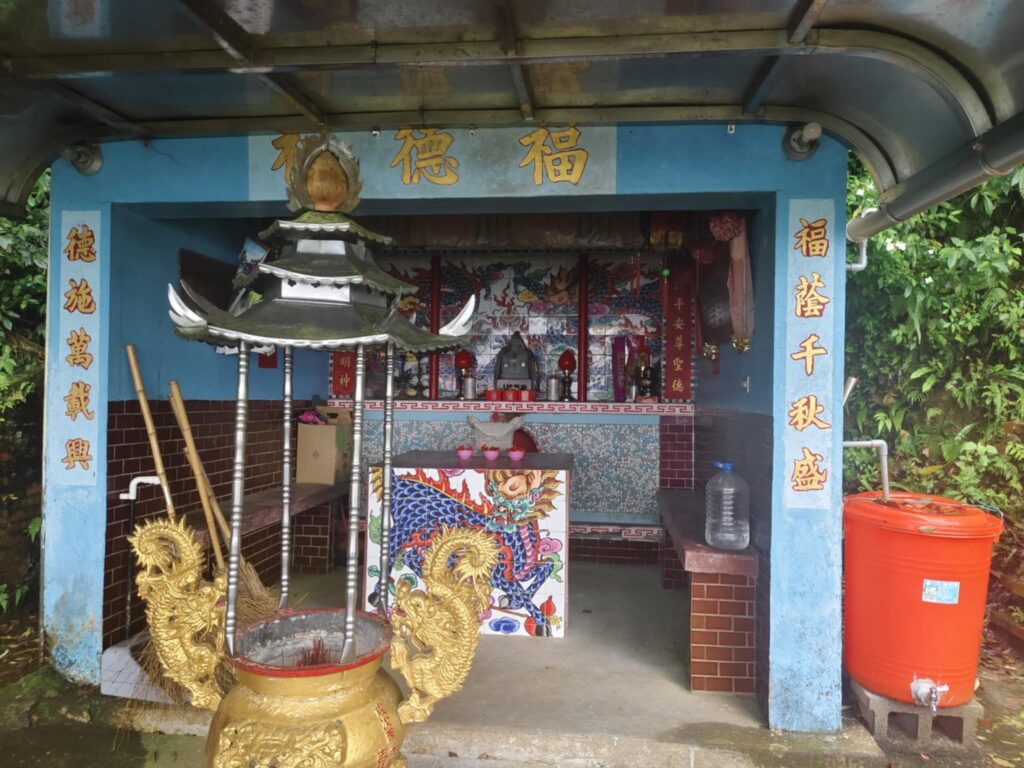
Opposite stands a well-maintained Earth God Temple, which is clearly still visited. Behind it, however, are numerous completely dilapidated building remnants that resemble farmhouses. Earth Gods or TuDiGong are tutelary deities of locations and the human communities who inhabit it.
In a former office, a few hundred meters below the main entrance, a former employee still lives. The trucks were weighed here. He is severely disabled due to his work. He didn’t want to engage in a conversation, and it was also made more difficult by a very hard-to-understand Taiwanese or Hakka accent.
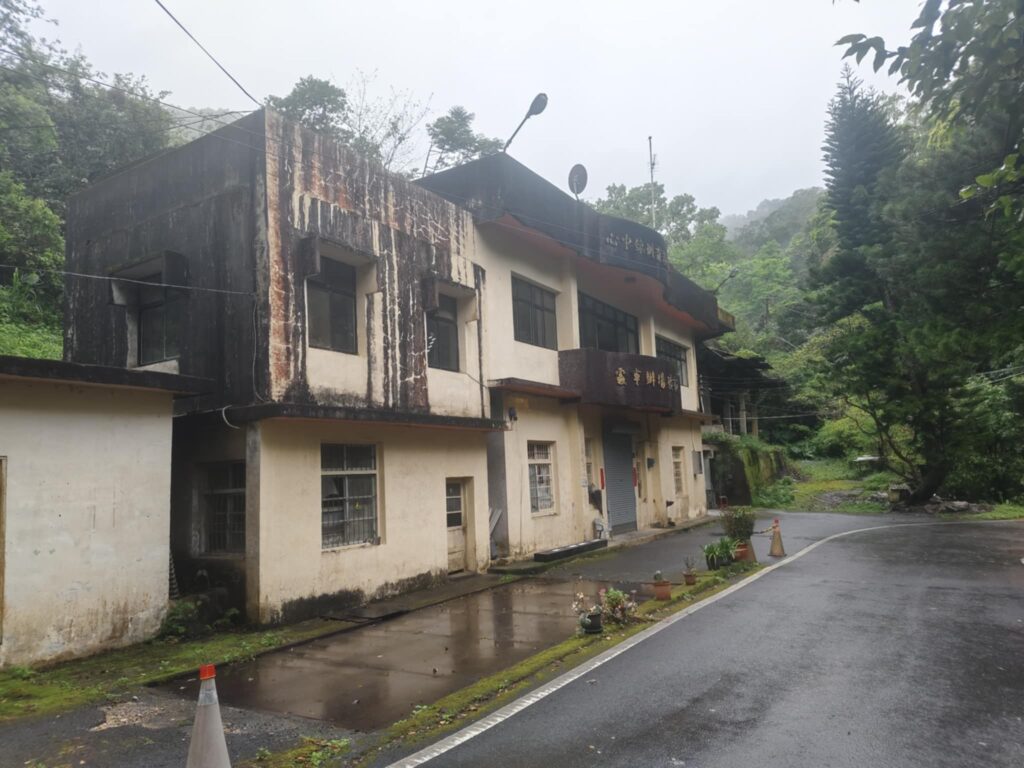
About 3 km downhill are the first villages, where some of the workers came from. I have driven through the village multiple times without really seeing any signs of life. It seems that farmers and construction contractors have stations here. Only an old woman told me that she is over 90 years old and still takes walks here.
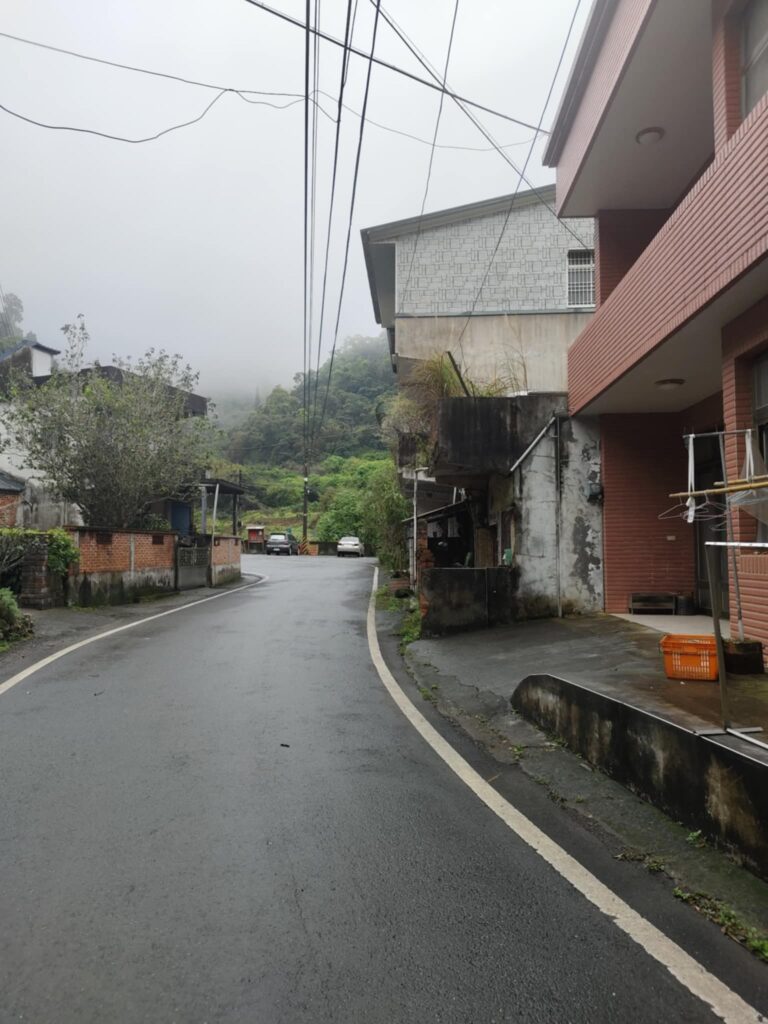
About a 10-minute drive away, we bought something from an elderly woman who had severe joint problems. She told us a bit about working in the mines. There are still many old farmsteads.
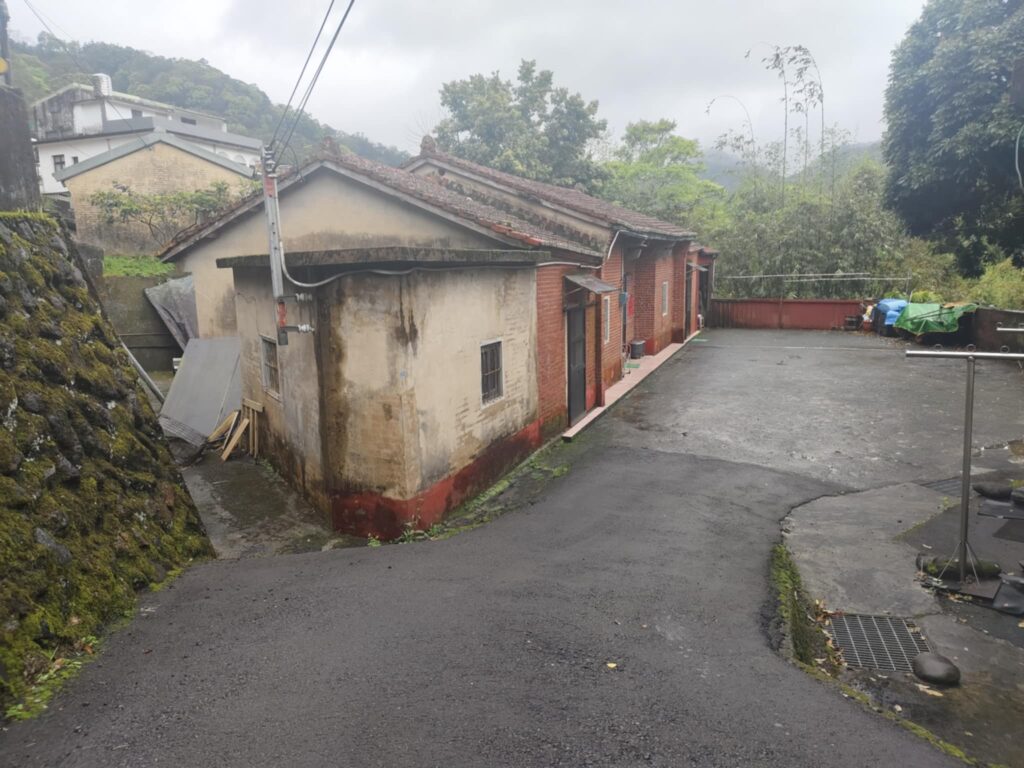
She still seemed quite clear-headed to me, but of course, her statements are not scientifically verified. I’ll double-check. She is 79 years old. When she was 15, her father had an accident. Despite this, he still had to repay a loan for purchasing farmland. As a result, she had to work in the mine for three years. There, she ruined her knees. She showed me her knees, which had obviously suffered from age. At that time, she earned 15 NTD per day, while men earned 20 NTD. But back then, rice and everything else were cheap. At 18, she got married and had children. She took care of them while also working on her own fields. Other people I met either didn’t provide any information or hadn’t worked in the mines.
Remarks: In Taiwan, the average daily wage in 1965 was relatively low compared to modern standards. The typical daily wage for an unskilled laborer at the time was around 30 to 50 NTD. Skilled workers or those in certain industries might have earned slightly more, but overall, wages were modest, especially in rural areas and for manual labor jobs such as farming and mining.
(Copyright Claudius Petzold)