ed. 2026/9/11
Zhongli is a clear example of how quickly a place can change. When I first visited Taiwan in 1999, the area around the train station and the neighborhood near the now-closed Sogo department store were bustling with activity. Over time, both areas gradually lost their appeal—Sogo and the cinema had to close, and the train station saw fewer visitors. One of the “most famous buildings for urban explorers” even emerged during this period of decline. Things have changed since then, as you can see below.
The God-of-Wealth-Building
Taiwan’s society is aging – and not just its people. The Zhongli Caishen Building (財神大樓, formerly known as Zhongli First Commercial Plaza) is one example. The Chinese name 財神 means God of Wealth.
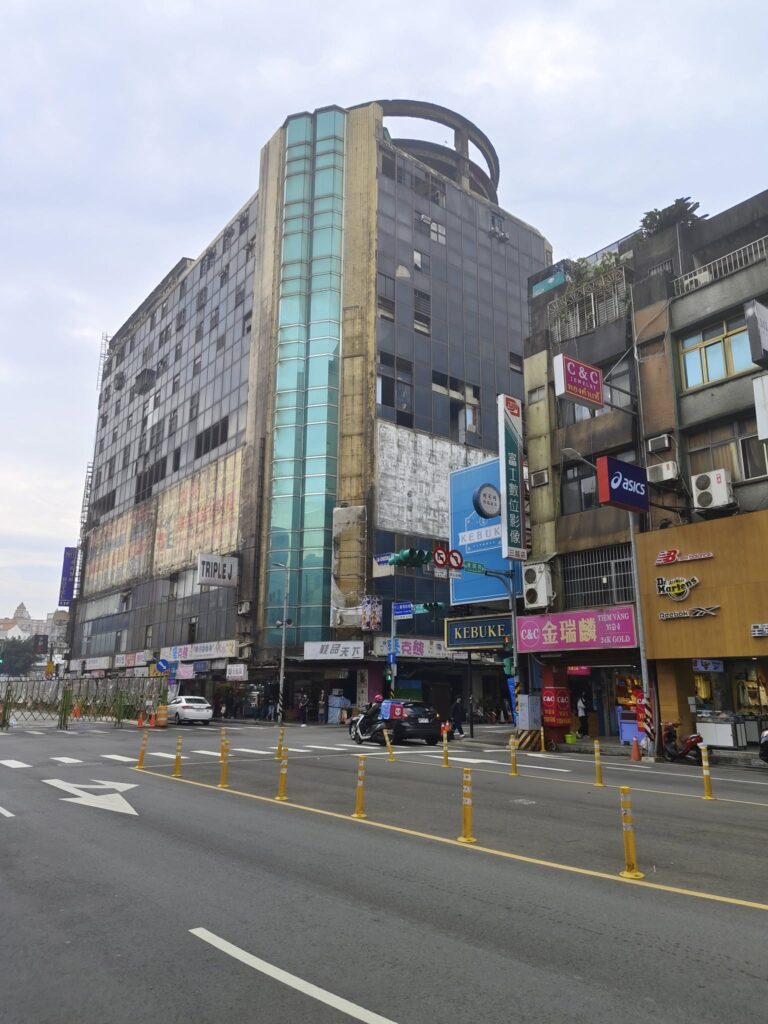
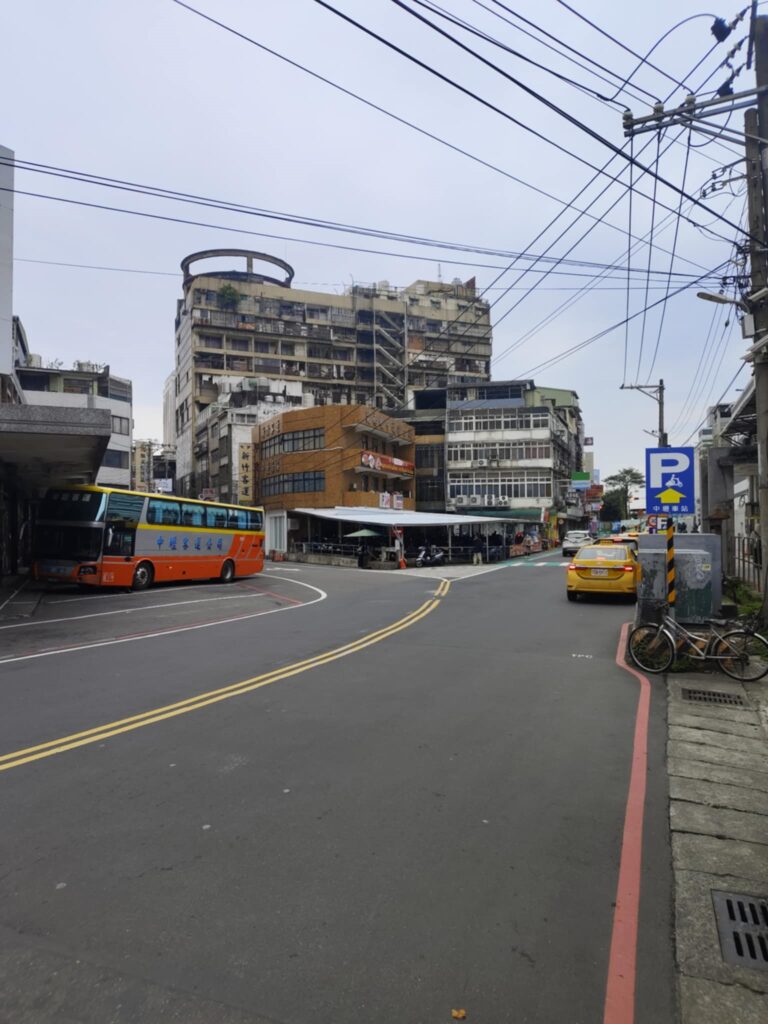
This building is located directly across from the main train station. The ground floor is mostly occupied by Vietnamese shops, while the first floor houses an arcade. Inside the building, everything is closed. You can walk up the outdoor staircase. Apart from that, only a few floors seem to be inhabited.
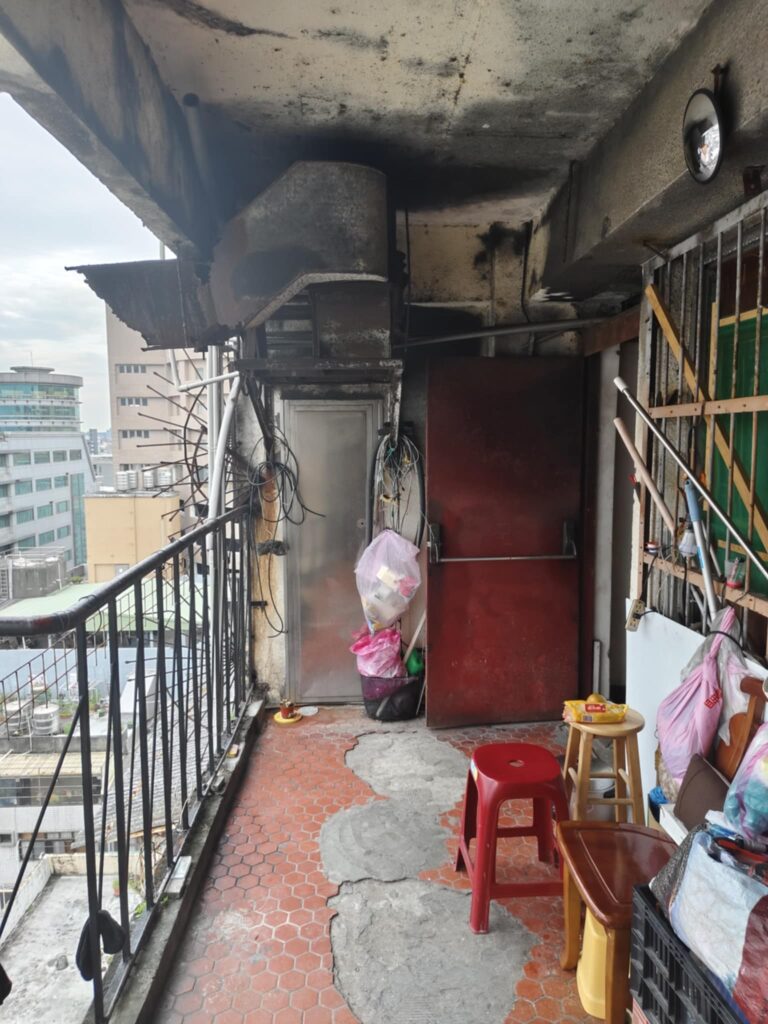
Large halls suggest the presence of banquet rooms, restaurants and theaters. Apparently, Taiwan’s youth once enjoyed this place.
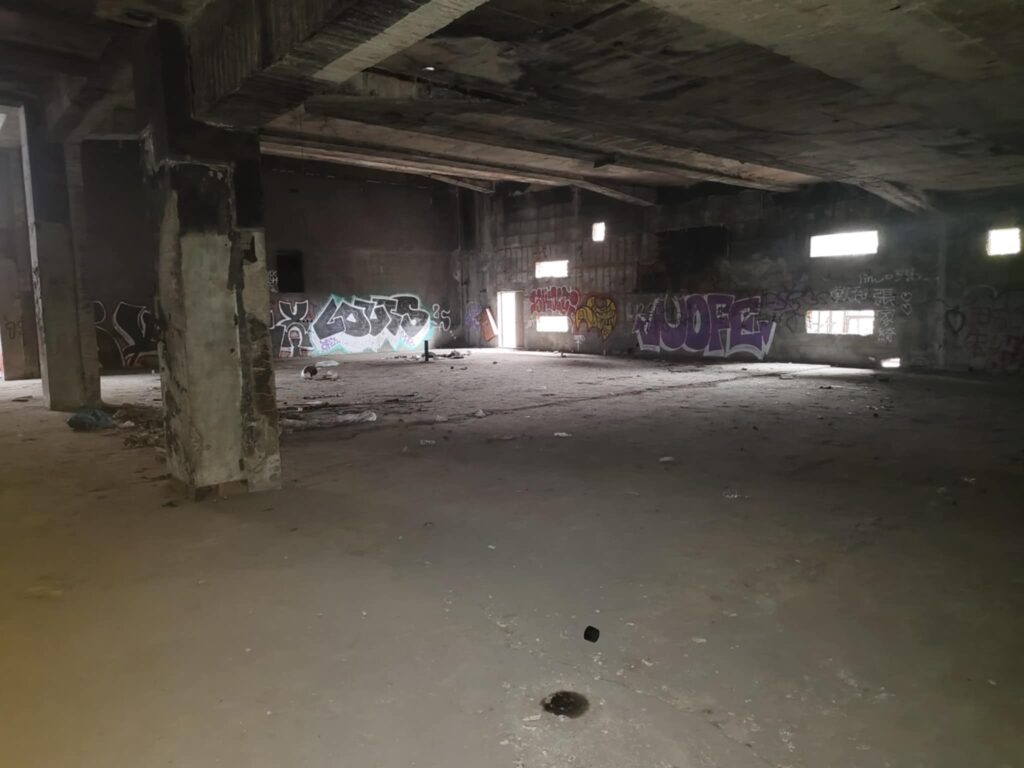
And now, the breathtaking view.
The roof is quite distinctive; from here, you can overlook modern Zhongli. This rooftop featured a revolving restaurant and an amusement park once. The decaying building stands in stark contrast.
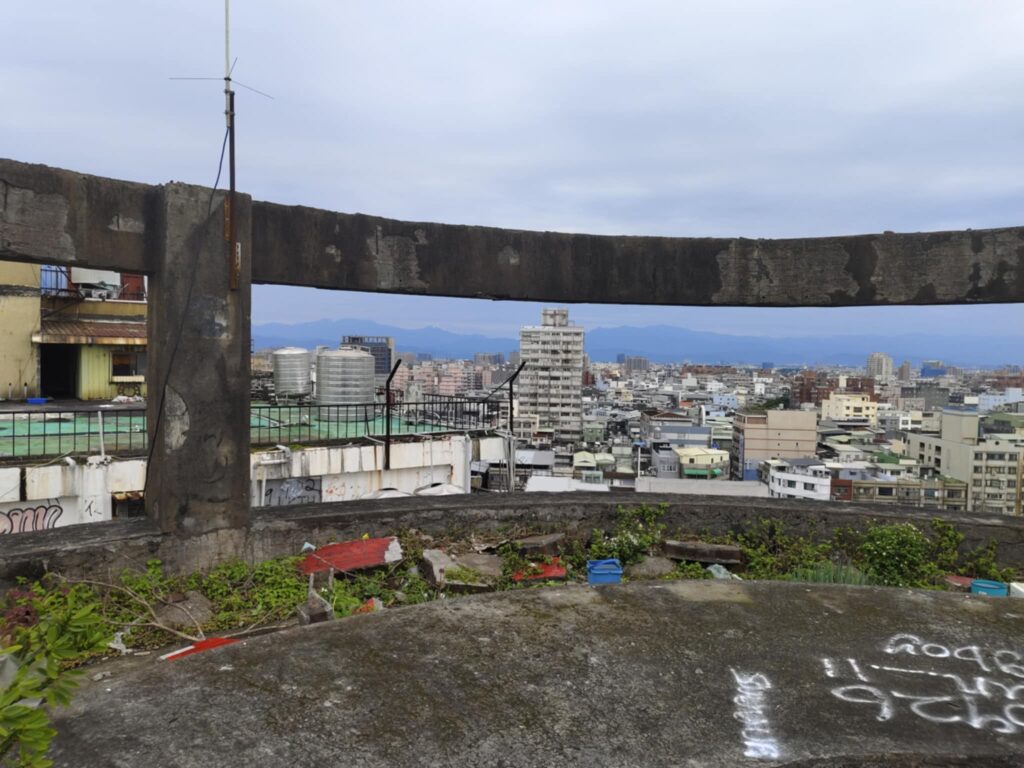
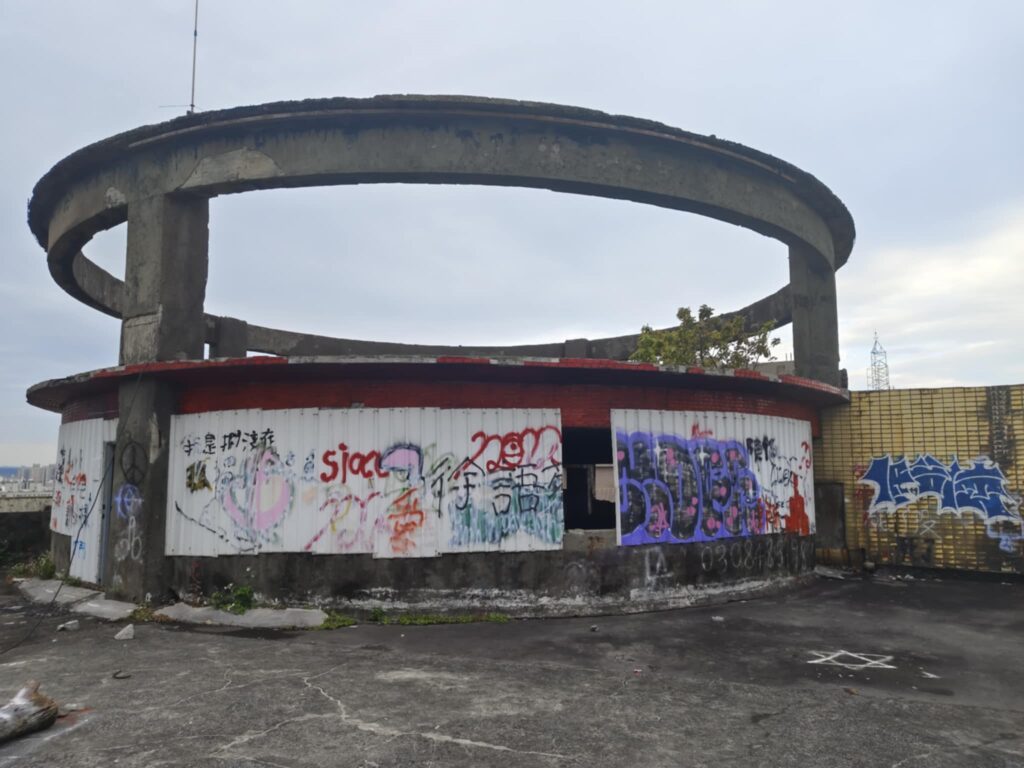
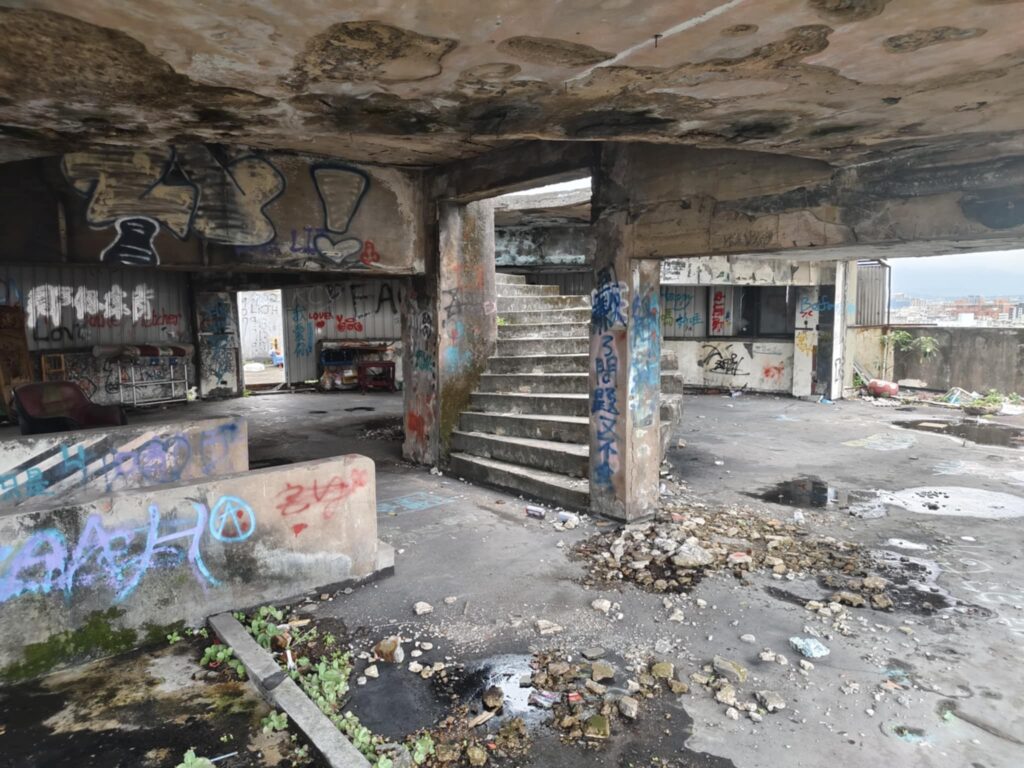
Here some explanation by ETtoday 2021/12/16:
The Building, opened in 1979, originally covered approximately 1,110 square meters. The original design included underground levels for food stalls and parking, while the first three floors housed a department store. The fourth and fifth floors were cinemas, the sixth floor had a Western restaurant, the seventh to tenth floors were suites, and the rooftop featured a revolving restaurant and an amusement park. Currently, the building has over 250 owners, but only about a dozen residents remain. Those who have recently moved in are mostly foreign migrant workers or low-income families.
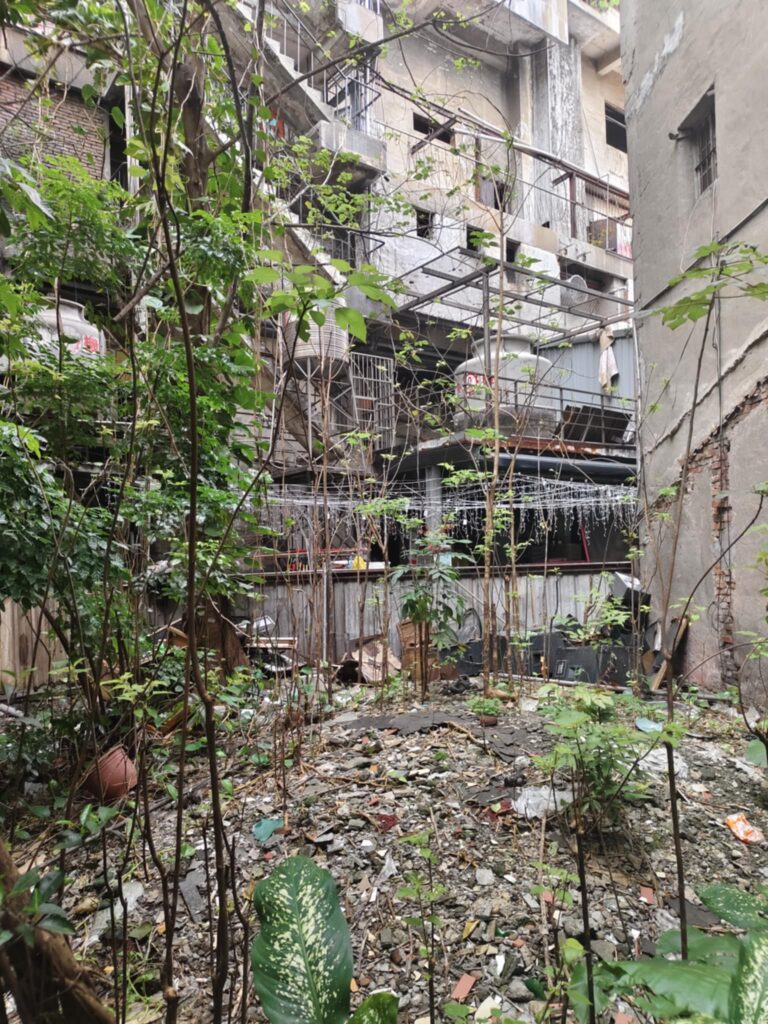
The 6th to 11th floors were designated for small suite-style apartments and a Chinese restaurant. Back then, owning a unit here was a dream for many. The area surrounding Zhongli Station was once bustling, with dance halls, department stores, and an endless stream of people. But as urban development shifted elsewhere and buildings aged, the once-thriving district fell into decline.
The building’s biggest challenge now is safety. Broken glass curtain walls, deteriorating structure, and locked stairwells fail to keep squatters from seeking refuge inside. The building has also gained notoriety due to past fires and suicides—people have jumped from the rooftop, turning the Caishen Building into a so-called “ghost building.” Over the years, the building has experienced at least three fires. Renovation alone would cost NT$80 million (approx. USD 2.5 million), a cost that most residents and creditors are unwilling to bear. (Note: Houses in which people have committed suicide are very difficult to sell. According to case law, this must be disclosed when purchasing. Many Taiwanese believe that the spirit of the deceased brings bad luck.)
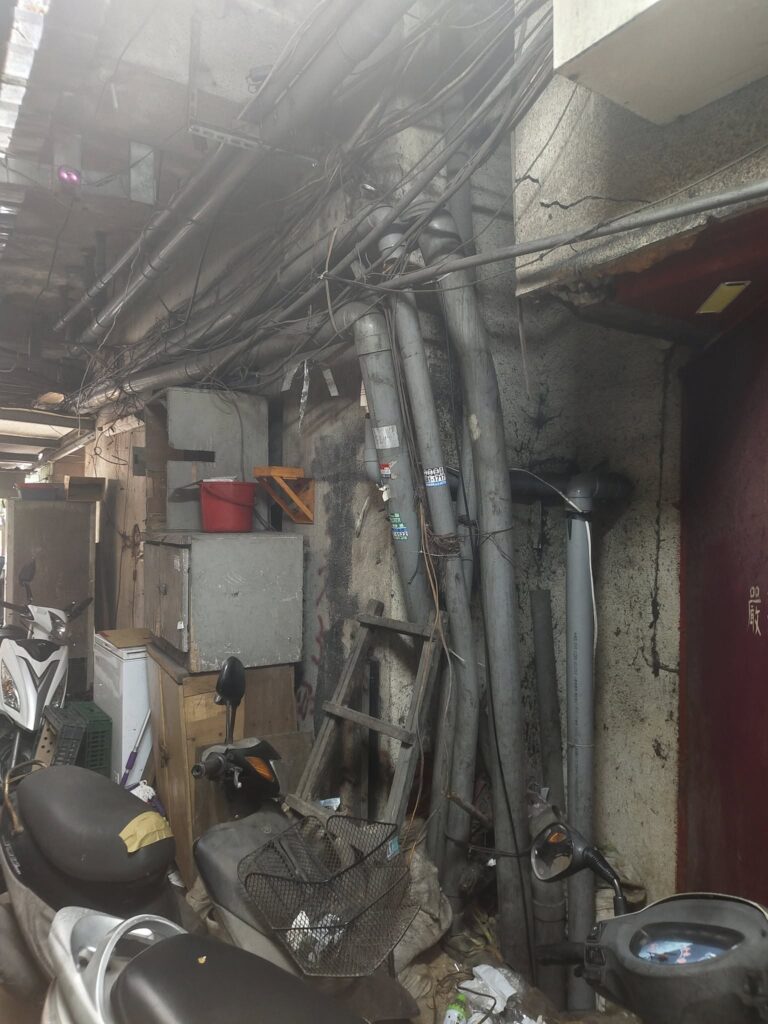
Old photos on Google Maps show that the building has remained almost unchanged in poor condition since 1009, so the decay began much earlier.
But times change. In recent years, the train station has been rebuilt, with new transport connections under construction, while old neighborhoods are being torn down. And it’s not only the buildings that are transforming. Around the station, many new shops have opened, some run by “new immigrants,” predominantly Vietnamese. The younger generation aspires to more than life as factory workers, “foreign brides,” or masseuses. Like the Taiwanese, they share a spirit of independence—preferring to run a small business of their own rather than remain dependent on others.
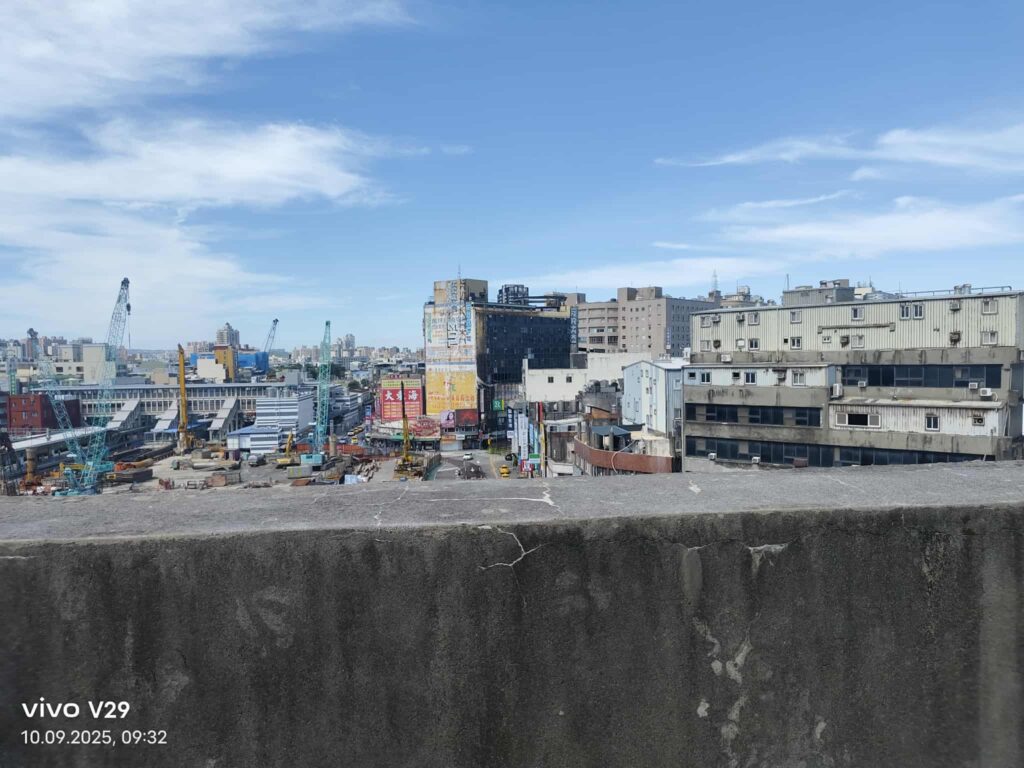
(opposite: The ghost house, left the construction site)
Later visits
Things have definitely changed around here. I went back inside and discovered a definitely illegal karaoke bar. To avoid any trouble, I quickly left without taking any photos. A bit further up, I ran into two young men who immediately asked me if this was my building and what I wanted. They were more of the petty criminal type. I politely asked back if it was their building, adding that I was just looking around. In any case, they became friendlier and said OK. I kept wandering around the area and found the cinema
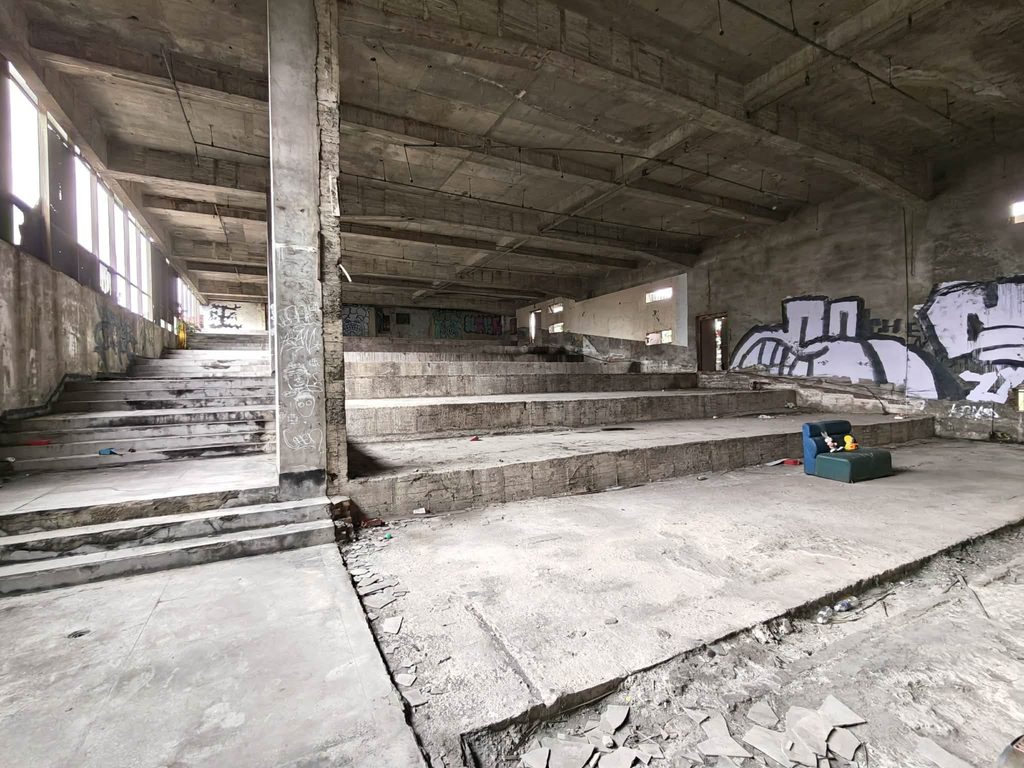
and a romantic spot.
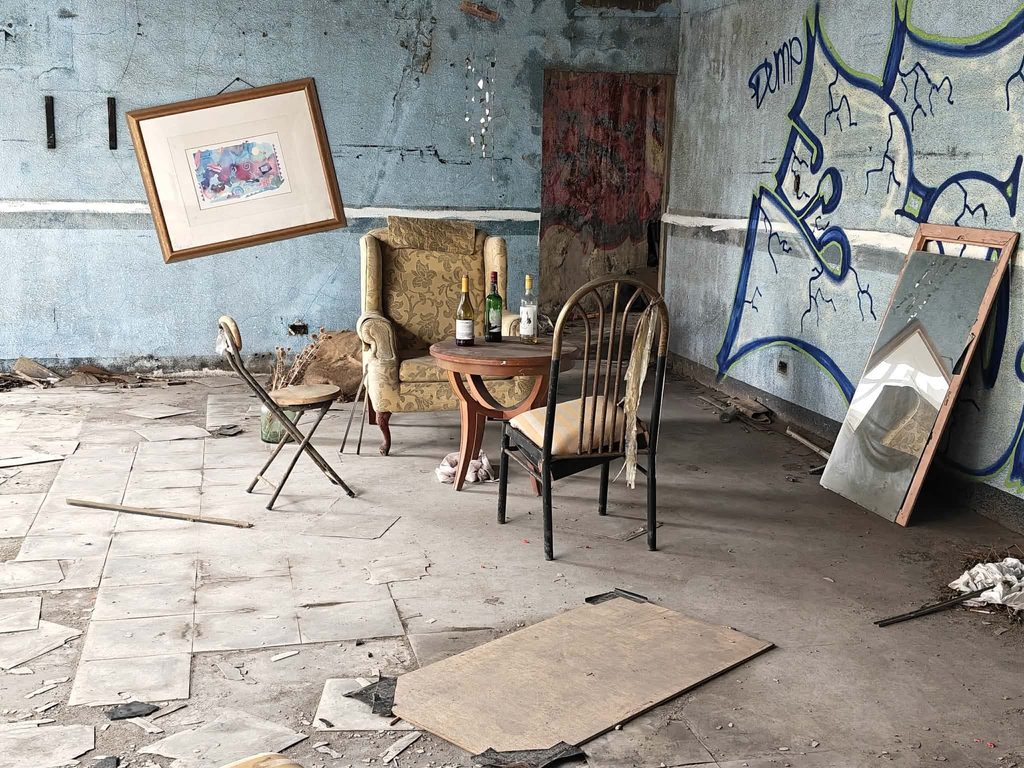
The open window takes away a bit of the romance, but whatever. Cool idea.
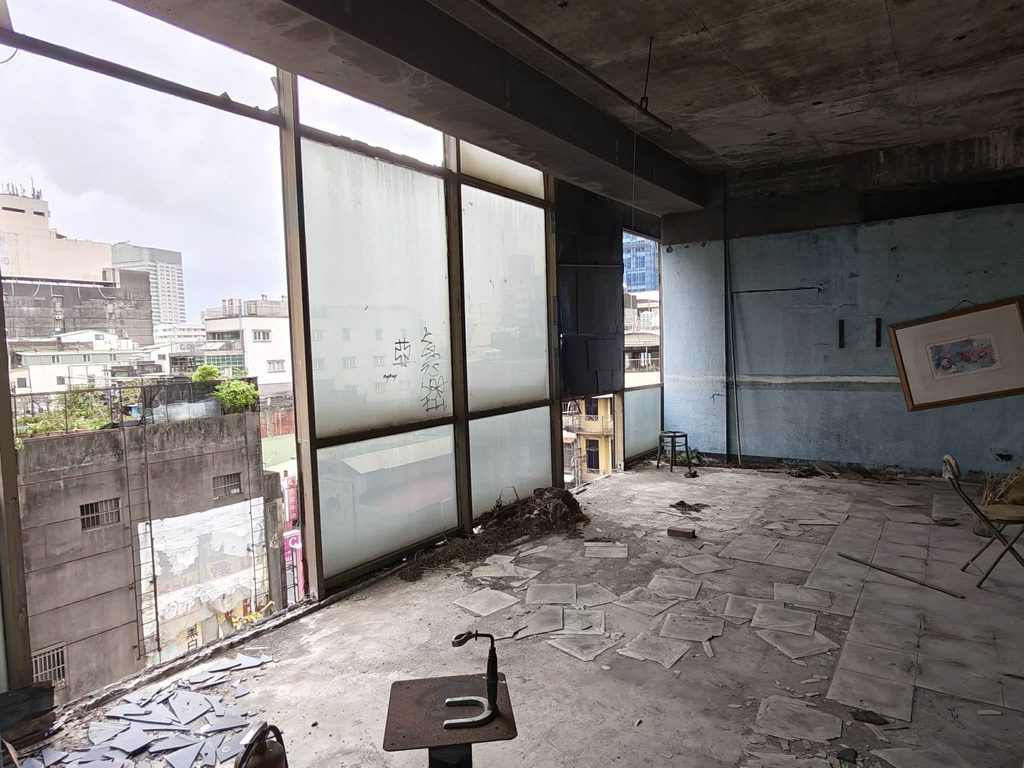
The old cinema near Sogo
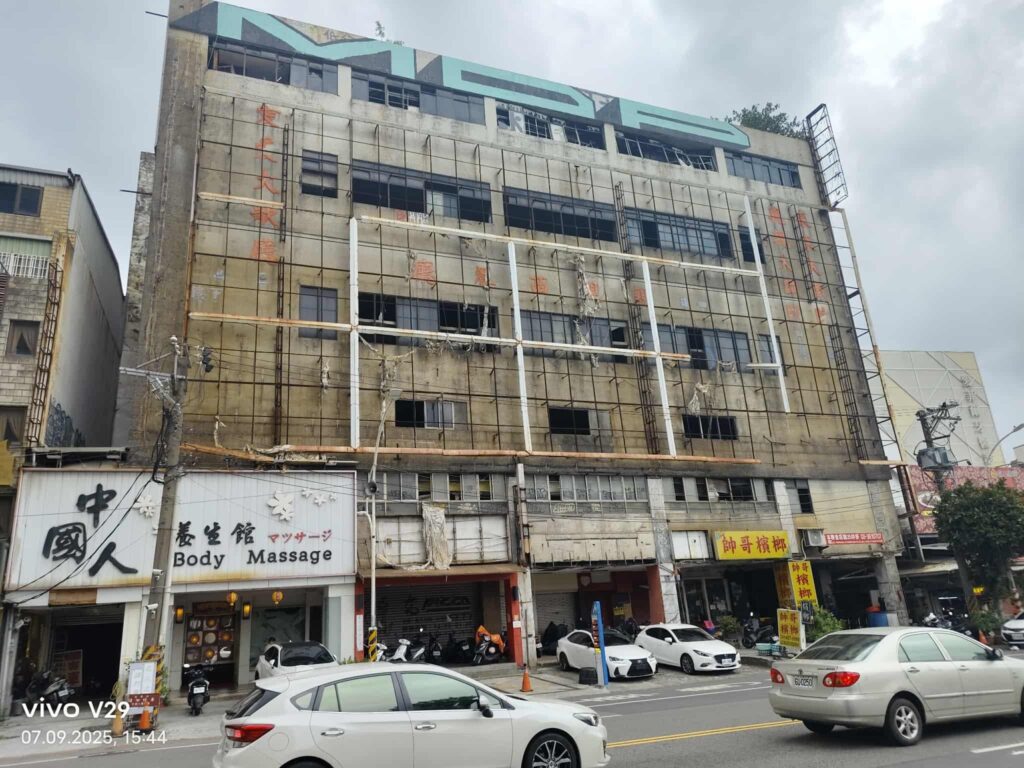
Oh yes, memories! I used to go there with my wife. Today, it has become a tightly sealed industrial ruin next to Sogo. You can still find photos of it online, taken by urban explorers, but now it’s firmly closed off, standing as an ugly foreign body in the cityscape. No way to penetrate that bitch. Zhongli, however, has moved on with smart urban development. The river has been partly restored, long walking paths have been created, and within just a few years an MRT station connecting to the airport has opened. Had a German been involved in its construction, we might have ended up with nothing but another half-finished ruin. At the same time, this too reflects a wider trend. Netflix and modern multiplex cinemas are putting traditional movie theaters under heavy pressure.
The cinema is still surprisingly well preserved and not very damp or decayed, probably because the open windows allow for ventilation.
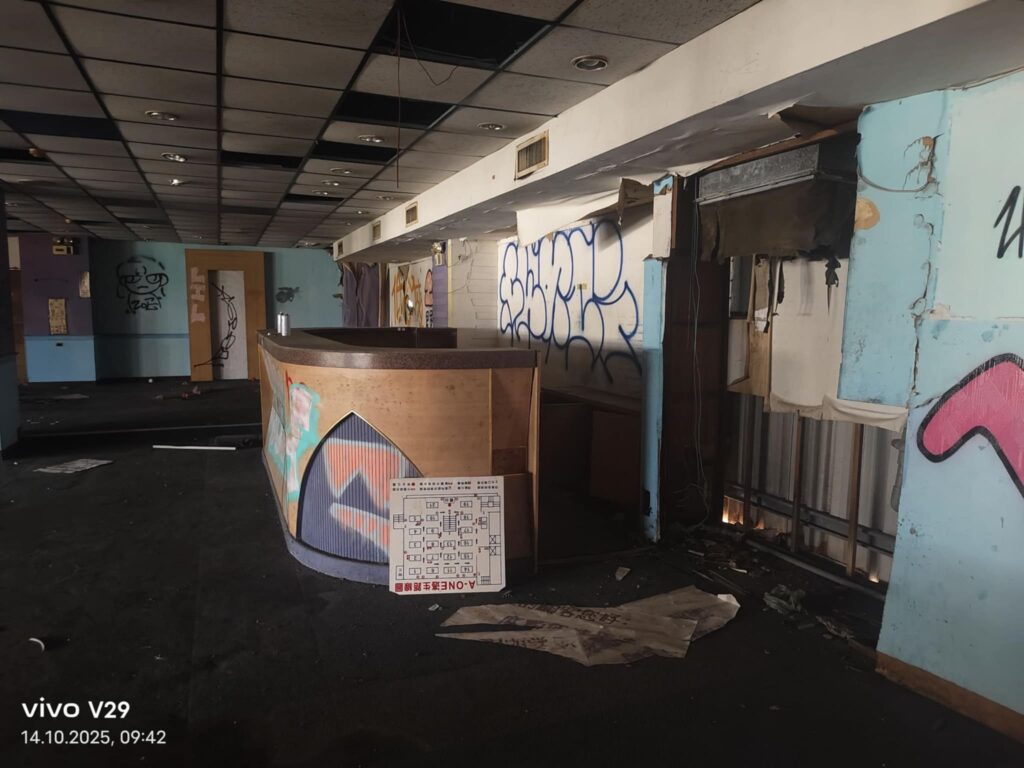
The floors are different, and it’s no longer possible to tell their original purpose.
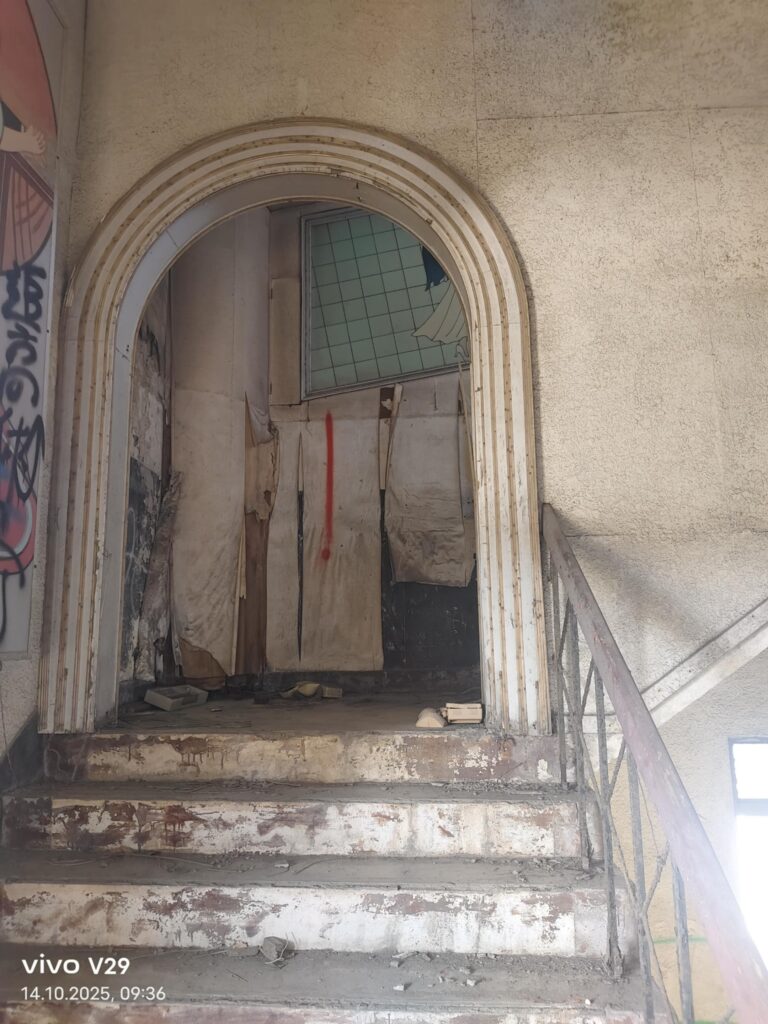
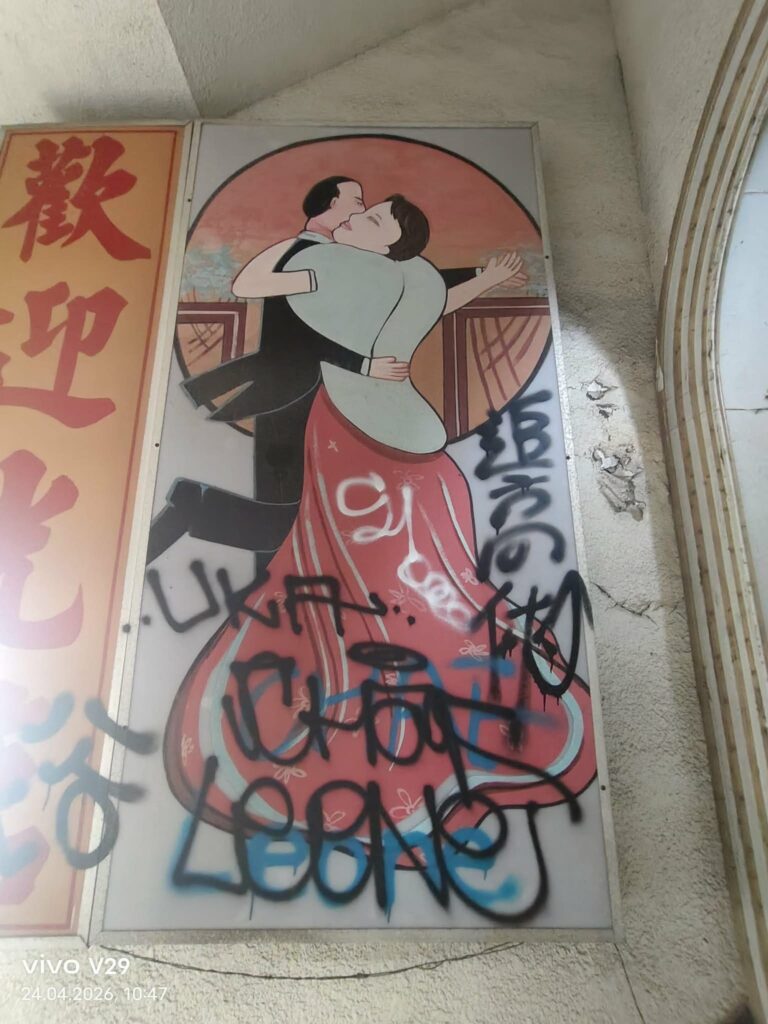
As is often the case, the top floor is the most affected.
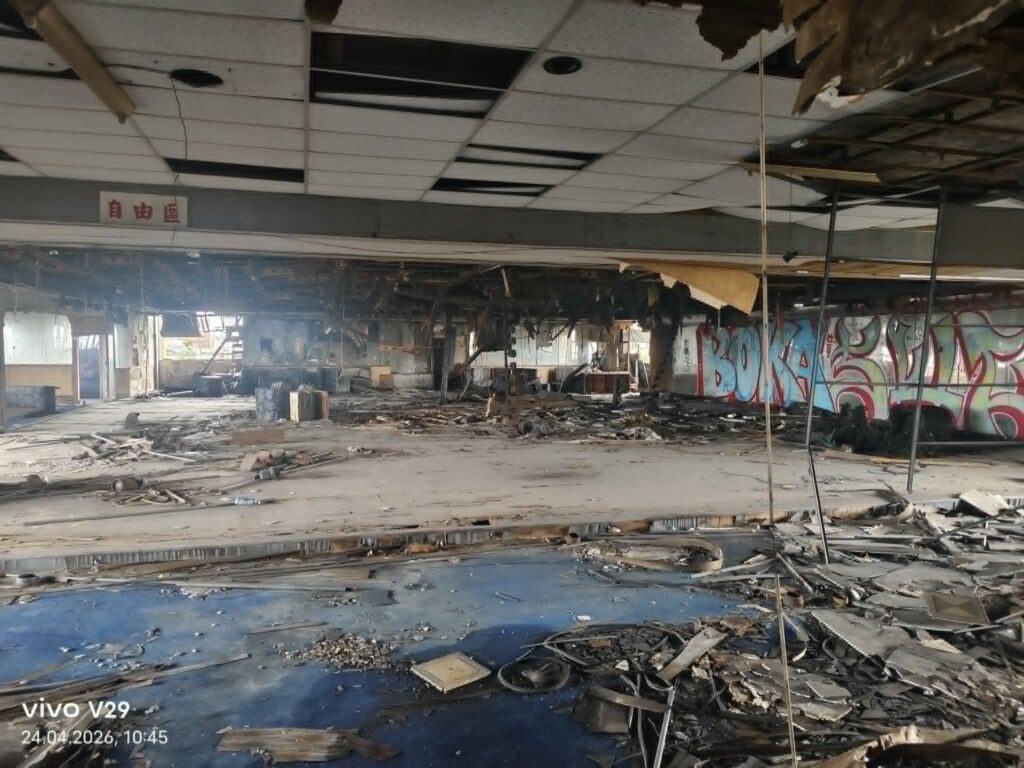
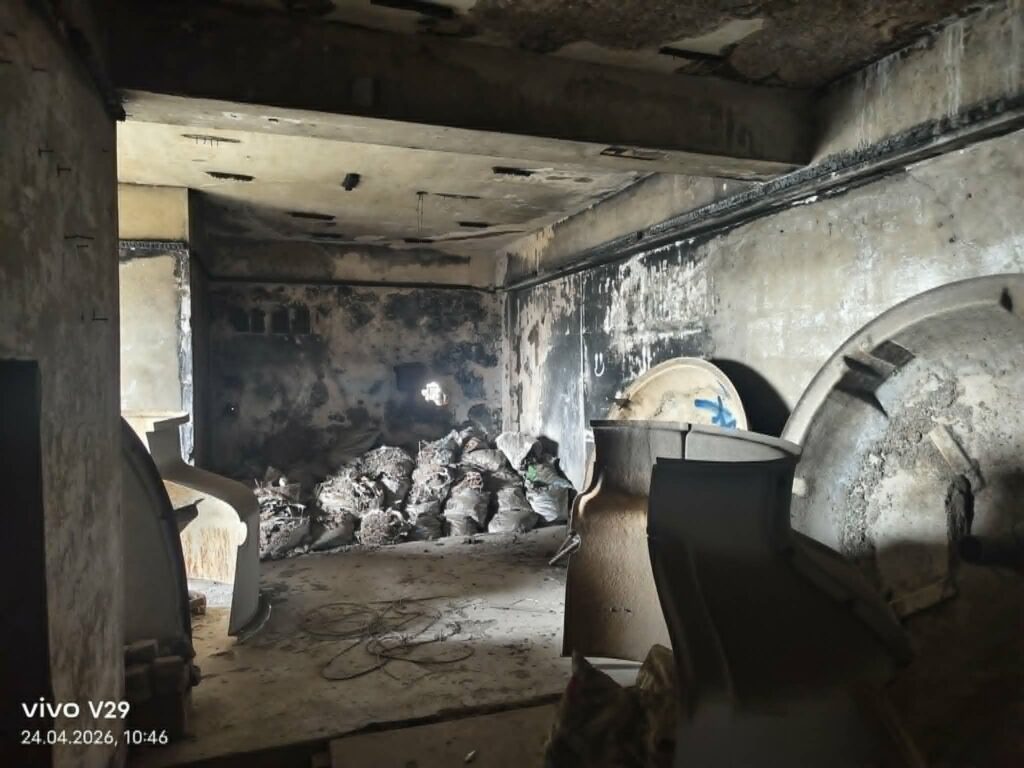
About a five-minute walk away lies another remnant—an old department store. Only the ground floor is still in use, housing a branch of the POYA store chain which is closed since 2024. The upper floors have been vacant since at least 2011. Above the POYA store, the façade has remained a “blank ugliness,” even though it was meant to carry advertising. The building can be entered without difficulty, and from the rooftop you can enjoy a view over Zhongli—both eerie and fascinating at the same time.
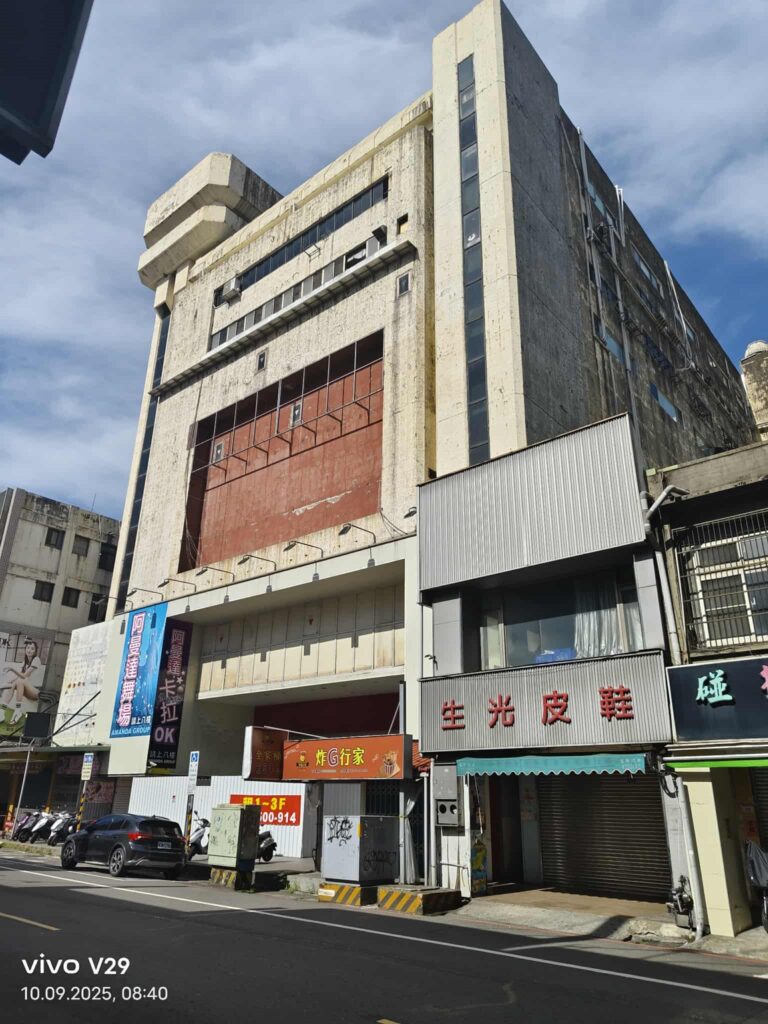
(nothing changed since 2009)
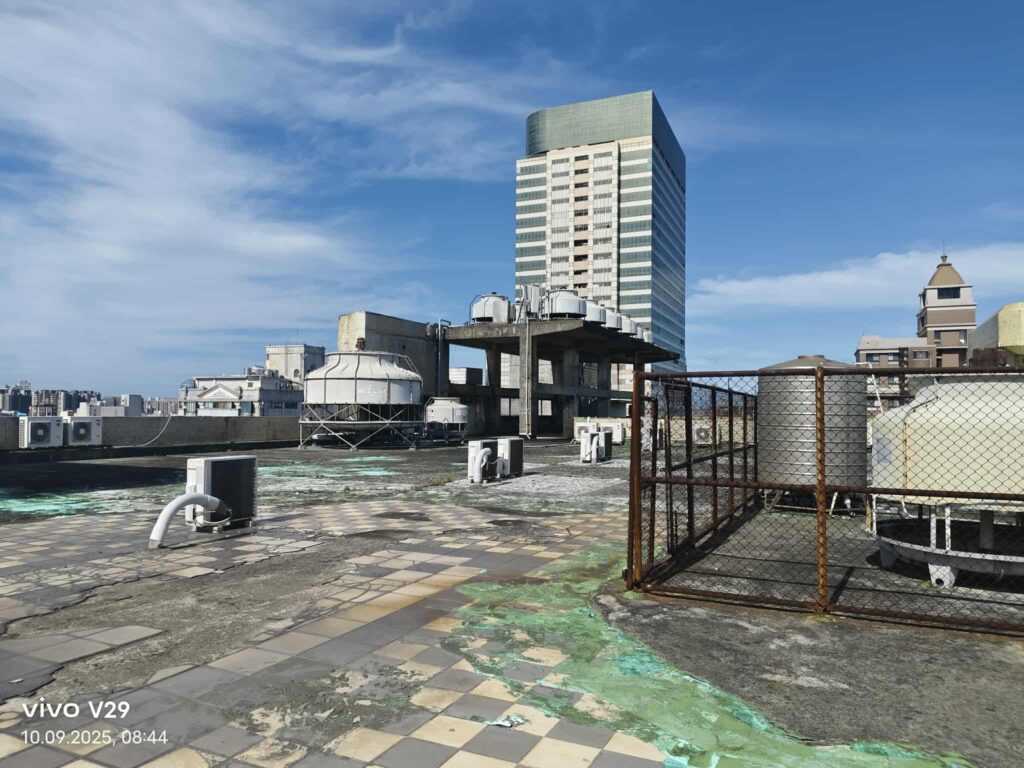
Yet somehow, life is returning to the surrounding alleys—it seems the area is turning into a small bar district.
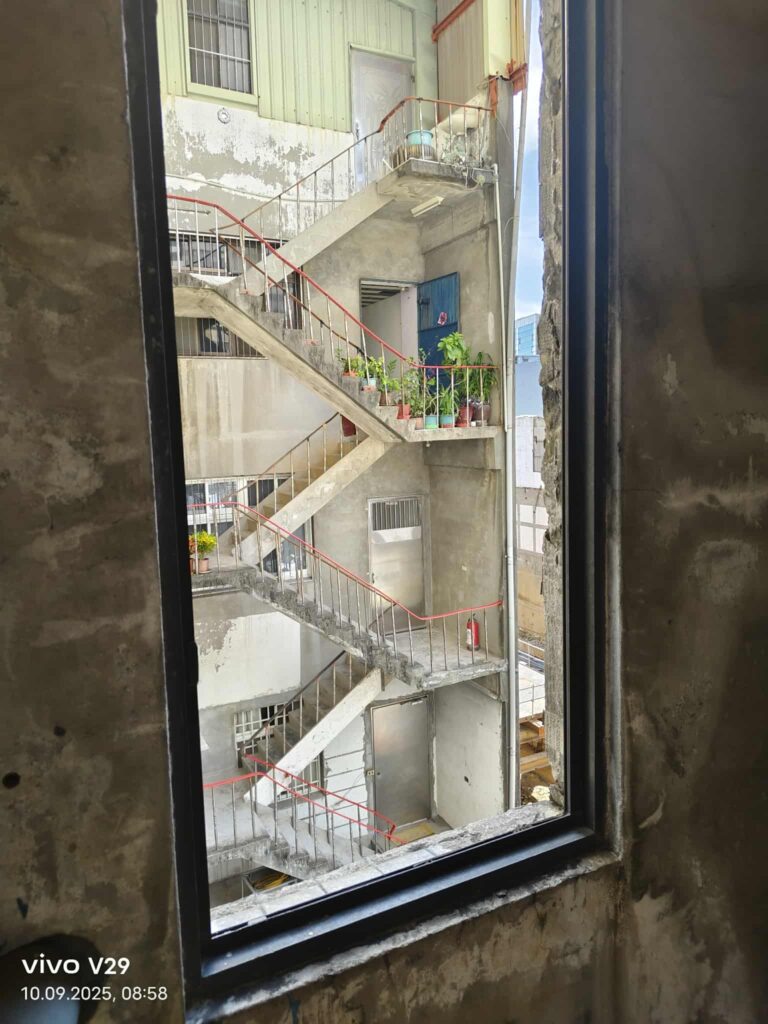
(These external staircases are typical of older buildings.)
The Colonial Building
I don’t think it belongs to the group of buildings required by the government to preserve their façades. Stylistically, it shows some differences. Google Maps images from 2009 reveal construction work, though at that time the windows on the upper floors were still intact. At some point, there seem to have been small shops on the ground floor, while the upper floors were never inhabited.
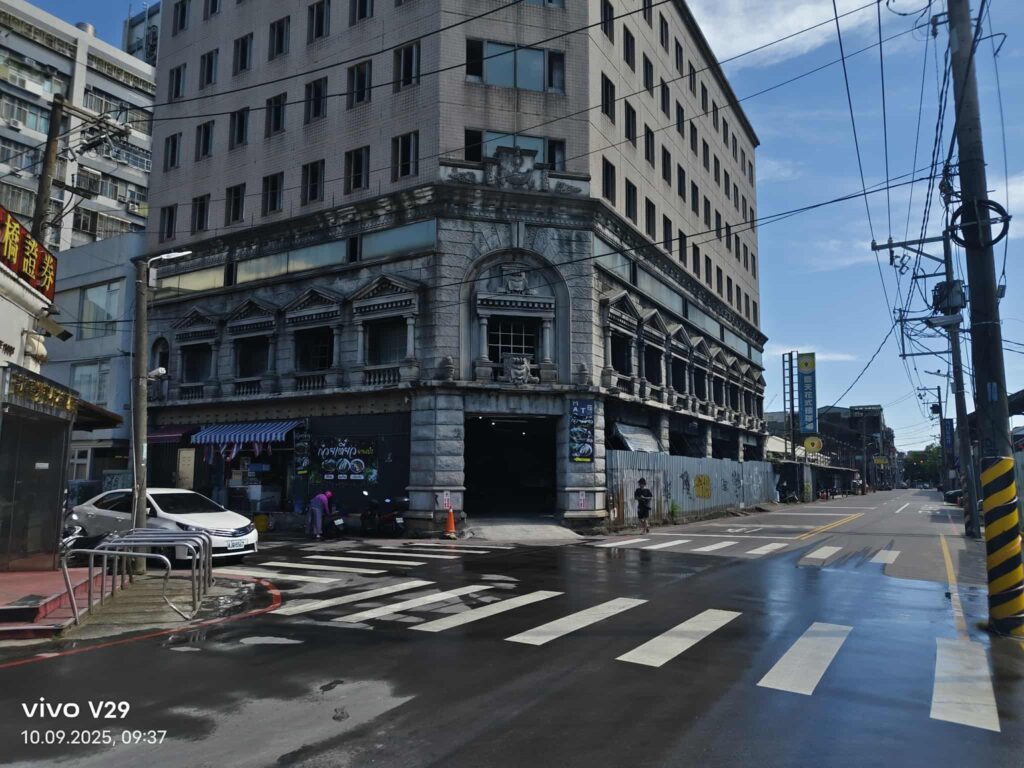
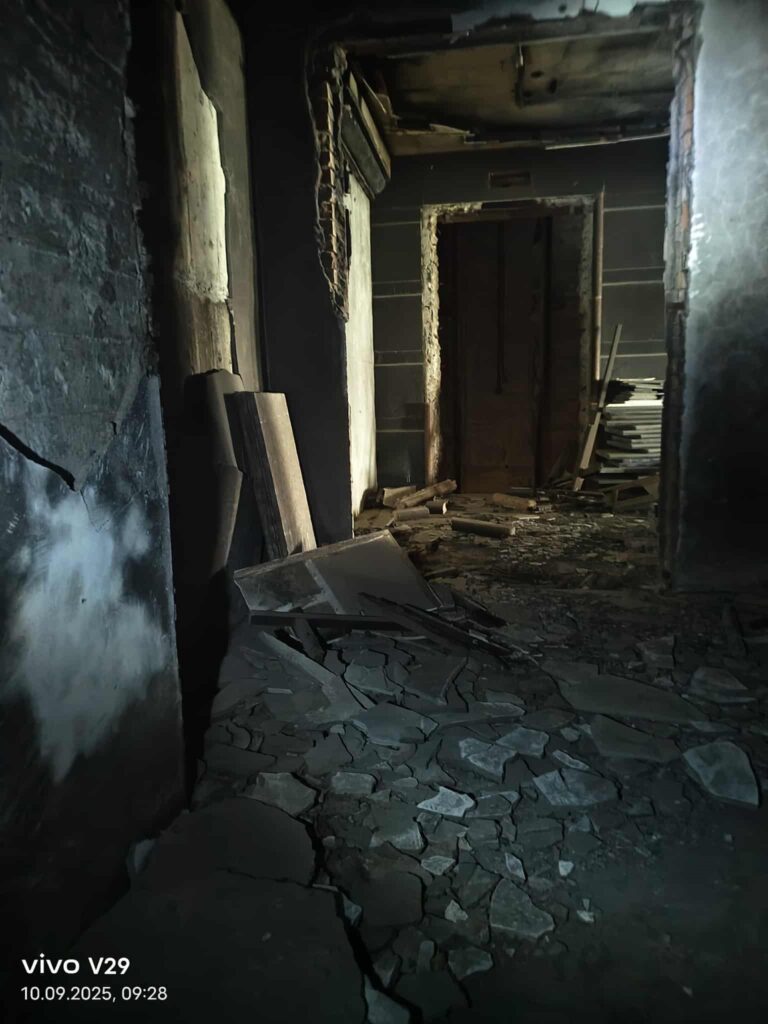
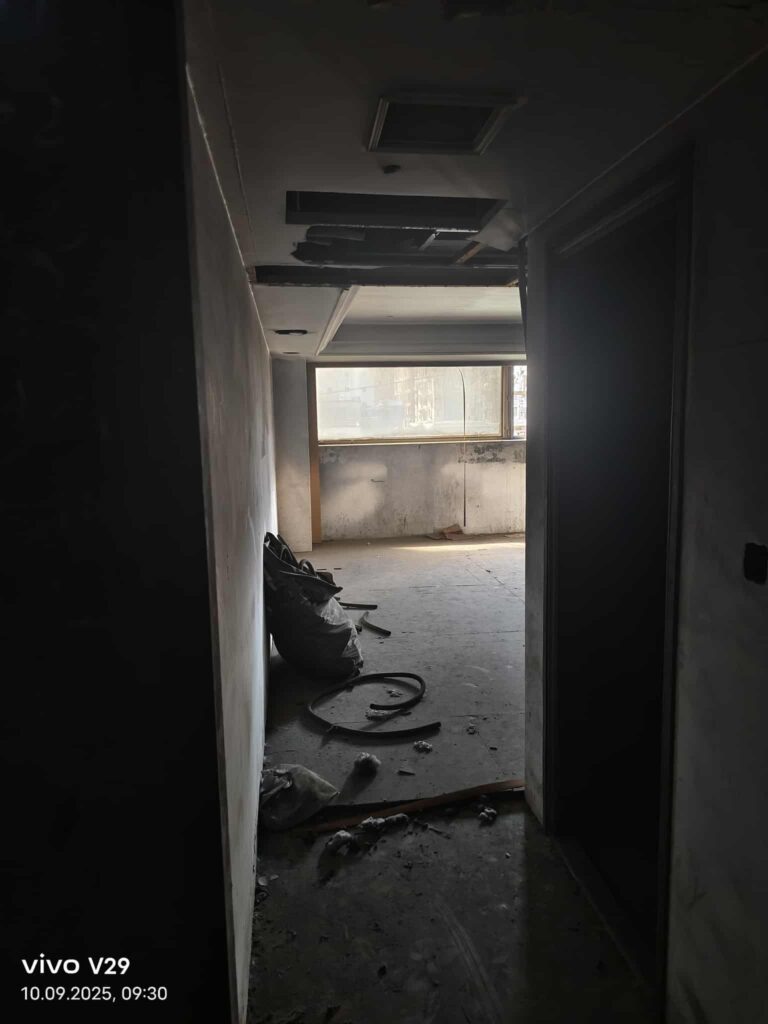
Zhongyuan Grand Theatre (中源大劇院)
The Zhongyuan Grand Theatre was a traditional cinema in the heart of Zhongli, which opened in 1981. It was located in the bustling Zhongyuan Night Market (中原夜市), directly across from Zhongyuan University, and was especially popular among students for its good value. The theater was famous for its hand-painted movie posters created by the artist Xie Sen-shan (謝森山). These posters were a rare art form in the digital age and made the cinema a cultural landmark in the region.
In June 2020, the theater announced it would close its doors after 39 years of operation. The decision was influenced by the effects of the COVID-19 pandemic and the resulting economic challenges.
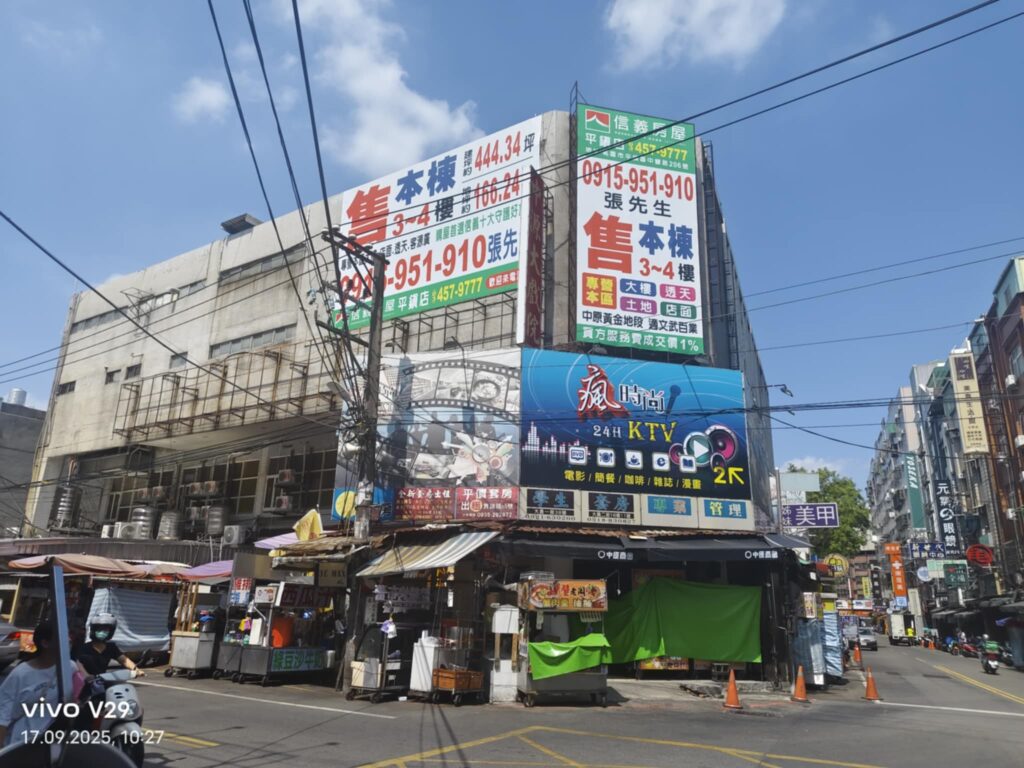
Today, the second floor houses a KTV, while the lower levels are occupied by small food stalls serving the night market. A characteristic feature is the exterior staircases leading to the roof. The cinema itself can no longer be entered.
(Copyright Claudius Petzold)