Claudius Petzold (copyright) in process
When I first visited Indigenous areas in Baling in 2000, I did not have a good impression of them. Belonging to the socially disadvantaged and robbed of their homeland, I often saw them drunk on the streets even in the afternoon. At the same time, I heard stories about their alleged promiscuity—just one of the many justifications for their mistreatment at the time. My opinion slowly changed when I got to know them as mountain guides. As I began my long-term research during my university years in 2016 and worked on my travel guide, I came to know more and more Atayal people personally. I visited Atayal villages in Smangus and Nanao that had managed to break free from the cycle of grief, self-contempt, social decline, and external scorn. Thus began a journey…

A traditional Atayal woman. Her face bears the marks of hardship, yet she laughs. Her tattoos prove that she has demonstrated mastery of the traditional skills. (copyright Leader Village)
I had already received my first hints back in 2011. An Atayal student at Providence University told me for the first time that Indigenous people who do not visibly appear as such often prefer to hide their origins. She wanted to establish an Indigenous student association at the university but failed. The university was very supportive of the idea, but her fellow students had concerns.
I only truly understood when I hiked with the Atayal from Nanao to their old villages. Before the journey, we watched a video about their history. It described how Yagu, a community manager, had arranged a helicopter flight deep into the mountains for the very elderly Indigenous people. These old villagers had not visited their ancestral homes in decades; the path had become nearly impassable. This was their first opportunity to return. However, the flight was initially delayed due to bad weather, leaving the elderly frustrated and upset as they stood before the helicopter. Meanwhile, younger Atayal had spent several days trekking into the mountains, clearing away the overgrown ruins of the abandoned village. When the helicopter finally landed, the elderly were overwhelmed by emotion. They wandered through the ruins, recognizing who had once lived where. They could not hold back their tears—people who had otherwise swallowed every hardship.
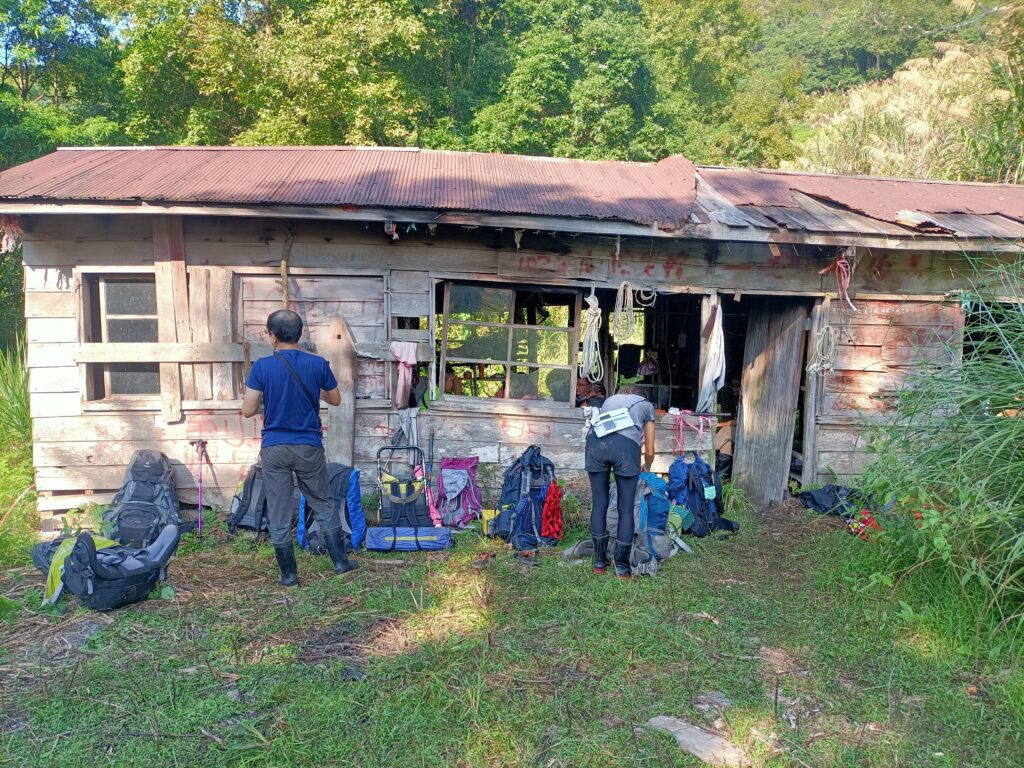
(The old guardhouse of the Forestry Bureau next to Ropwe. Even though it did not serve a good purpose, it remains a testament to its time.)
During a hike, I sat down with a female leader. We talked, and I remarked that I no longer heard her identifying as Amis. She told me that she had consciously trained herself to suppress her Indigenous accent in order to improve her job prospects. At first, I was shocked, but then I remembered that, as an East German, I had been given exactly the same advice.
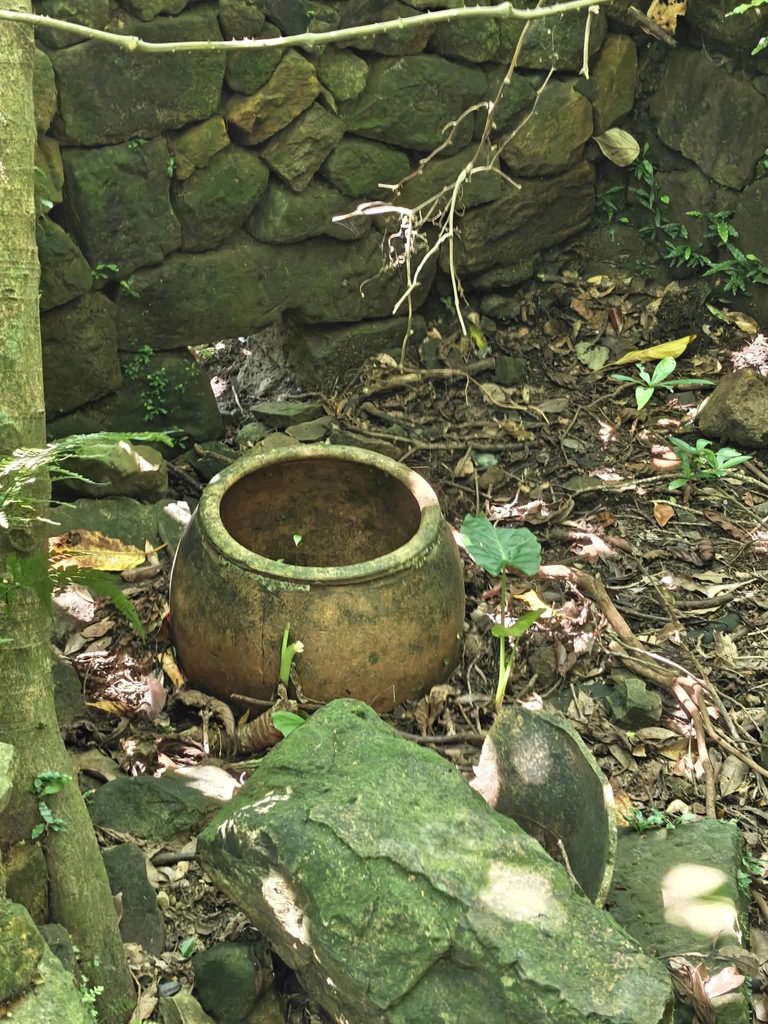
We sit in Ropwe, the old village. Our mountain guide speaks at length about his father and the village, even though he himself never spent time there. He gets caught in loops, unable to control his emotions. This is a man who can spend days hunting in the mountains and who has survived a nearly fatal traffic accident.
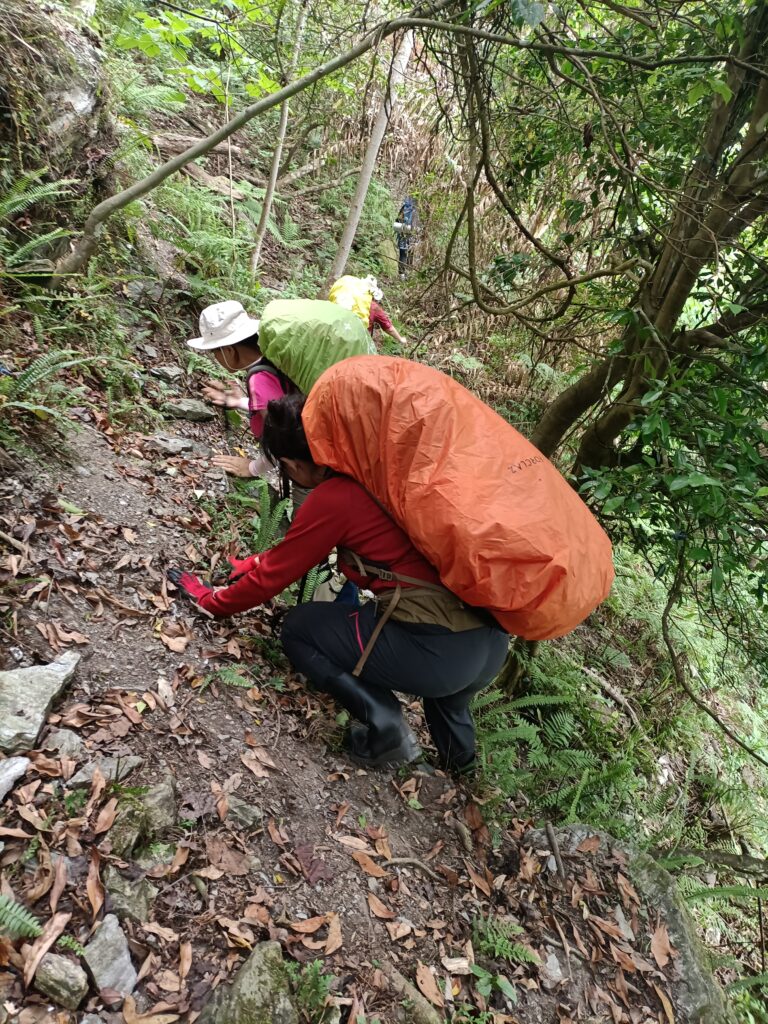
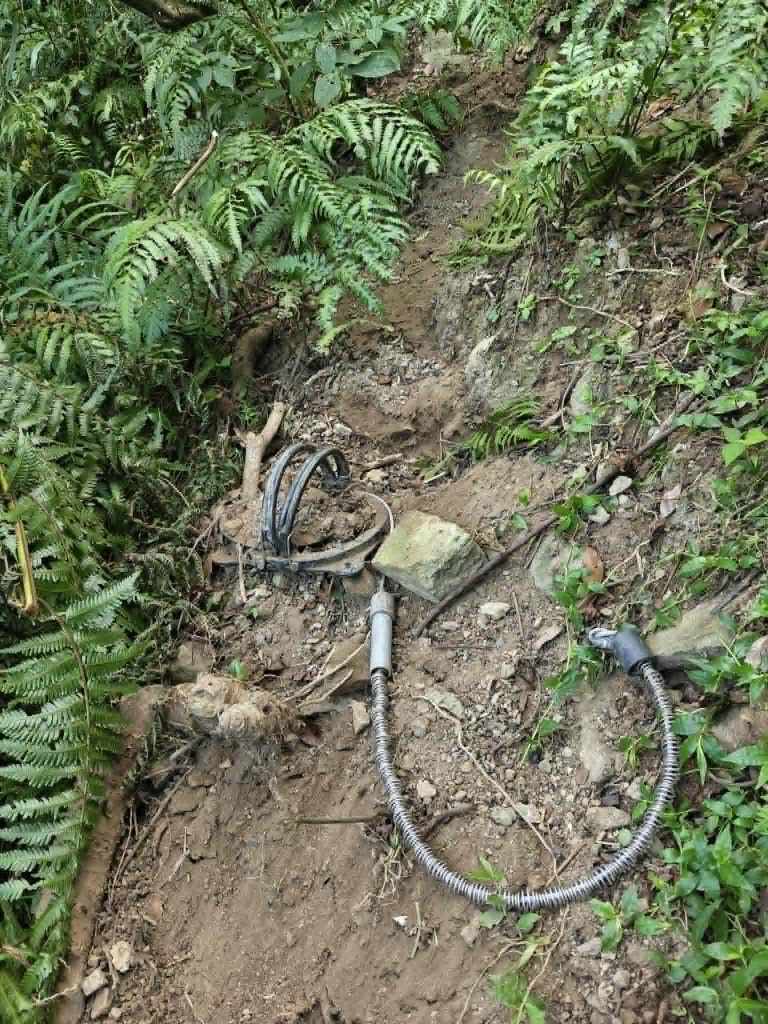
(The paths are long, exhausting, and not entirely without risk.)
Decades of individual and collective oppression, accompanied by contempt and rejection, have damaged the identity of the Atayal and left their mark on the individual. They begin to despise themselves and their own culture. It destroys the soul. The best formulation I have read cites Hall:
This inner abandonment of one’s own culture cripples and deforms. The inner expropriation produces individuals ‘without anchor, without horizon, colourless, stateless, rootless.'” (Fanon, quoted by Hall, Cultural Identity and Diaspora, p. 395 with references)
I have had many personal experiences that confirm the sad meaning of this sentence. One day, I asked an Atayal in Baling in Chinese, “Are you a local?”(你是當地人?/Ni shi dangdiren?) He answered, “Yes, I am a mountain people.” (我是山地人/Wo shi shandiren.)The pronunciation is somewhat similar and can easily be confused. In Chinese, it sounds very impolite and discriminatory. Until 2010, it was often used in a tone of contempt. I had never intended to say it and would never say it. However, the Atayal expected it and even confirmed it positively.
Very often, my Atayal friends have told me that indigenous people simply love to drink alcohol (我們原住民愛喝酒). This is not correct—traditionally, they only drink on special occasions. Alcohol abuse is merely a consequence of oppression and social decline. However, it is also one of the most common prejudices among Taiwanese.
(Copyright Claudius Petzold)