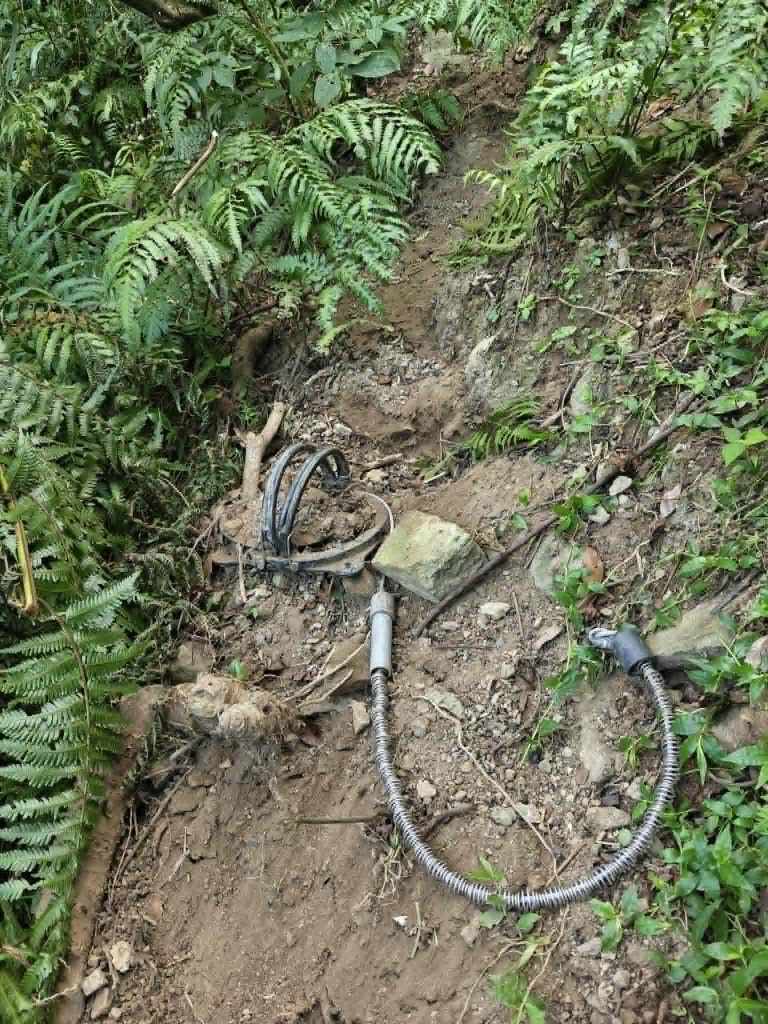
The tunnel complex at E’tou Mountain in Jiaoxi is also a remnant of the Pacific War. Its air defense strategy and interior layout are almost identical to those of the Neiyuan Mountain tunnel complex. However, since the entrances and exits in this area are located away from cemetery grounds, it is well suited for opening to the public. It could rightly be considered a cultural tourism treasure, but due to divided opinions among local residents, its development has been repeatedly delayed.
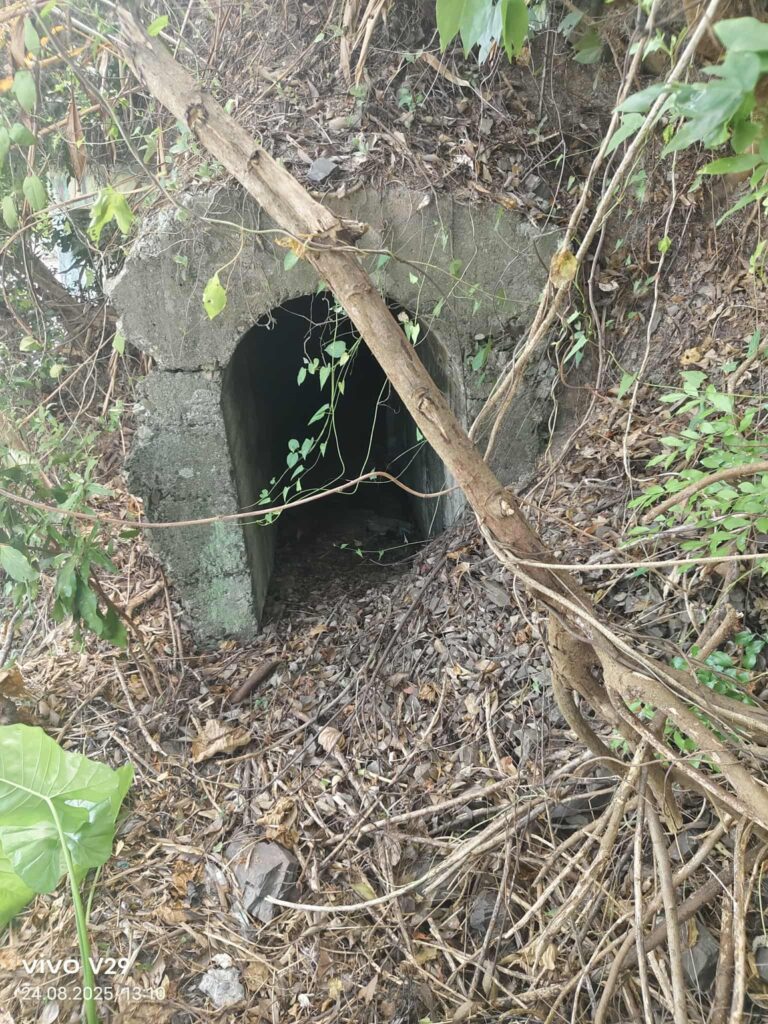
(no one will expect a whole, partly intact system)
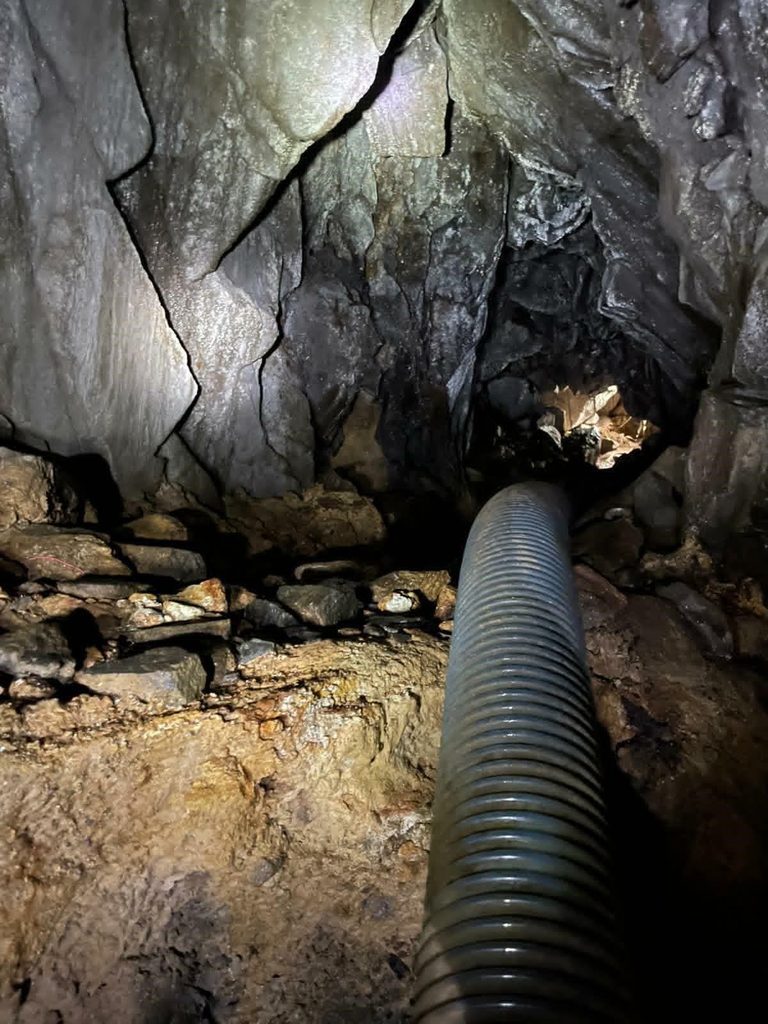
They are rarely mentioned on the Internet, and it’s easy to walk right past the entrance. There are several entrances; so far, I only know one that leads deeper inside.
E’tou Mountain Tunnel Complex
During World War II, the Japanese military excavated numerous tunnels in the foothills. The E’tou Mountain tunnel complex, belonging to the Baie, Wusha, and Longtan defense sectors, stretches in a straight line eastward, its exit leading directly to the Dafu bunker cluster. This was also the very sector identified in the Raijin Unit Formation Map as the main beachhead where American forces might land. The Japanese construction of fortifications on both the mountainside and the seashore reflects a deliberate, mutually reinforcing defensive strategy.
(old map:地圖所示為鵝頭山坑道群的位置。(楊基山/攝))
The southernmost position of the E’tou Mountain tunnel network lies near Longtan Lake. Beside Zhangfu Temple stand two typical emplacements—a gun battery and a machine-gun bunker. Though partly collapsed, these are still relatively intact compared with other tunnel systems and remain serviceable.
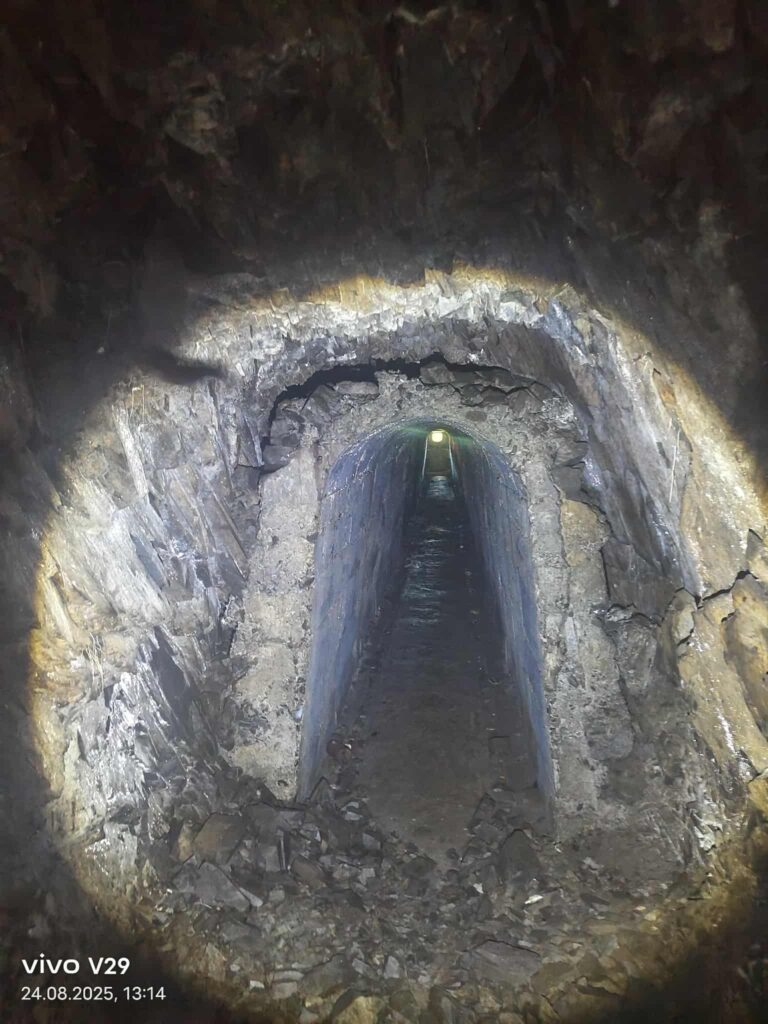
The E’tou Mountain tunnel complex is being almost fully completed and structurally intact, making it well suited for reviving wartime history through preserved Japanese military remains.
(copyright Claudius Petzold)