last update: 10/2025
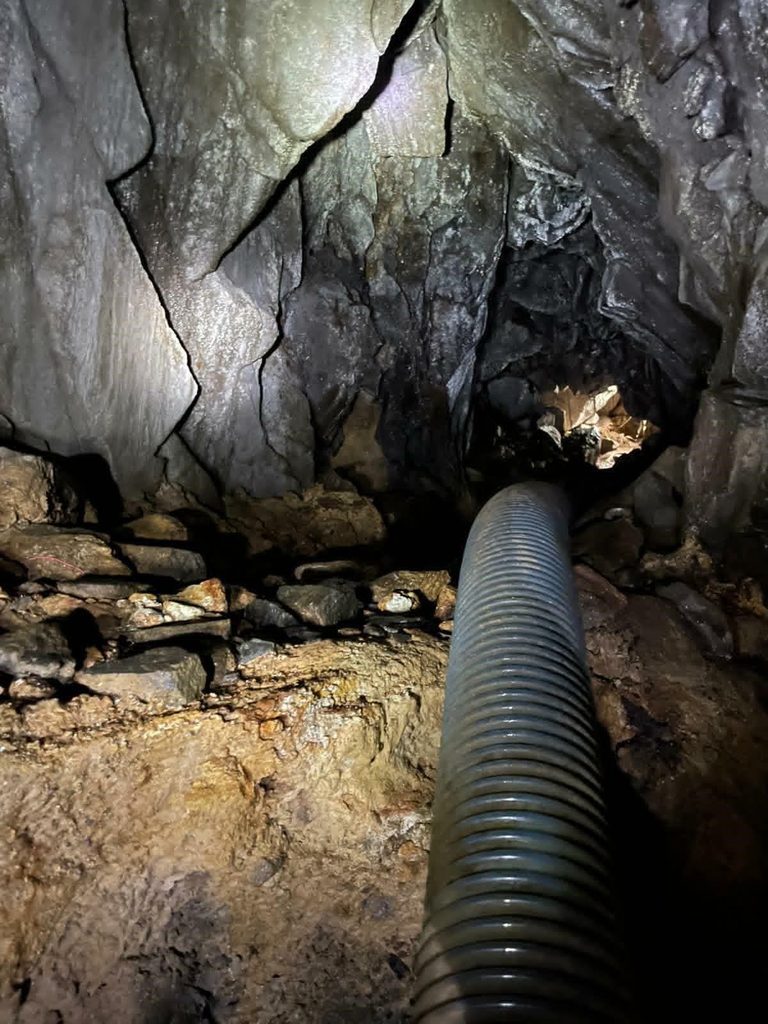
Highly dangerous (risk of collapse, unstable, corroded, holes in the floor), hazardous to health
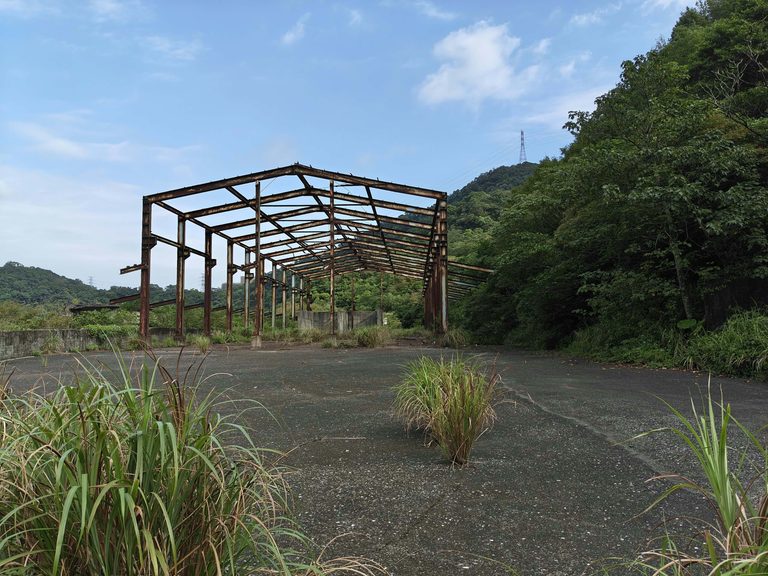
Many remnants of the old mining industry can still be found around Shuinandong, the Northeast Coast, and Teapot Mountain. These include old tunnels, abandoned mining areas reclaimed by nature, and a factory.
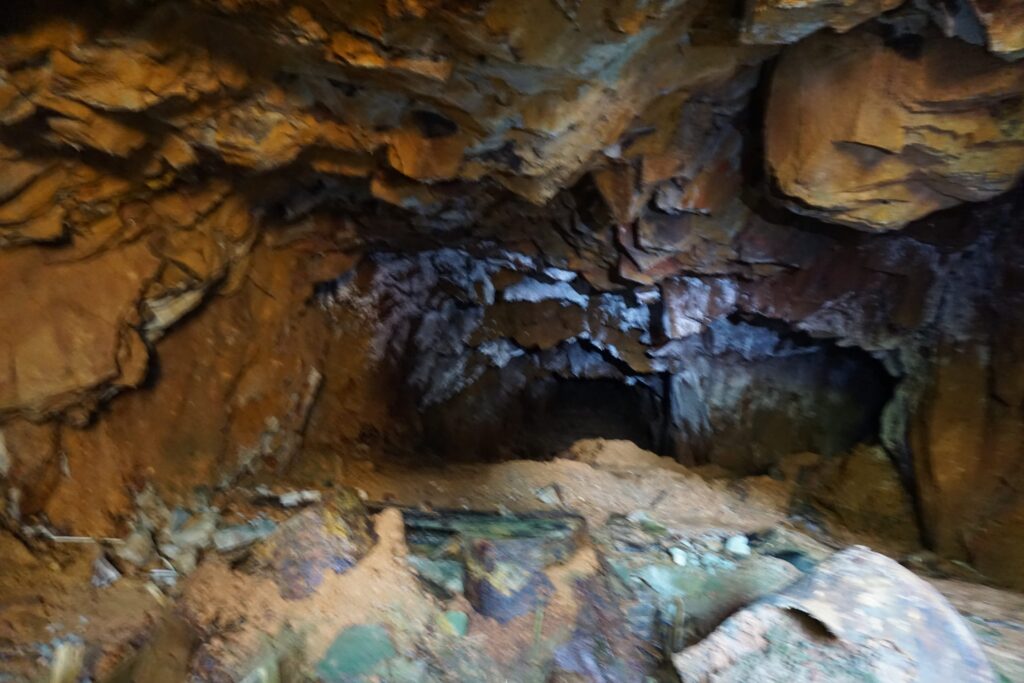
In 1893, a large and rich outcrop of a gold ore deposit was first discovered in the area. The mine began formal mining operations in 1896. In 1931, large-scale mining and milling operations for gold and copper ores were started by the Nippon Mining Company. However, the copper concentrate, cement copper, and gold and silver precipitates were shipped to Japan for smelting. In 1944, mining and milling activities were closed due to ocean transportation difficulties at that time. In 1945, the Chinese government established the “Taiwan Copper Mine Reconstruction Office” to take over the property.
A. Mine shafts
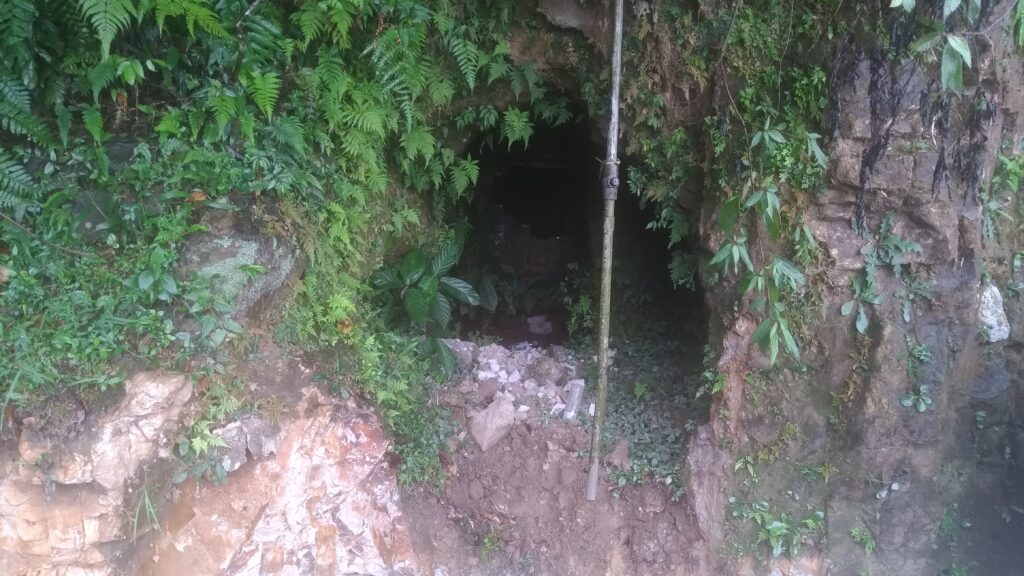
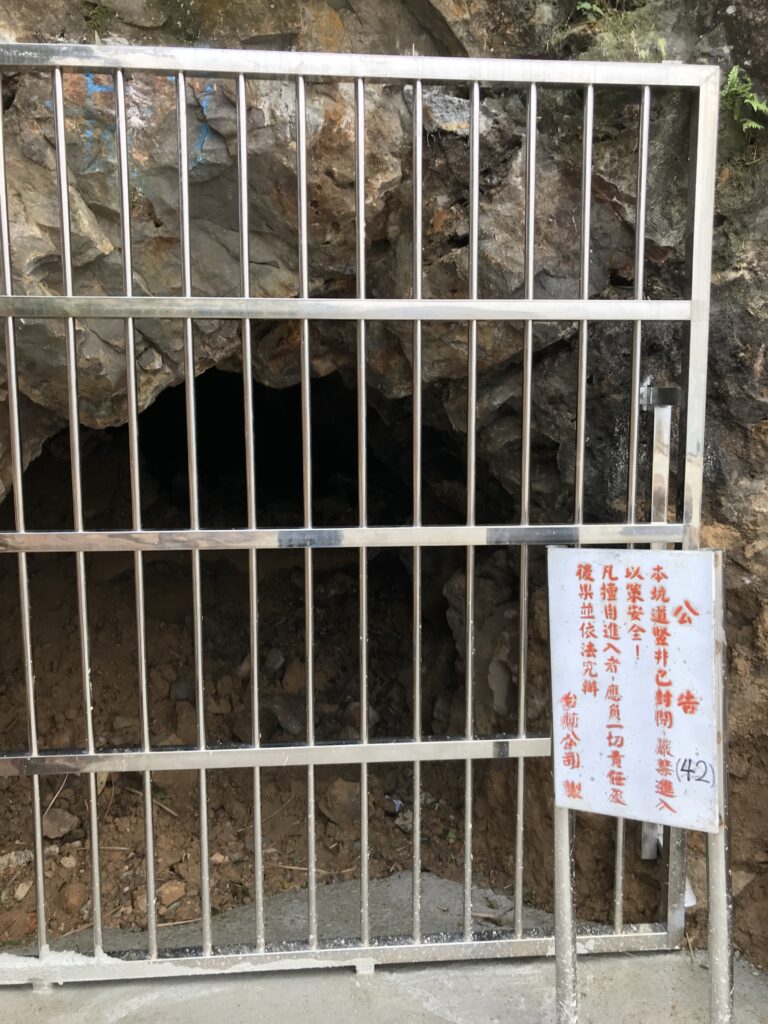
The area around Jiufen is crisscrossed by a network of tunnels where copper and gold were once mined. Until around 2015, many of these tunnels were still accessible. Anyone driving along Highway 102 could spot countless entrances, most of which are now sealed. The Benshan mining area has been reconstructed. After years of searching, I discovered one remaining tunnel. Since around 2022, it has only been reinforced with concrete.
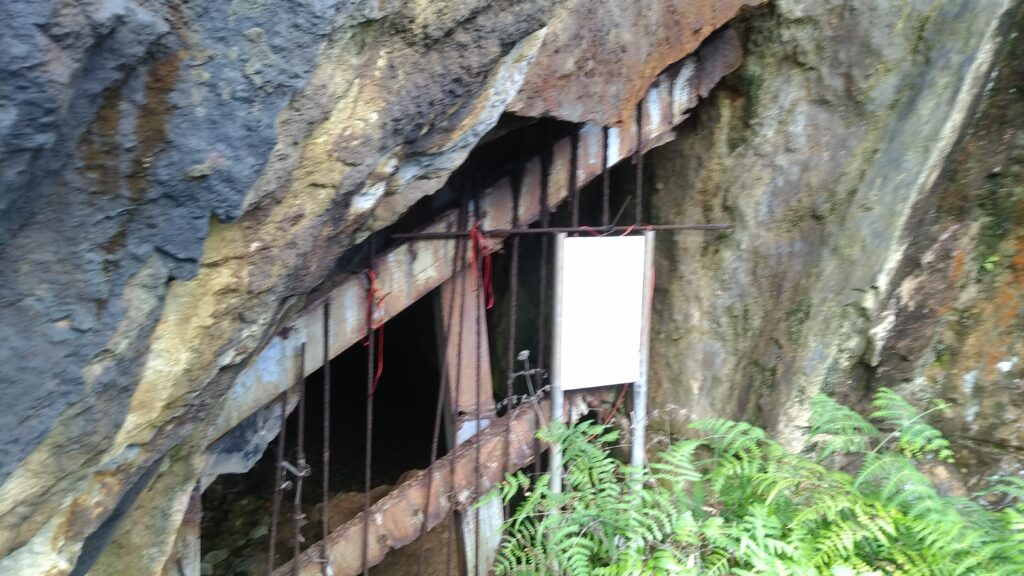
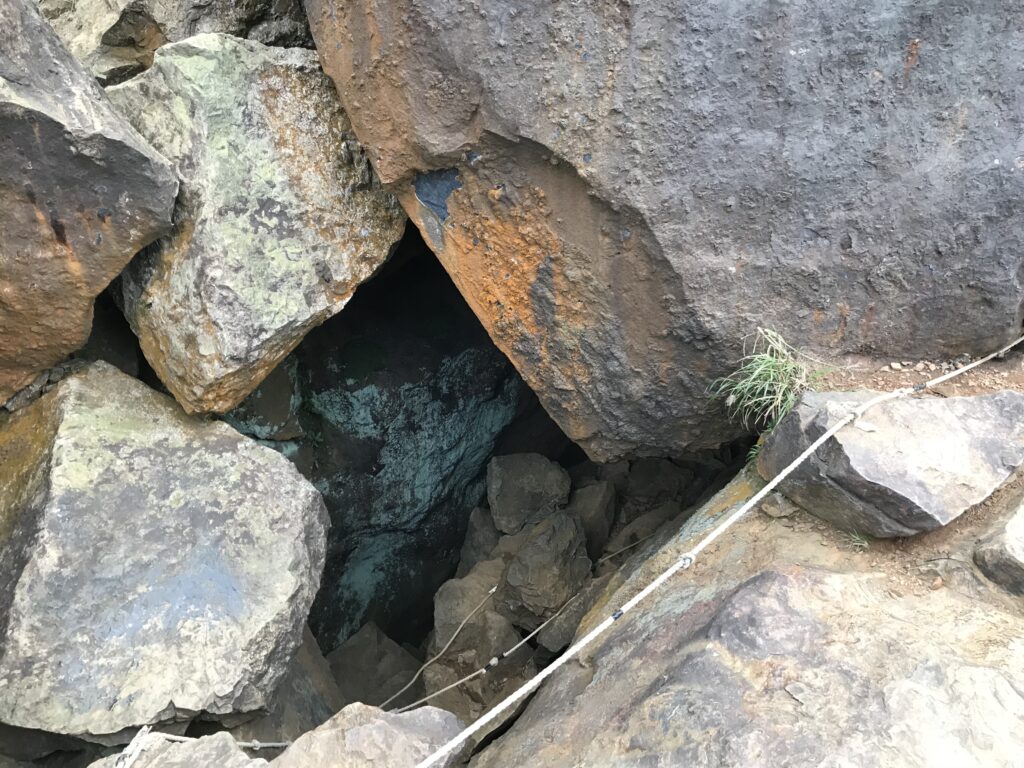
I spent several years searching for an entrance, and finally, I found it hidden in a rock crevice. Here is the photo from my first encounter. Others had simply bent the iron at the entrance. However, the tunnel itself was clean, with little to no trash, indicating it was rarely visited. I was able to venture a few hundred meters inside. The atmosphere was oppressive—the air was stale, and everything felt overwhelming.
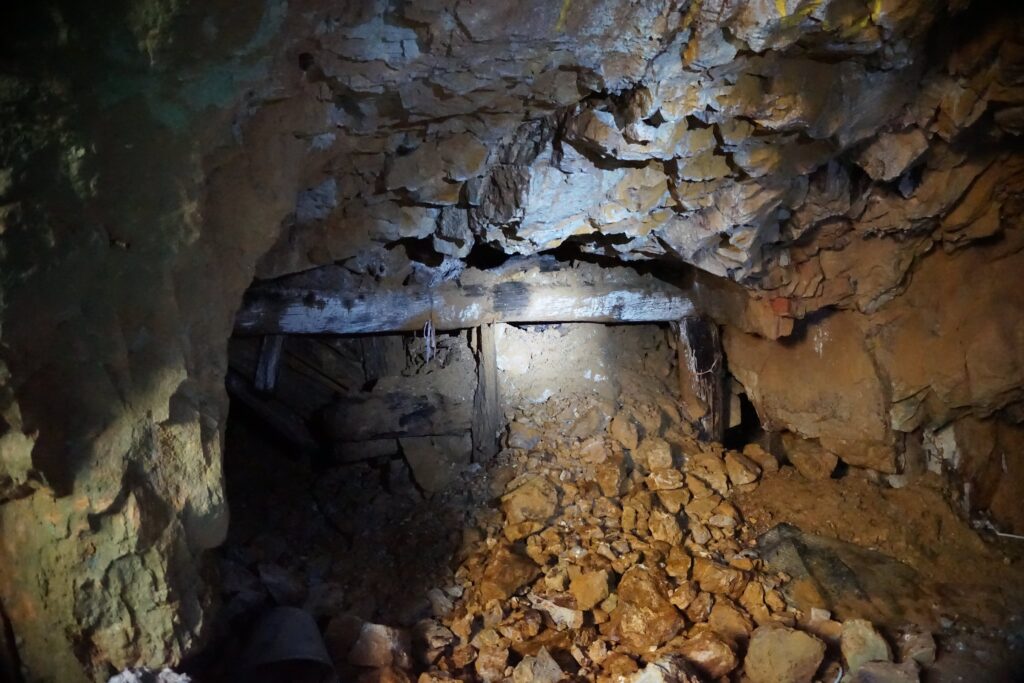
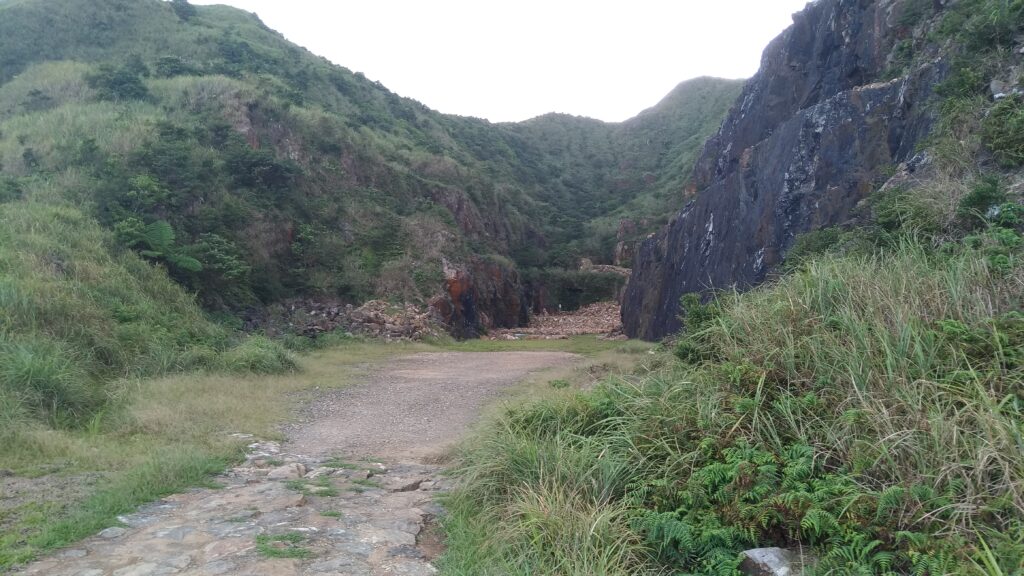
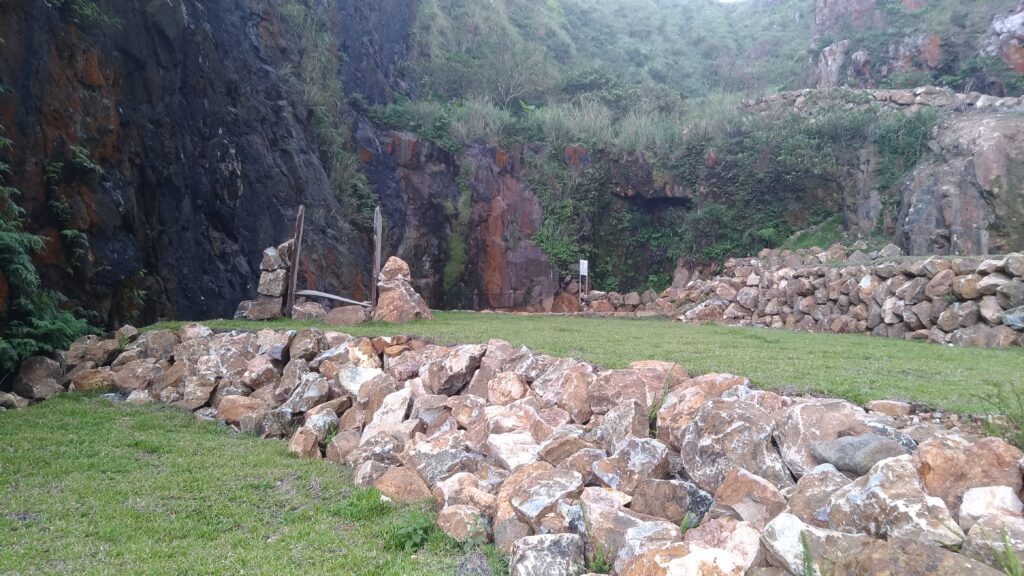
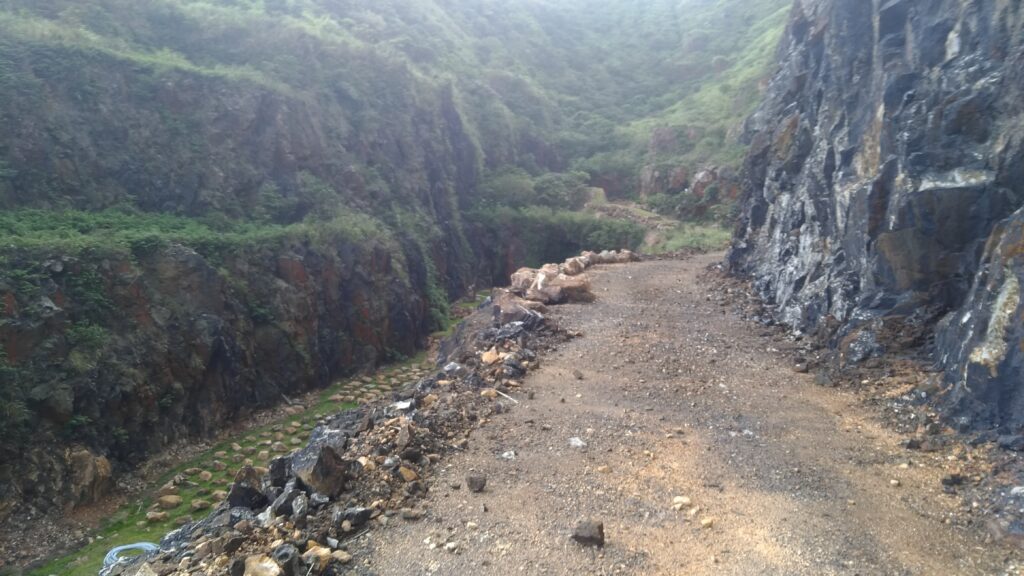
The other photos above are from the reconstructed Benshan area. Access roads and terraces are still clearly visible. Non-accessible entrances and ventilation shafts can be seen everywhere.
B. The Teapot Mountain
The most striking example is Teapot Mountain, which is currently closed once again. It is a beauty!
The visible layer is the result of erosion and weathering, with mining also playing a role. Over time, softer rock layers were eroded away, while the harder, silicified rock of Teapot Mountain remained intact. This resistance to weathering allowed it to become a prominent geological landmark. The mountain’s distinctive “earless teapot” shape is the result of these erosion processes.
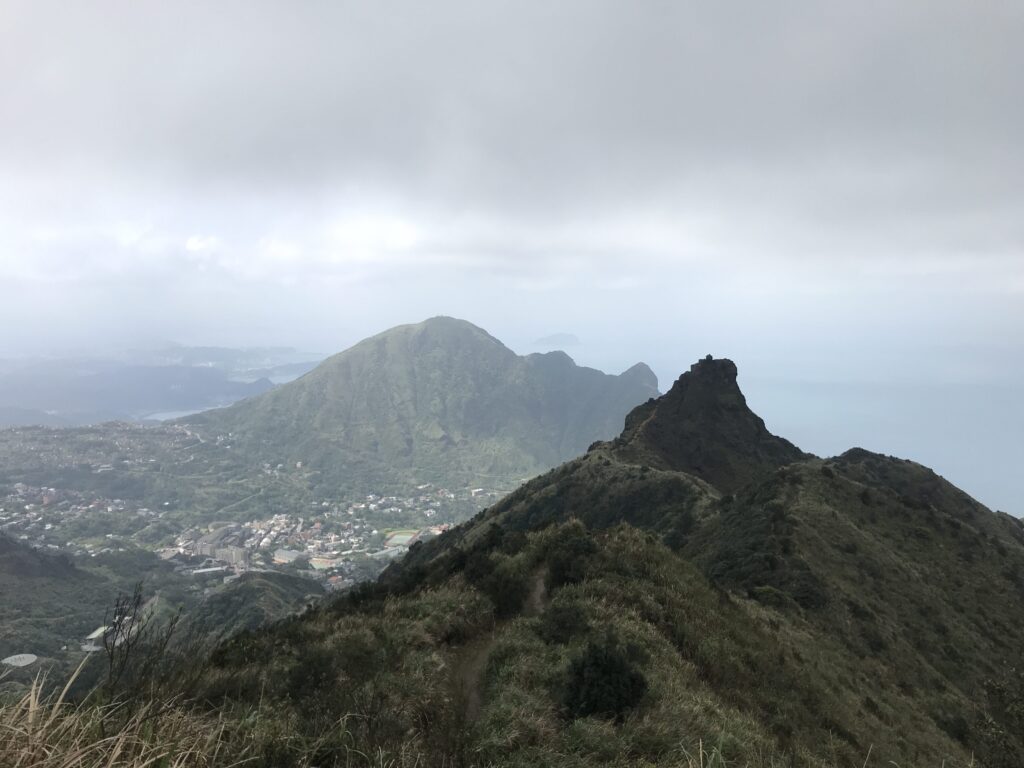
Another view from the Keelung East Peak Trail, behind the Stegosaurus Ridge.
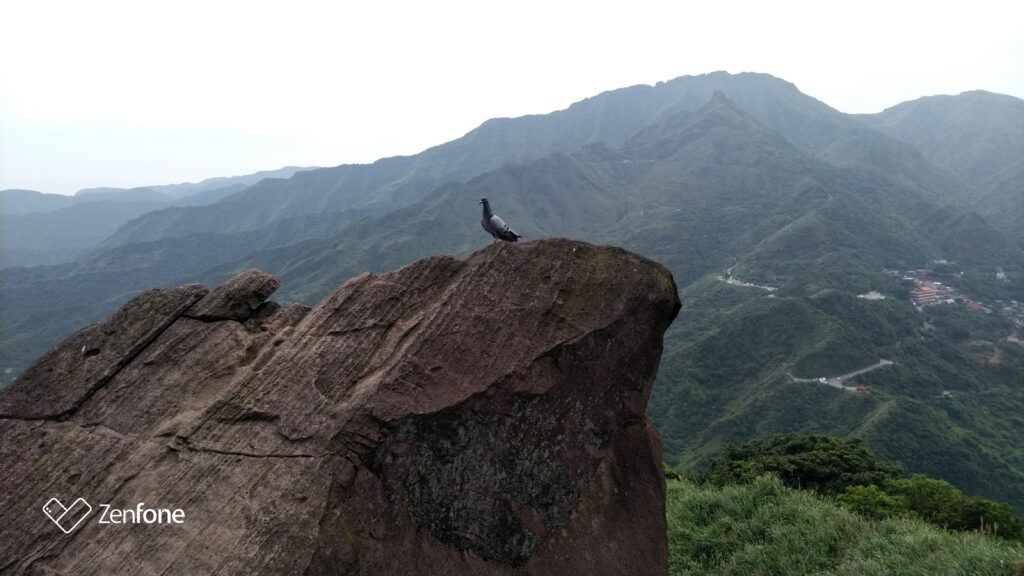
Today, Teapot Mountain is not only a fascinating natural formation but also a site of historical mining significance, showcasing Taiwan’s rich geological and mineralogical history. The entrances are now closed, but it is still possible to climb down a few meters.
C. Remains of the Thirteen Levels
The former Tai-Kin mining plant, also known as the Shuinandong Refinery, is located near Shuinandong on the northeast coast. It is often referred to as the “Remains of the Thirteen Levels.” In the past, it was the largest ore processing and refining plant in the Shuinandong, Jinguashi, and Jiufen areas, dedicated to extracting gold, silver, and copper.
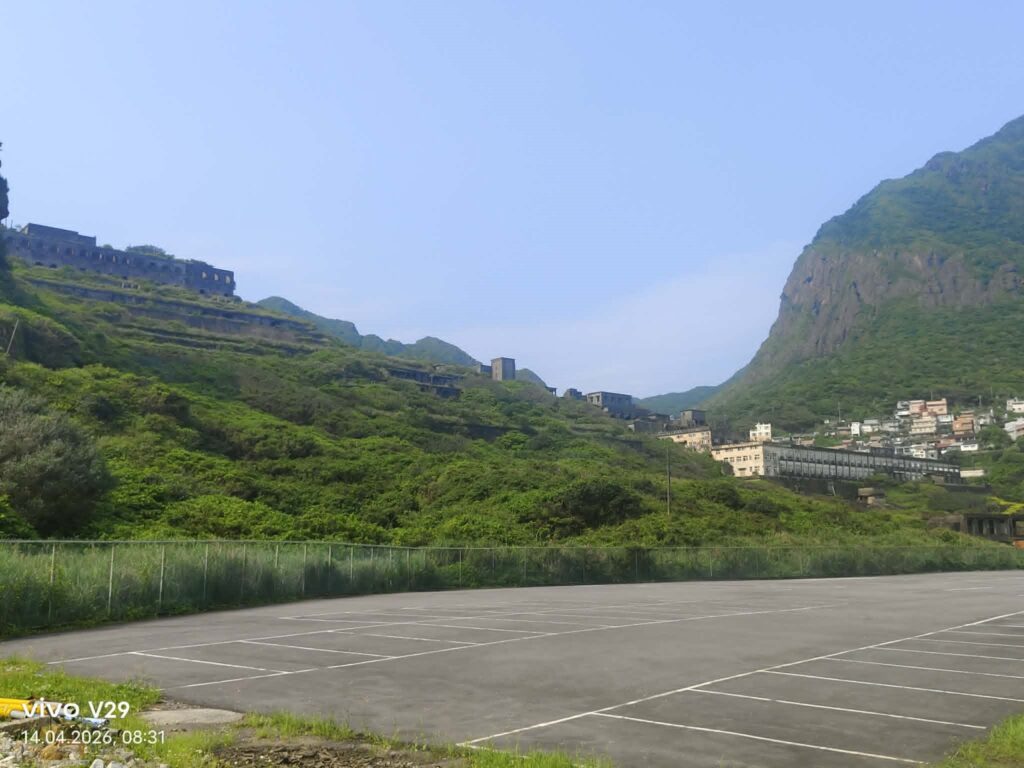
The refinery was built in 1933 during the Japanese colonial era and played a crucial role in processing and refining precious metals. After 1945, the site was taken over by Taiwan Metal Mining Corporation, which constructed a new gold refinery and divided the facility into a processing plant and a smelting plant. However, as the mining industry gradually declined, the once-thriving refinery ceased operations in 1987 and was later placed under the management of Taiwan Power Company (Taipower). A few years ago, it was possible to climb onto the roof from the back.
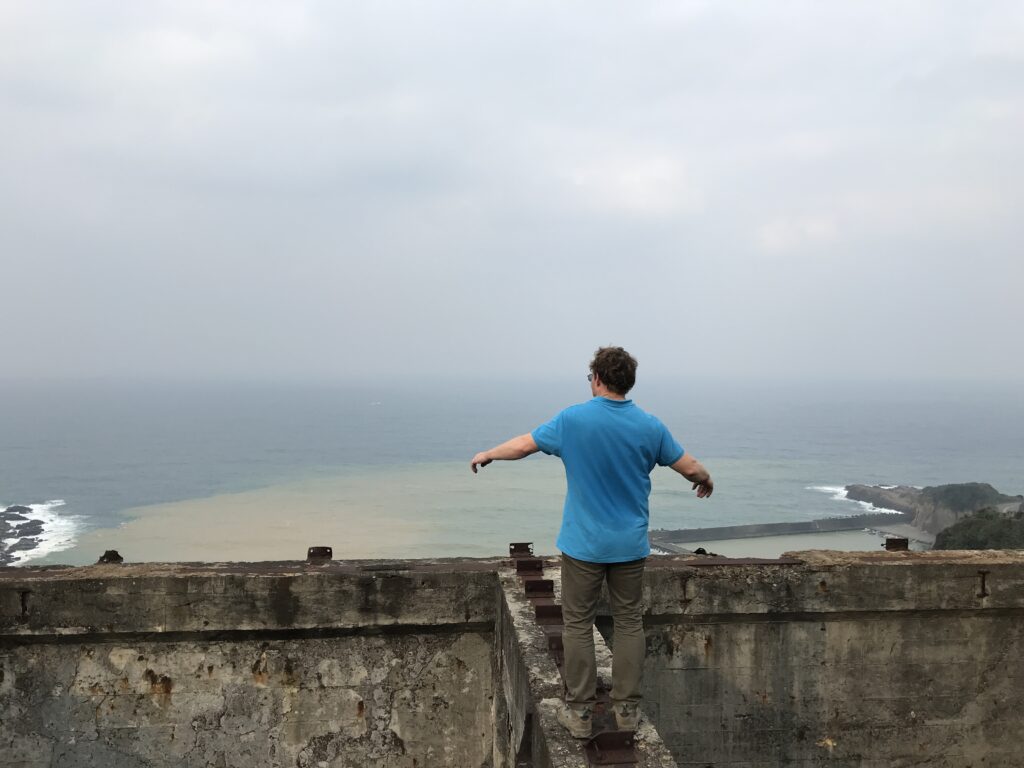
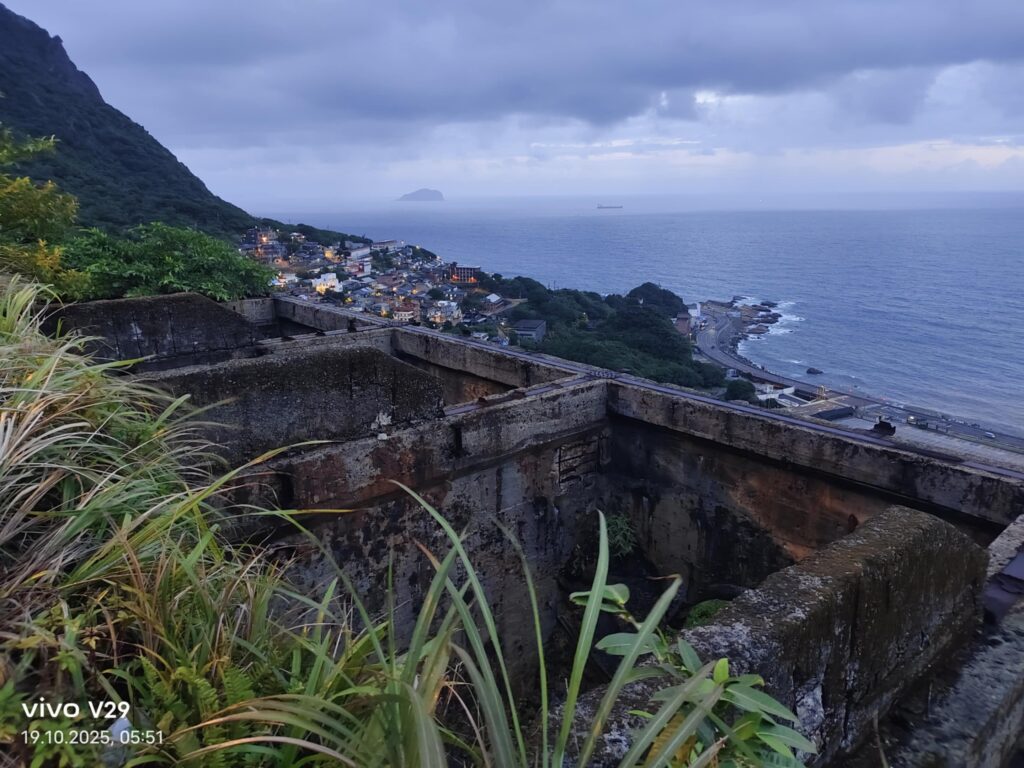
I made a new visit and took many photos from the outside. Some contributions are from third parties. Park at the lower parking lot and you’ll have a beautiful view of the entire site. On the right-hand side is the so-called Shuinandong Smelter. If you now walk up the road to the right, you will immediately see some smaller administrative buildings.
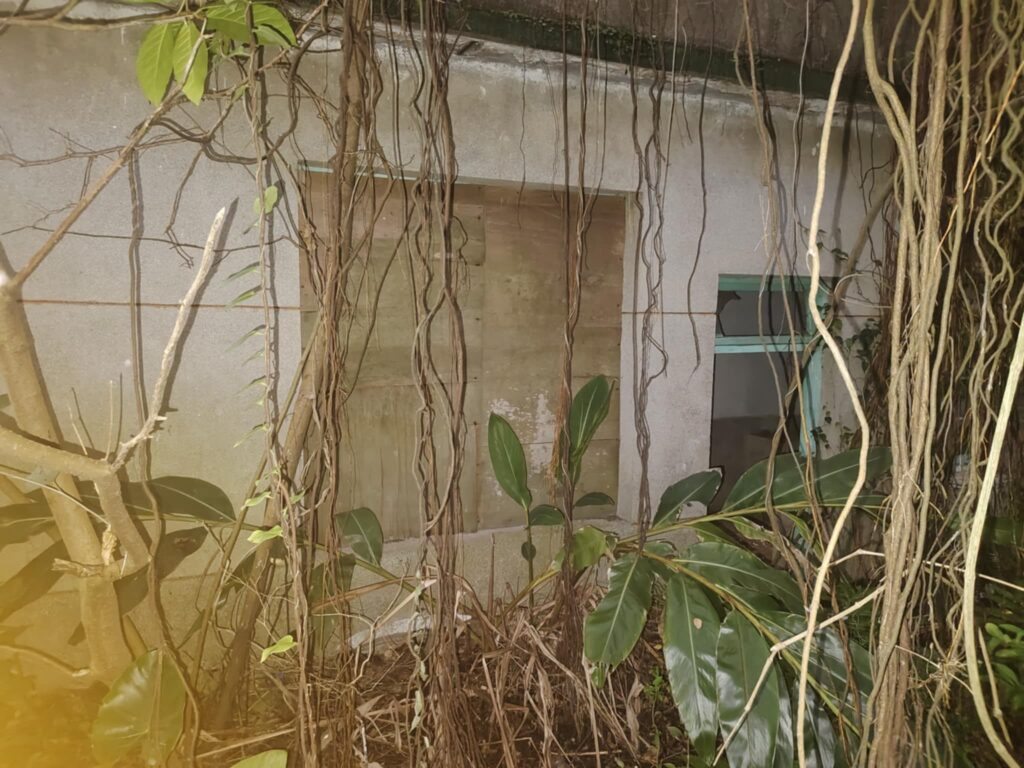
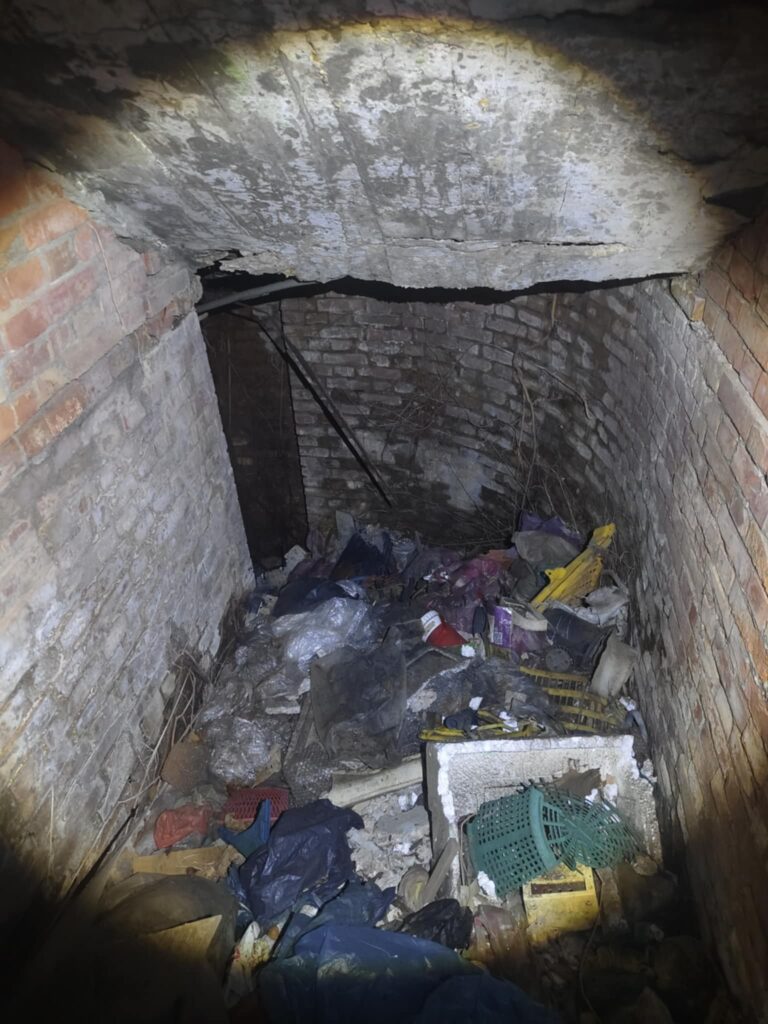
(Entrance to a shelter)
Continue walking uphill — even from the outside, you can still make out the ruins of the smelter. Below, on the southeastern slope of the Shuinandong Smelter, you’ll find the Changren No. 3 Mine Entrance Ventilation Duct. This flue was originally built to discharge the toxic waste gases generated during copper smelting to the uninhabited rear side of the mountain. The duct’s interior measures about 2 meters in height and 1.5 meters in width. Each flue extends for approximately one kilometer, making it one of the longest chimney ducts in the world. It was later abandoned after the Taiwan Metal Mining Corporation ceased operations. Over time, a significant amount of secondary minerals has accumulated inside the duct — these substances are harmful to human health, and entering the duct without proper precautions is strongly discouraged.
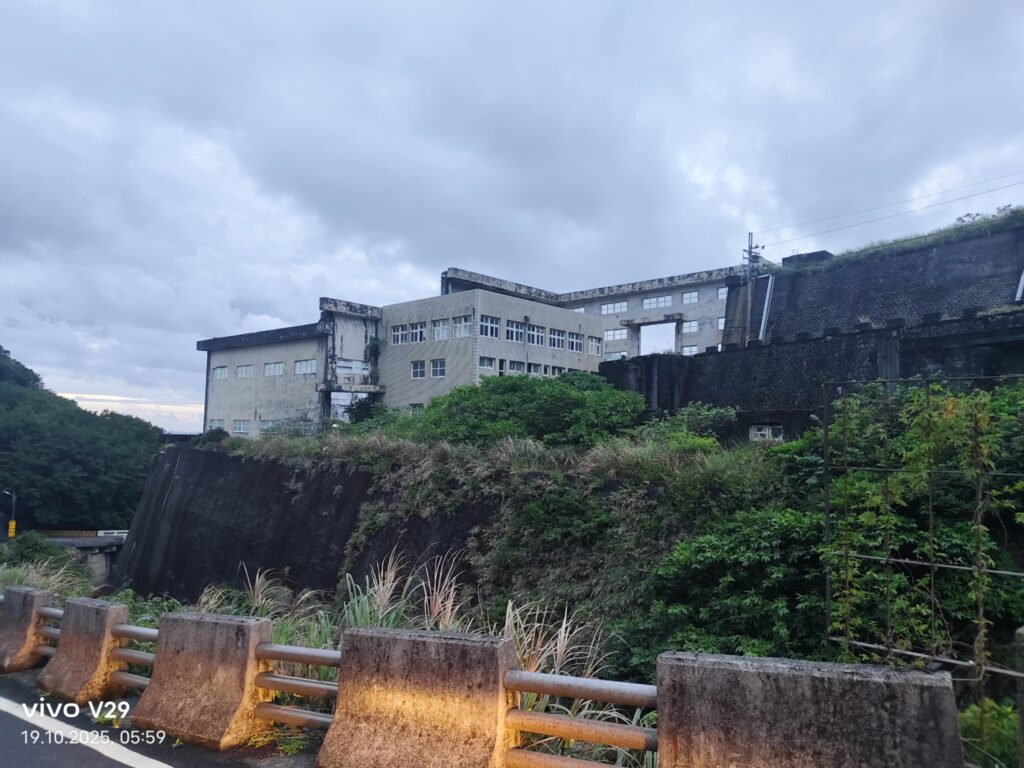
The entrances are now closed. Go up and follow the road, before the Golden Waterfall turn to the left.
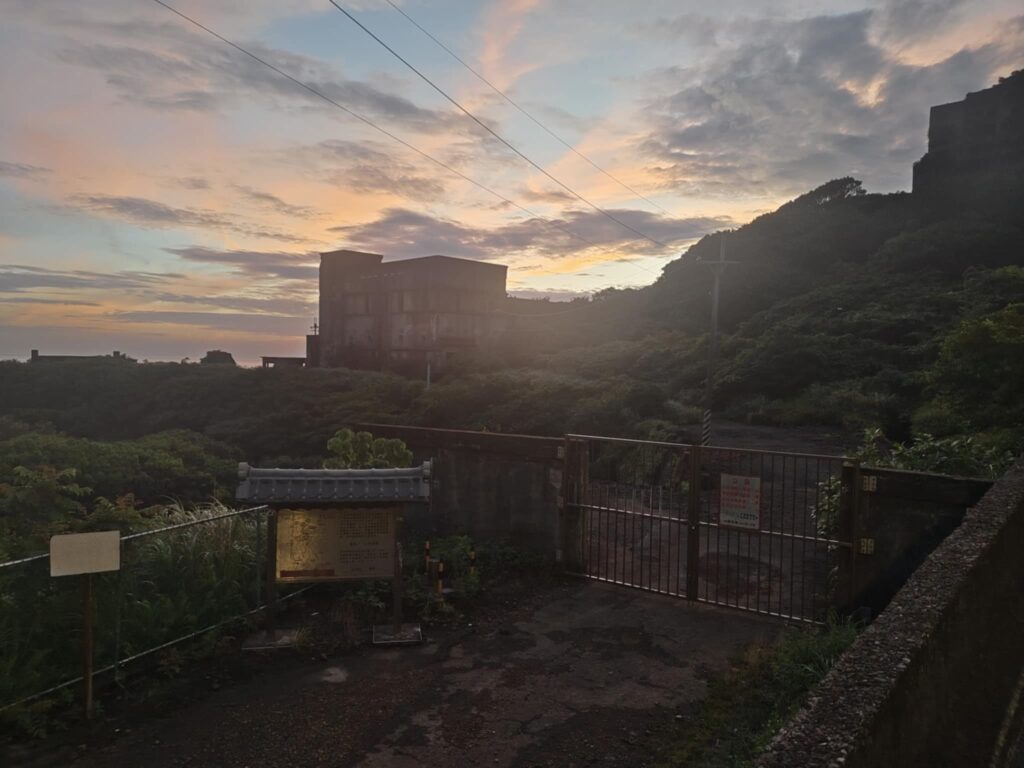
Follow the road for a few 100 m, left are the pipes. You will reach the top of the Thirteen Level.
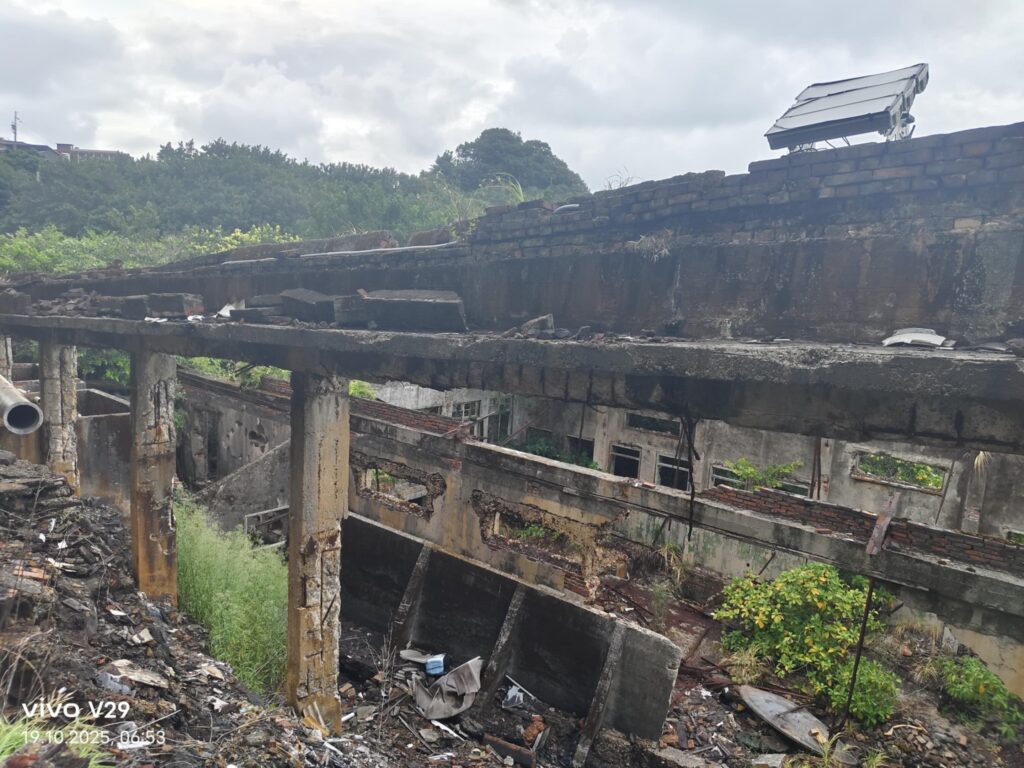
My very good friend Mr. X went into the building — the smell of decades-old chemicals was exceptionally unpleasant. Mr. X made a second visit to the lower levels, enjoy it:
(I guess it is level 3)
The flue or pipes
The Taiwan Metal Mining Corporation began its copper smelting operation at the Shuinandong smelting plant in 1973. The process involved the smelting of ore into refined copper, and the waste gases generated during smelting were emitted through a 60-meter chimney located beneath the Liukeng (Six Pits) area. However, because the company did not properly recover or treat these waste gases, the sulfurous gases from the copper smelting process significantly impacted the living environment in the Jinguashi and Shuinandong areas, leading to population migration from the region.
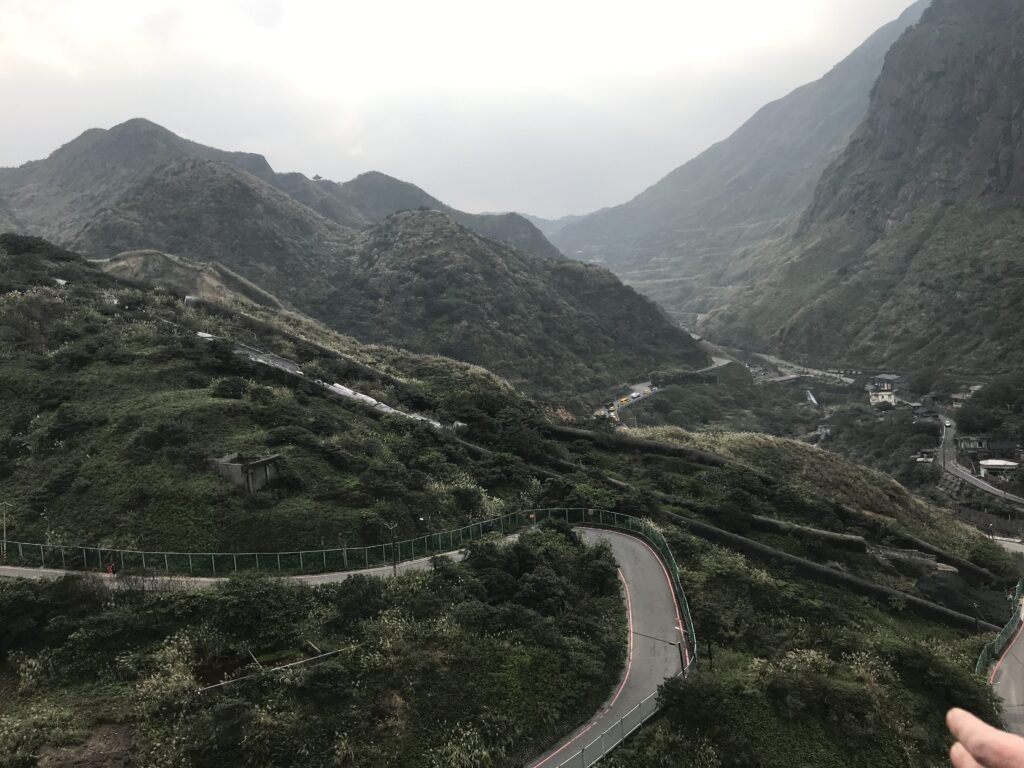
At the time, the copper smelting policy involved increased ore feeding during night shifts to avoid visible thick smoke during the day, reducing the exposure to sulfurous gases for daytime workers. Eventually, the equipment at the Six Pits chimney, being corroded by strong acids, became unusable. In response, the company built a 1,030-m-long smoke duct running through the old tunnels of the Sankeng (Three Pits) area, directing the fumes toward the mountain valley behind. While this improved the air quality to some extent, residents in Shuinandong still suffered from the pollution when the southeast wind blew. Similarly, when winds blew from the east to west, the Jinguashi area was affected.
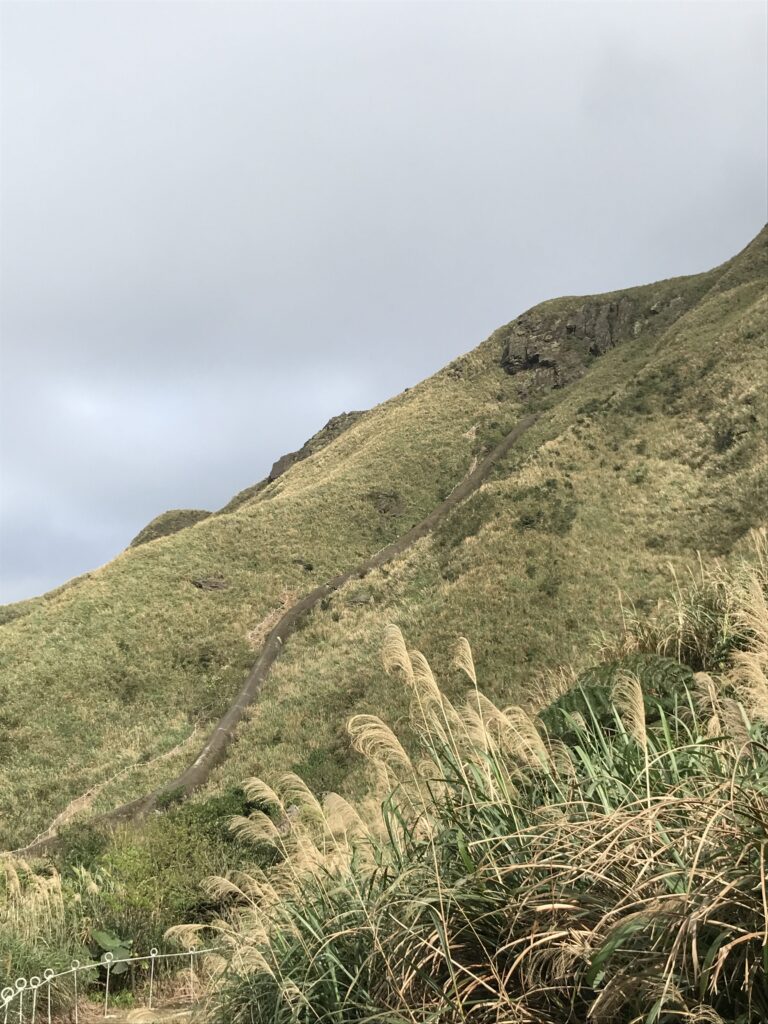
The first smoke flue was poorly designed and became corroded shortly after construction, leading to the need for a second smoke flue. Once the second flue was completed (850m), the company began work on a third. However, by the time the third flue was finished 1,000 meters, the Shuinandong smelting plant ceased operations and merged with the Lile Smelting Plant, leaving the third duct unused.
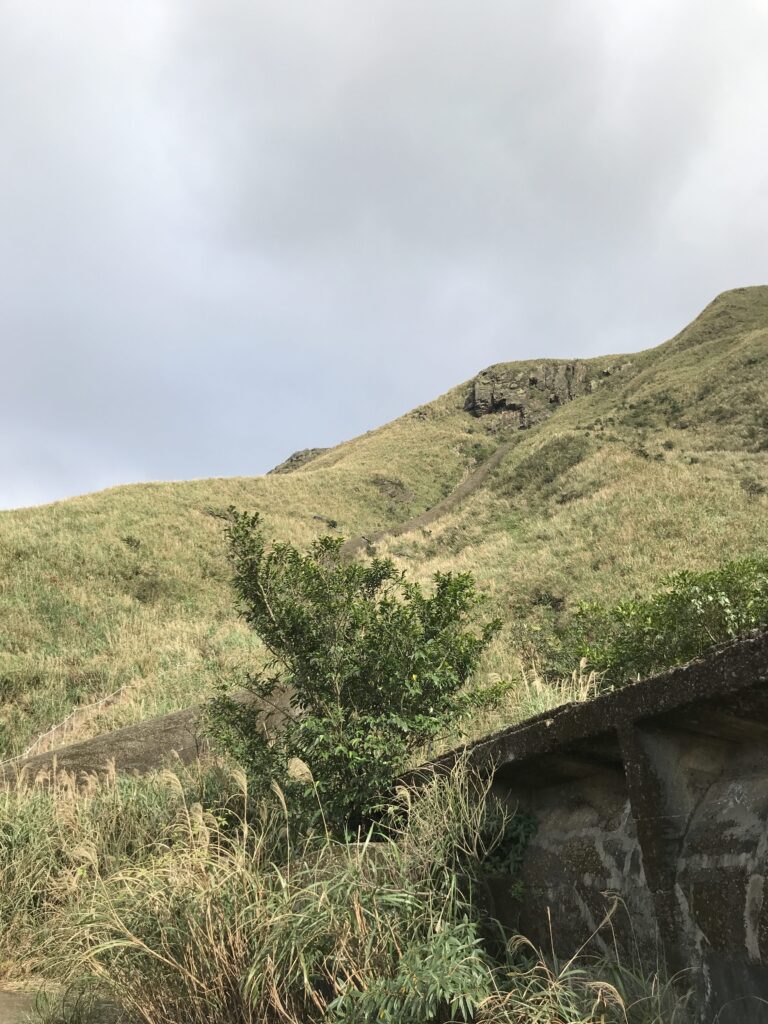
Currently, three giant gray cement pipes can still be seen on the hillside of Sankeng, Jinguashi, extending towards the mountain top. These are known locally as the “Three Dragons of Jinguashi”. These ducts are made of reinforced concrete, with a vaulted arch shape. The inner space measures about 2.4 meters wide and 2.6 meters high, with pipe walls 30 cm thick.
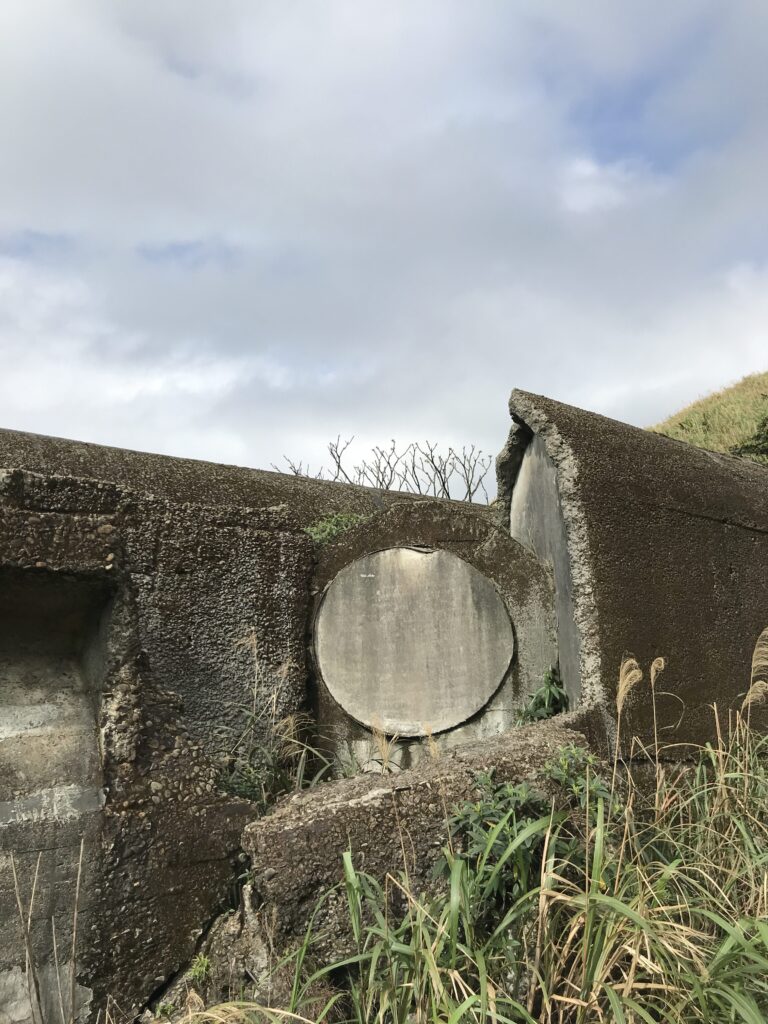
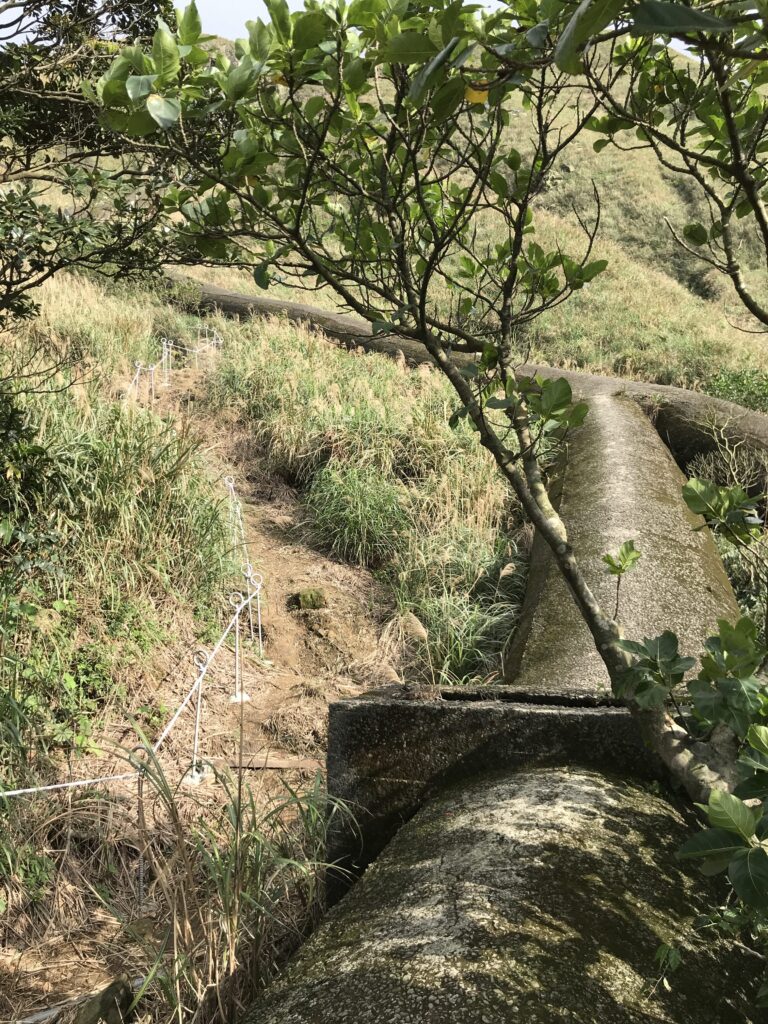
For a time, it was a popular attraction until around 2015 when the first efforts began to restrict access. In 2014, I stood right next to an entrance to the cleaning area that was still open at the time. The smell was overwhelming. I’m still looking for the photos.
Notes:
https://ntpc.culture.tw/ntpc/zh-tw/ruifang3/569735
D: The Centennial Water Dam Ruins of Shuangxi and Mudanxi
If you take a small path, you can enjoy a leisurely hike through the forest. Suddenly, the remnants of a very large dam appear, completely unexpectedly. Yet, this dam stands entirely in the wilderness. Along the way, you pass by various terraces that show remnants of past mining activities.
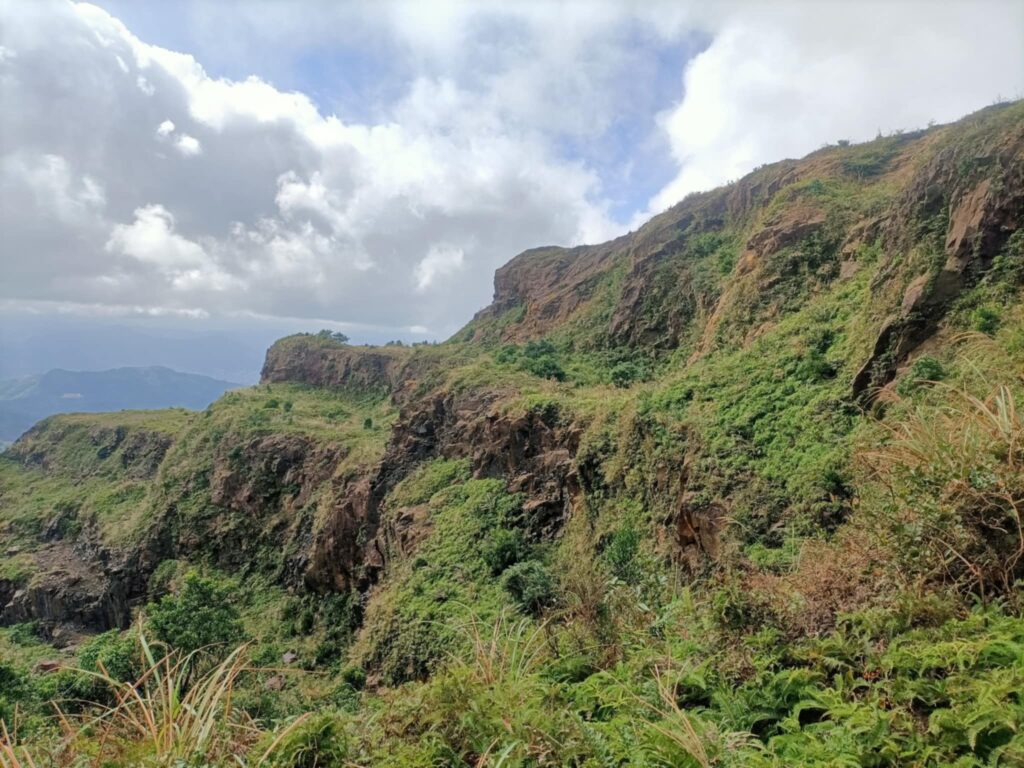
During the Japanese colonial era, Mudan and Shisan prospered due to mining activities, attracting a large population to these areas, which led to a shortage of drinking water. Mudanxi, the main river of the Shuangxi River system, had abundant water, so a dam was constructed here to supply water to the Mudan and Shisan areas. Later, a hydroelectric power plant was built due to water resources, marking the first hydroelectric plant in northern Taiwan during the Japanese era. This power plant enabled the establishment of a water pumping station downstream. The old dam site is marked with an explanatory sign from the former Shuangxi Township Office, which claims the dam was built for the mining needs of Jinguashi. However, this explanation is incomplete and inaccurate. The water from the southern foothills of Canguangliao Mountain was diverted to the northern foothills of Canguangliao to reach Jinguashi. To achieve this, the water had to pass over a mountain, requiring motor-driven pumps to do so. The power for these pumps came from the dam’s hydroelectric plant, and the abandoned pumps in the water pumping station tell this story.
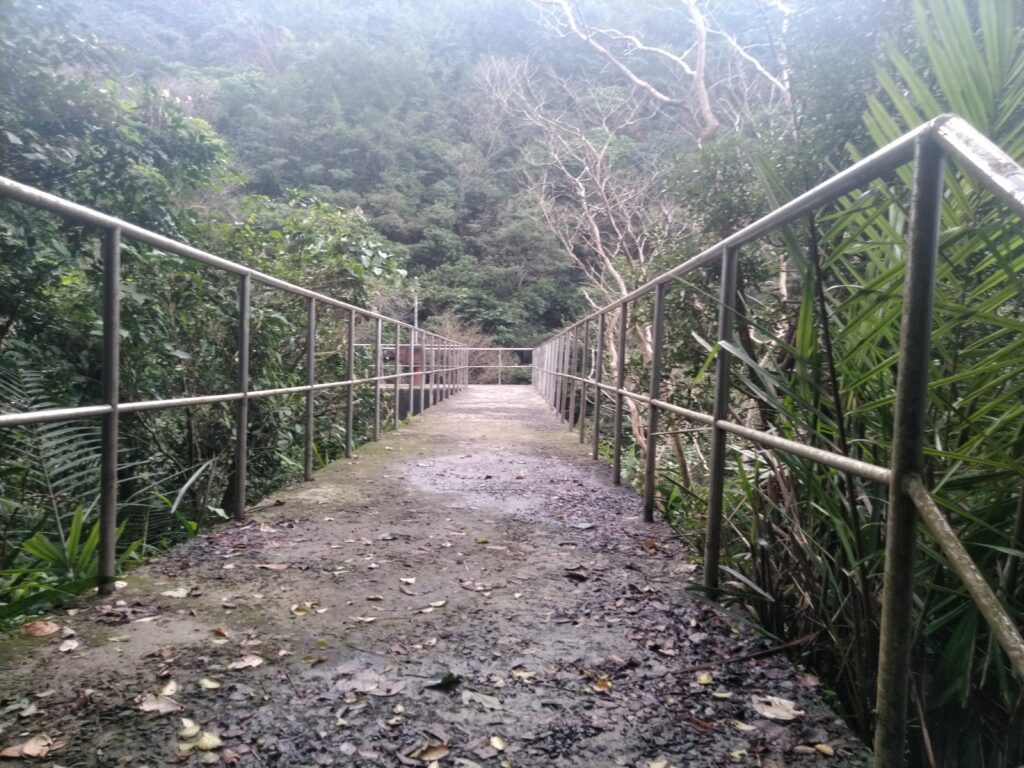
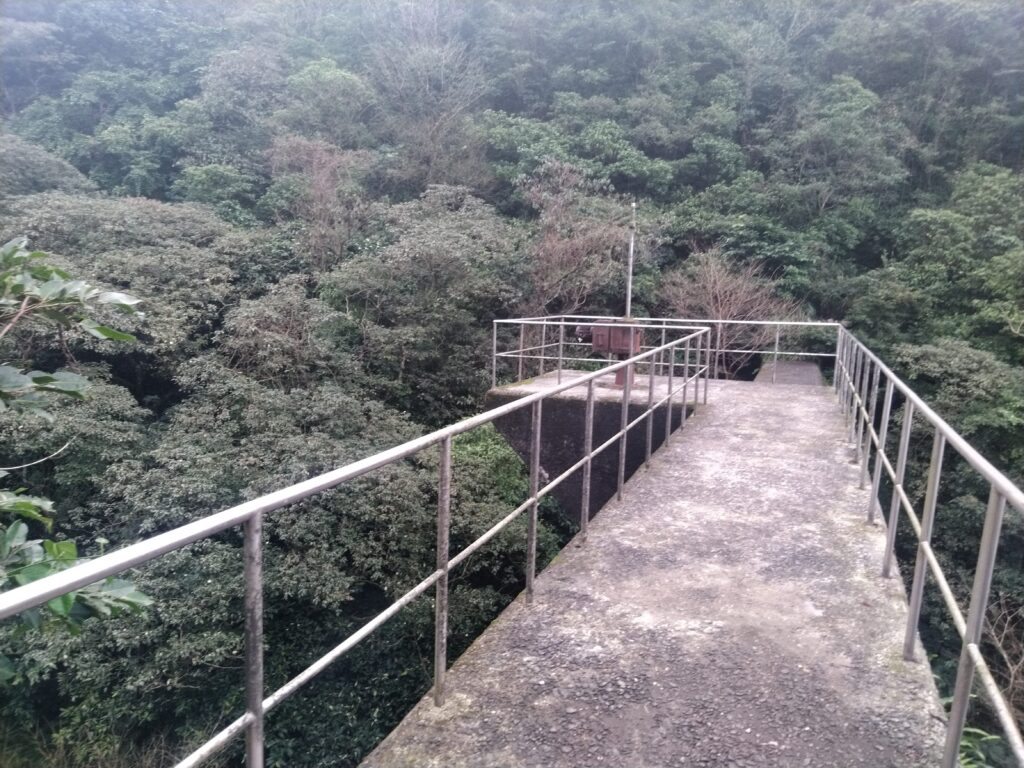
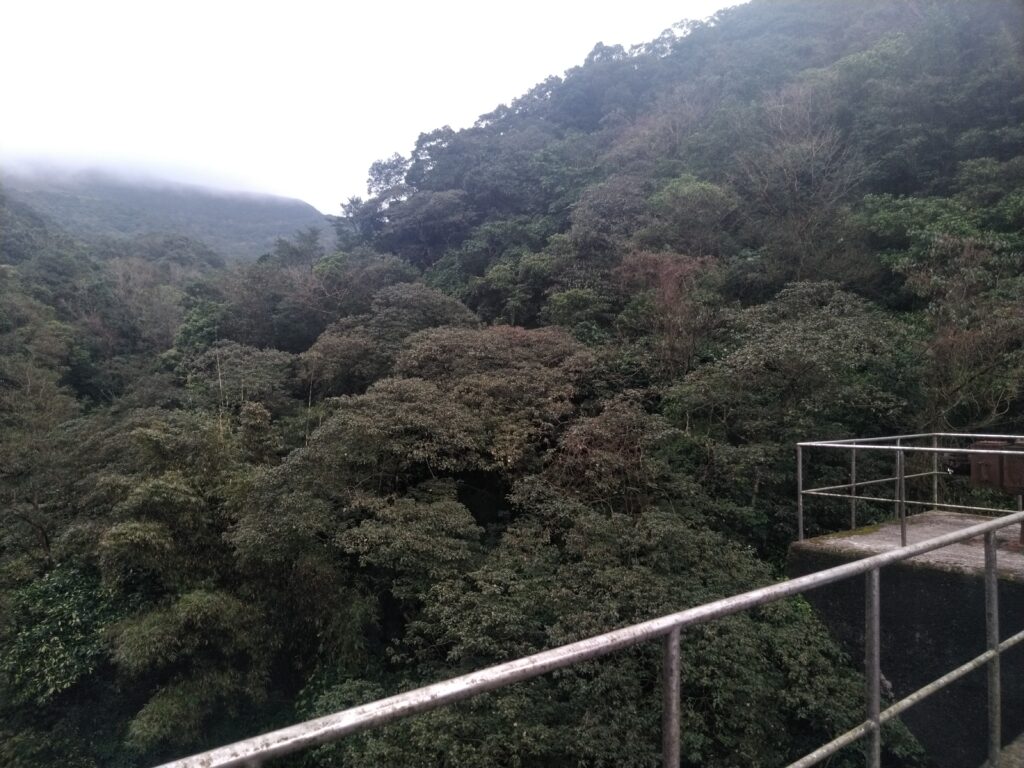
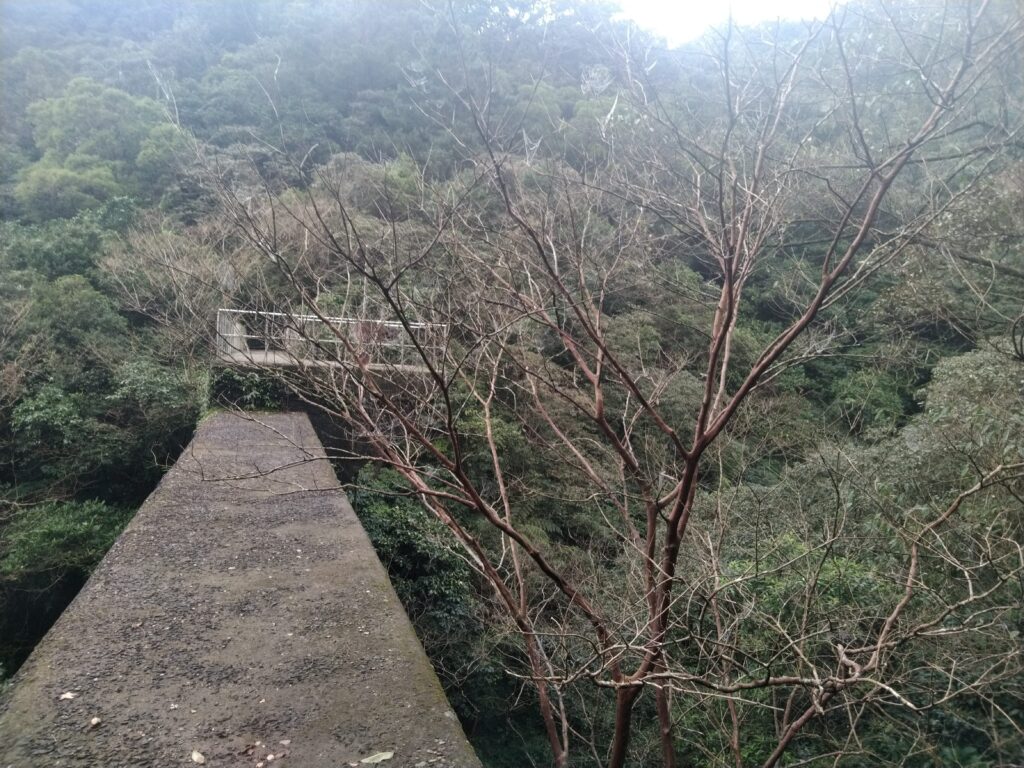
A Water station was set up in the upper stream of the Mudan Creek to supply Jinguashi but is now abandoned.
(copyright Claudius Petzold) additional info: https://tcmb.culture.tw/zh-tw/detail?indexCode=Culture_Place&id=569762