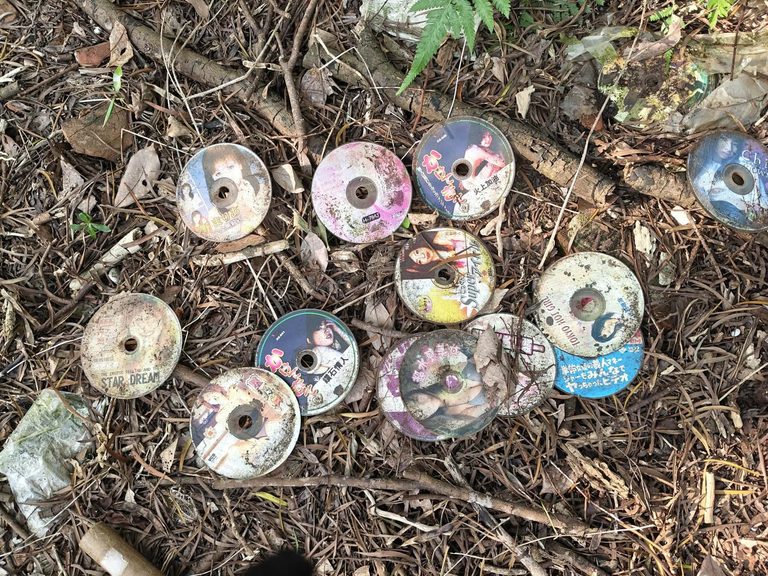
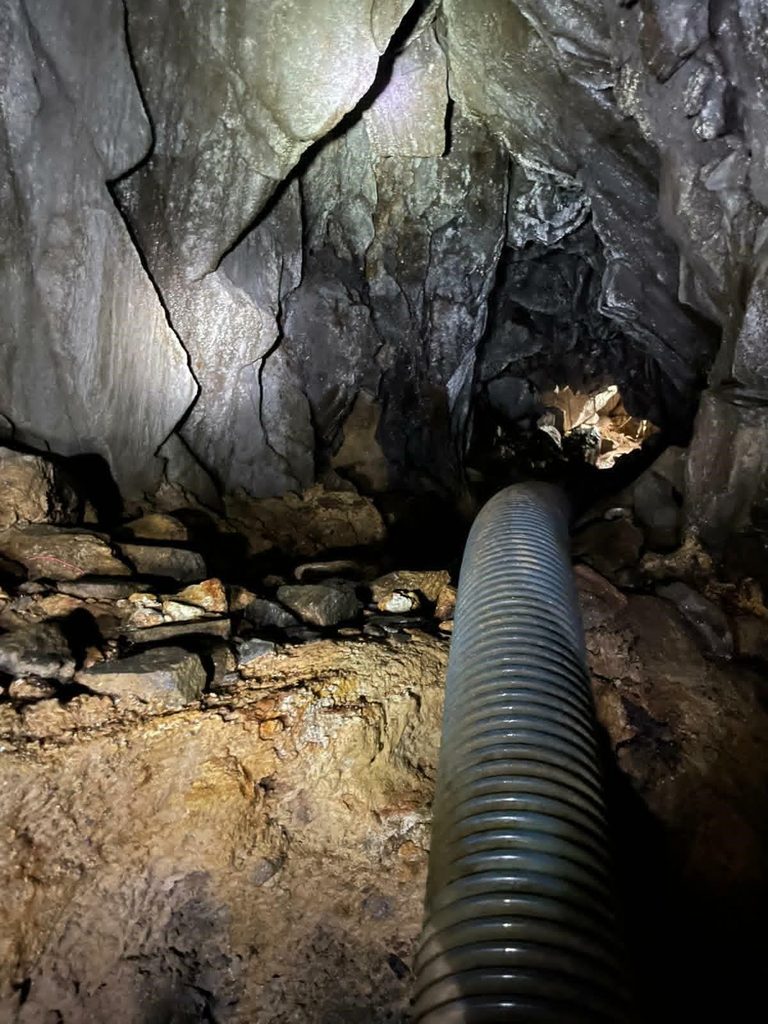
dangerous (risk of collapse, gas, snakes)
This mine can be found neither on Google Maps nor on the usual websites. My Taiwanese research friend—who has far better technical skills than I do—searches old maps and compares them with topographic maps. Then he applies the good old method: searching, walking, and talking to people. We went there together and explored the area.
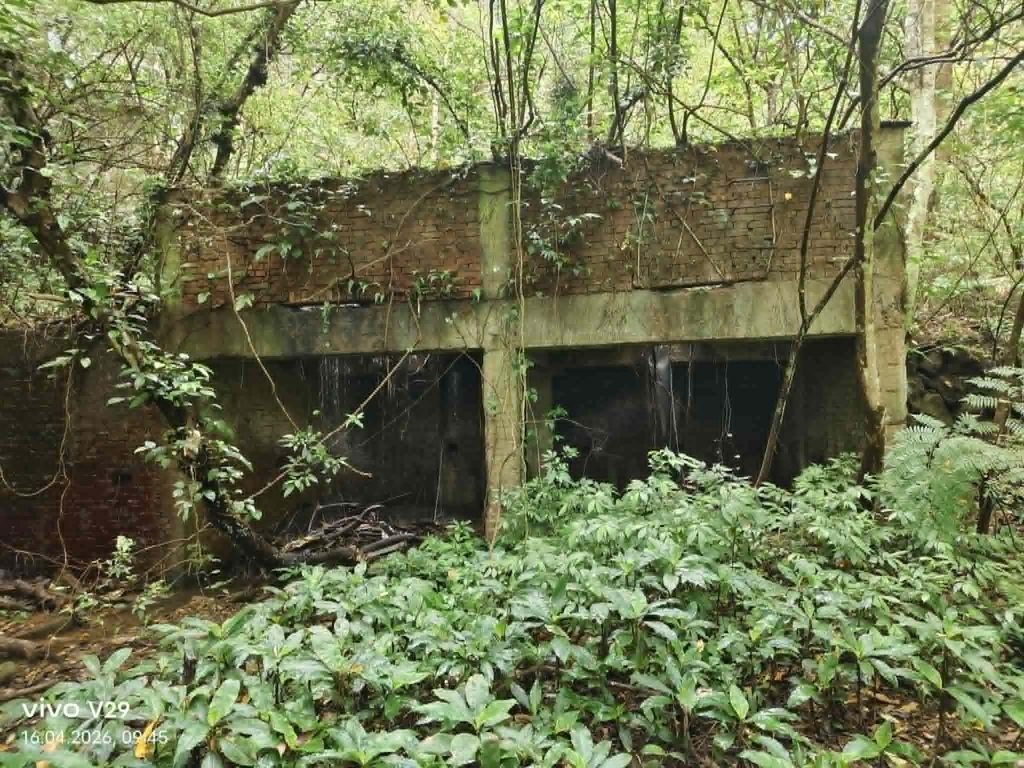
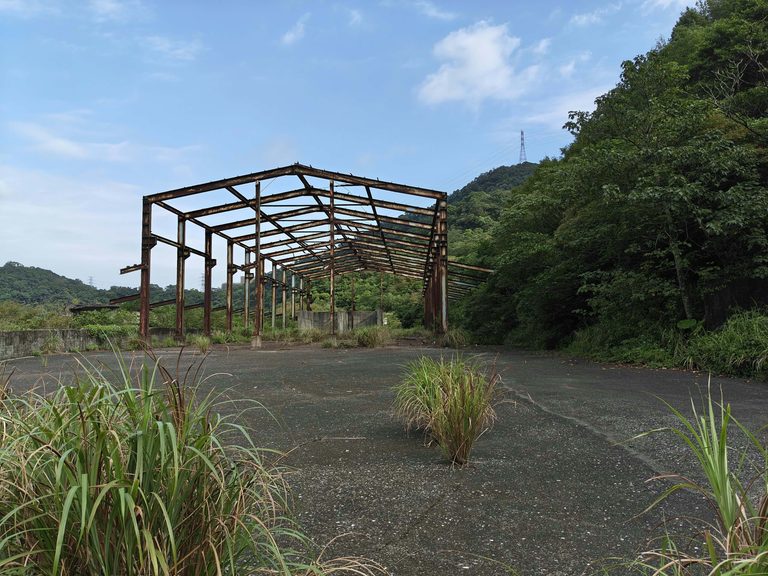
(Ende der früheren Straße, Entladestation)
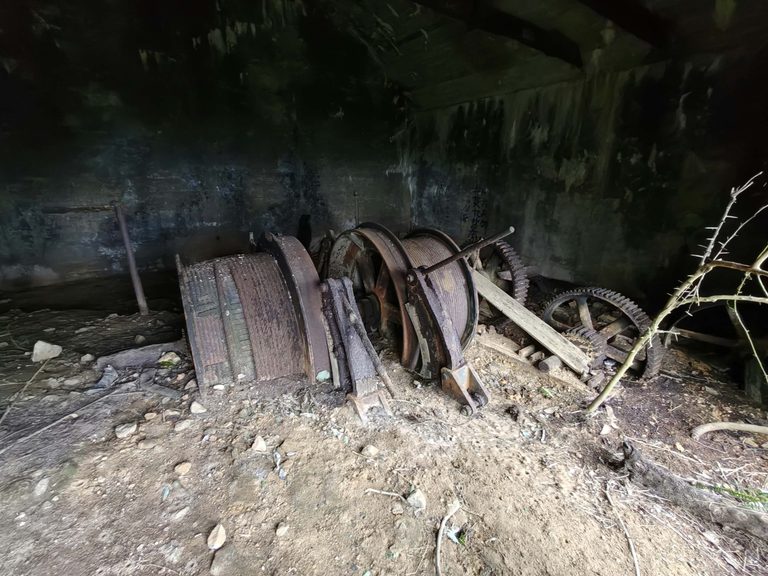
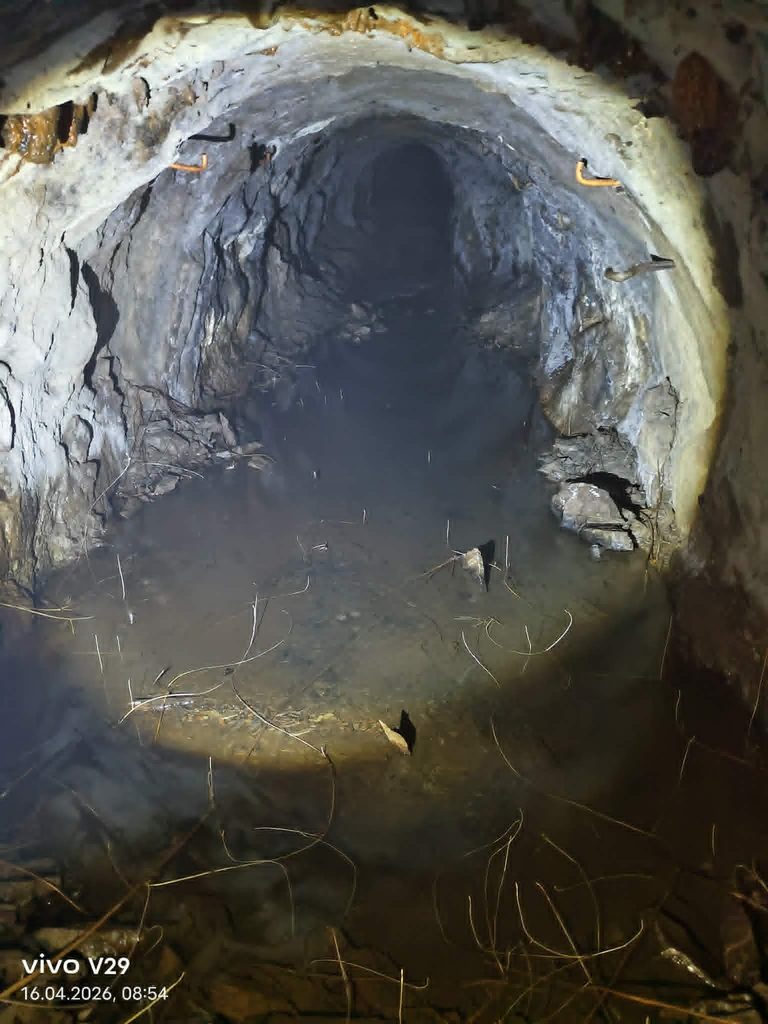
At first, it was a long drive into nowhere. We stopped at an old farm and had to hike uphill for about 10 minutes. The road was clearly not from the mining era, but it was already in poor condition—probably a farm road built later. Suddenly, he said we needed to climb downwards. Even when he pointed it out to me, I couldn’t see anything at first. We climbed down, crossed a small creek, and then I saw the first huts, which didn’t look very promising. We initially entered the tunnel, but had to turn back because the water level was too high and the ground was extremely muddy. The tunnel itself, however, seems to be in good condition. We’re saving that for another visit after a long dry period.
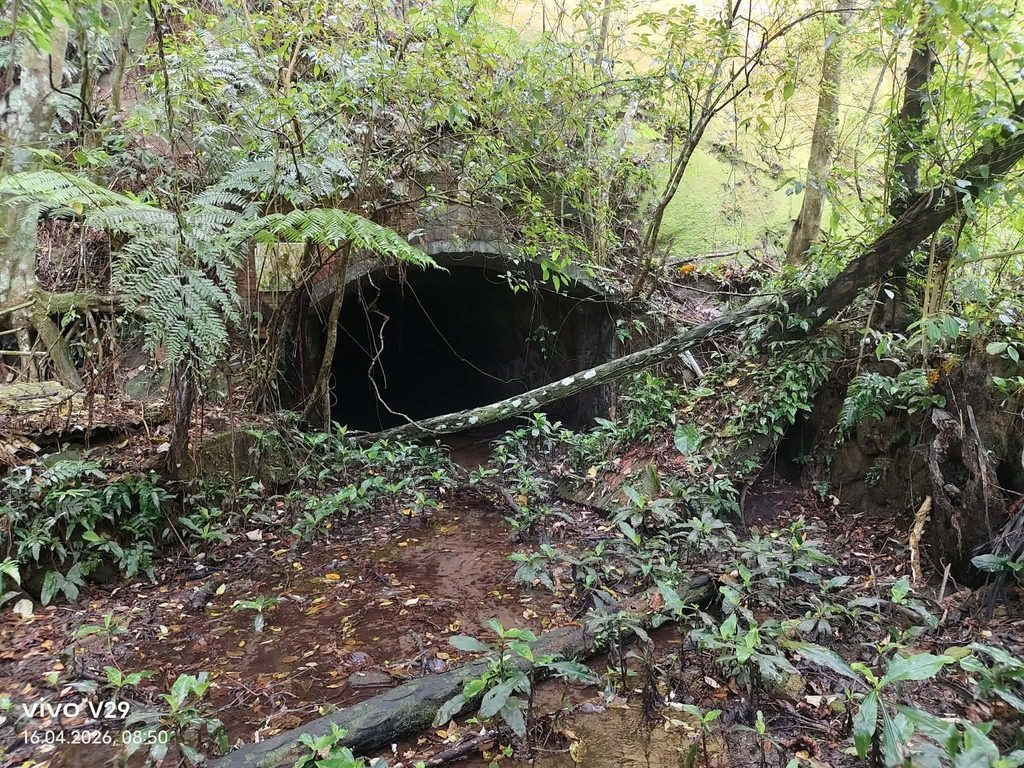
On the right side of the entrance, there are still remains of former buildings, though little is left.
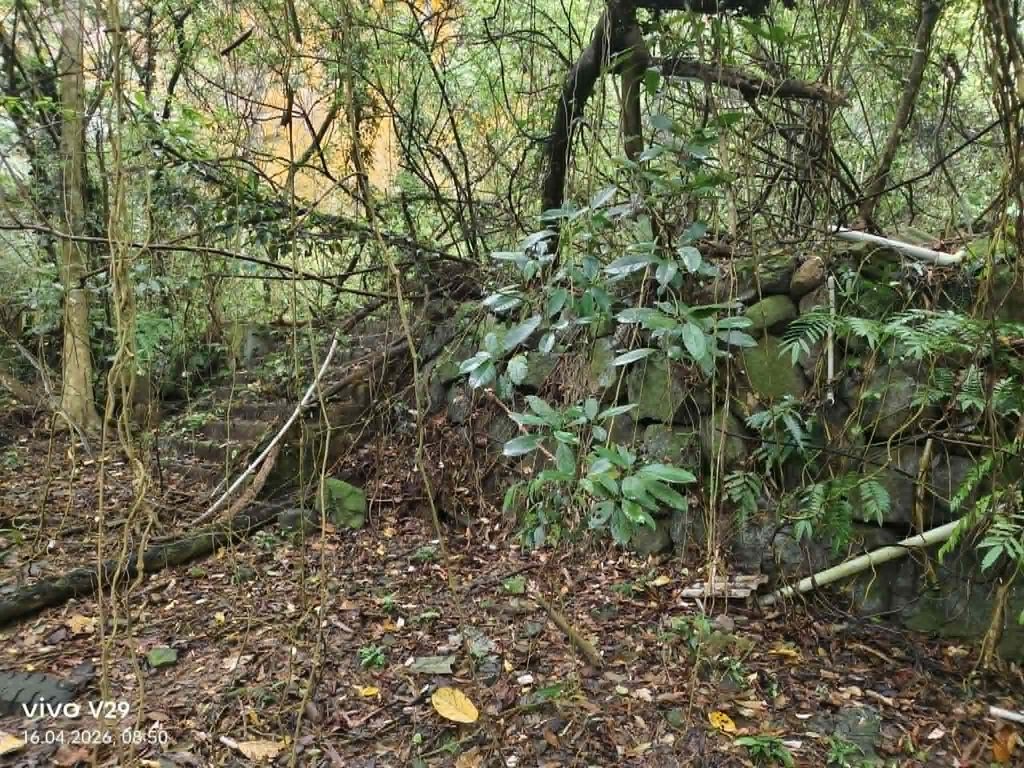
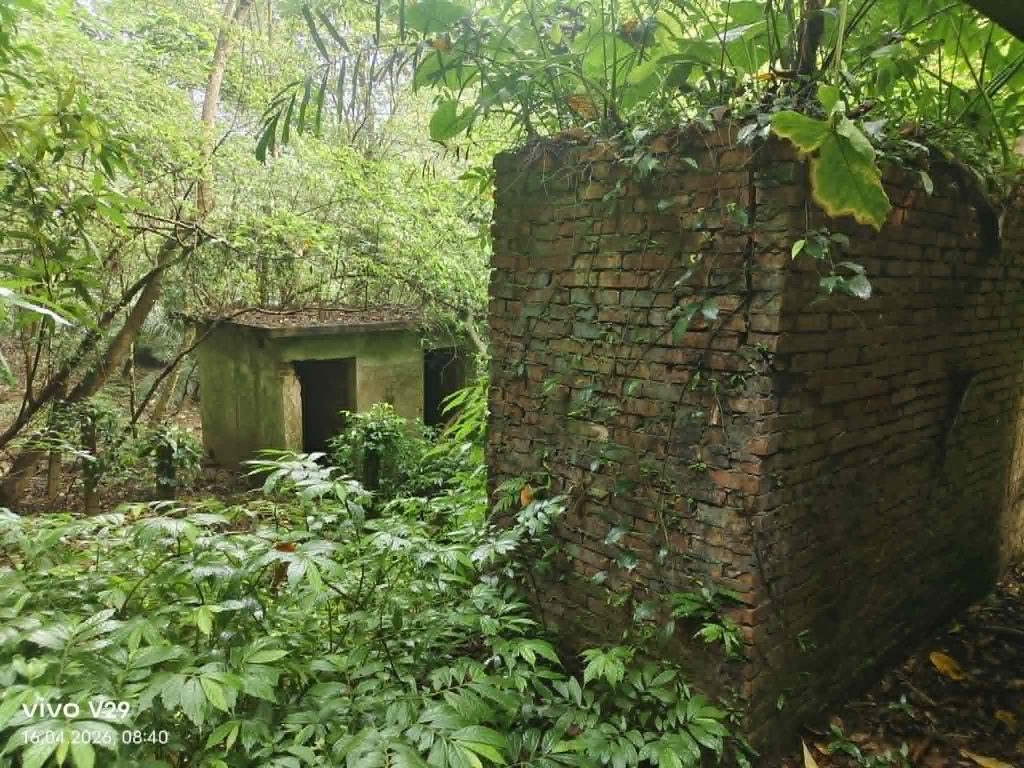
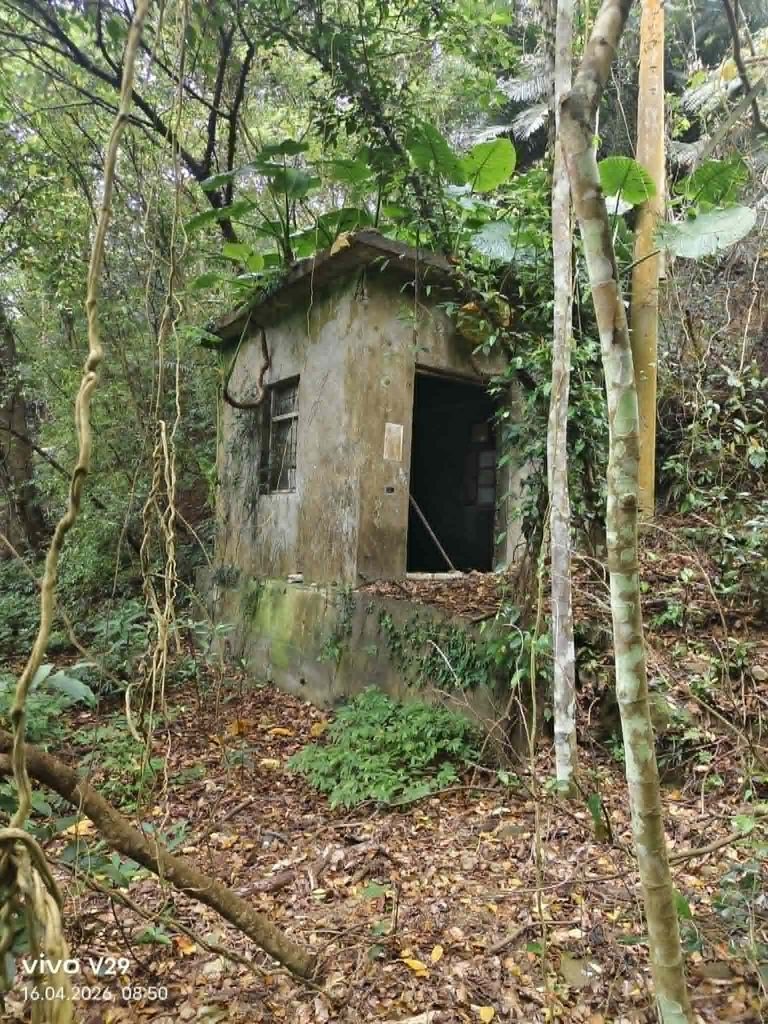
We were still able to make out the now heavily overgrown path and followed it to the large administrative building.
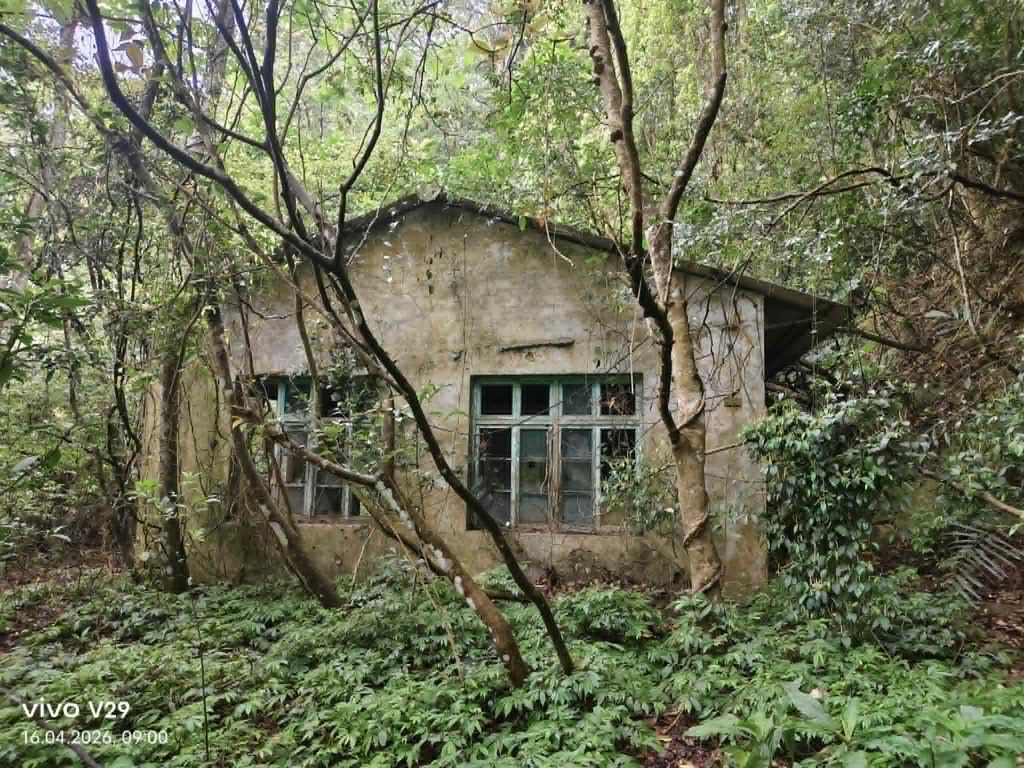
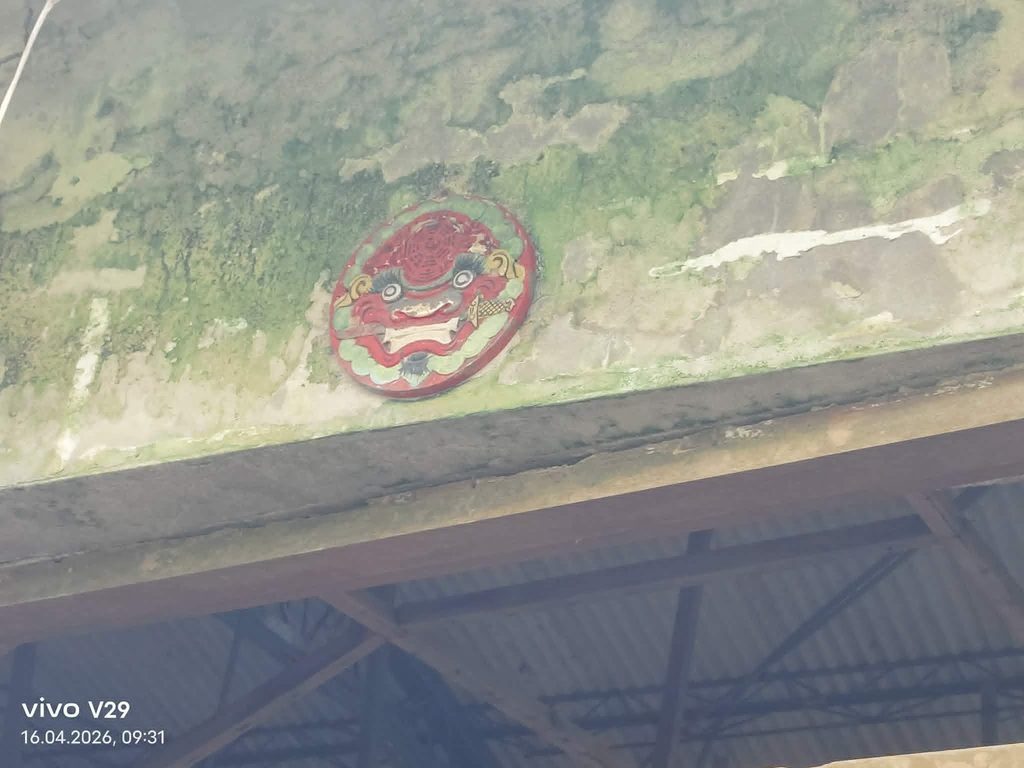
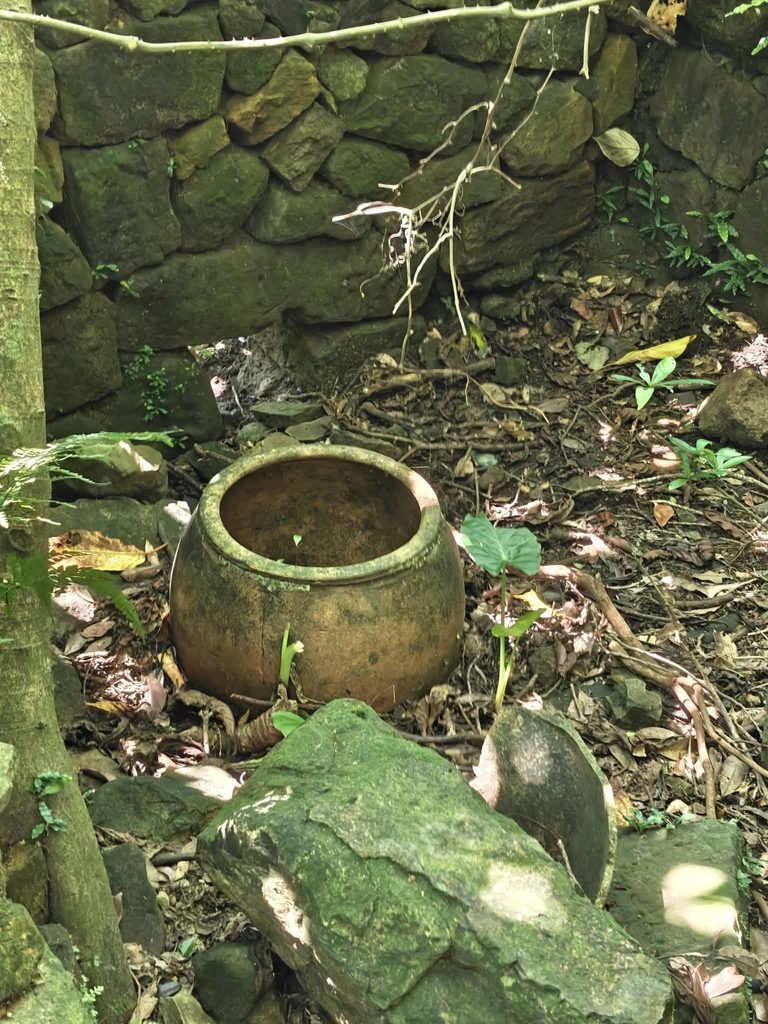
Protection from ghosts?
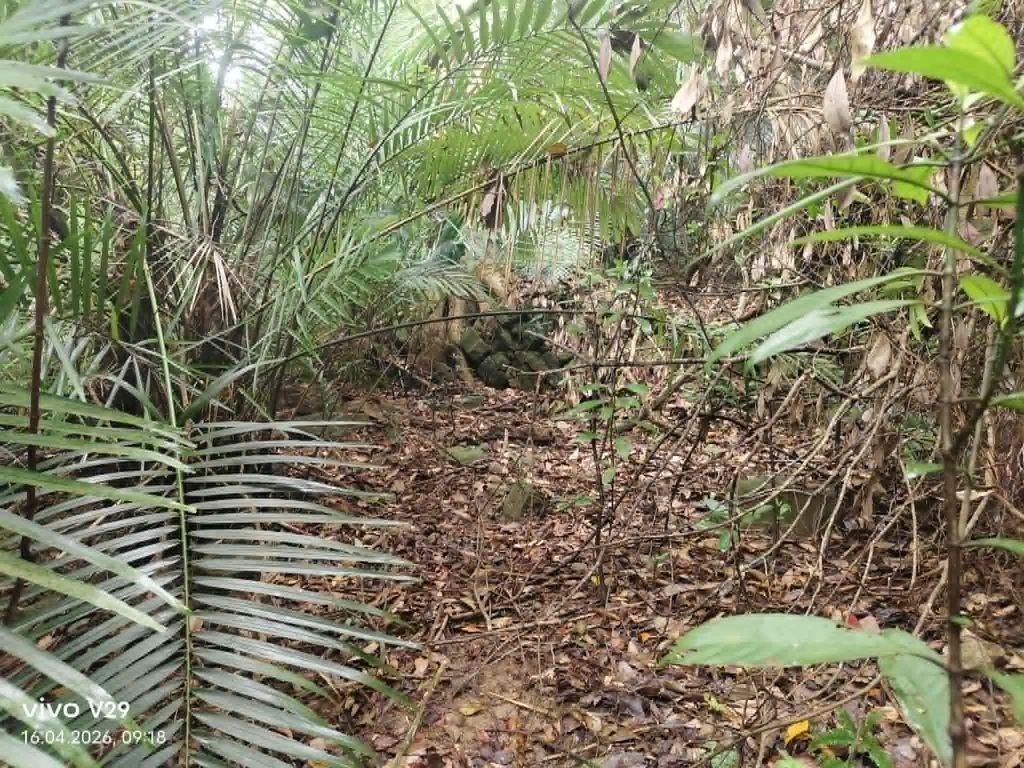
We followed the path farther into the area and climbed higher. Several terraces and stone boundaries are still visible, but there was nothing particularly worth seeing. This part of the site was probably used for fields and small houses.
Second Visit
I returned on my own about six months later. I followed the old road again, but this time I took my time. I could now see that the road had been rerouted. Every so often, I passed an old building or a driveway on my right, but none of the driveways led anywhere.
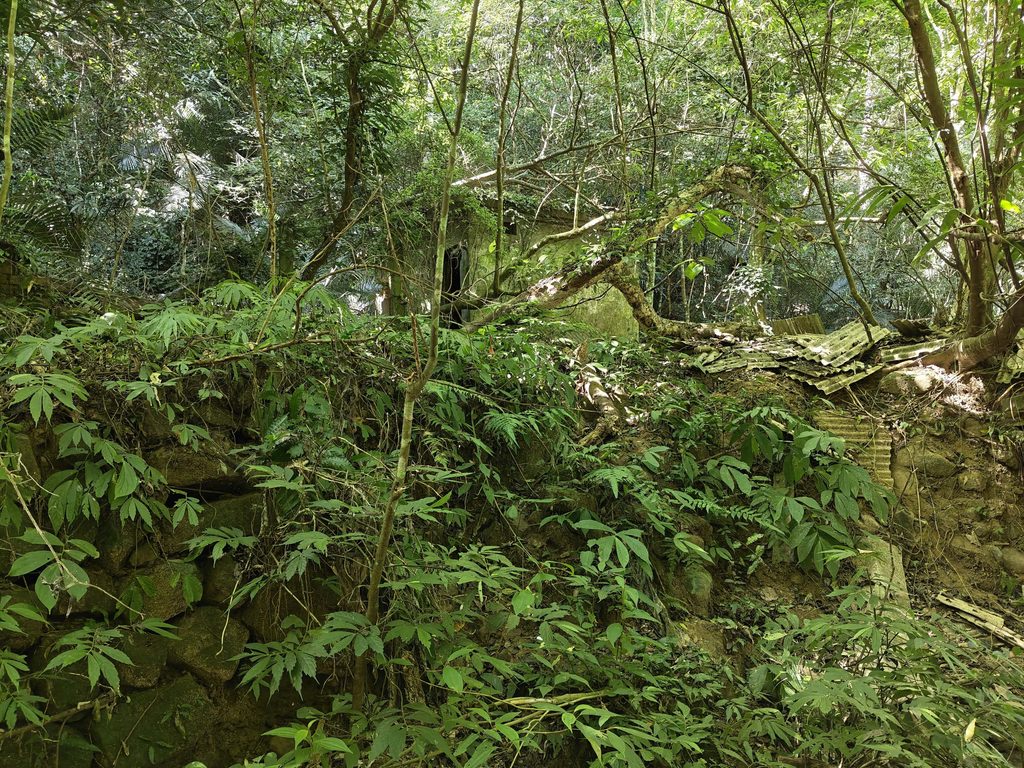
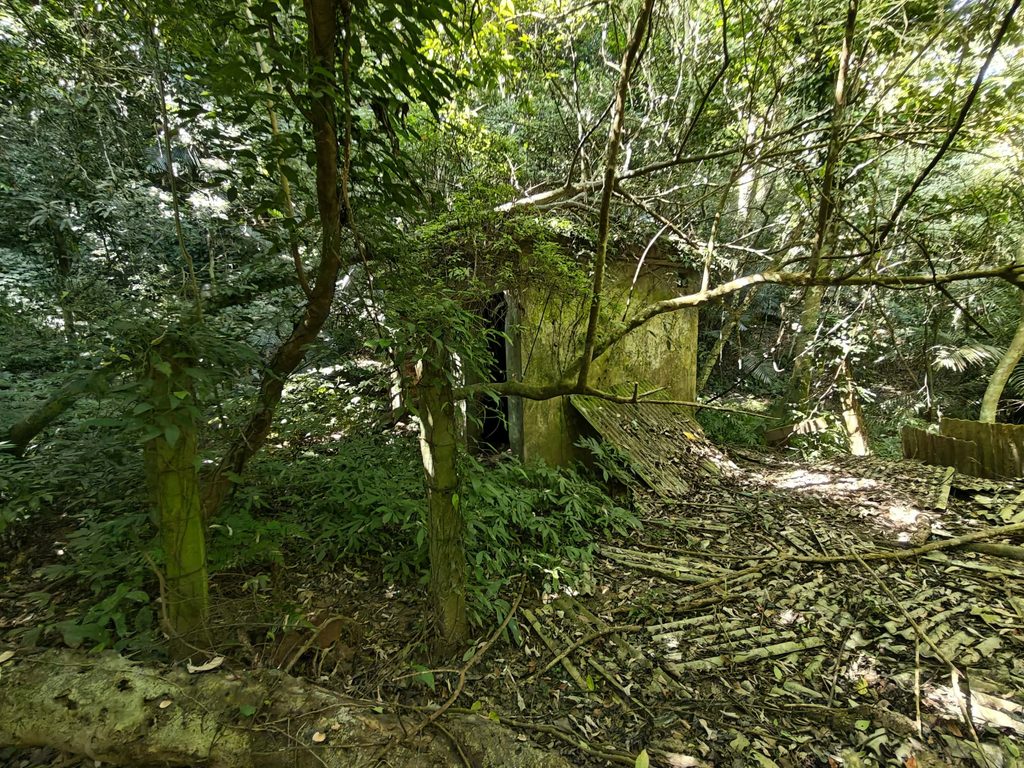
I followed the road to the end, where I found the remains of an old settlement that must once have spread across at least three levels.
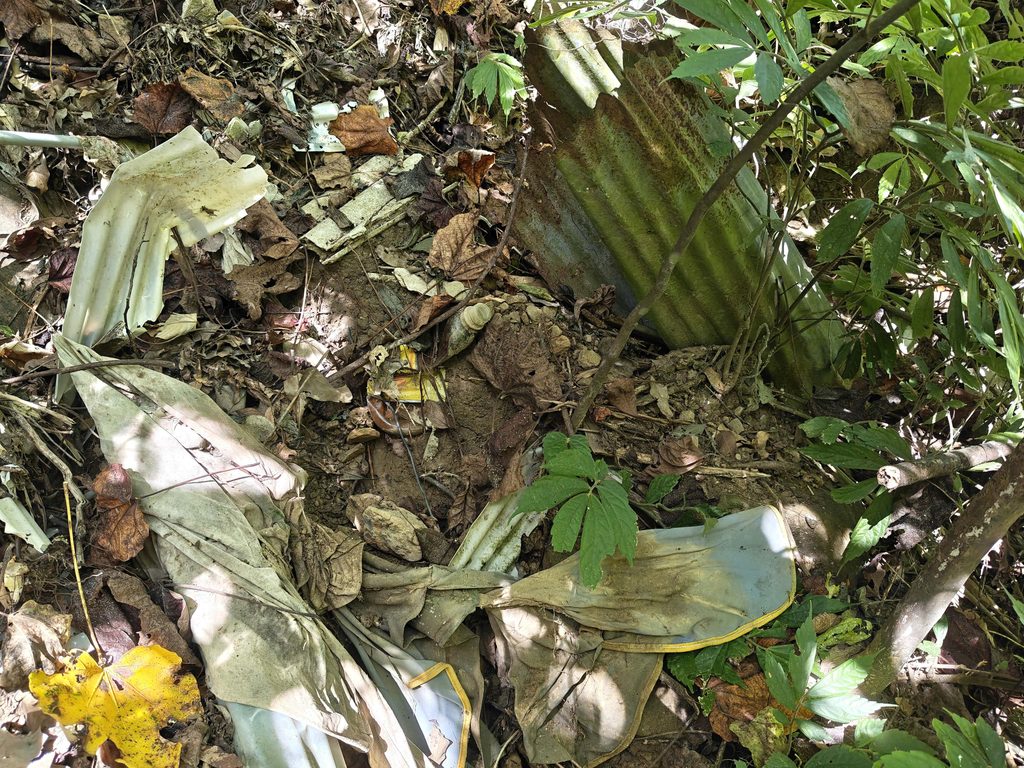
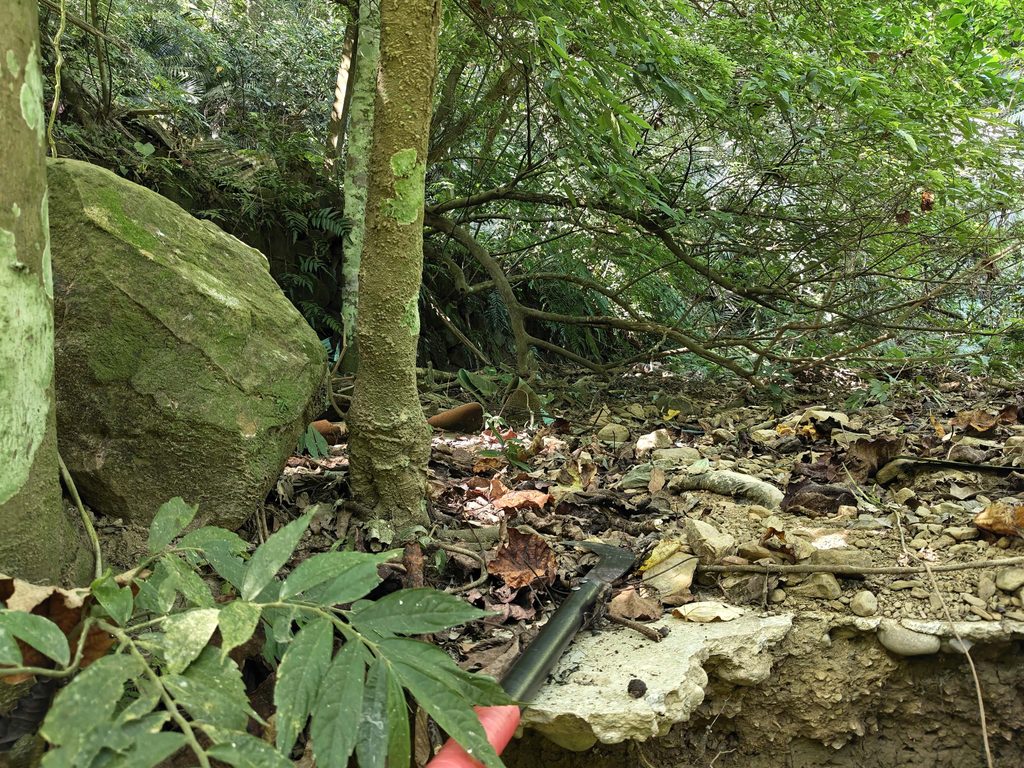
Remnants of the foundations are still visible.
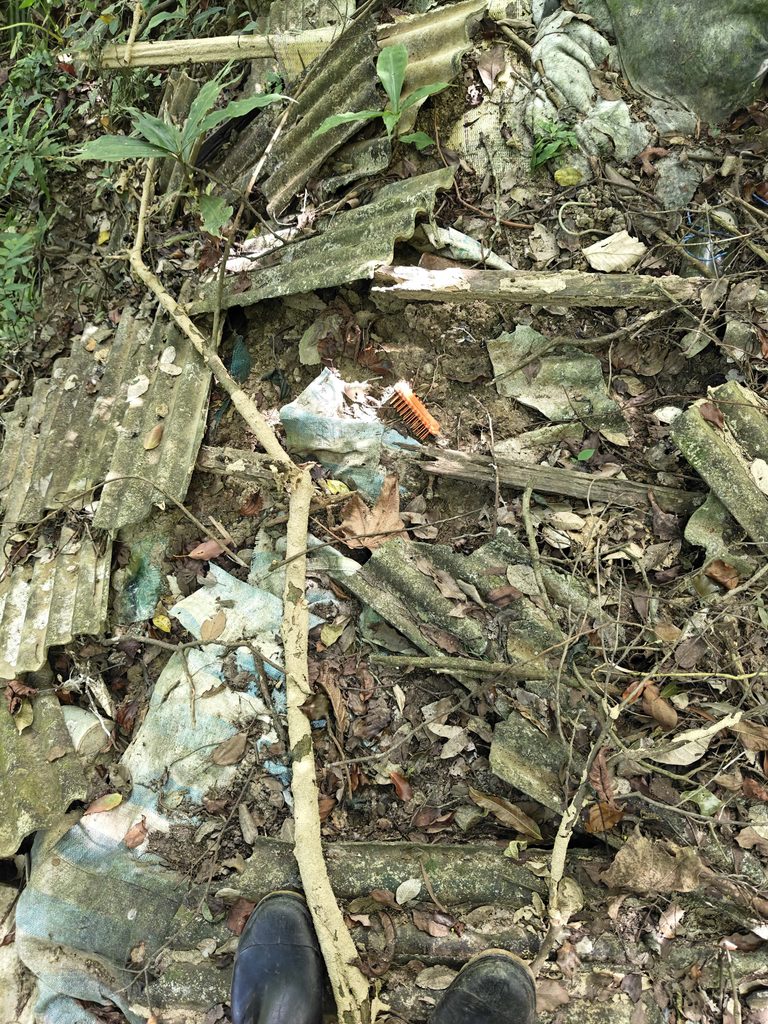
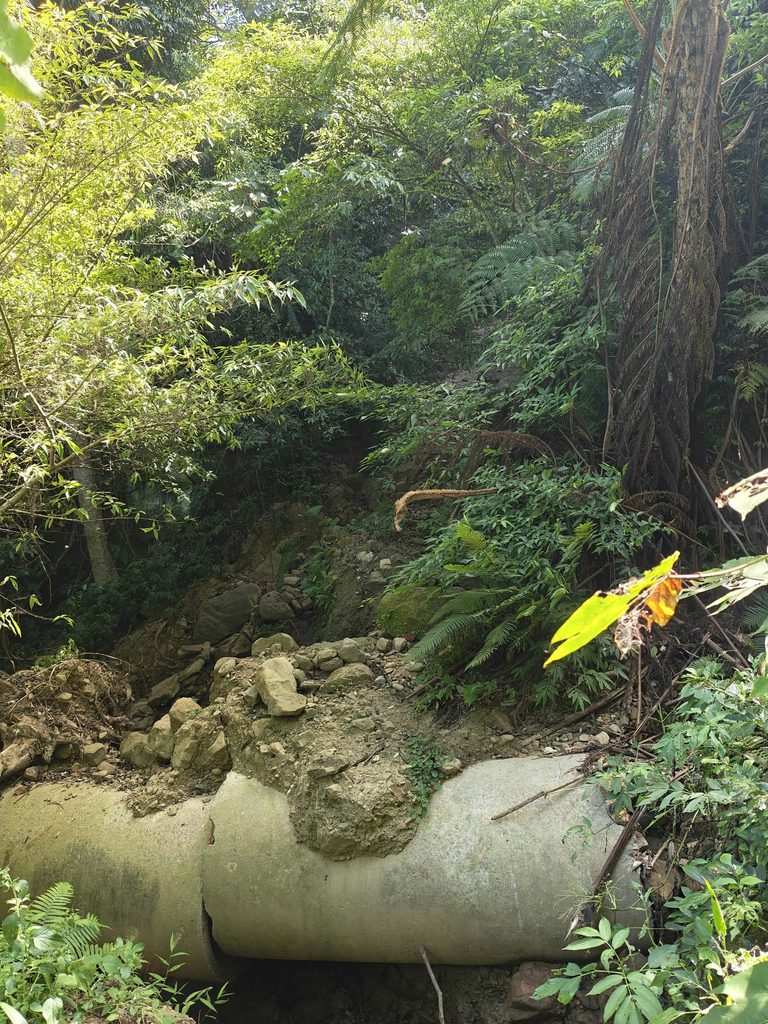
This is where things get interesting, and where I’ll focus my next search. Why is there such a huge drainage channel at the end of the road, right by the old settlement? It seems to serve no purpose now, but there must have been a reason to build it on that scale. My guess is that there’s something farther uphill.
FEAR
Mines fascinate me. All right, abandoned places in general fascinate me, especially old factories. But there’s something about mines that makes them different. Whenever I go inside one, a sense of unease sets in almost immediately. Is it knowing that there are tonnes of rock above my head that could come crashing down? Or is it just a natural fear for someone who wasn’t born a mole? I was probably looking at it too simply. So I asked the most famous professor of them all, Professor ChatGPT:
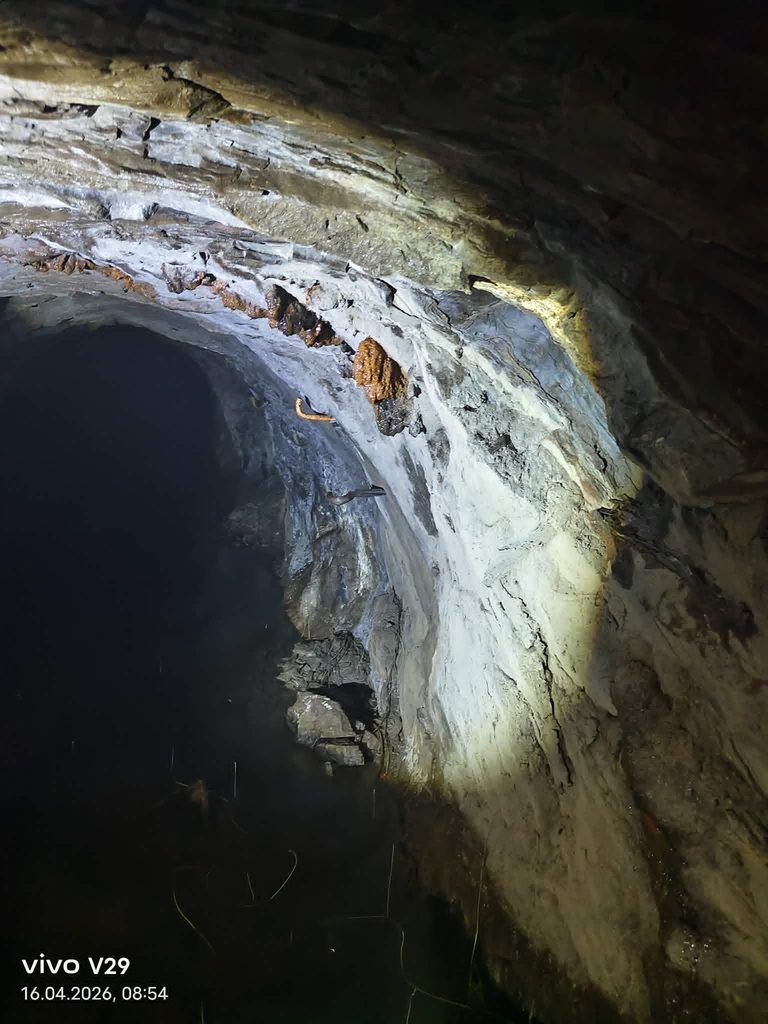
In mines, this feeling of an apparent directed threat arises from the interaction of several physical and biological factors that strongly affect perception and the brain’s stress processing.
Acoustic conditions play a major role. Sound is repeatedly reflected by the narrow, hard surfaces, creating delayed and multi-directional echoes. As a result, it becomes extremely difficult to determine where a sound is coming from or how close it actually is. Even minor events such as dripping water, falling debris, or animal movement can feel spatially diffuse or as if they are surrounding the observer. At the same time, the lack of light significantly impairs visual orientation. Depth perception is reduced, shadows are misinterpreted, and peripheral vision easily produces illusory motion. In the absence of reliable sensory input, the brain automatically fills in gaps, which in uncertain environments tends to amplify ambiguity rather than resolve it. In addition, subtle physical effects within the mine further distort perception. Small air currents, pressure differences, and temperature gradients can create barely perceptible movements of air that may be felt on the skin or generate faint sounds. In darkness, these cannot be properly identified and are therefore often interpreted as approaching movement or contact.
Air quality can also contribute. Elevated CO₂ levels, reduced oxygen, or the presence of sulfur or metal compounds can affect both physical well-being and cognitive processing, increasing anxiety, disorientation, and a sense of unreality. Biologically, animals such as bats further intensify this experience. Their silent, rapid, and unpredictable flight patterns, often passing close to the body, trigger the human startle reflex almost instantly, even though there is no actual threat. Overall, the combination of sensory uncertainty, physical stimulation, and reduced orientation pushes the brain into a heightened alert state. In this mode, ambiguous or random signals are more likely to be interpreted as intentional movement or threat, making the environment feel actively hostile even though it is physically inert.
copyright Claudius Petzold