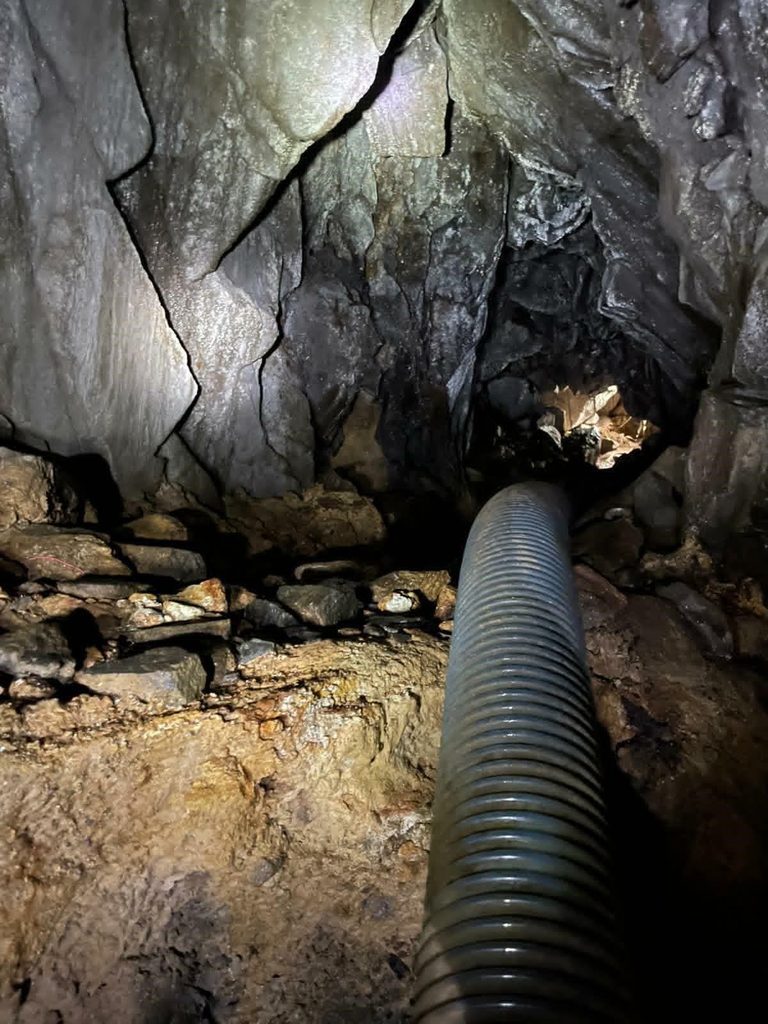
ed. 2026/10/17, still in process
(very dangerous, snakes, hornets, risk of collapse, toxic inside the flues, arsenic)
I am morbidly fascinated by the mines, tunnels, and flues behind the Shuinandong Smelter. From the funicular railway or Liukeng Slope Ropeway (六坑斜坡索道), it’s not that hard to find some tunnels, old buildings, and mines. You can already get a first overview using Google Maps. The rest is basically old-fashioned legwork and a bit of effort with a machete.
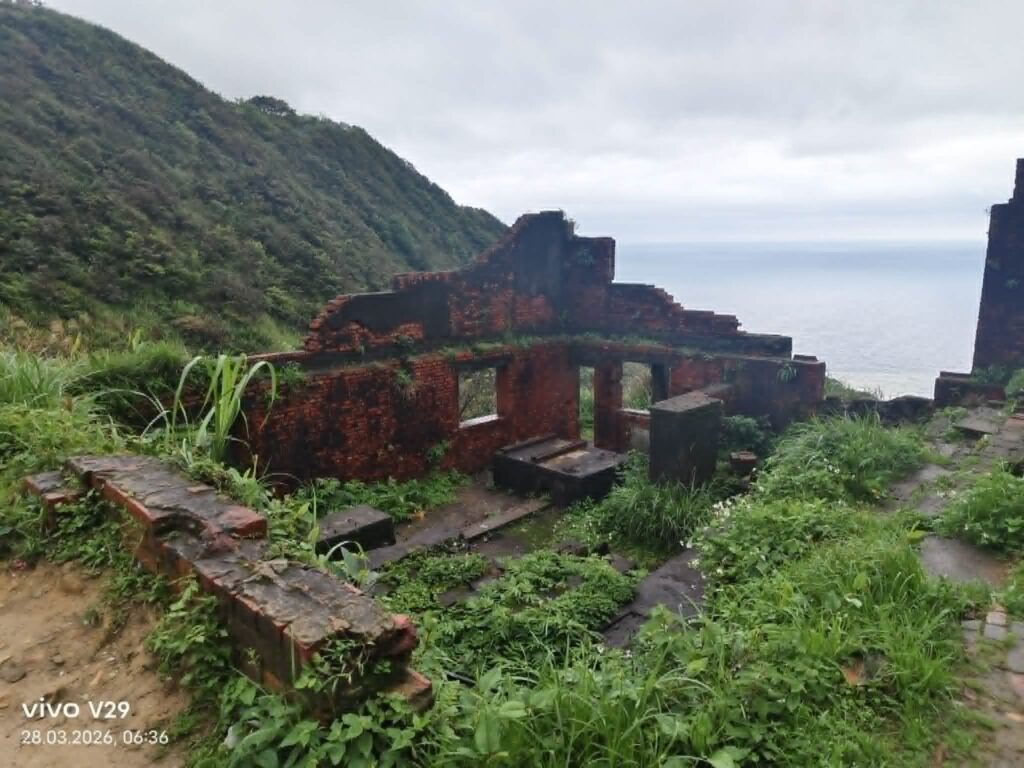
It started off quite nicely, with a few tracks—some well preserved, others less so.
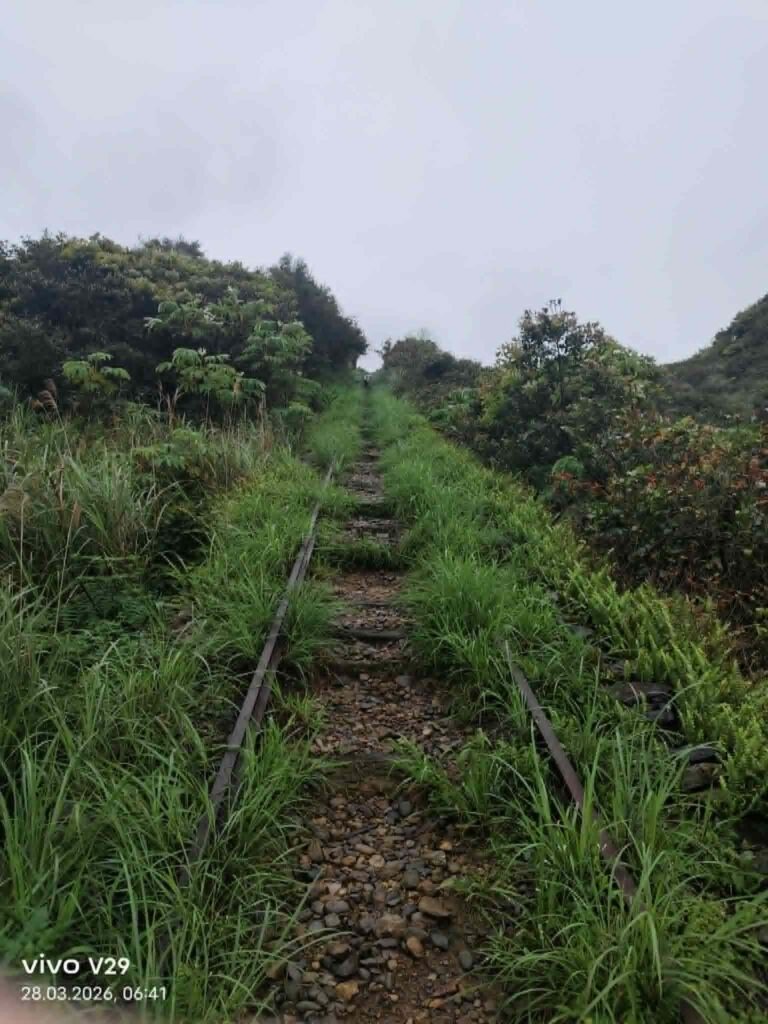
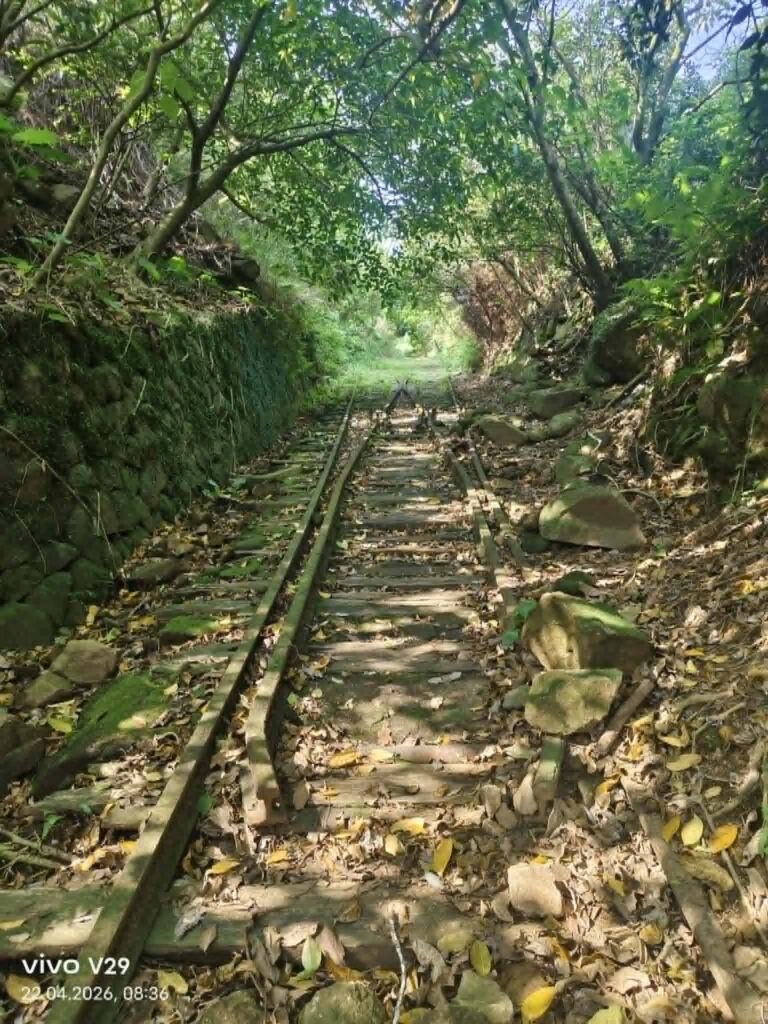
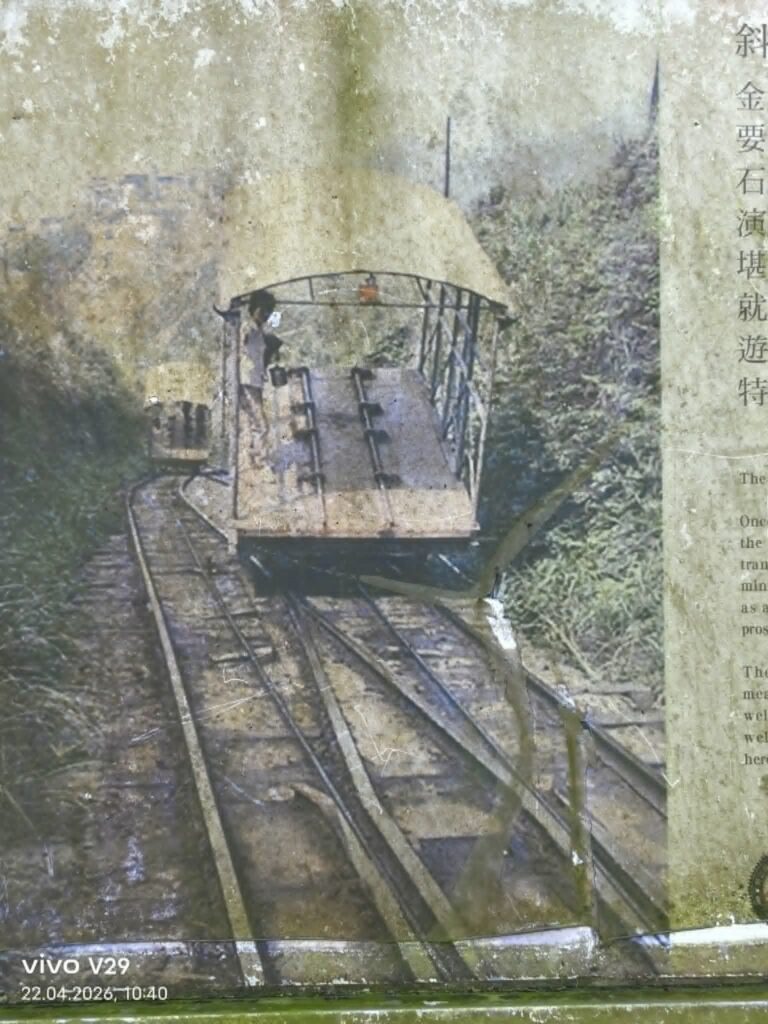
(Thanks to the Jinguashi Museum)
Along the sides, you can make out the remains of utility poles and paths, but even on older Google Maps imagery they aren’t marked—so it must be quite old.
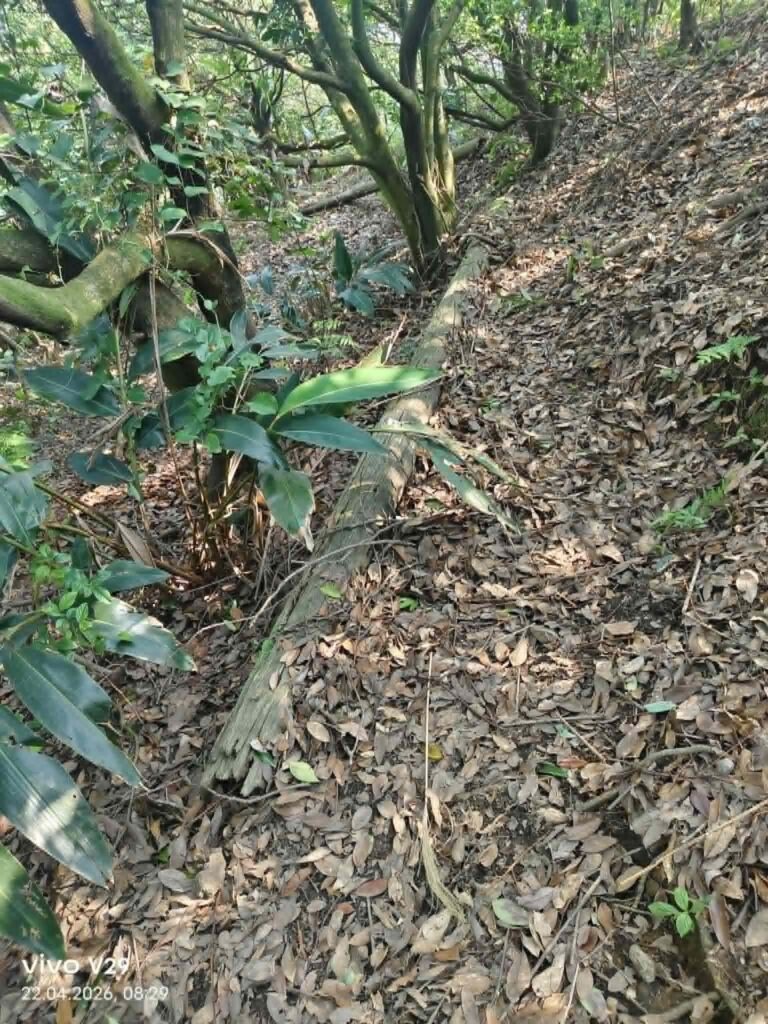
Something to come back to later; for now, I headed down. On the way, I could already tell that I would gain access to the entire rear area of the smelter.
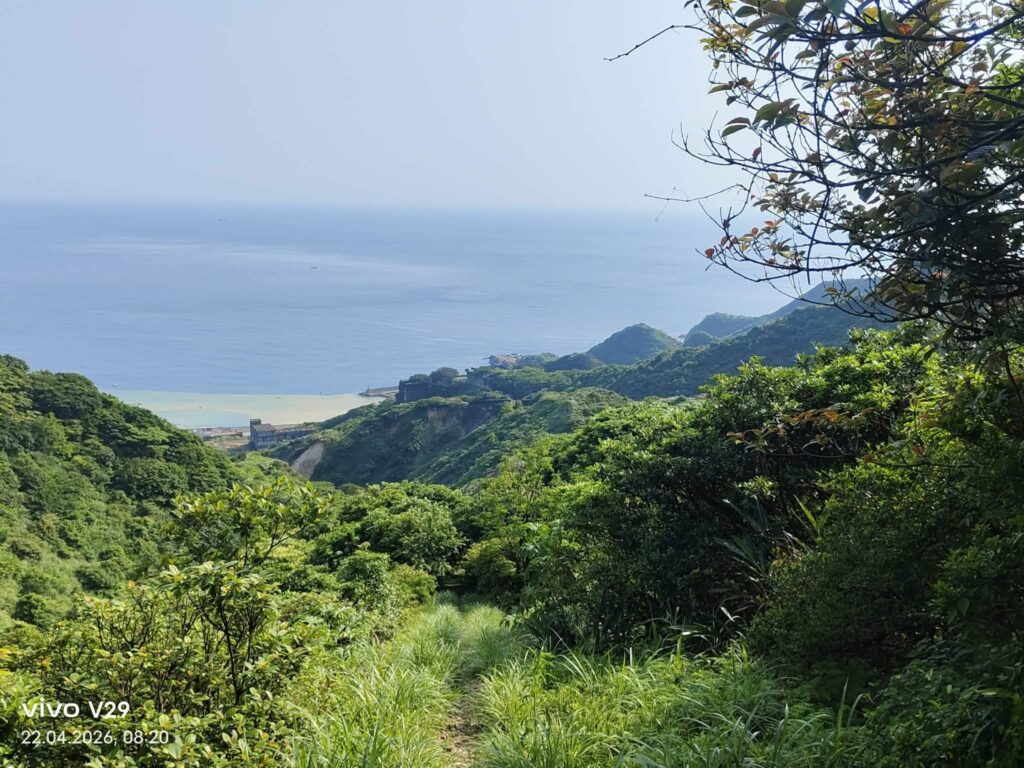
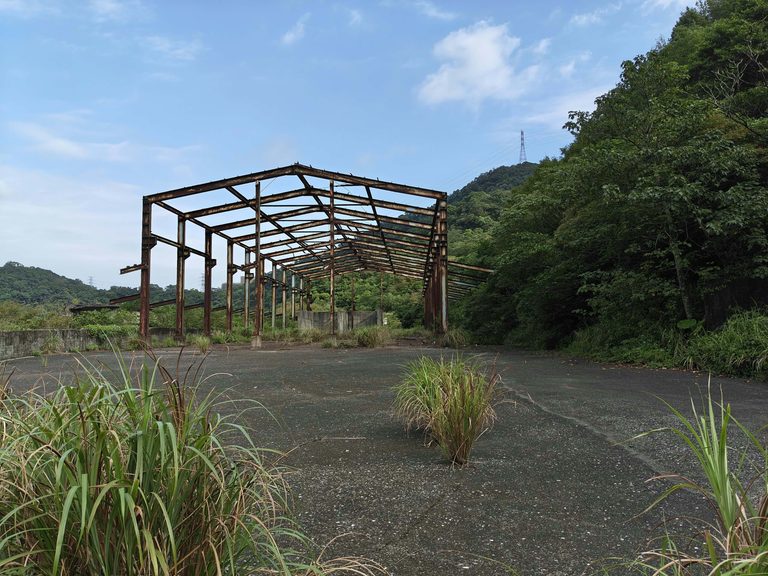
At the end, there are numerous buildings whose purpose is no longer recognizable in detail.
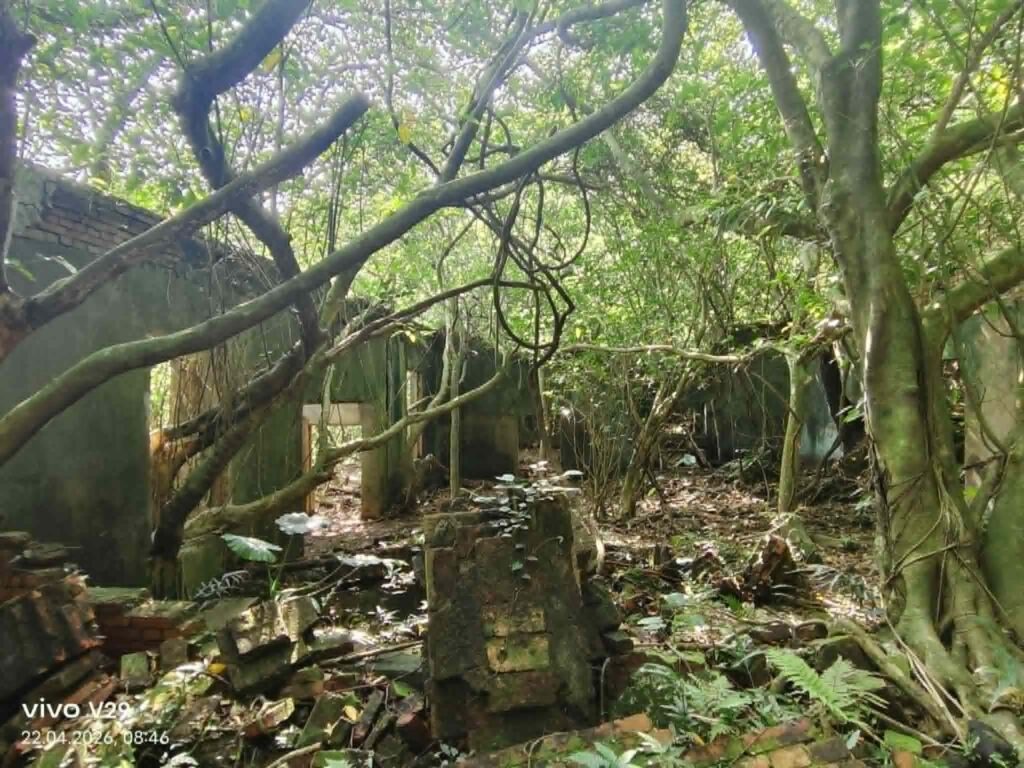
This was a large complex consisting of several buildings, perhaps around 100 meters long and 20 meters deep. In the front section, there are heavier foundations, and together with the remains of electrical insulators, it suggests that the compressor was located here (please see the old picture below).
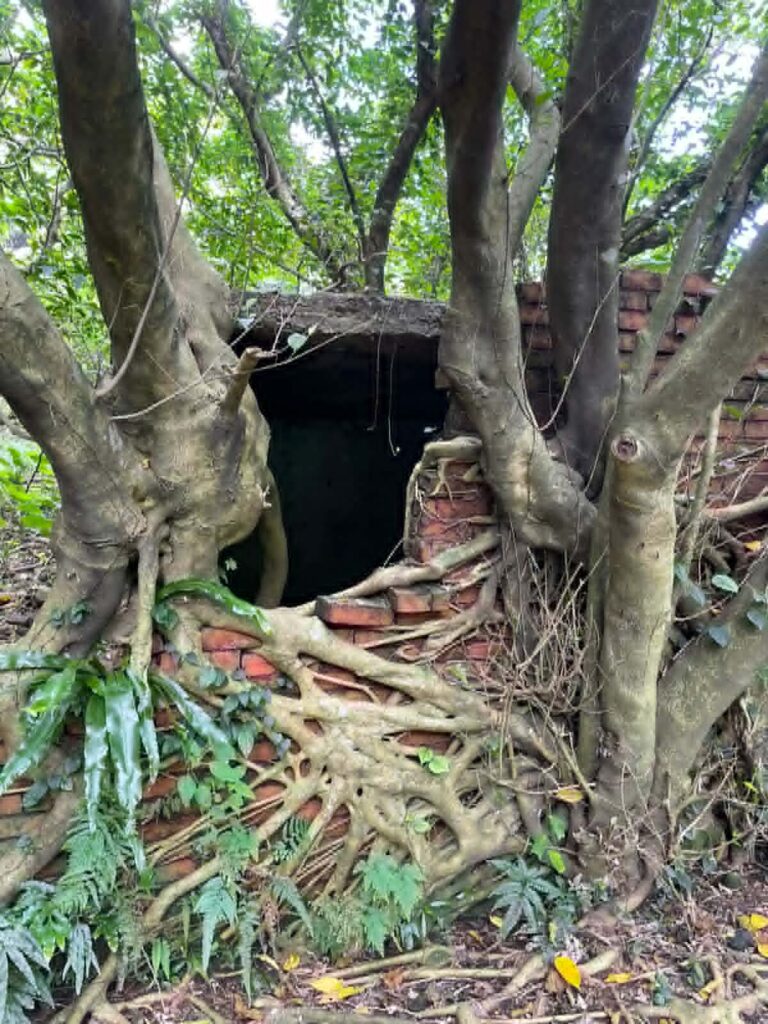
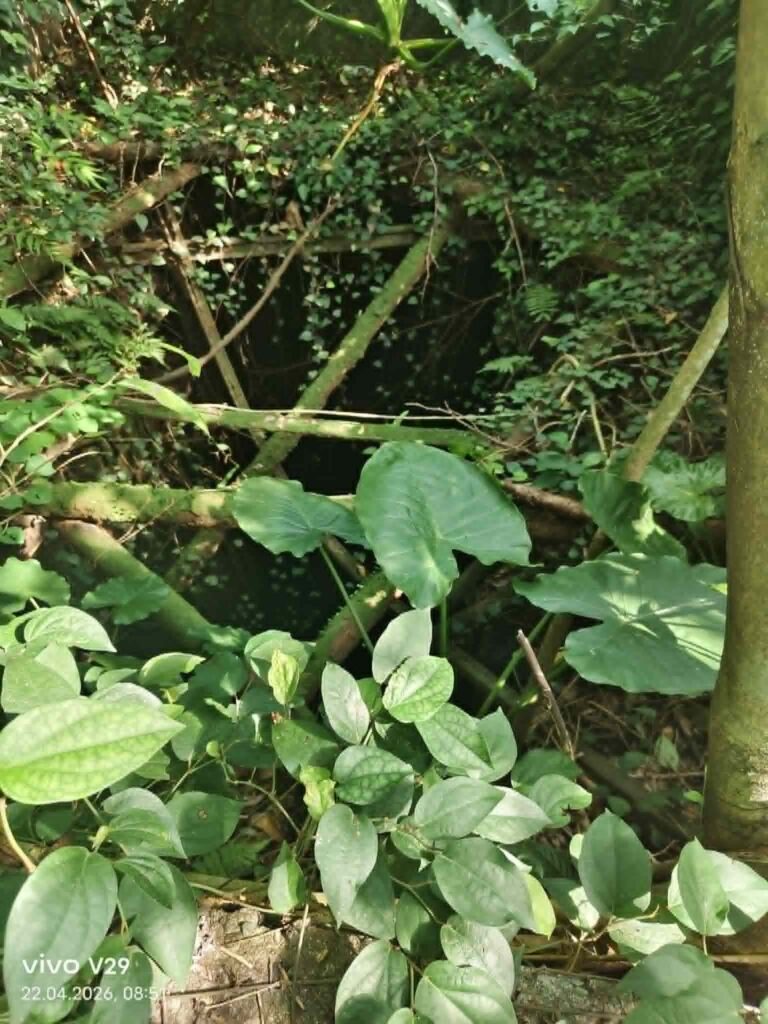
Opposite them is an old shaft. A sign warns about it. What stands out is that it’s vertical, which is unusual for the area. Or is it just ventilation? However, it is surrounded by walls that are far too solid and substantial for a ventilation shaft. It may therefore have been a connecting shaft between different levels of the mine. We dropped a stone into it, and it appeared to be very deep—most of it now flooded.
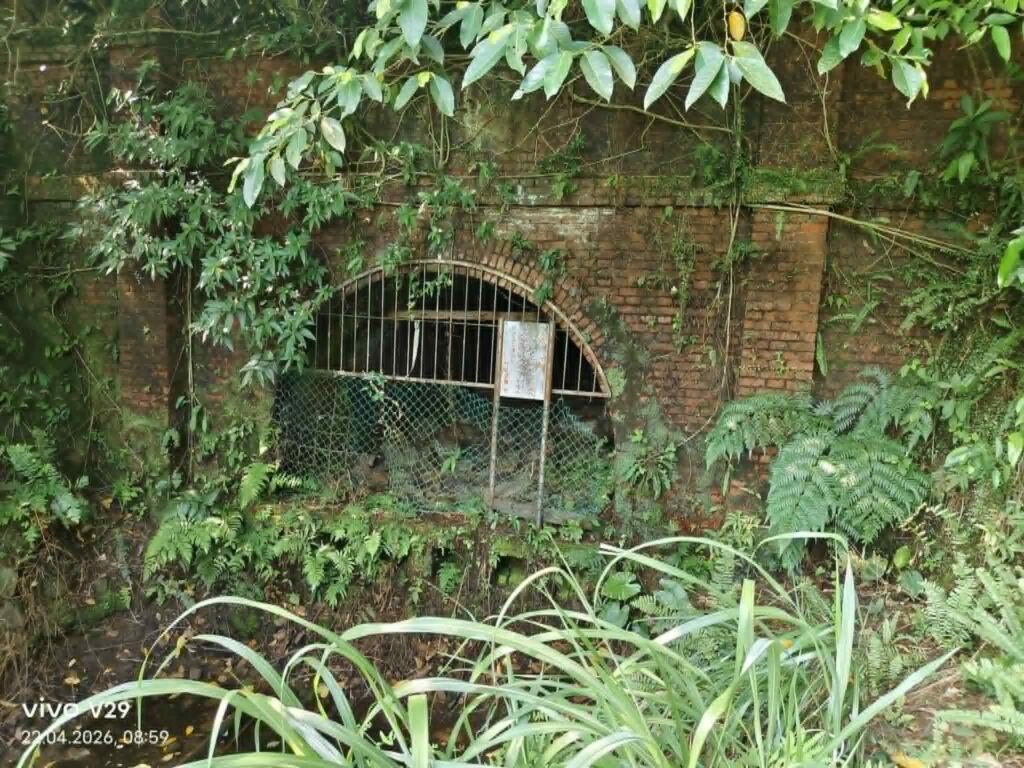
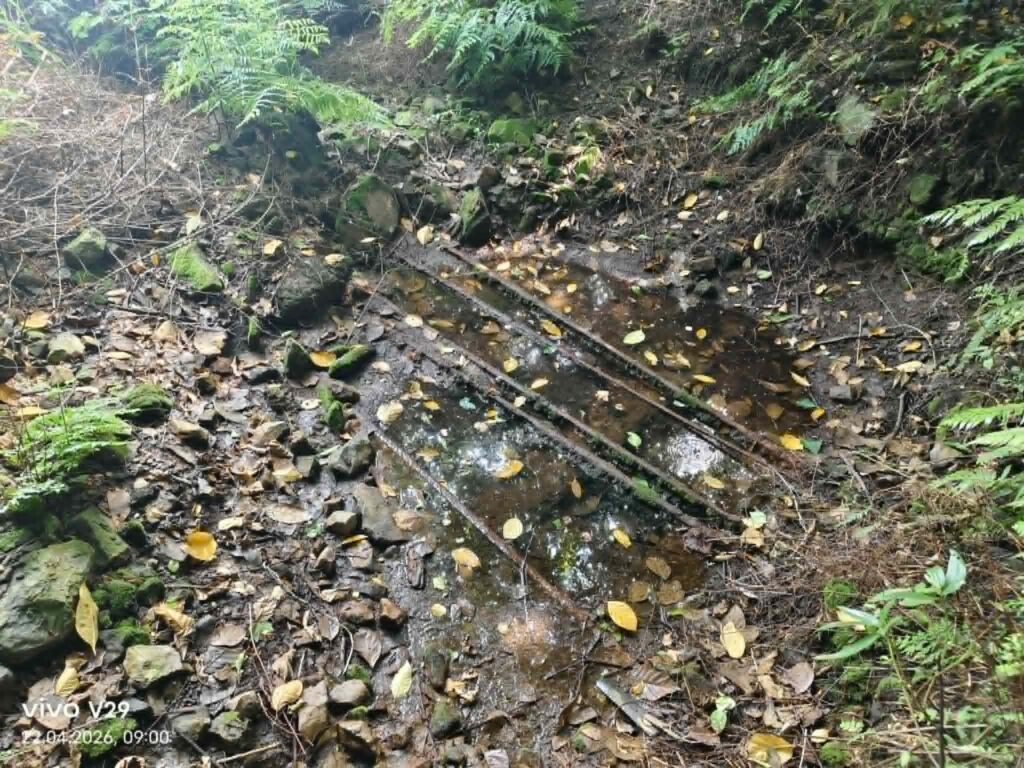
Well, I headed toward the smelter. With a bit of searching, you can find the old Mine Entrance VI. It appears to be accessible. Below it, there are remnants of rails.
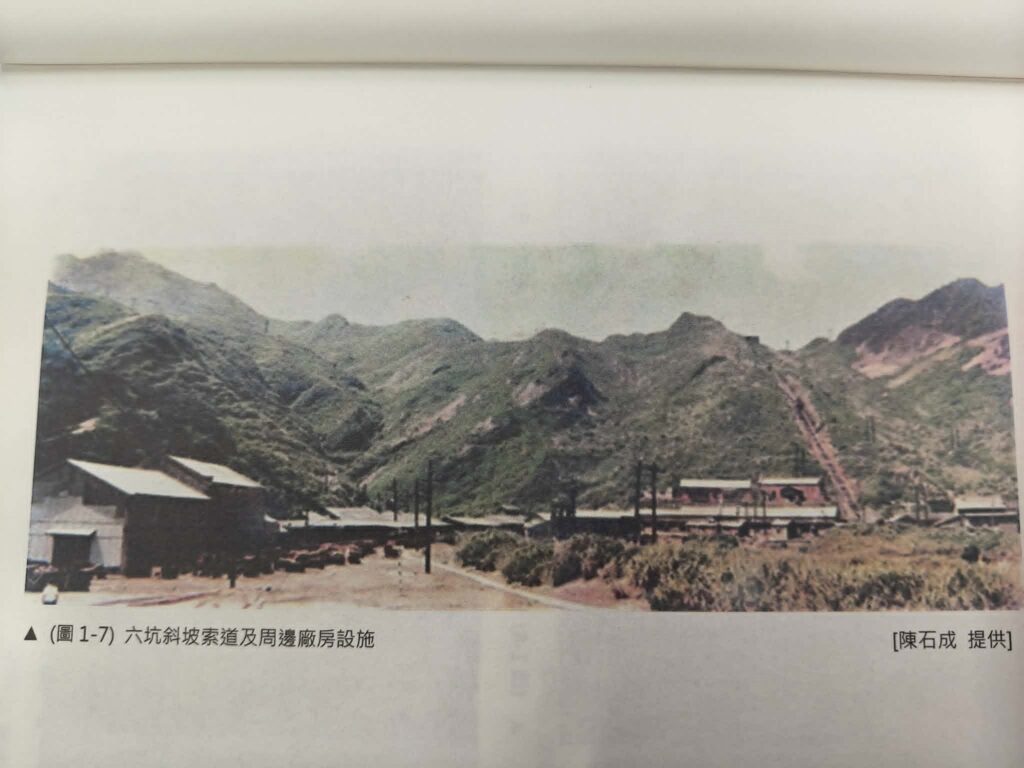
(1942金瓜石事件鑛城蒙冤悲歌)
Now compare this photograph from around 2015 with the photo above. We are looking in the direction of the ropeway, with the work buildings on the left. It appears that the entire topography changed after the 1987 typhoon. On the right, there is now a steep drop-off leading directly down towards the smelter. It is quite possible that this was precisely where the major landslide occurred in 1987. This could also explain why the intermediate mine openings between No. 6 and No. 7 have disappeared.
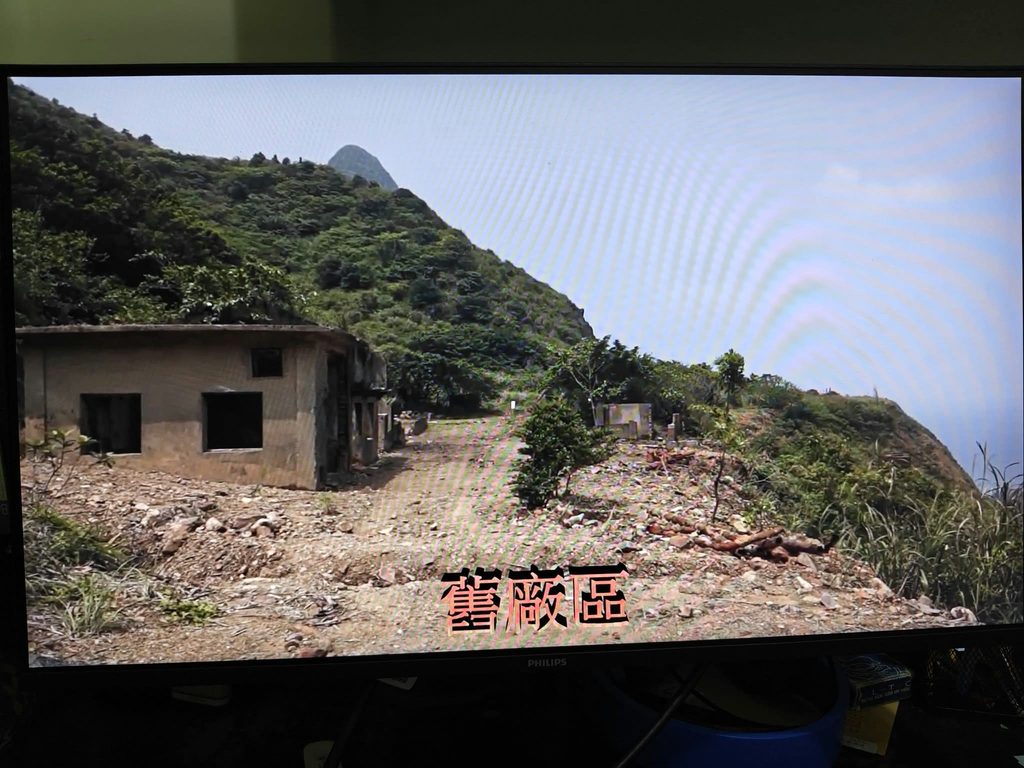
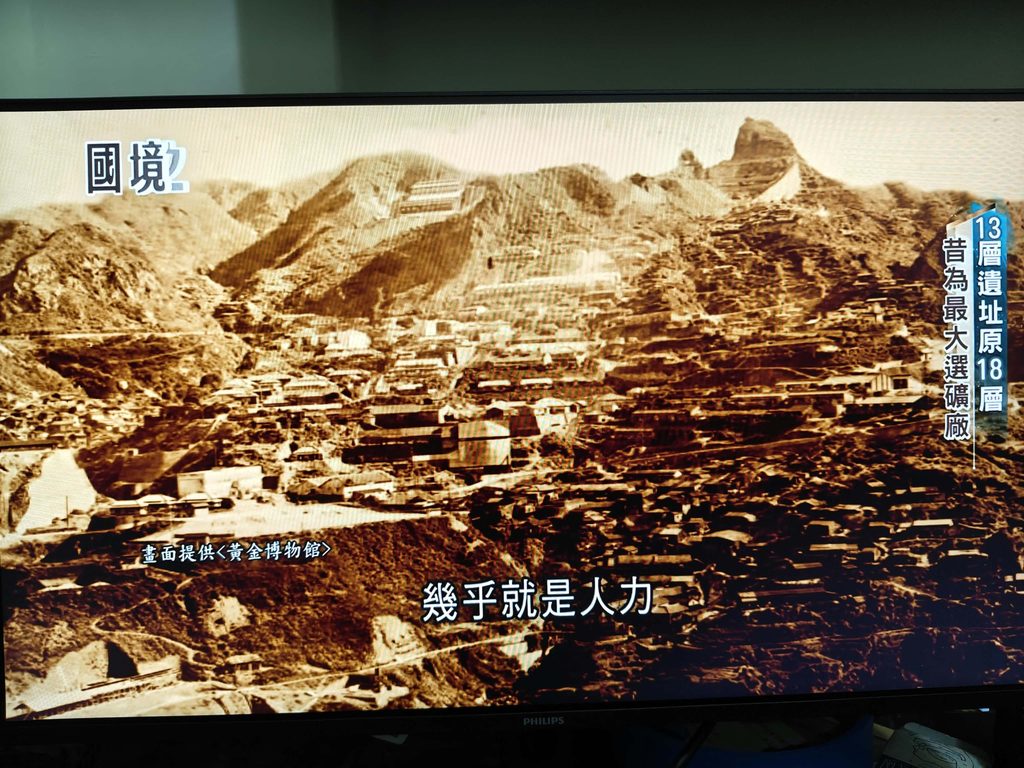
It’s hard to imagine today, but this must once have been a bustling settlement. On the right side of the image is the ropeway. Immediately to its left are the abandoned buildings mentioned above, whose ruins can still be seen today. Hidden behind the buildings in the center is the entrance to the mine shaft. Of the former forecourt, only a narrow path remains, with dense vegetation having reclaimed both sides.
I then continued walking along the road towards the smelter. It must once have been quite wide, but it’s becoming increasingly overgrown. About 15 years ago, there was a great deal of interest, and the tunnels that had been filled in at the time were excavated and reopened.
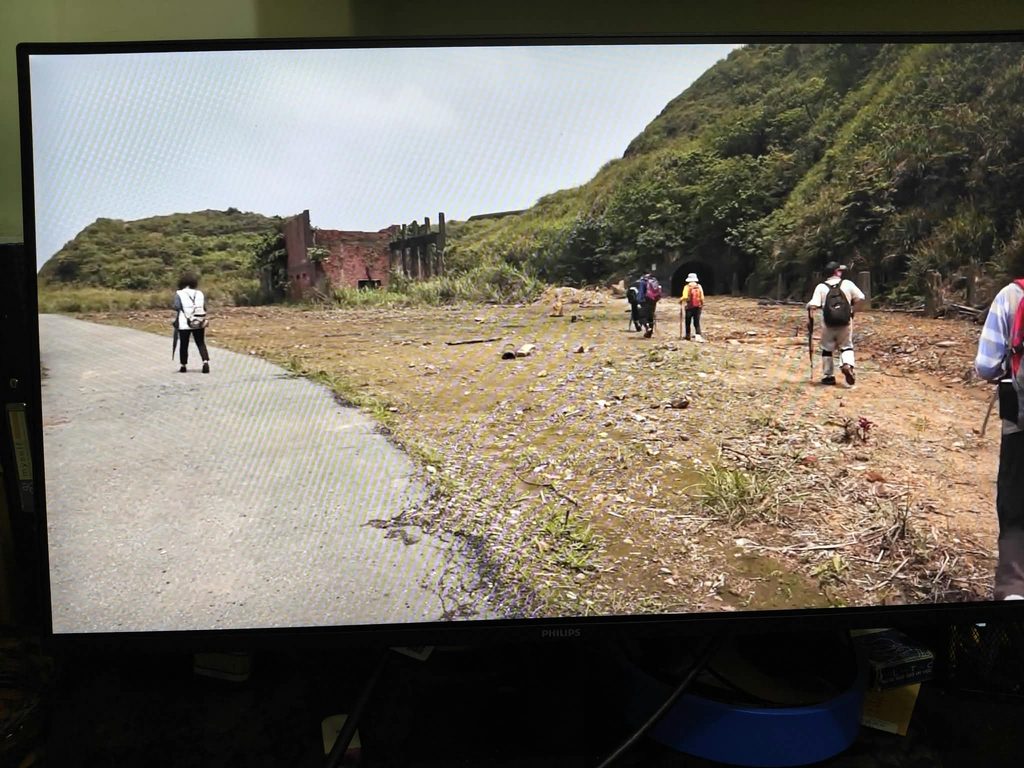
(With Shaft No. 6 behind us, to the right, in the direction of the tunnels.)
On one side, I suddenly noticed several remains that I can hardly identify. They don’t look like flues, and they’re too close to the road for that. Above, you can make out traces of old roadways, as well as what seems to be a guardhouse.
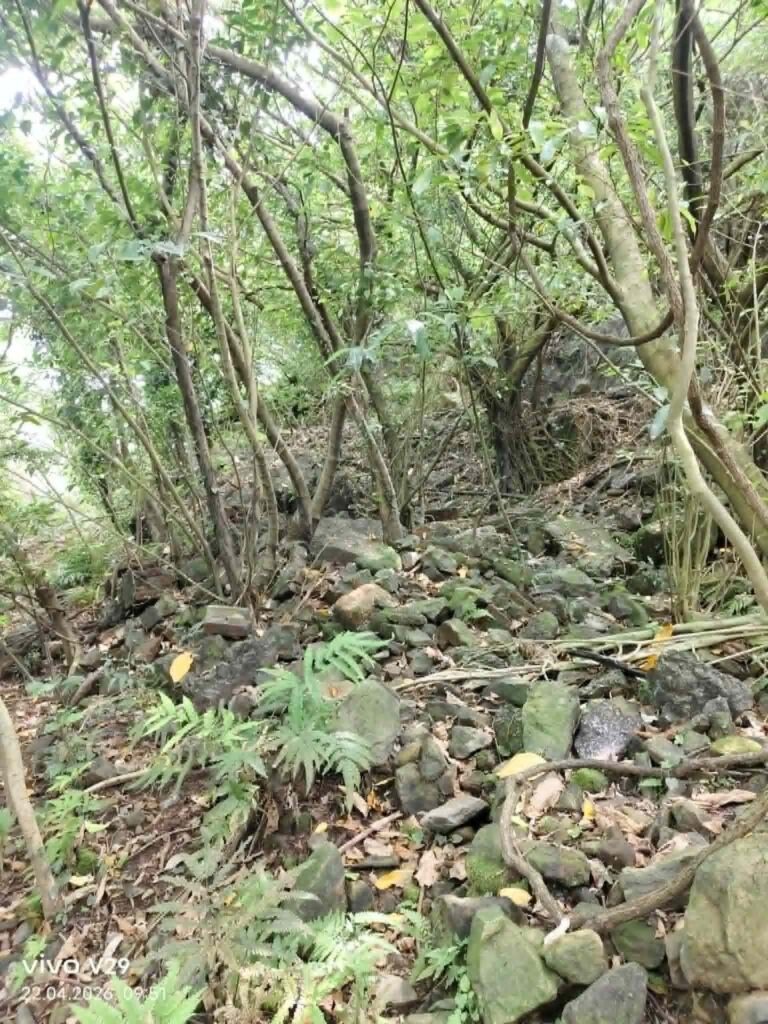
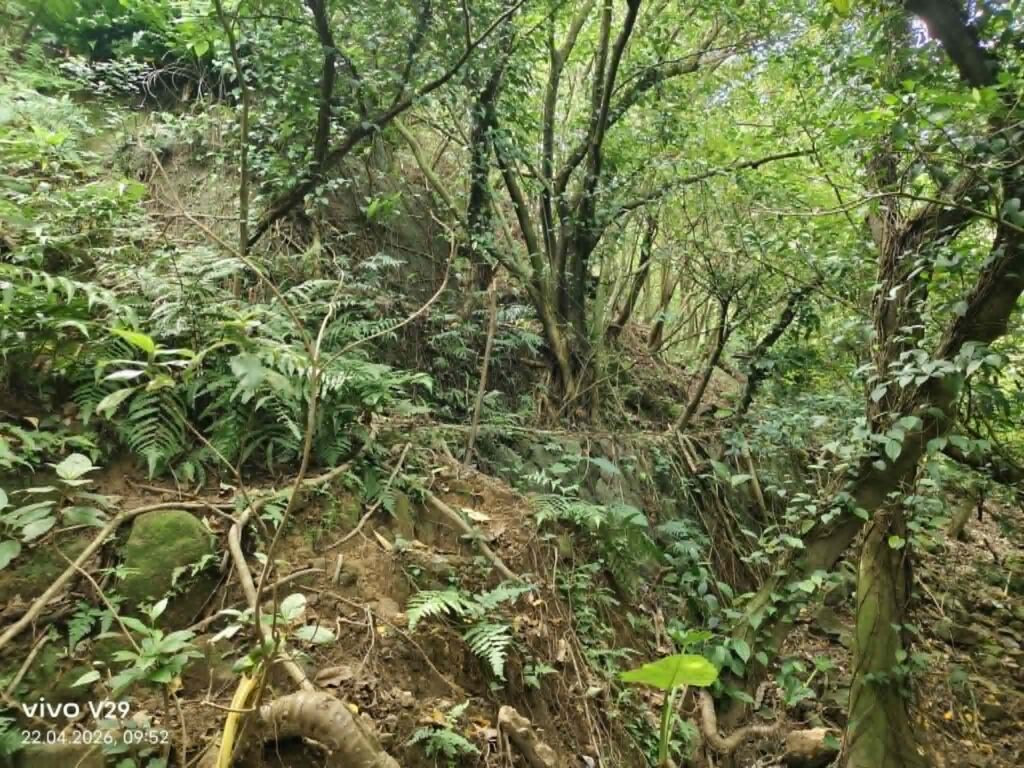
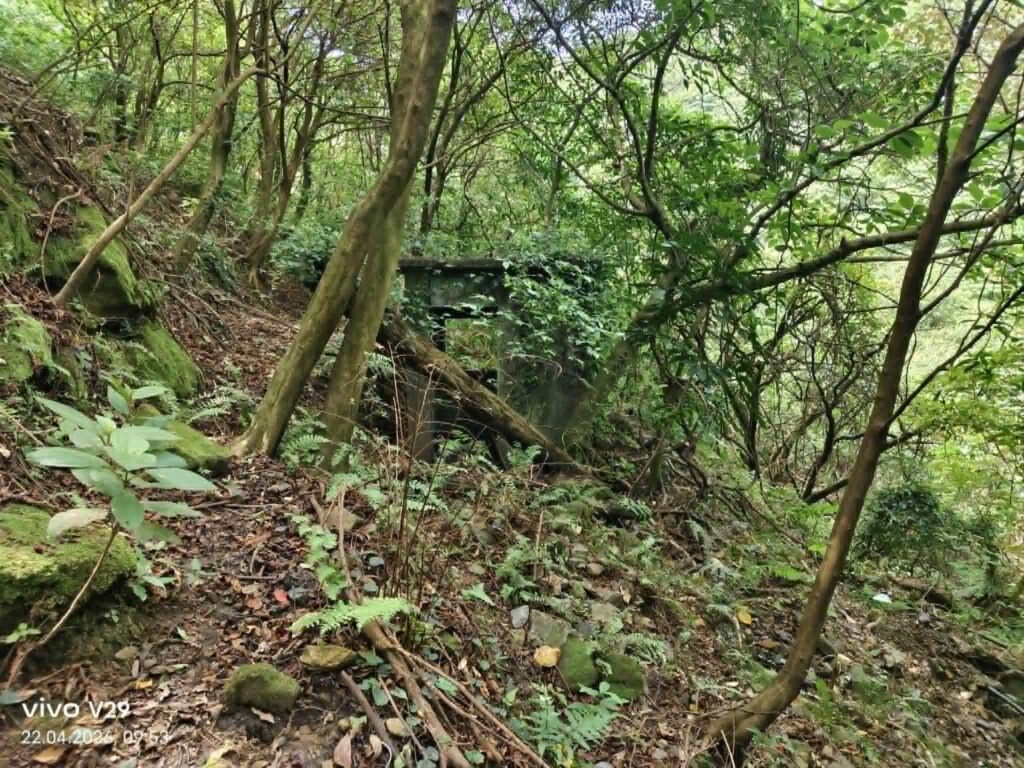
Old aerial images aren’t of much help. I’ll come back later. Back again, I found a connection leading toward the smelter passing two tunnels, but it ends at a sealed tunnel exit.
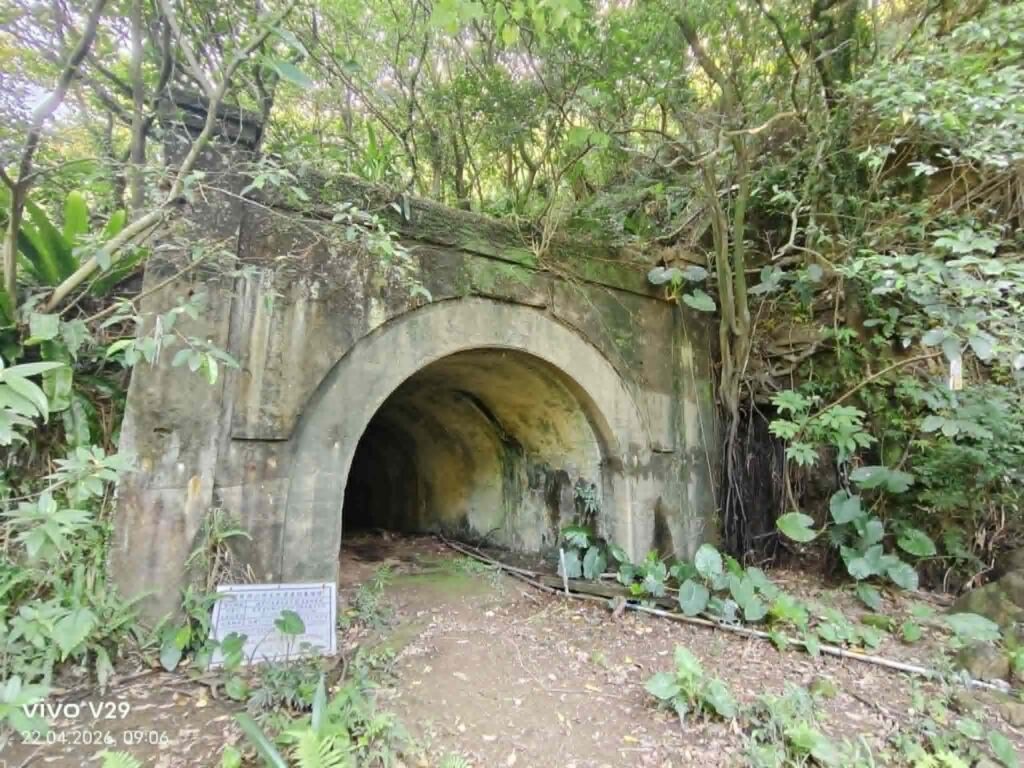
Today, the two tunnels are connected by a narrow path. This is what the area used to look like:
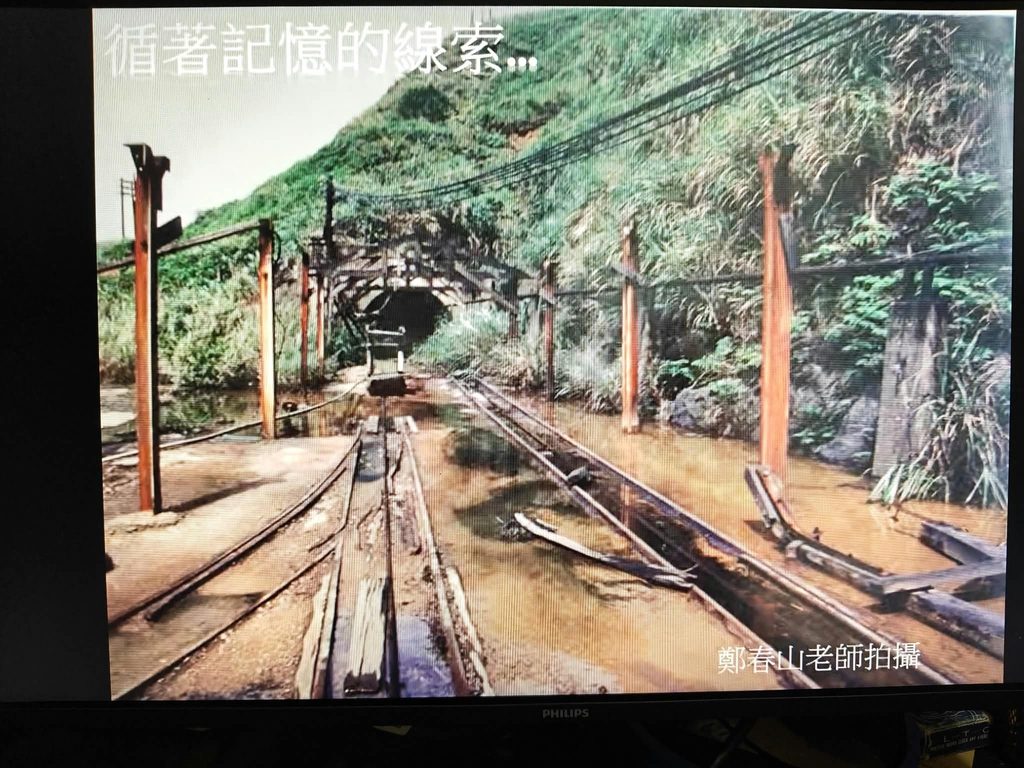
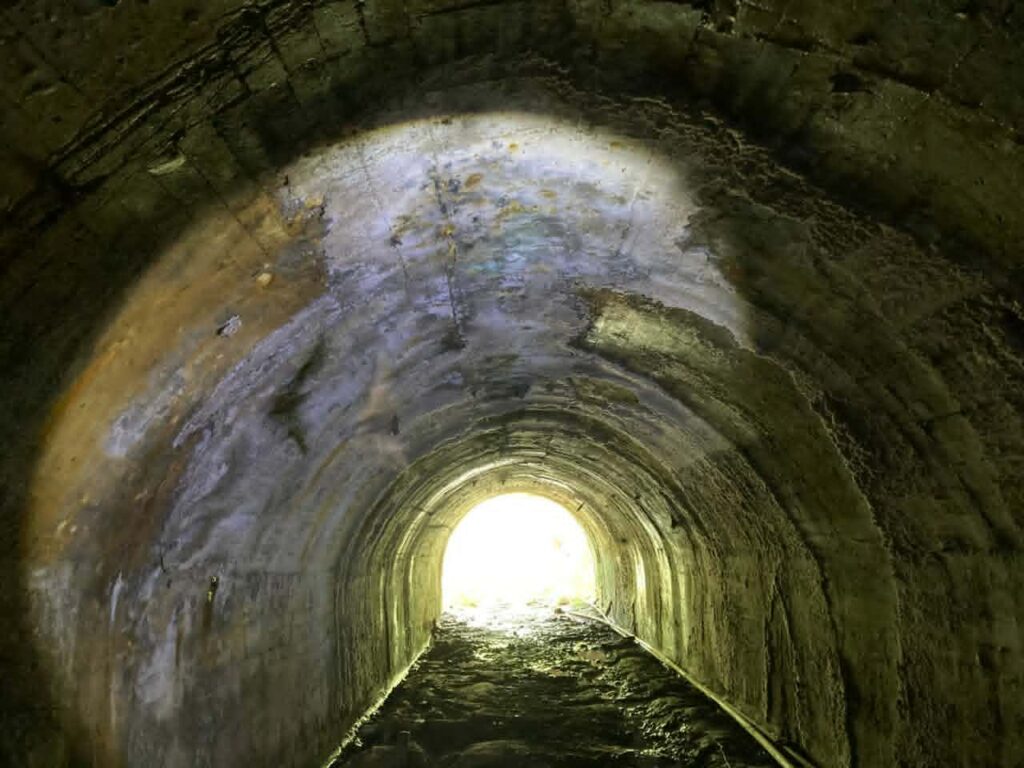
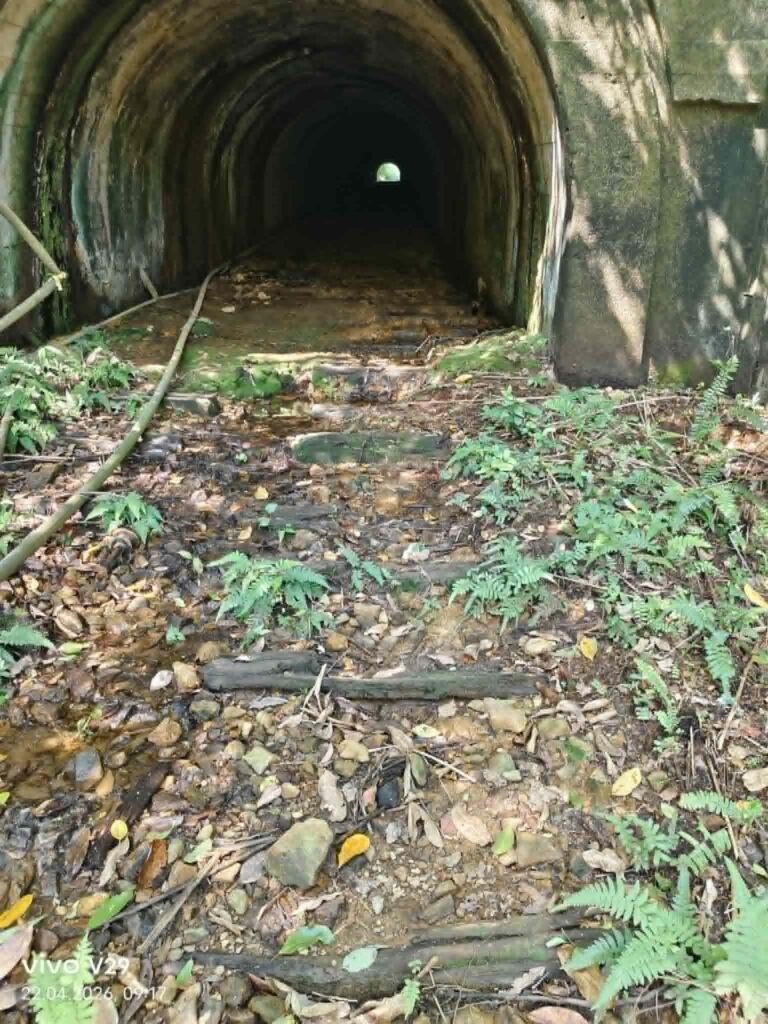
(remains of the tracks)
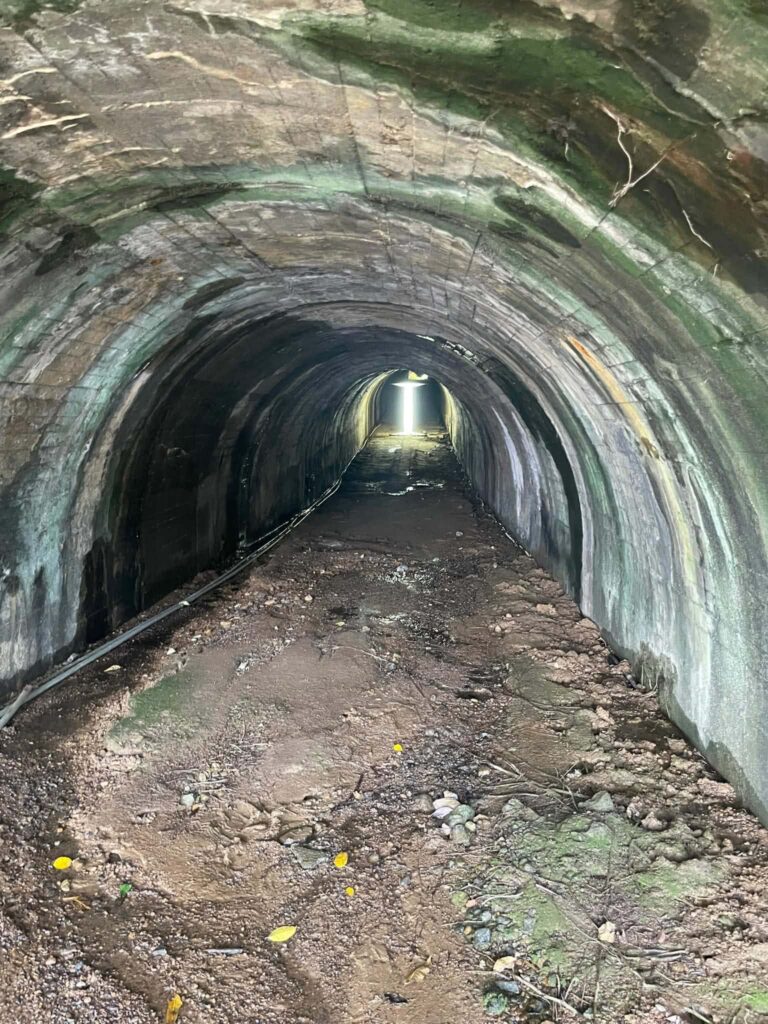
(At the far end is the parking area above the 13 Levels, but it is securely blocked off by steel grates. The lighting is misleading)
Fortunately, if you bypass the tunnel from the side and are willing to hack your way through the tall grass with a machete, after about 400 meters you reach a large structure that appears to have been used for water storage.
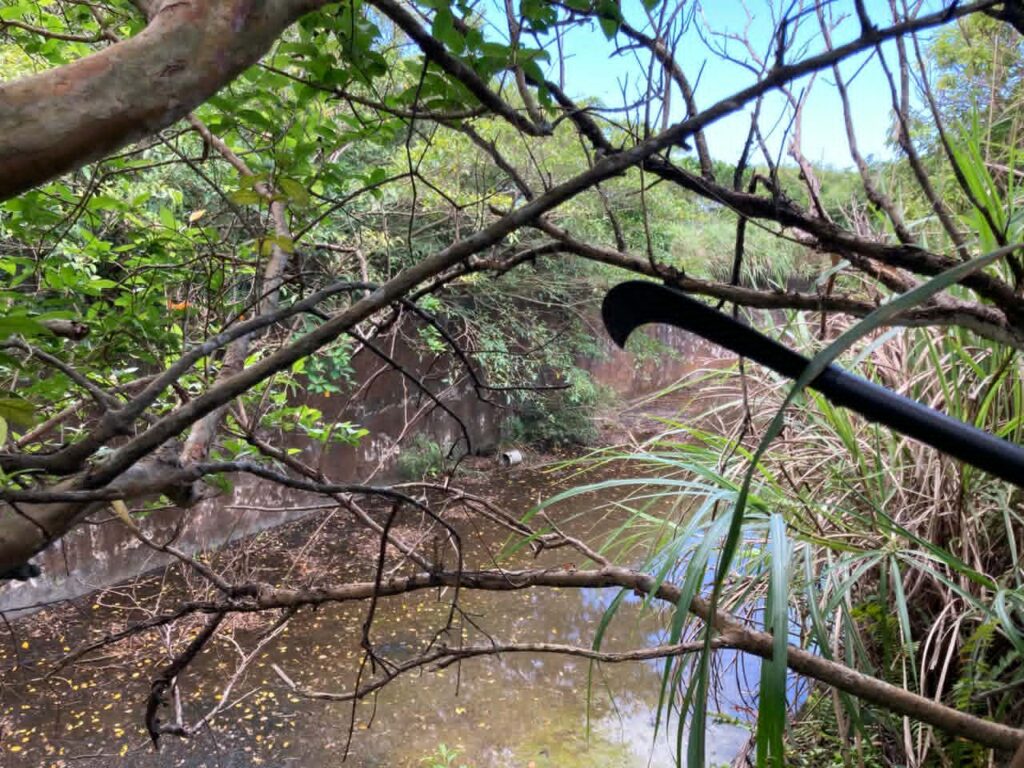
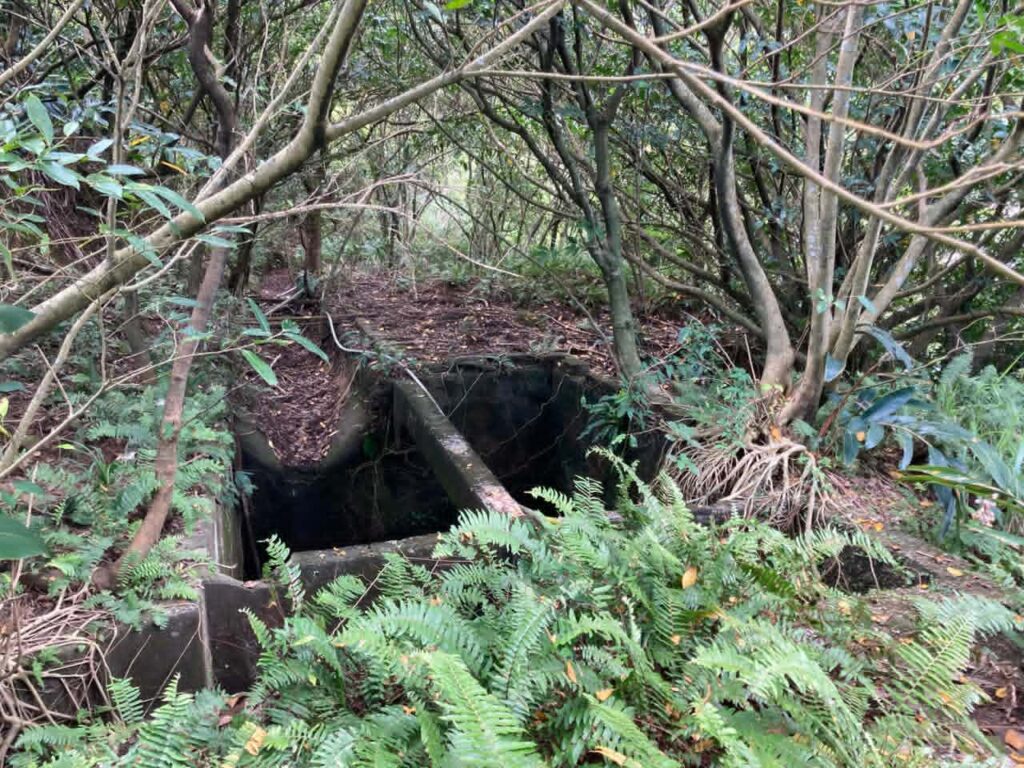
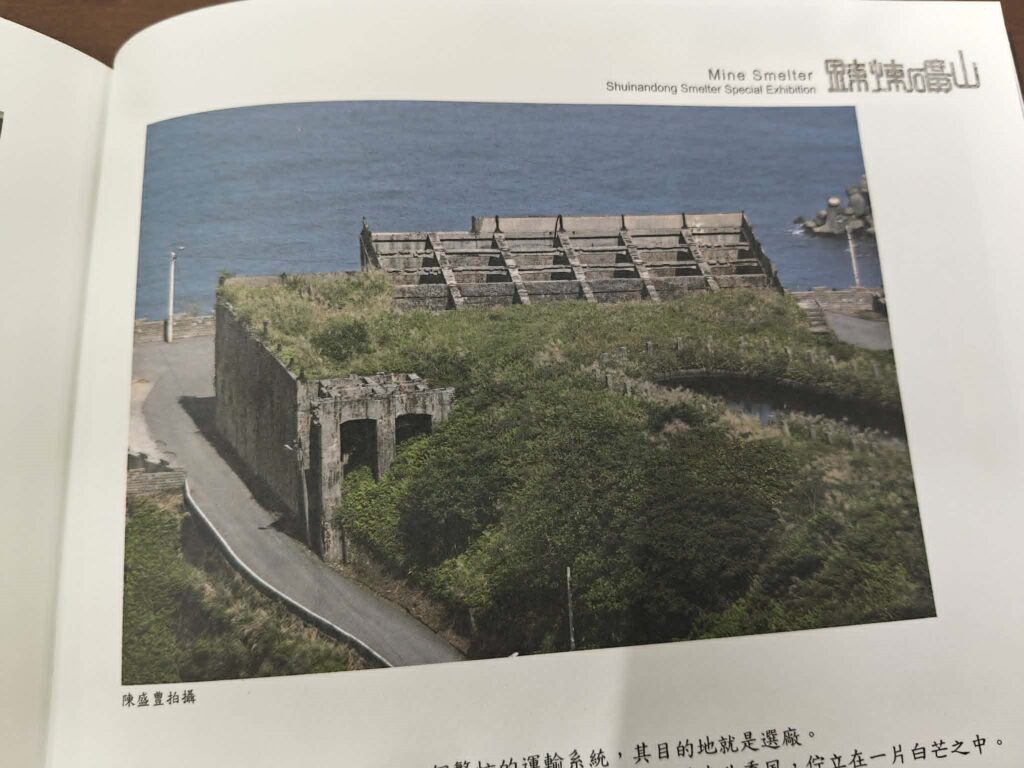
Not much can be seen. To get past the storage facility, one first has to cut through over two-meter-high sharp reed grass. Adjacent to it is a large open area that is just as completely overgrown. In aerial photographs, it can be seen that there is a very large concrete platform built on top of a massive concrete structure. Then comes this structure, where rock blocks were once unloaded and fall down before being transported onward to the Thirteen Levels.
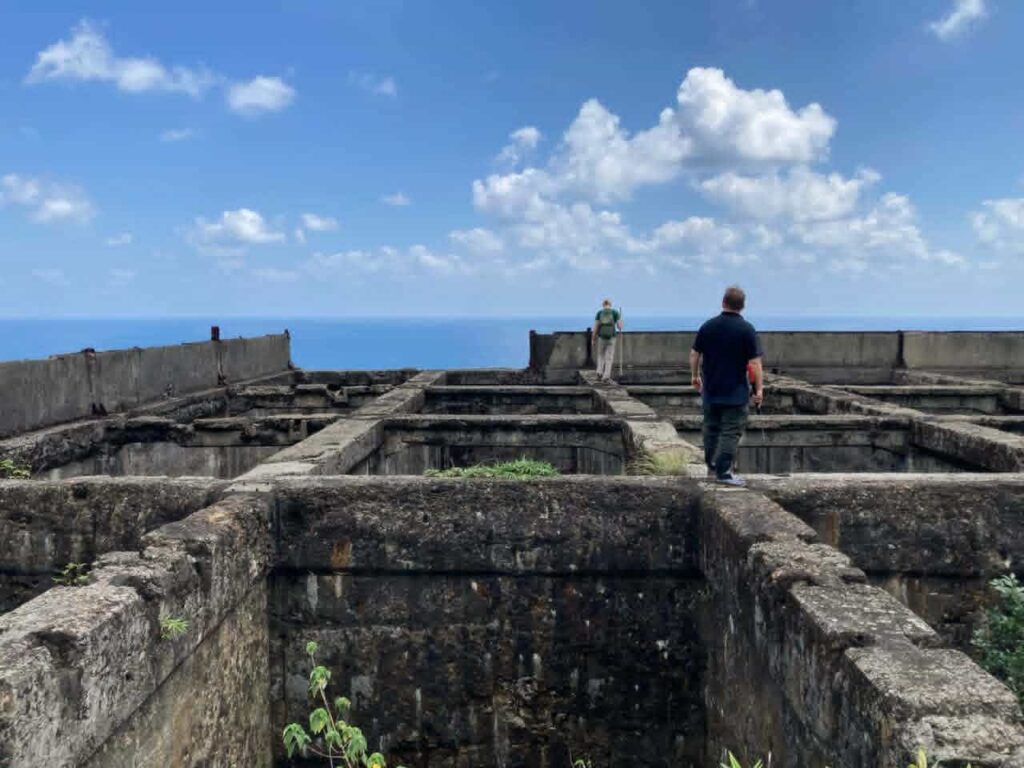
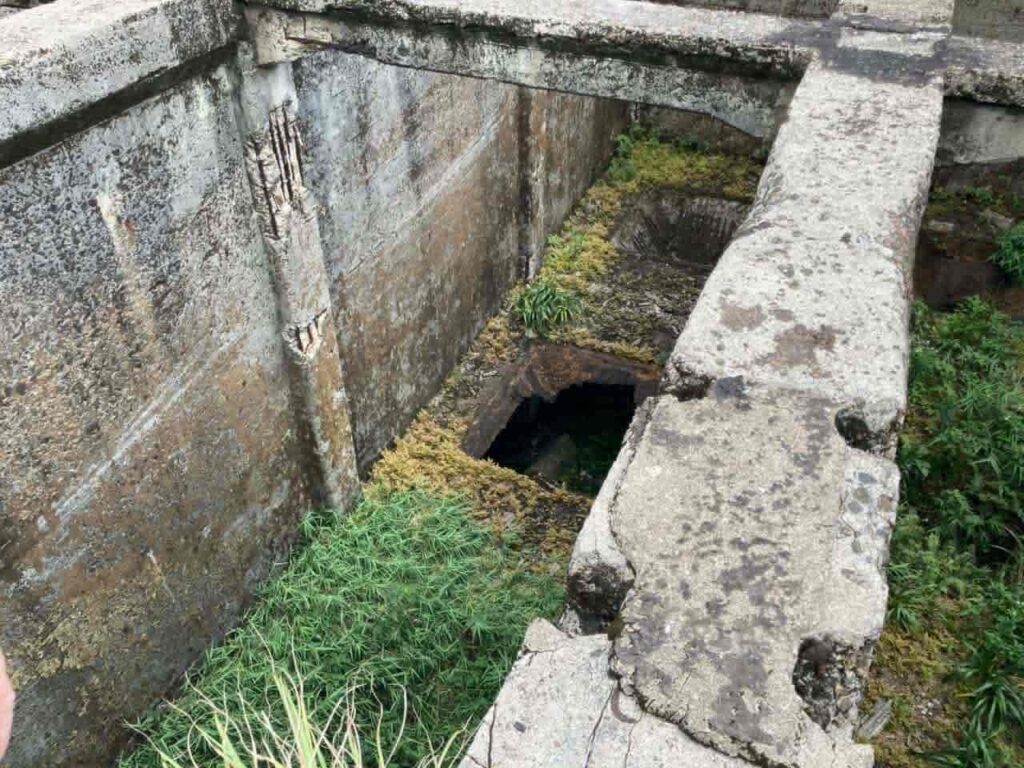
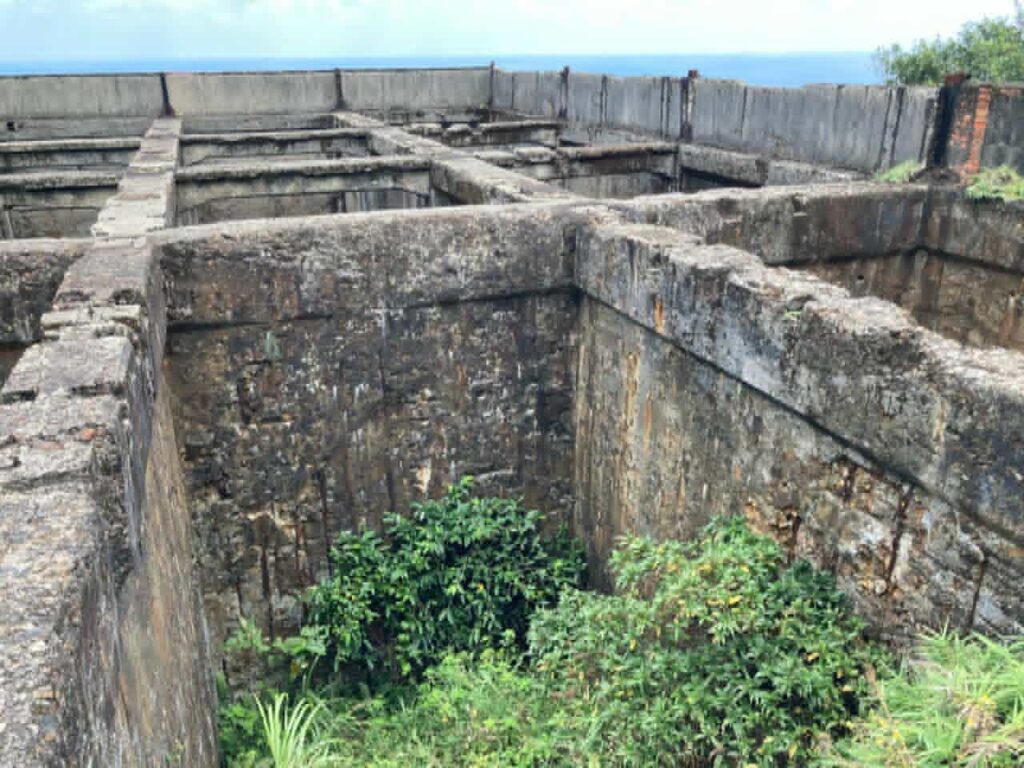
Today, this structure is separated from the uppermost section of the Thirteen Levels by a newer road. Originally, however, it appears to have been an integrated part of the entire industrial complex. This is why the structure is also known as the Ore Storage Level, or in Chinese 第18層 (礦石倉庫). In reality, the complex consisted of 18 levels, not just thirteen. The name “Thirteen Levels” became popular later, but the original industrial complex extended across a total of eighteen levels.
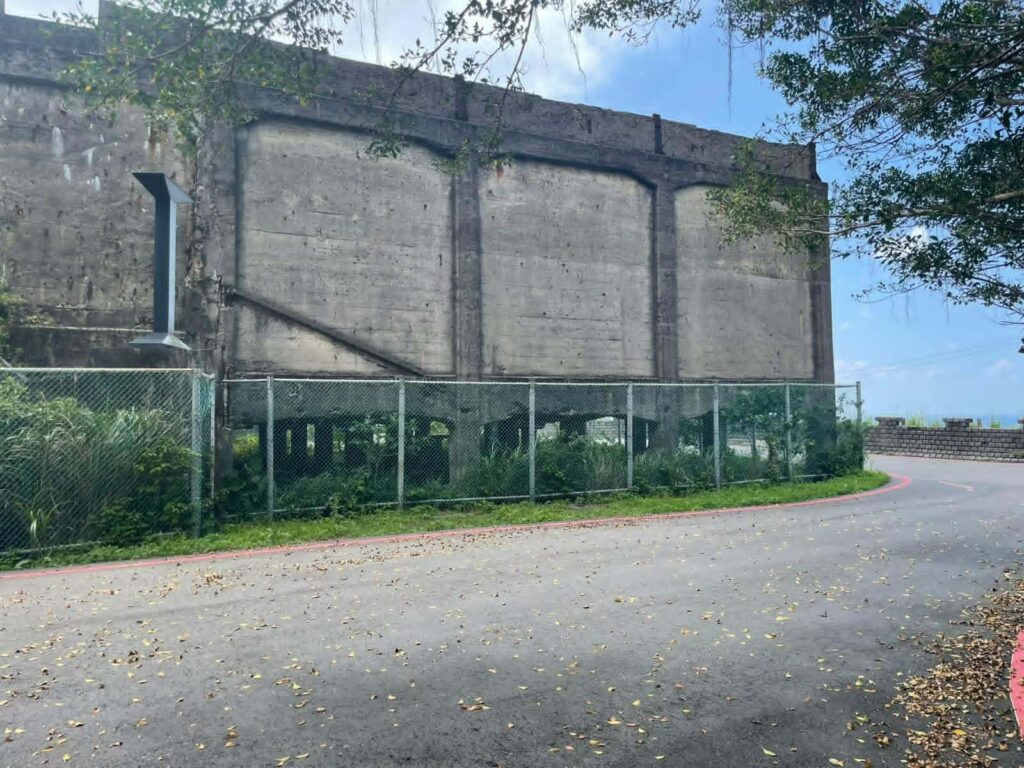
A picture from 2005, not so overgrown at that time (Shuinandong Smelter Special edition):
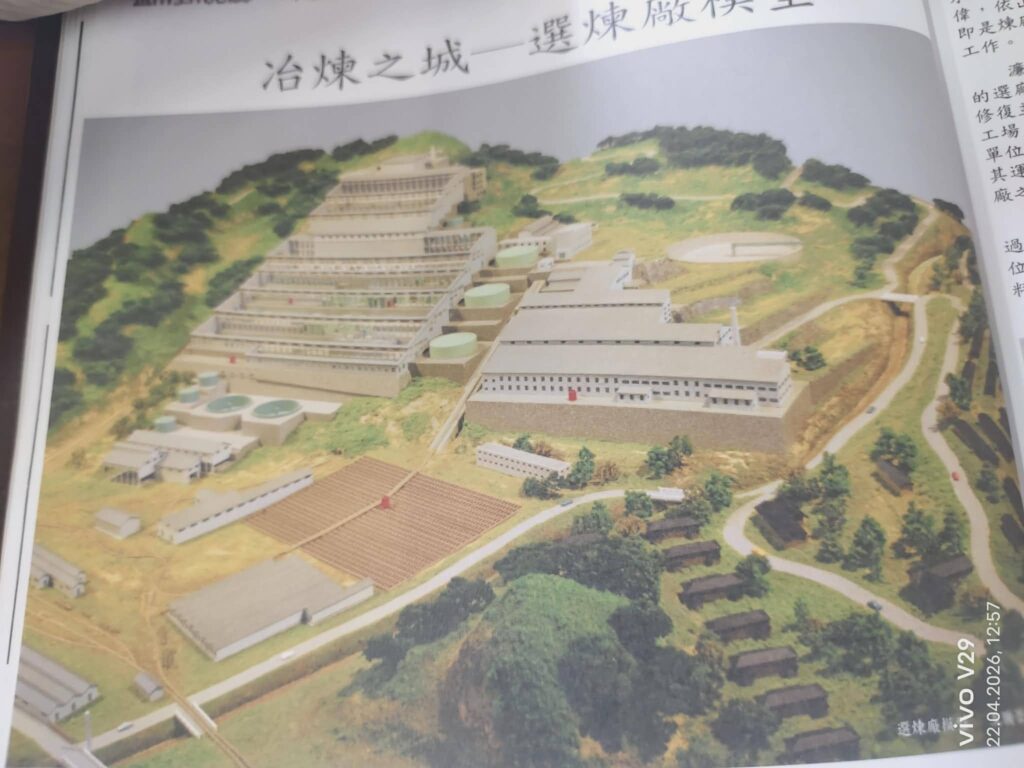
(Jinguashi Museum)
This stylized photograph of the old facility also shows that there was no road above the Thirteen Level (or Eighteen Level) in the past. Visible in the image is the road leading to the Ropeway Station and Mine No. 6, which has since collapsed.On the right is what is today 北34. However, in this photograph it had not yet been extended toward Jiufen and served only as an access road. The lower section remains identical to its present-day alignment.
Broken Road, broken flues
Back on the main road road, which ends at a collapse. I also found a rather interesting old path leading to the flues.
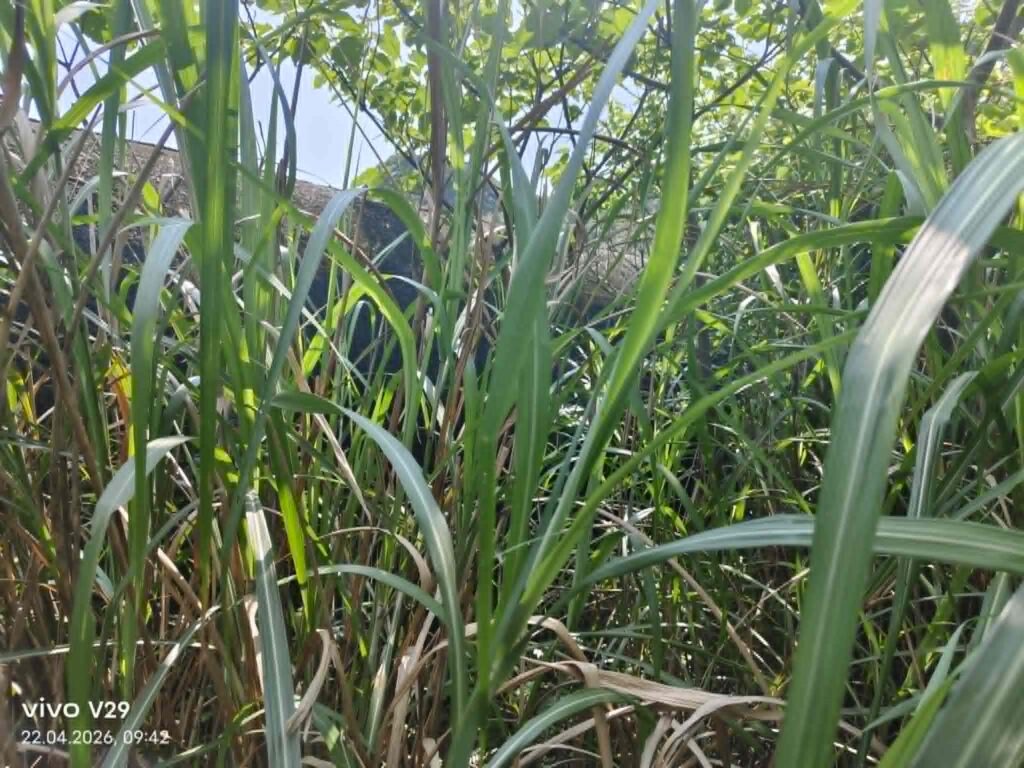
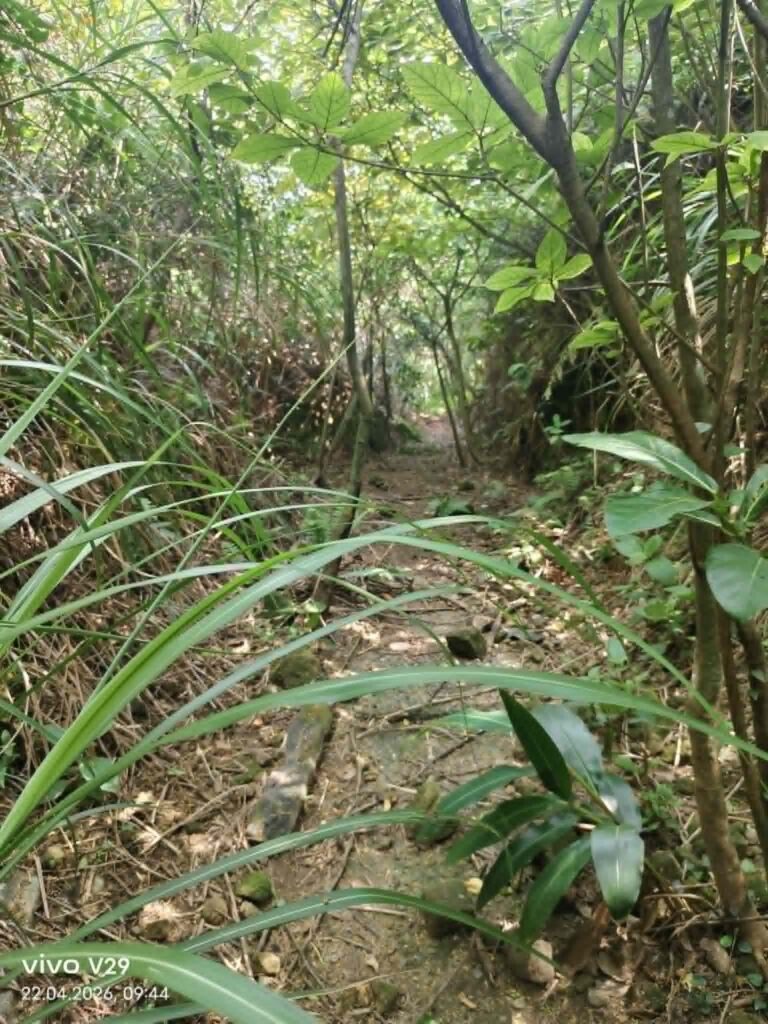
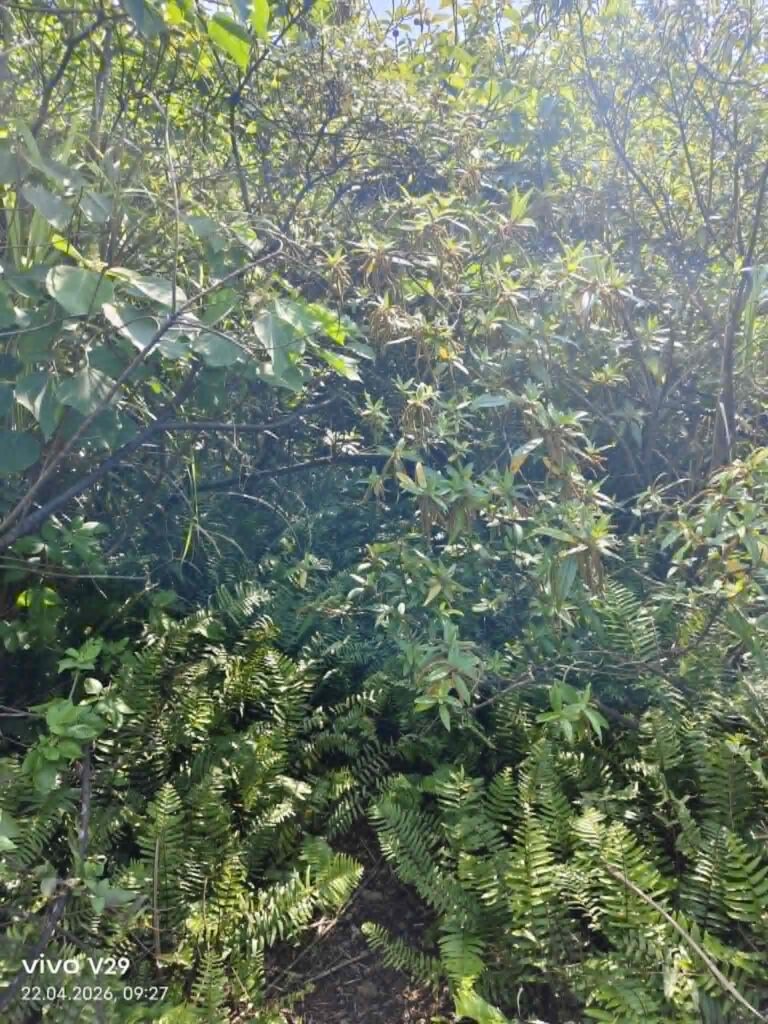
(machete needed at the beginning, easy to miss the trail)
The impressive flues
An overview:
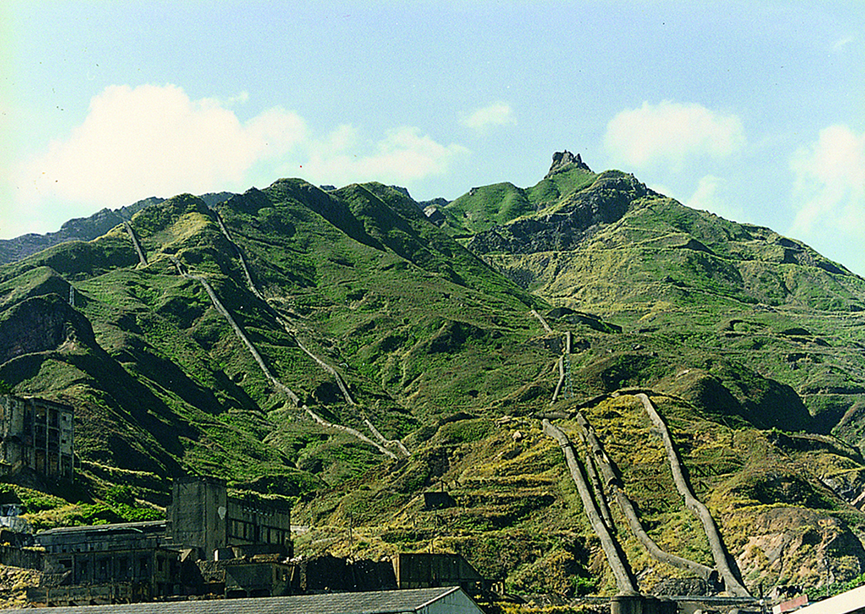
https://tcmb.culture.tw/zh-tw/detail?indexCode=Culture_Place&id=569735
The flues are still highly toxic; as you get closer to an opening, the smell is repulsive.
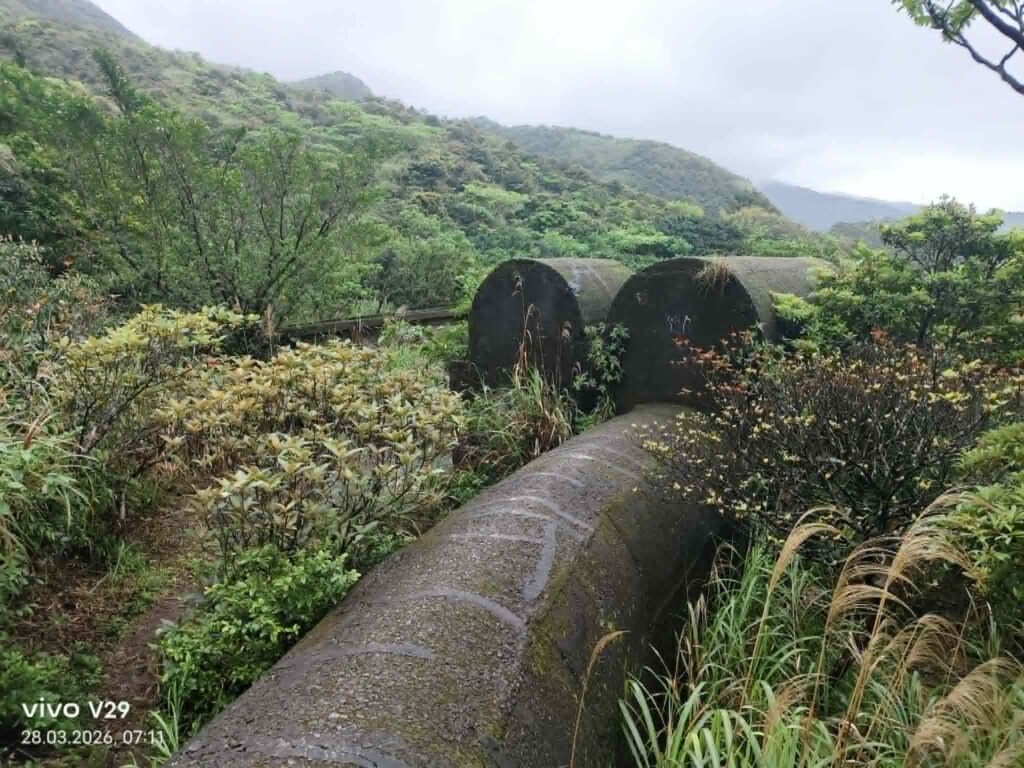
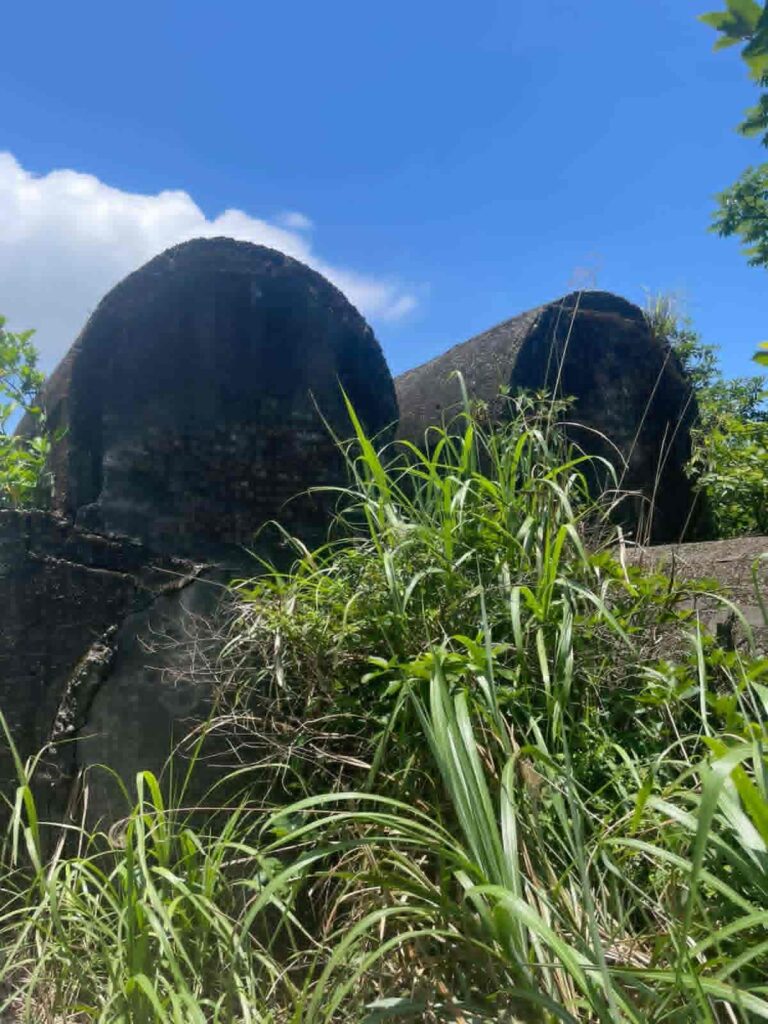
This section is somewhat difficult to understand because it appears that there are not just three separate pipeline systems, as stated on the internet, but that they are actually interconnected. However, these connections were later sealed off to prevent people from entering the highly toxic interior.
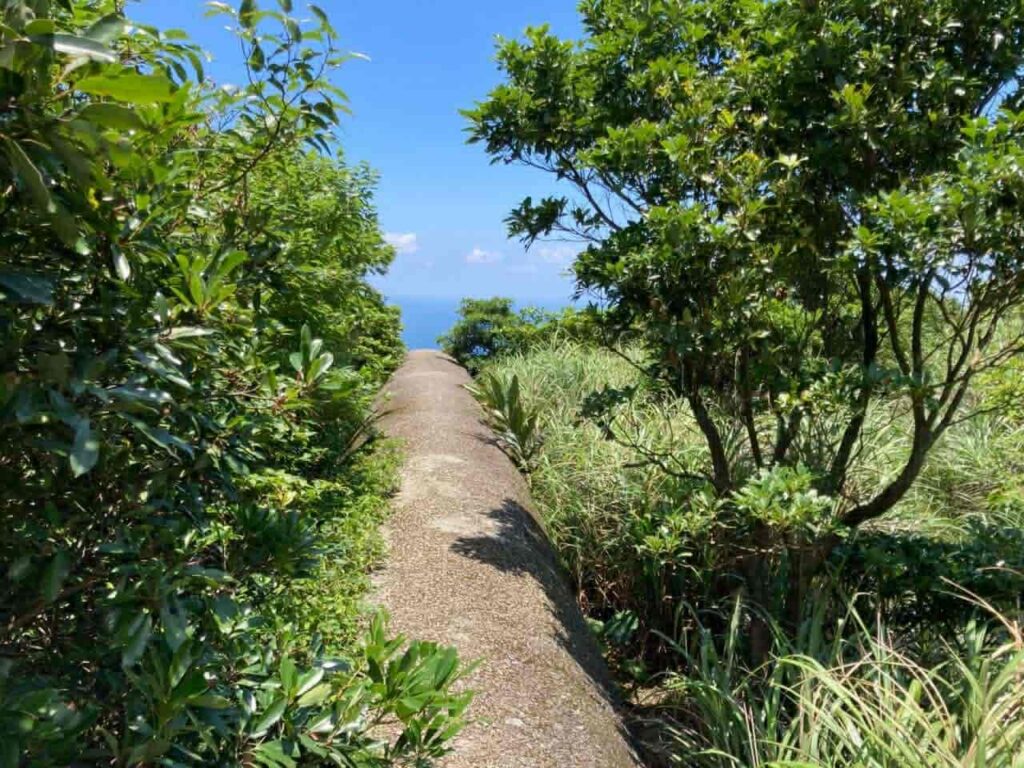
The waste gases produced during smelting were discharged before through a 60-meter chimney located below the Sixth Mine. Because no proper gas recovery or treatment was implemented, the sulfurous emissions from copper smelting severely affected the living environment in the Jinguashi and Shuinandong areas, directly leading to an outflow of the local population.
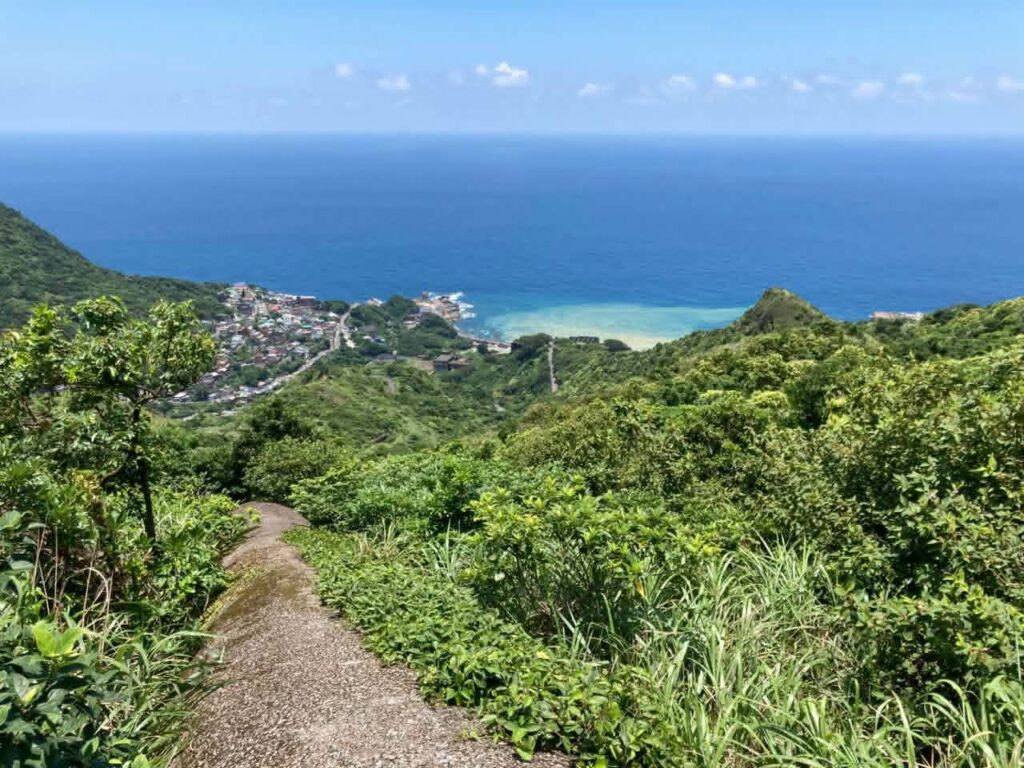
(From here, you have a beautiful view of the sea. It is difficult to see in the photo, but the slope drops away very steeply. When the ground is wet, it would be easy to lose your footing and fall.)
At the time, the smelting policy involved feeding materials during night shifts, with the aim of making the thick smoke less visible and reducing exposure of daytime workers to sulfurous gases. Later, the flue system beneath the Sixth Mine entrance became unusable due to strong acid corrosion. To improve emissions, the company constructed a flue over 1,000 meters long, utilizing an old tunnel from the Third Mine to vent gases into a valley behind the mountain. Although this improved air quality to some extent, residents in Shuinandong were still affected when southeasterly winds prevailed; when winds blew east–west, residents in Jinguashi were impacted instead. Because the first flue was poorly designed, it quickly deteriorated and was replaced by a second flue. After completing the second, a third flue was constructed as a backup. However, by the time the third flue was finished, operations at the Shuinandong smelter had ceased and were merged into the Lile Copper Smelter. As a result, the third flue was never used.
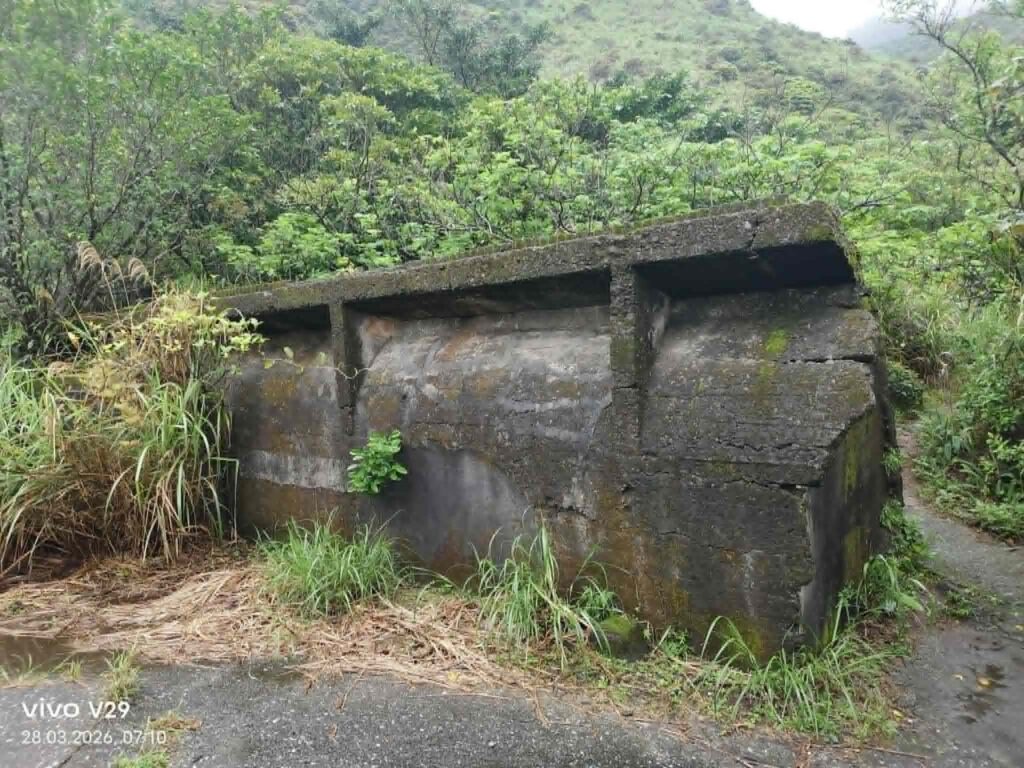
Today, what remains on the hillside near the Third Mine in Jinguashi are three massive gray concrete pipes extending up the slope, visible in the scene. Locals refer to them as the “Three Dragons of Jinguashi.” Their remaining lengths are approximately 1,030 meters for the first, 850 meters for the second, and 1,000 meters for the third. The flues are arch-shaped reinforced concrete structures with hollow interiors, about 2.4 meters wide and 2.6 meters high, with wall thickness of 30 centimeters.
(my son, strong aboriginal boy, still going with me)
The strong odor is caused by sulfur compounds, stagnant water, decay, microbes, and other heavy metals. Combined with a lack of oxygen, being in the flues can very quickly lead to impaired consciousness. They should not be entered.
Changed topography
Everything has changed. I explore this area quite often, searching for remains of the old mining operations, and I know where several mine entrances are located. But I can’t identify or match anything in this historical photograph to what I see there today.
(copyright Claudius Petzold)