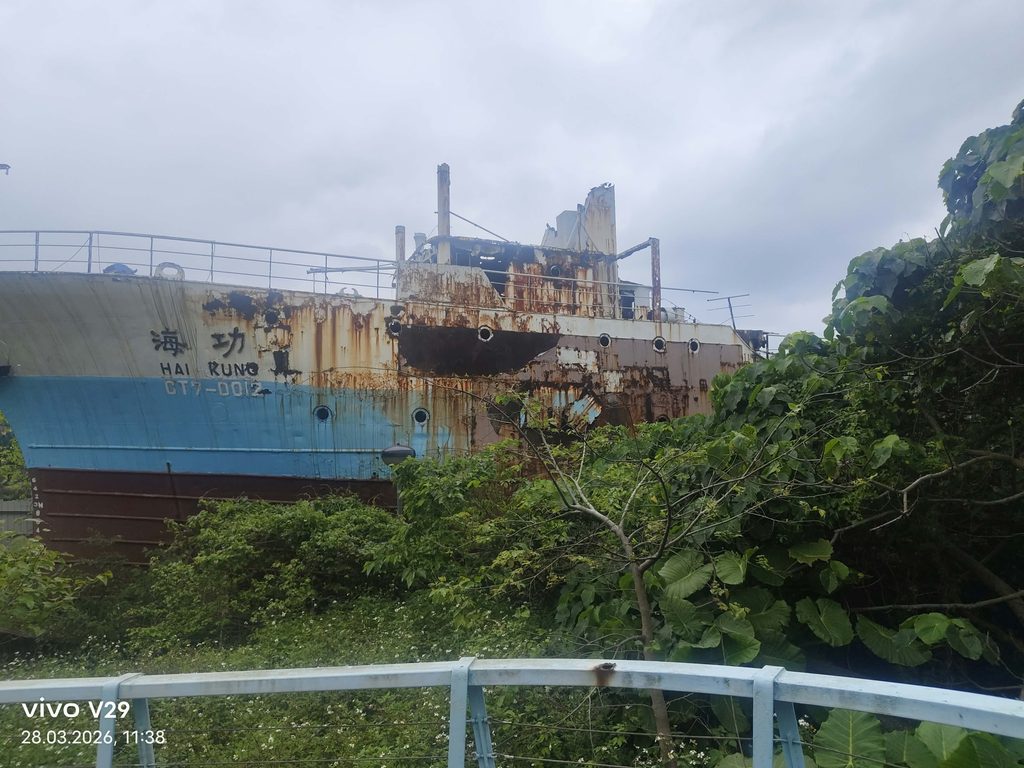
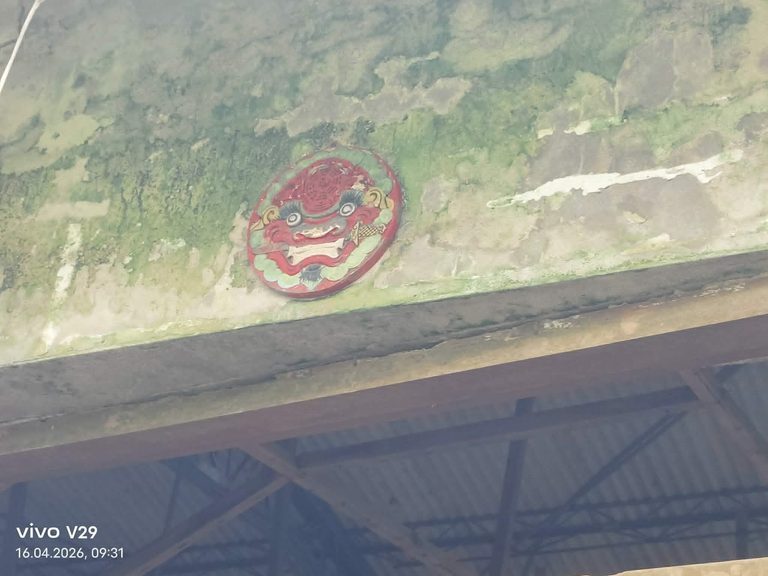
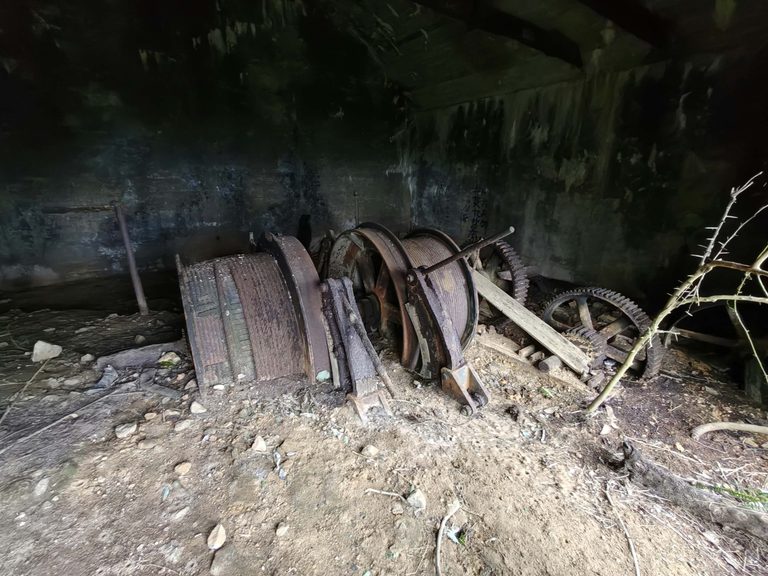
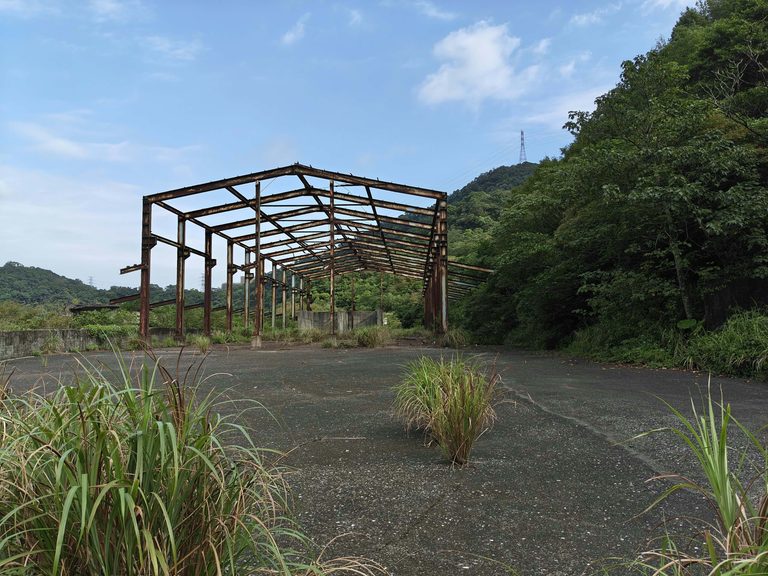
The ship is clearly visible from the road, and the fence isn’t exactly as sophisticated as the former Berlin Wall. As a German, I should gave advise for walls.
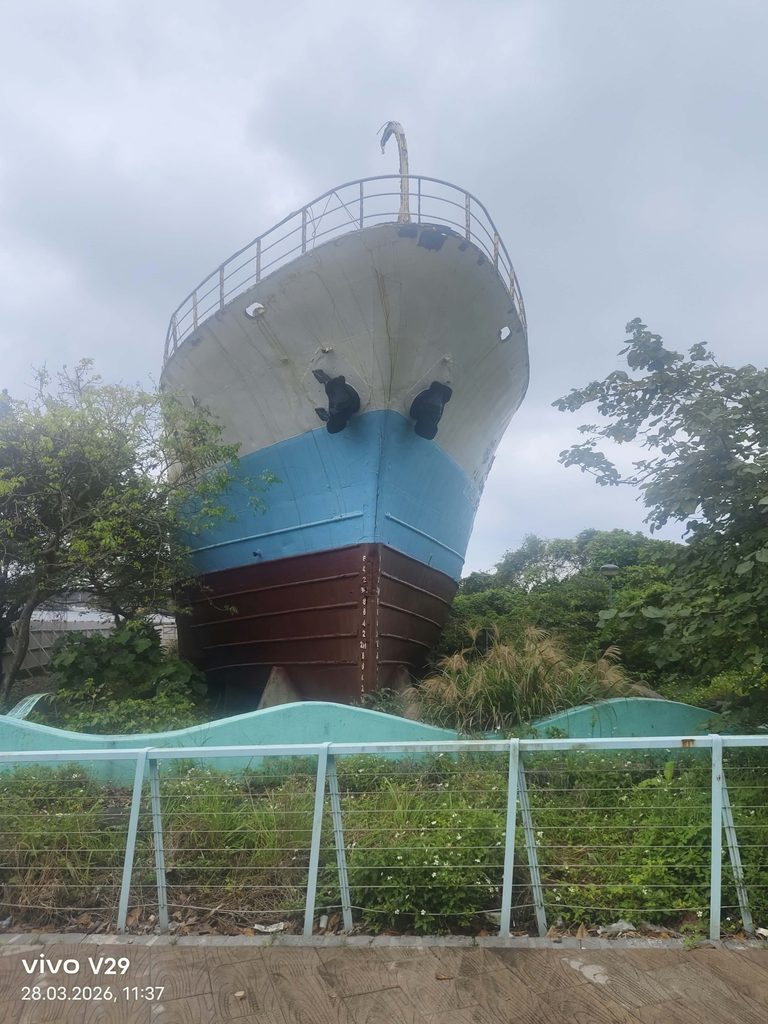
Construction of the Hai Gong was made possible in 1974. Then chairman of the Taiwan Provincial Government provided a further NT$25 million in special funding. Construction began in November 1974. The vessel was named and launched on 12 July 1975 in Cijin, Kaohsiung. After sea trials and the fitting out of its fishing gear, it officially began its mission in 1976 to develop distant-water fishing grounds and carry out surveys and experimental research on fishery resources.
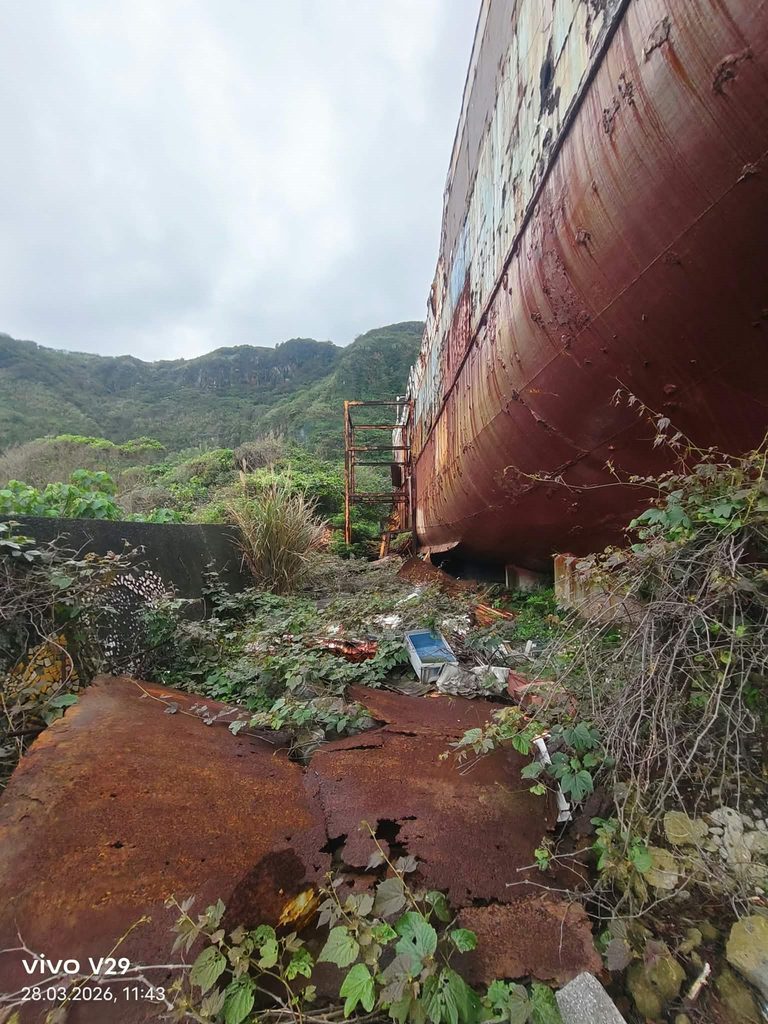
(too rusty, no way to climb up)
The Hai Gong had a gross tonnage of 711.5, a 2,200-horsepower main engine and a speed of 13.5 knots. It could freeze 16 tonnes of catch per day and trawl at depths of up to 1,000 metres.
Beginning in 1976 a team successfully developed deep-sea trawling grounds off New Zealand and shrimp fishing grounds in waters near Antarctica. Li Canran, continued this work, successfully developing squid drift-gillnet fisheries in the South Pacific and seamount trawling grounds in the central Pacific. The institute also passed on deep-sea trawling techniques, automated tuna longlining methods and squid drift-gillnet fishing techniques to fishermen. This helped Taiwan’s fishing industry make fuller use of migratory and bottom-dwelling fish stocks across the world’s oceans, spurring the growth of its fishing economy and setting an example for developing countries seeking to build prosperity through fisheries.
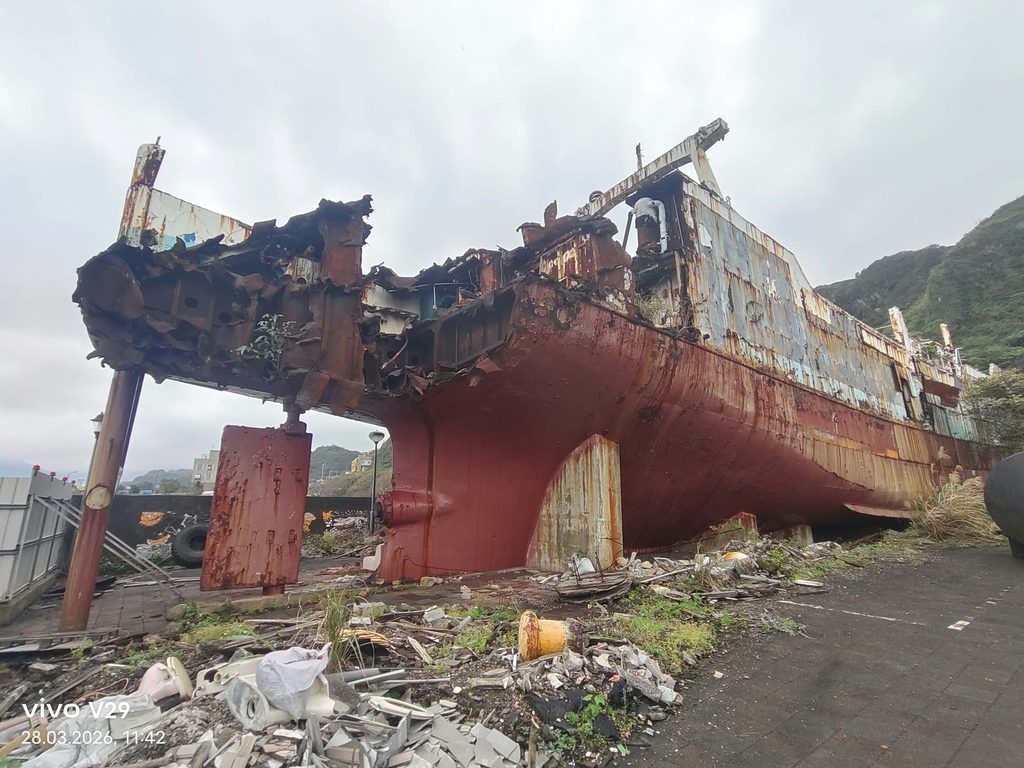
The Hai Gong (海功號) did not run aground. It was deliberately brought ashore in 1998 and put on public display in the Bisha section of Badouzi Fishing Harbour in Keelung to commemorate its 18 years of research service. It looks like a wreck today because decades of salty, humid coastal air corroded its steel hull. In 2021, strong winds brought down the radar tower, and the Fisheries Agency began dismantling the ship for safety reasons. The work was suspended after an application was filed to protect the vessel as a cultural heritage asset.