ed. 12/2025
I went back in again and did more detailed research, and I also found buildings that have not previously been mentioned online. My impression was that this is a KMT training center, because there is a strong emphasis on Chinese culture, but there is also a church.
On the Jinshi Trail near Hukou (金獅步道), you’ll encounter the ruins of an abandoned settlement, Yihe Mountain Villa (逸鶴山莊), which was likely used for political education under the Kuomintang (KMT). It was temporarily closed after a typhoon when a man, unable to escape his gambling debts, committed suicide there. Today, it is considered a ghost town, and many Taiwanese avoid visiting. Many old houses, still containing their original furnishings, remain intact.
Many people have tried to find information about this place, but there are no official records. Several houses are scattered around the area, and you can still enter some of them.
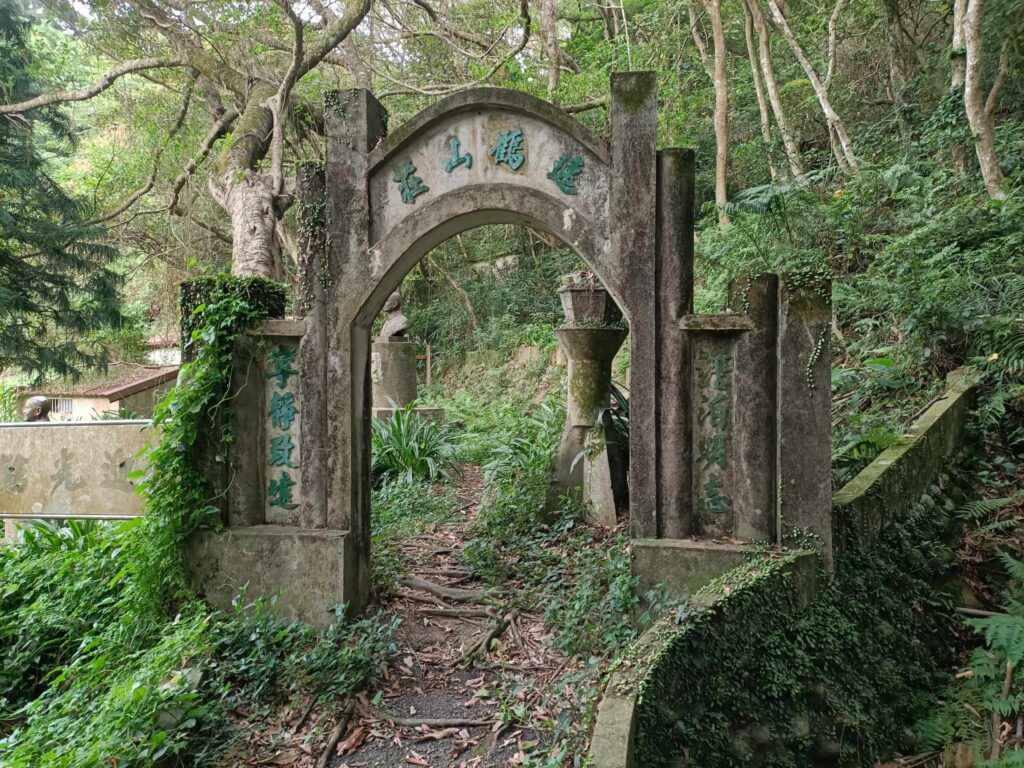
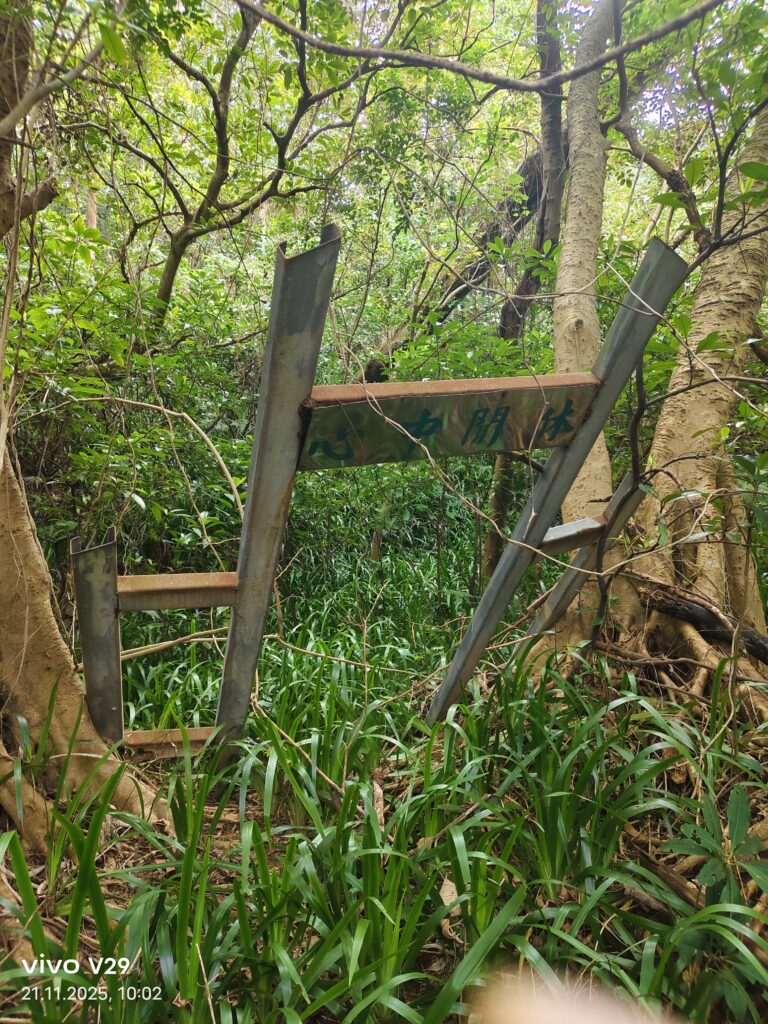
(The entrance)
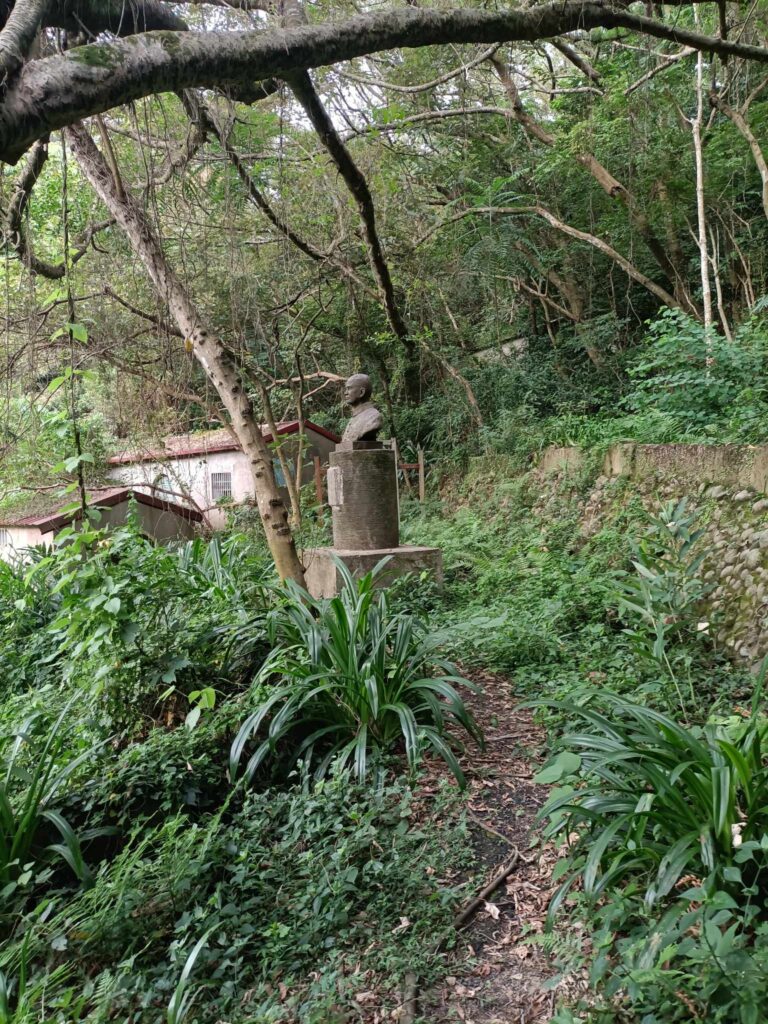
(The first buildings)
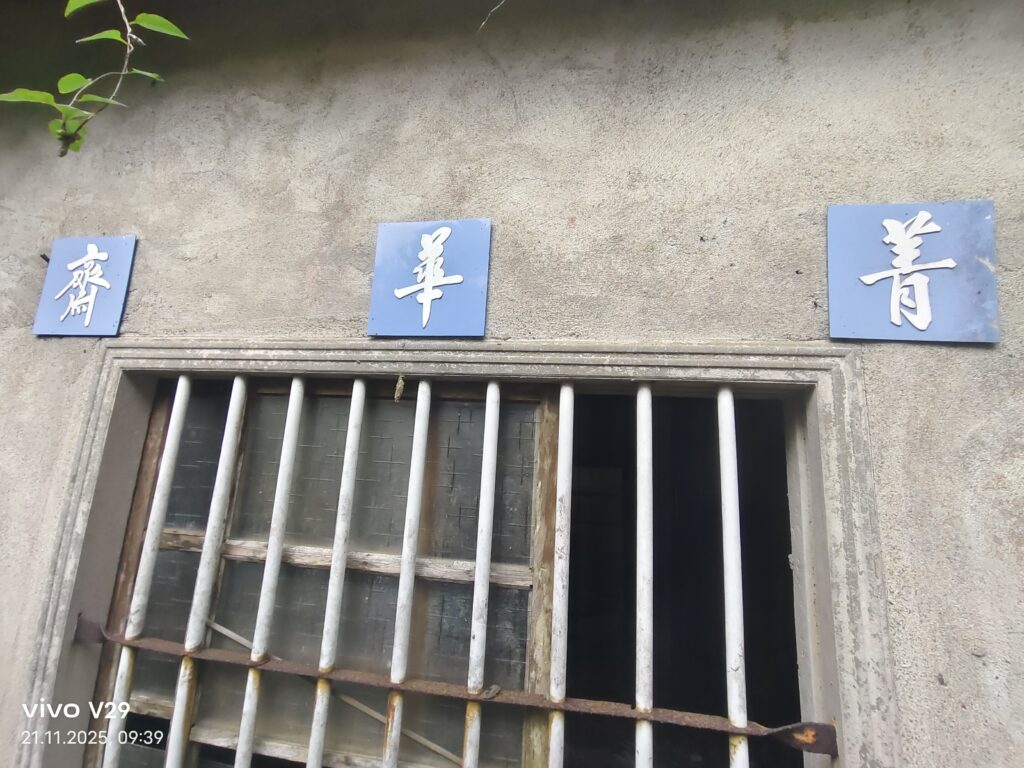
Immediately after the entrance area, the first buildings appear. On the right, along an overgrown path, there is a small building. The inscription above the door is quite difficult to read because it is written in cursive and the characters are unclear. It probably means, in rather highly philosophical terms, something like “study room.” The characters could be 齋, 華, and 青, but possibly 事 instead of 華. Taken individually, the words have the following meanings:
齋 – a space of quiet, meditation, or study;
華 – beauty, culture, splendor;
青 – the color “blue/green,” also a symbol of youth or purity.
How exactly these are meant to fit together is open to interpretation.
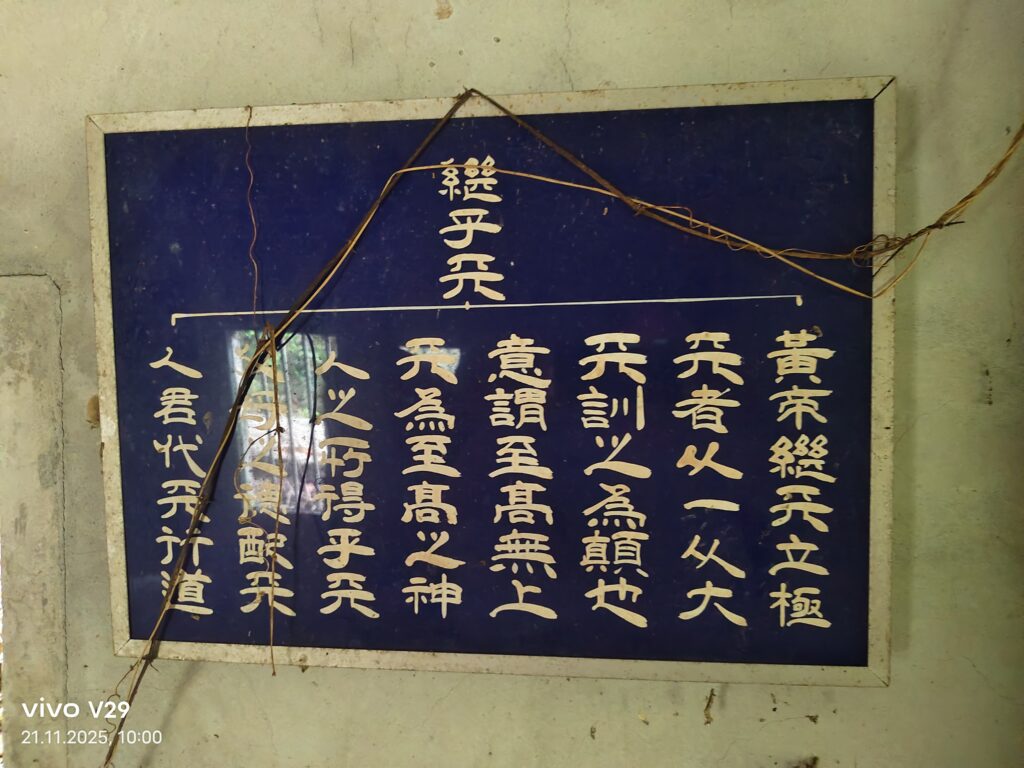
If you go inside the building, the impression of a study room for Chinese culture is confirmed. Books are lying around, and on the walls there are many plaques or panels of the kind one usually finds in temples. One of them is particularly interesting. The individual words inside do not make much sense on their own: 教社在功. This could perhaps mean “Education is the foundation of a community’s achievements,” but again this is open to interpretation.
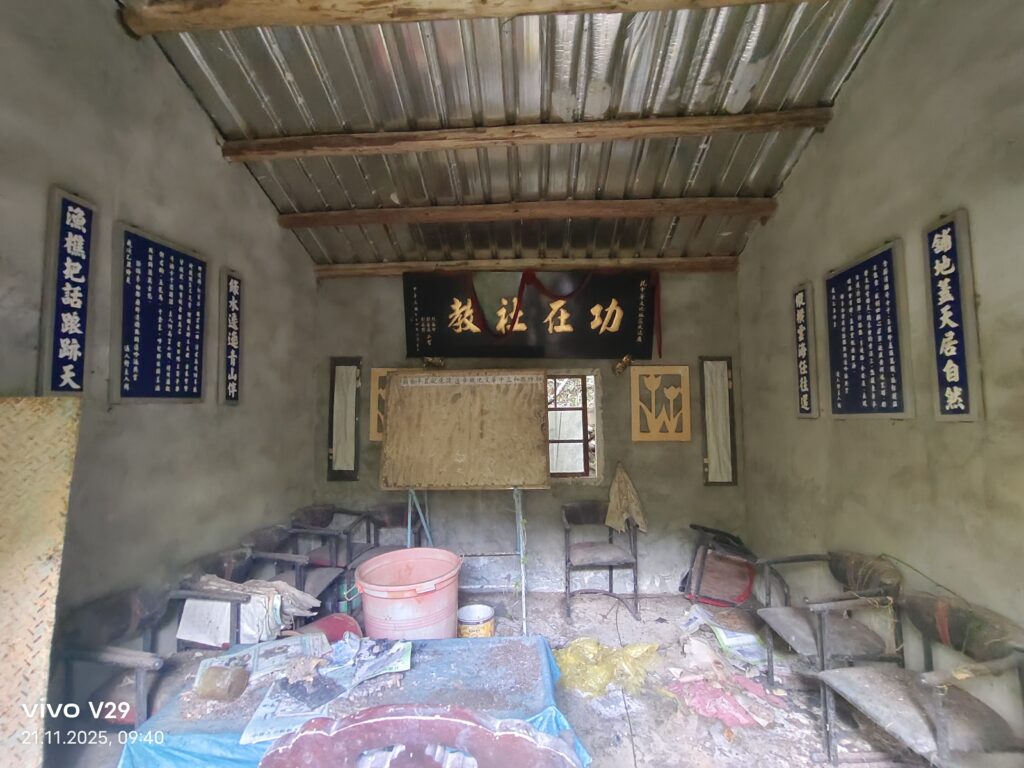
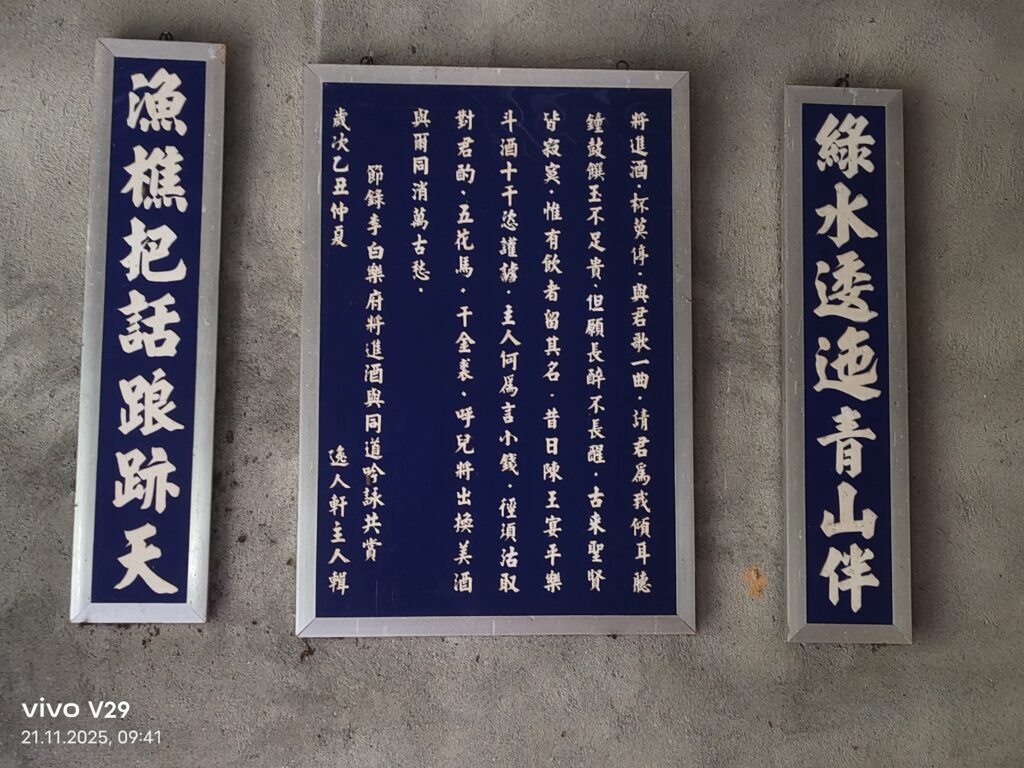
漁樵話跡跟天 — this is quite complex. 漁樵 is a classical pair meaning “simple folk living close to nature.” The central plaque refers to a poem by Li Bai (李白), namely 將進酒 (“Bring in the Wine”), by a famous poet of the Tang dynasty. His works are particularly difficult to translate; he also liked to associate them with drunkenness, which makes him rather sympathetic. The Chinese language is highly context-dependent, and in the philosophical realm it presupposes a great deal of background knowledge and is extremely open to interpretation.
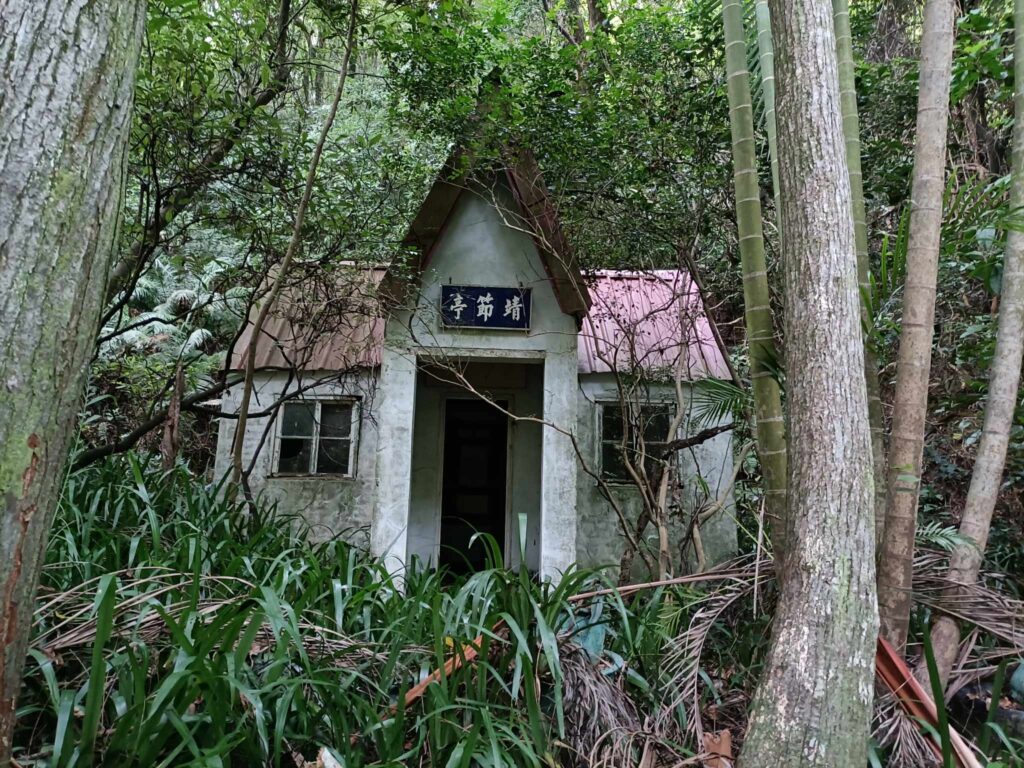
You can then cross to the opposite side via a small water channel. Below a small Tudigong shrine there is another building. This also served educational purposes and contains various texts. One room serves as a memorial, to whatever exactly; the other is a cultural room. Slightly higher up, on another level, there is the Jingjie Pavilion (靖節). 靖 means calm, peaceful; to pacify; section; season; virtue; festival; principle. Possible translations include:
“Quiet virtue” / “Peaceful virtue” (if understood as a character trait).
– As a name or title, Jìngjié (transliterated), often found in classical texts or as an honorific name. For example, “靖節先生” is an honorific name of the Chinese poet Tao Yuanming (陶淵明): “Master Jingjie.”
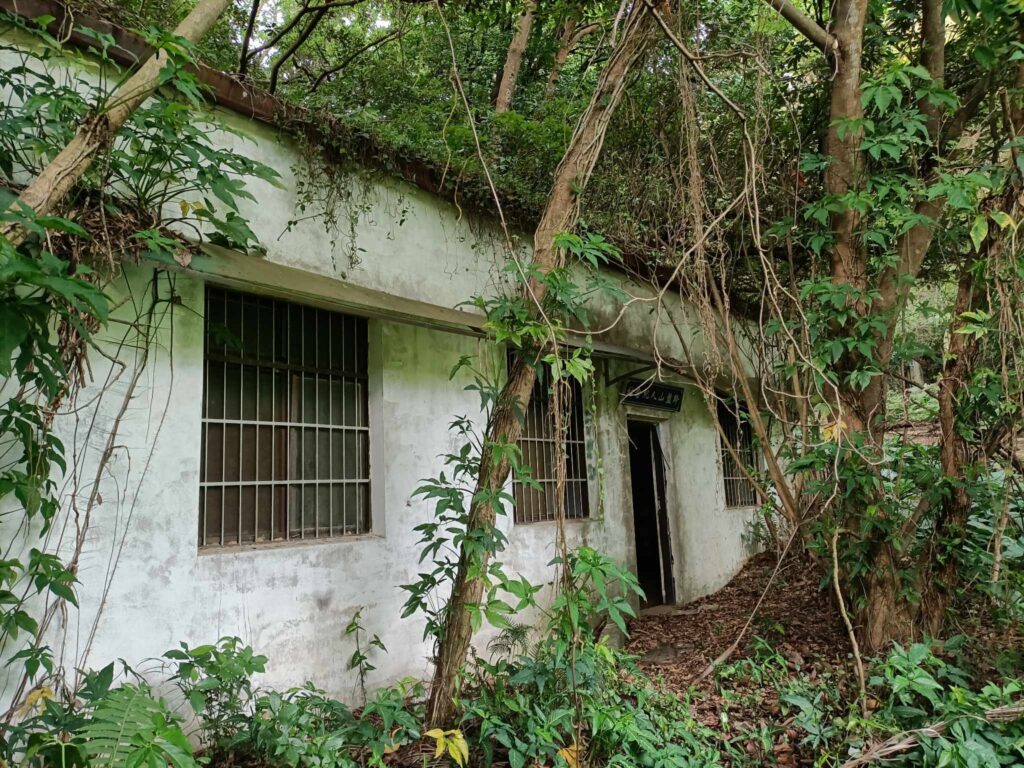
Now you go back to the other side of the channel, where there are more buildings. One looks very run-down.
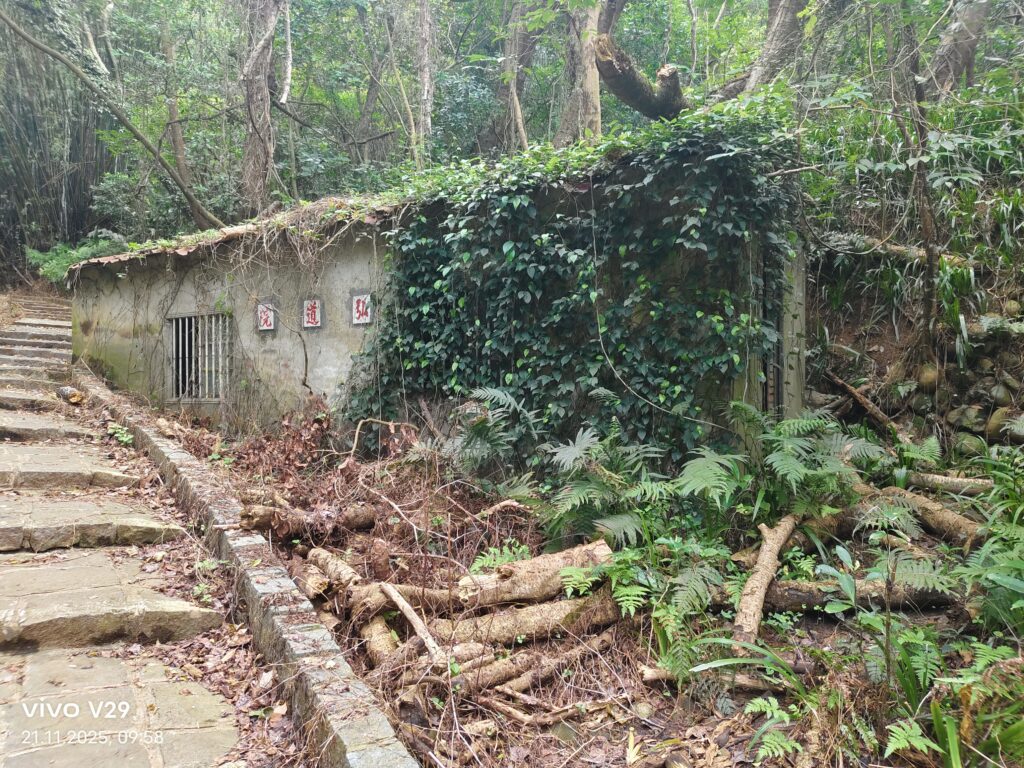
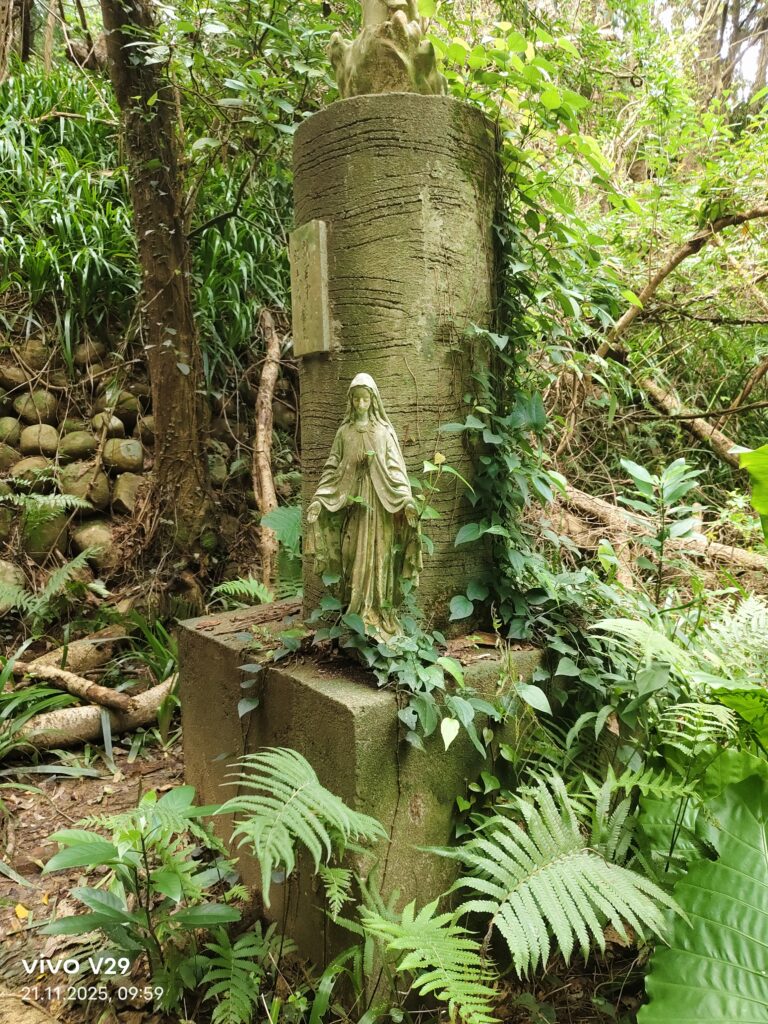
As you get closer, it becomes more interesting. In front of the door stands a saint’s statue that appears more Christian. That points to the “Great Leader,” interpreted here as the Taiwanese one. The interior also feels Christian. The cross is sword-shaped. But here, too, there are plaques hanging on the walls whose content is very Confucian and KMT-style.
brp_del_th:null;
brp_del_sen:null;
delta:null;
module: photo;hw-remosaic: false;touch: (0.05595238, 0.30065453);sceneMode: 2097152;cct_value: 0;AI_Scene: (-1, -1);aec_lux: 0.0;aec_lux_index: 0;albedo: ;confidence: ;motionLevel: -1;weatherinfo: null;temperature: 32;
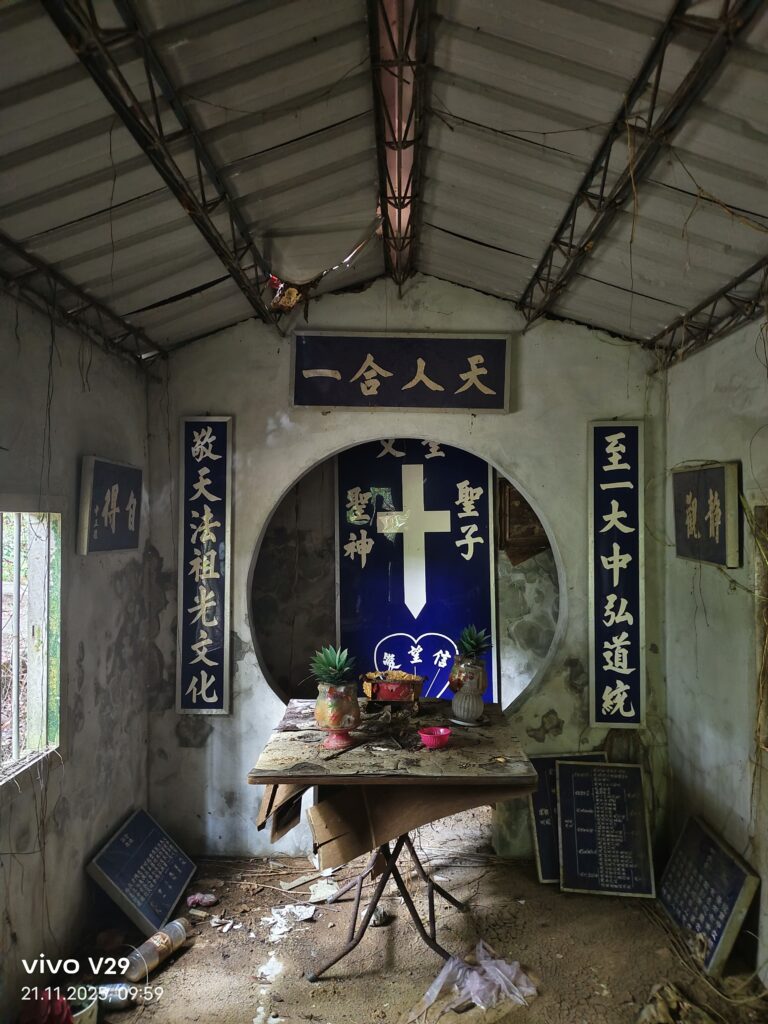
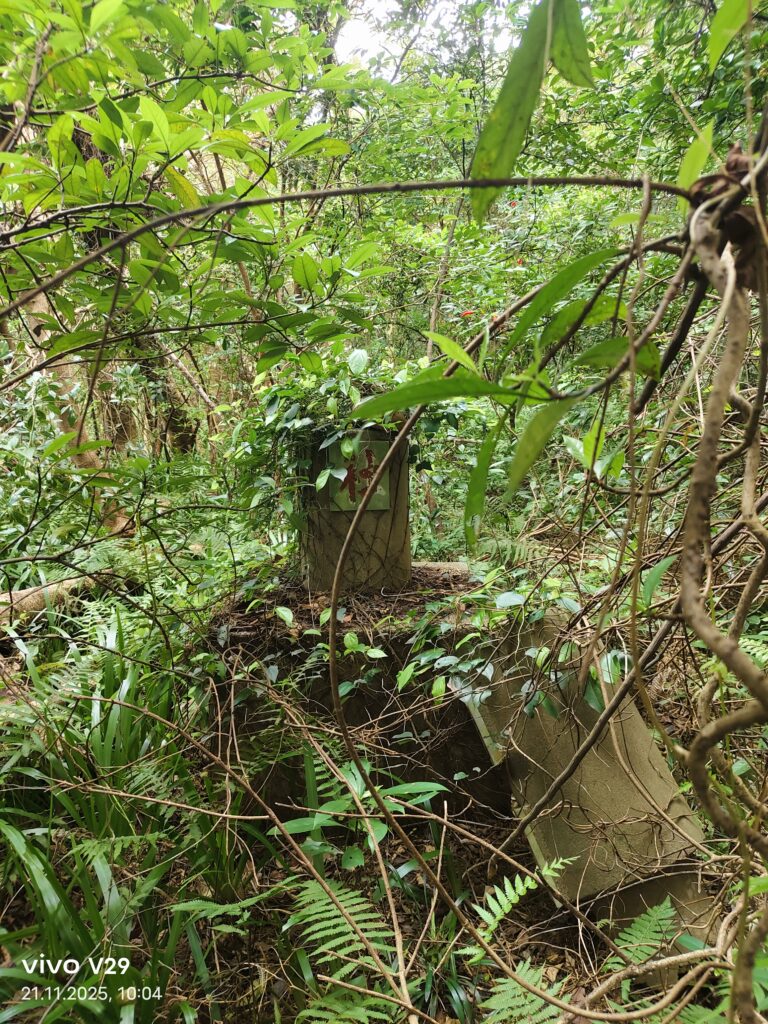
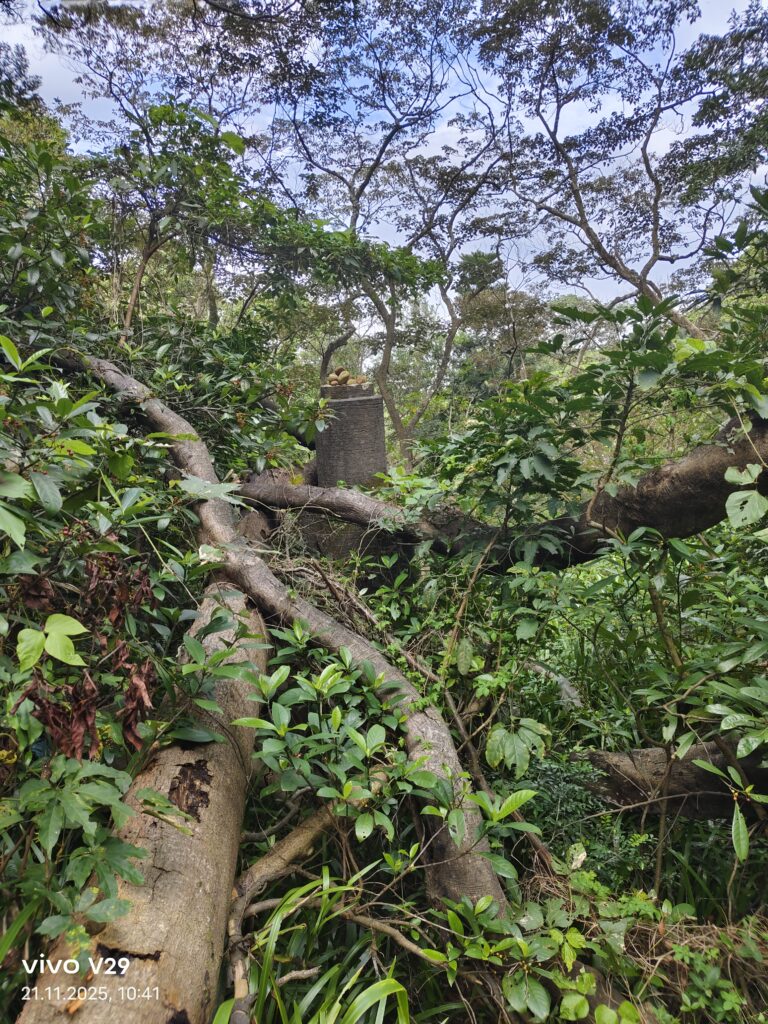
Here, too, there is another strange statue, crumbling and no longer recognizable.
(Copyright Claudius Petzold)